Why Are Ants Invading Your Beehive?
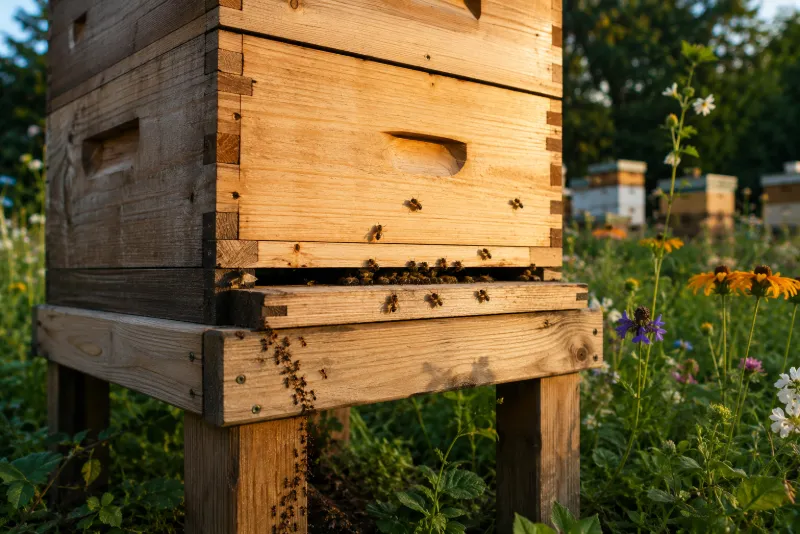
Ants are attracted to beehives because they provide abundant food and shelter. Honey, pollen, sugar syrup, wax scraps, and even dead insects can all attract foraging ants.
Healthy colonies often repel small numbers of ants, but weaker colonies—such as newly established nucleus colonies, swarms, or colonies recovering from disease or environmental stress—may struggle to defend every entrance.
Some ant species simply collect spilled food around the hive, while others may enter repeatedly to steal honey or establish nests beneath hive equipment.
The Threat of Ants
Although ants are not considered major honey bee predators in most regions, large infestations can create significant problems for a colony.
| Potential Problem | Possible Effect on the Colony |
|---|---|
| Honey theft | Reduced food reserves |
| Pollen removal | Less protein available for brood |
| Disturbance inside the hive | Stress and defensive behavior |
| Nesting beneath hive equipment | Persistent reinfestation |
| Pressure on weak colonies | In severe cases, colony decline or abandonment |
Large ant populations may also interfere with routine hive inspections by beekeepers.
Why Chemical Sprays Are a Bad Idea
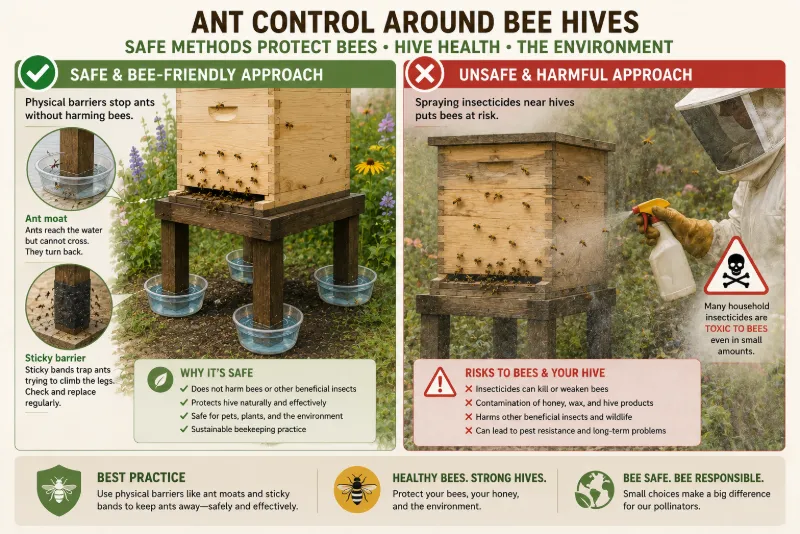
It may be tempting to spray household insecticides around a beehive, but doing so can create serious risks for honey bees.
Honey bees are highly sensitive to many insecticides. Spray drift, contaminated flowers, residues on hive equipment, or chemicals carried back into the colony may harm adult bees, developing brood, or beneficial microorganisms associated with the hive environment.
Even products marketed for household ant control are generally not intended for use near active beehives.
For this reason, most experienced beekeepers recommend avoiding routine chemical insecticide applications around occupied hives unless a product is specifically labeled for that purpose and used strictly according to local regulations and manufacturer instructions.
5 Safe and Natural Ways to Keep Ants Out of Beehives
1. Install an Ant Moat
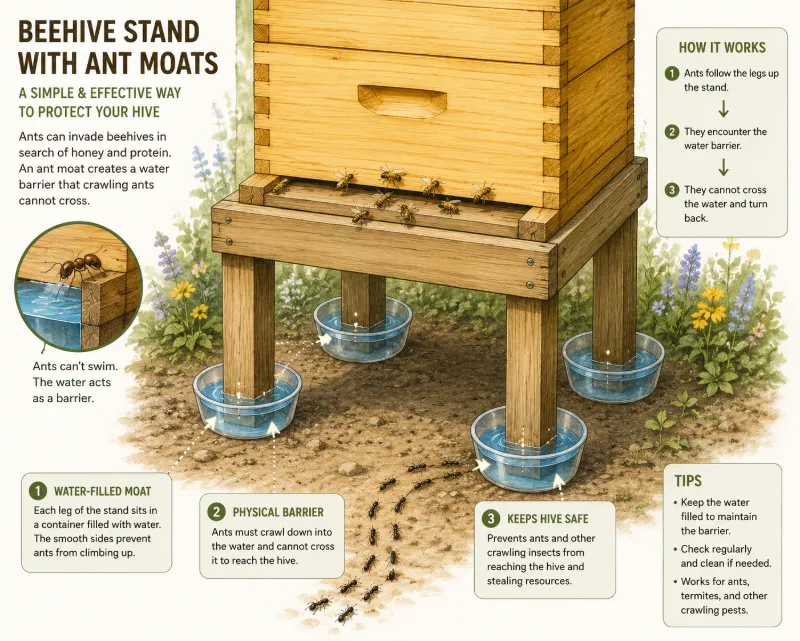
An ant moat is one of the most effective physical barriers against crawling insects.
The hive stand legs are placed inside small cups or containers filled with water or, in some designs, food-grade mineral oil or vegetable oil. Because ants cannot cross the liquid barrier, they are unable to climb into the hive.
Commercial ant moats are available, but many beekeepers also build simple versions using durable plastic or metal containers.
Maintenance Tip: Check the moat regularly and refill evaporated water or replace contaminated liquid as needed.
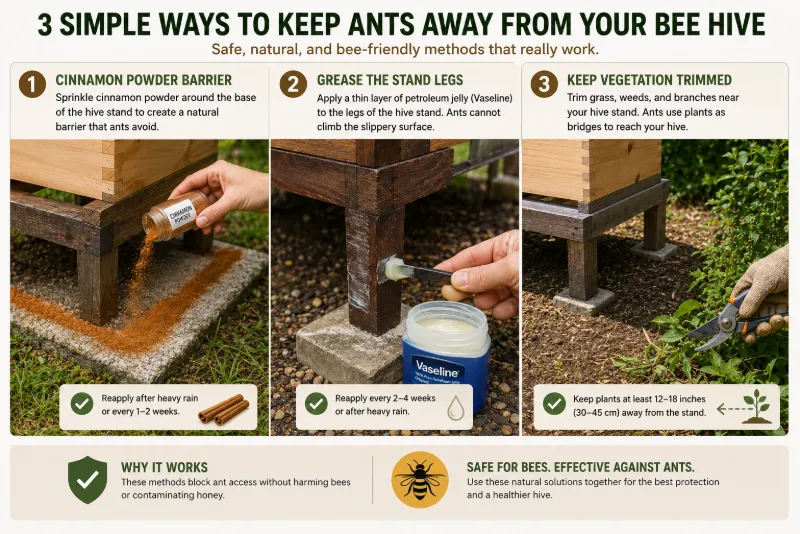
2. Create a Cinnamon Powder Barrier
Ground cinnamon has a strong aroma that many ant species avoid.
Sprinkling a narrow band of cinnamon powder around the hive stand or beneath the hive may discourage ants from crossing the area.
Because wind and rain reduce its effectiveness, the barrier should be refreshed periodically.
Cinnamon should not be placed inside occupied hive boxes or directly onto bees.
3. Apply Grease or Petroleum Jelly to Hive Stand Legs
A sticky barrier placed around each stand leg can prevent ants from climbing toward the hive.
Many beekeepers use:
Petroleum jelly
Specialized insect barrier grease
Sticky horticultural products designed for crawling insects
Reapply the barrier whenever it becomes coated with dust, leaves, or dead insects, as these materials can create a bridge for ants.
4. Eliminate Food Sources Around the Hive
Reducing attractants often lowers ant activity naturally.
Good hive management includes:
Cleaning spilled sugar syrup promptly.
Removing broken comb left near the apiary.
Avoiding honey drips during inspections.
Keeping feeding equipment clean.
Less available food means fewer reasons for ants to remain near the hive.
5. Keep the Hive Stand Clear of Vegetation
Branches, tall grass, weeds, and vines can provide alternative routes that allow ants to bypass physical barriers.
Maintain a vegetation-free area around the hive stand whenever practical, ensuring that plants do not touch the hive or its supporting structure.
Which Colonies Are Most Vulnerable?
Ants are more likely to become a serious problem when colonies are already under stress.
| Colony Type | Relative Risk |
|---|---|
| New nucleus colony | High |
| Recent swarm | High |
| Weak colony | High |
| Healthy established colony | Usually lower |
| Large overwintered colony | Usually lower |
Maintaining a strong, healthy colony is one of the best long-term defenses against many hive pests.
How to Monitor for Ant Activity
Early detection makes ant problems much easier to manage.
Inspect hive stands weekly during warm seasons.
Watch for trails of ants climbing the legs.
Check beneath the bottom board.
Look for ant nests forming under pavers or supports.
Observe whether ants are carrying honey or pollen away from the hive.
Addressing infestations early usually requires much less effort than controlling an established colony of ants.
Protecting Bees While Managing Ants
Successful beekeeping involves protecting honey bees without exposing them to unnecessary hazards. Physical barriers, careful sanitation, and regular inspections are generally safer strategies than broad-spectrum insecticides. By preventing ants from reaching the hive instead of trying to eliminate every ant nearby, beekeepers can reduce conflicts while maintaining a healthier environment for both managed bees and surrounding wildlife.
FAQs
Why are ants attracted to my beehive?
Ants are mainly attracted by honey, pollen, sugar syrup, wax scraps, and other food sources around the hive. Weak colonies may be less able to prevent ants from entering.
Will ants kill a honey bee colony?
Small numbers of ants usually do not threaten a healthy colony. However, large infestations can rob food stores, disturb the bees, and place additional stress on already weakened colonies. In severe cases, particularly with vulnerable colonies or aggressive ant species, they may contribute to colony decline or abandonment.
Can I spray ant killer around my beehive?
Routine household insecticides are generally not recommended near active beehives because many products can harm honey bees through direct contact or chemical residues.
Does cinnamon really repel ants?
Cinnamon may discourage some ant species because of its strong scent, but its effectiveness varies and it should be considered a temporary deterrent rather than a guaranteed solution.
What is the safest way to stop ants from reaching a beehive?
Physical barriers such as ant moats, sticky barriers on hive stand legs, good apiary hygiene, and vegetation management are among the safest and most widely used methods for preventing ants from accessing beehives.