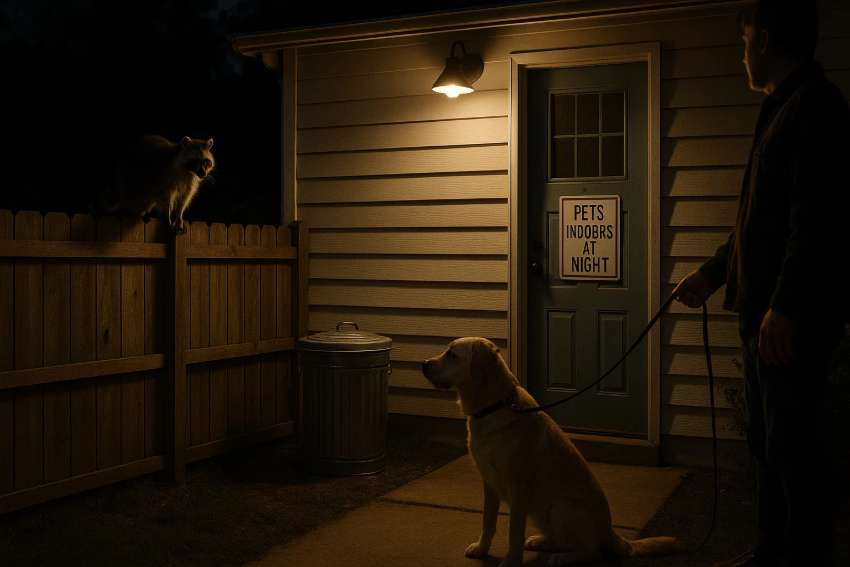
If you live in North America, raccoons are almost part of everyday life – rummaging through trash, walking along fences, or staring at your dog through the window at 2 a.m. They look cute, but they are still wild animals, and they can be dangerous to dogs and cats if they feel cornered, threatened or sick.
This guide explains, in practical terms:
How raccoons usually behave around dogs and cats
Real risks to your pet’s health and safety (bites, diseases, parasites)
How to reduce raccoon visits to your yard or apartment area
What to do if your dog or cat fights with a raccoon
Important: This article is general information only. Always follow local laws and contact your veterinarian and local animal control/wildlife authorities if there is contact between a raccoon and your pet.
1. Raccoon Basics: Curious, Clever and Very Food-Motivated
Understanding raccoon behavior helps you predict risks and prevent problems.
Nocturnal: Most active at night and around dawn/dusk.
Omnivores: Eat almost anything – garbage, pet food, fruit, insects, small animals.
Highly adaptable: Live in cities, suburbs and rural areas; very common in many parts of the US and Canada.
Not naturally “evil” or aggressive: Most raccoons prefer to avoid conflict and will leave if they can.
The danger comes when raccoons feel cornered, threatened, or are protecting food or babies – or when they are sick and not thinking clearly.
2. Are Raccoons Dangerous to Dogs?
The short answer: they can be, especially for small or off-leash dogs.
2.1 How raccoons react to dogs
If a dog chases a raccoon, the raccoon may:
Run up a tree or escape route (best case).
Turn and fight with teeth and claws if it feels trapped.
A raccoon may defend:
Food (trash, pet food dishes, compost)
A den site (under decks, in sheds, attics)
Young kits (babies)
2.2 Injury risks for dogs
Bites and scratches: deep wounds that can become infected.
Eye injuries: claws near the face can cause serious damage.
Soft tissue injuries: cuts on ears, legs, muzzle, chest.
2.3 Disease risks
Raccoons can carry several diseases and parasites that are dangerous to dogs (and people), such as:
Rabies (in regions where it is present)
Canine distemper virus (some outbreaks in raccoon populations)
Intestinal parasites and roundworm eggs in feces
This is why it’s critical that your dog is:
Vaccinated according to your vet’s recommendations
On regular parasite prevention
3. Are Raccoons Dangerous to Cats?
Cats and raccoons usually try to avoid each other, but fights can still happen.
3.1 Typical raccoon–cat interactions
Many confident adult cats will stand their ground and posture rather than run.
Shy or smaller cats may try to escape and hide.
Conflicts often happen around:
Outdoor food bowls
Garbage or compost
Sheltered spaces (under decks, sheds, porches)
3.2 Risks for cats
Deep bites and scratches (often around the face, neck or legs).
Rabies and other diseases, depending on local wildlife disease patterns.
Eye injuries and abscesses (infected bite wounds).
Indoor-only cats are generally much safer. The biggest risk is to outdoor cats, especially those fed outside at night.
4. How to Tell if a Raccoon Might Be Sick or Dangerous
Not every raccoon is a threat, but certain behaviors are red flags. Contact local animal control or wildlife authorities if you see a raccoon that:
Approaches people or pets with no fear in daylight
Staggers, circles, or seems very uncoordinated
Has obvious neurological signs (head tilt, paralysis, constant falling)
Foams at the mouth or drools heavily
Acts unusually aggressive or confused for no clear reason
Do not try to catch or handle any raccoon yourself, healthy or sick. That is a job for trained professionals with proper equipment and vaccinations.
5. Practical Ways to Protect Your Dog or Cat from Raccoons
5.1 Don’t feed wildlife (even “by accident”)
Feed pets indoors whenever possible.
If you must feed outdoors:
Only put food out for short periods.
Remove bowls after your pet finishes.
Secure trash cans with tight lids or bungee cords.
Clean up fallen birdseed, compost scraps and outdoor grills.
A yard with open food is an open invitation to raccoons and other wildlife.
5.2 Supervise dogs outdoors, especially at night
Go outside with your dog for late-night toilet breaks.
Use a leash or long line if your yard is not securely fenced.
Keep small dogs especially close and well-lit at night.
5.3 Keep cats indoors at night
Nighttime is peak activity for raccoons and other predators.
Indoor-only cats have:
Lower risk of fights, disease and accidents
Longer average lifespans
If you want your cat to enjoy the outdoors, consider:
Catios (enclosed patios or window boxes)
Leash and harness training in safe areas
5.4 Secure possible raccoon shelters
Block off spaces under decks, sheds or porches where raccoons might den.
Repair roof openings and attic vents (using wildlife-safe methods and only when no animals are inside).
6. What to Do If There’s a Raccoon in Your Yard
If you see a raccoon in your yard or near your building:
Stay calm – do not rush toward it.
Bring pets inside immediately, or move them farther away if you’re already outdoors.
Make gentle noise from a safe distance (clap, talk firmly, bang a pot) to encourage the raccoon to leave if it seems healthy.
If the raccoon:
Does not leave
Appears sick or injured
Is stuck in a building or enclosed area
…contact your local animal control or wildlife rescue for advice. Do not attempt to trap or corner it yourself.
7. What to Do If Your Pet Fights with a Raccoon
If you witness a fight or suspect contact (bites, scratches), treat it as a potential emergency.
7.1 Immediately after the incident
Do not grab the raccoon. Use noise, water from a hose, or a barrier (like a board) from a safe distance to separate if possible.
Bring your pet indoors as soon as you can safely do so.
Avoid touching blood or saliva with bare hands; wash your hands thoroughly afterward.
7.2 Check your pet and contact your vet
Look for:
Visible wounds (even small punctures)
Blood on fur
Signs of pain or shock
Call your vet as soon as possible and explain that your pet had contact with a raccoon.
Follow your vet’s instructions about:
Wound cleaning and treatment
Pain relief
Rabies booster vaccinations if appropriate
7.3 Contact local health authorities if required
In some areas, any contact between a pet and a wild animal like a raccoon must be reported to public health or animal control.
They may advise specific quarantine or observation periods depending on vaccination status and local laws.
It’s much easier to deal with this kind of situation if your dog or cat is already up to date on vaccinations and regularly seen by a veterinarian.
8. How to Tell If Your Pet Has Been Exposed Without You Seeing It
Sometimes you don’t see the raccoon, but you find signs your pet may have had a run-in.
Fresh bite marks or scratches (often hidden under fur).
Wet or sticky fur that could be saliva.
Sudden fear of going into the yard or a specific area.
Blood drops near trash cans, fences or under decks.
If you suspect a raccoon encounter:
Contact your vet and describe what you’ve found.
Clean minor wounds only as directed; do not delay professional care for anything more than superficial.
9. Living with Wildlife: Balance Safety and Respect
It’s important to remember:
Raccoons are part of the urban and suburban ecosystem.
They’re not “out to get” your pet – they are simply trying to survive.
Most problems arise when humans unintentionally invite raccoons in with easy food and shelter.
By:
Securing trash and outdoor food
Supervising pets, especially at night
Keeping cats indoors or in secure outdoor enclosures
Knowing what to do if contact occurs
…you can greatly reduce the risk to your dog or cat while still coexisting with wildlife in a responsible way.
The goal isn’t to wage war on raccoons. It’s to make sure your pets stay safe and healthy while raccoons stay wild and at a respectful distance – exactly where they belong.