Urban foxes are now a normal sight in many European cities – from London and Berlin to Paris, Amsterdam and beyond. They trot along pavements at night, slip through back gardens, and sometimes stare straight into your windows. For many people, they’re exciting to see. But if you keep chickens, rabbits, guinea pigs or other small pets, foxes are a serious risk you can’t ignore.
This guide will help you:
Understand how foxes behave in urban and suburban areas
Know which pets are most at risk
Make your garden less attractive to foxes
Know what to do if a fox attacks or gets too bold
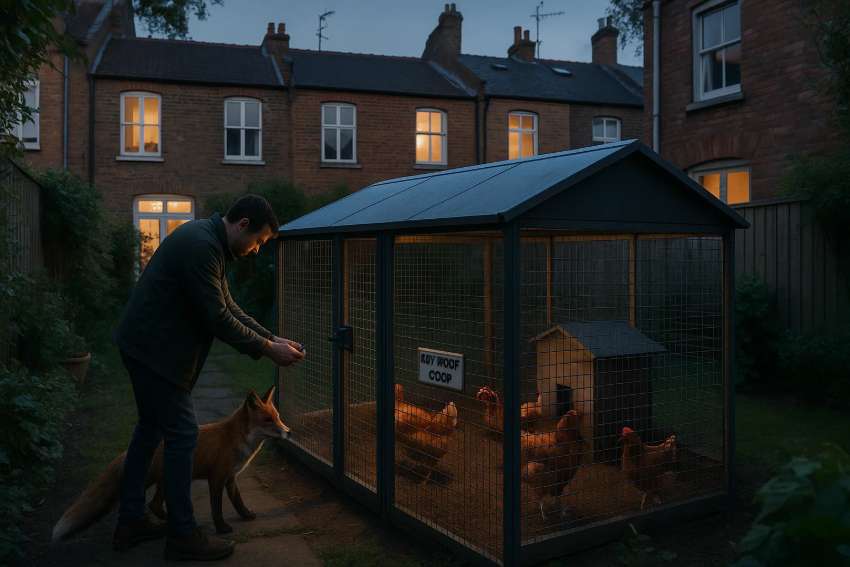
1. Urban Foxes: Curious, Opportunistic and Bold
Red foxes in European cities are highly adaptable. Over many generations, they’ve learned that:
Human areas = easy food (rubbish, compost, pet food, fallen birdseed)
Back gardens = quiet places to travel, rest or raise cubs
Chickens and small pets = prey animals, just like wild rabbits or rodents
Key points about urban fox behaviour:
Most active at night and dawn/dusk, but can be seen in daylight, especially in quiet areas.
Generally avoid direct contact with adult humans, but may show little fear at a distance.
Excellent climbers and diggers – they can jump, squeeze and burrow into poorly secured enclosures.
A fox passing through your street is not automatically a crisis. The main goal is to make sure it cannot reach your animals and has no reason to stay in your garden.
2. Which Pets Are at Risk from Foxes?
Foxes are predators. In a city, their natural diet (rodents, birds, invertebrates) often overlaps with the animals we keep as pets.
2.1 Chickens and other poultry
Backyard hens, ducks and quails are high-risk because they:
Are prey species
Often live outdoors full-time
May be locked into small areas at night
Once a fox discovers an unprotected coop, it may return repeatedly.
2.2 Rabbits and guinea pigs
Outdoor hutches and runs are very attractive targets – rabbits move like wild prey.
Flimsy hutches or pens that sit directly on grass are easy to dig under or break into.
2.3 Cats and small dogs
Healthy adult cats and medium-to-large dogs are usually at low risk; foxes prefer to avoid a fight.
Small dogs, puppies, kittens or sick/elderly animals may be more vulnerable, especially if left outside alone at night.
The highest risk is almost always to outdoor prey species in insecure housing – chickens, rabbits, guinea pigs and other small mammals or birds.
3. Fox-Proofing for Chickens: Coop and Run Design
If you keep chickens in Europe, you should assume foxes are present even if you haven’t seen them. A determined fox can:
Dig under fences
Squeeze through gaps
Climb low fences or jump from nearby objects
3.1 The coop: secure sleeping space at night
Solid walls and doors:
Use wood, metal or strong plastic – not thin wire alone.
Doors should close fully with proper locks or bolts (not simple turn latches a fox can nudge open).
Ventilation with strong mesh:
Cover vents and windows with welded wire mesh (often called hardware cloth), not chicken wire.
Chicken wire keeps chickens in but does not reliably keep predators out.
Automatic or strict manual closing:
Use an automatic pop-door timer or a strict routine to lock birds in before dark.
3.2 The run: safe outdoor area
Roof or cover:
Runs should be fully enclosed – not just open-top fencing.
Use mesh or solid roofing to stop foxes climbing or jumping in.
Strong fencing:
Use welded wire mesh with small openings (for example 1–2.5 cm).
Avoid large gaps or flimsy netting where a fox could push through or tear.
Dig-proof base:
Bury mesh at least 30–50 cm into the ground around the perimeter, or create an “apron” of mesh laid flat on the ground around the edges and covered with soil or stones.
Alternatively, place the entire run on slabs/concrete with deep bedding on top.
3.3 Daily habits that reduce risk
Lock chickens inside the secure coop at night, every night.
Collect eggs and remove spilled feed to avoid attracting foxes and rodents.
Check fences, doors and mesh regularly for digging, lifting or damage.
4. Protecting Rabbits and Guinea Pigs
Many traditional hutches in European gardens were never designed with foxes in mind. They may keep animals contained but not truly safe.
4.1 Housing location and structure
Keep hutches close to the house where human activity and lights discourage predators.
Choose solid, heavy hutches that cannot easily be tipped or dragged.
Doors and access points should:
Have secure locks (bolts, carabiners)
Close flush with the frame – no gaps a fox can work at
4.2 Secure runs and exercise areas
Outdoor runs should be:
Fully enclosed – including the top
Made of strong mesh, not thin netting
Prevent digging:
Place runs on slabs, decking or a buried mesh base covered with soil/grass.
If on grass, use buried or apron mesh similar to chicken runs.
Provide hiding boxes and tunnels so rabbits/guinea pigs feel safe and can retreat if startled.
4.3 Night-time safety
Ideally, bring small pets indoors or into a locked shed/garage at night in high fox areas.
If that’s not possible, ensure:
Night housing is inside a sturdy structure (shed or outbuilding) or
The hutch itself is built to a predator-proof standard similar to a chicken coop.
A fox simply sniffing around a flimsy hutch can cause extreme stress to rabbits and guinea pigs – even if it never breaks in. Strong housing protects both their bodies and their sense of security.
5. Cats and Small Dogs Around Urban Foxes
Most urban foxes prefer to avoid confrontation with adult cats and dogs. Still, it’s sensible to be cautious.
5.1 Cats
Many adult cats are confident enough to stand their ground; foxes usually back off.
Kittens, elderly cats or cats with mobility issues are more vulnerable.
To reduce risk:
Keep cats indoors at night when fox activity is highest.
Provide indoor enrichment (climbing trees, toys) so they don’t rely on night roaming for stimulation.
5.2 Small dogs
Most fox-related risk to small dogs happens when:
They are left unattended in gardens at night.
They chase foxes and corner them, prompting a defensive bite.
Simple precautions:
Supervise small dogs outside after dark.
Use a leash in unfenced areas or shared courtyards.
Bring dog toys and chews indoors at night to reduce scent attractions.
6. Make Your Garden Less Attractive to Foxes
Fox-proof housing is essential, but it also helps to make your property a place foxes don’t want to hang around.
6.1 Remove food sources
Use secure bins with tight lids for rubbish and food waste.
Bring pet food bowls indoors after meals.
Clean up fallen fruit, compost spills and overflowing bird feeders.
6.2 Block potential dens
Check under sheds, decking and outbuildings for signs of burrows.
If you discover a den:
Seek advice from local wildlife authorities about legal and humane eviction.
Only block entrances once you’re sure no cubs are inside.
6.3 Consider fencing and deterrents
Fencing:
High, solid fences can slow foxes down, but many can still climb or jump.
Angled extensions or smooth panels at the top can make climbing harder.
Lighting and activity:
Motion-activated lights or sprinklers can discourage some foxes.
Regular human presence in the garden (daytime use, gardening) makes it feel less safe for wildlife.
No deterrent is perfect, but every layer of effort makes your garden a little less attractive compared with easier options nearby.
7. Safe and Ethical Fox Deterrents
It is never acceptable to harm foxes or use illegal poisons or traps. Focus on humane deterrents:
Secure food and rubbish instead of trying to scare foxes away while still feeding them indirectly.
Use motion-activated lights or sprinklers near sensitive areas like chicken runs.
Repair broken fences and close off hiding spaces.
Talk to neighbours about consistent practices – one household leaving out food can attract foxes for the whole street.
Check local regulations before installing any deterrent devices and always choose options that do not injure wildlife or neighbouring pets.
8. If a Fox Attacks or Injures Your Pet
Despite all precautions, incidents can still happen. If your pet is bitten, scratched or strongly harassed by a fox, treat it seriously.
8.1 Immediately after the incident
Bring your pet indoors or to a secure area as quickly and calmly as possible.
Avoid handling them near painful areas; even friendly animals may snap when scared or hurt.
Do not chase or corner the fox; let it escape on its own.
8.2 Contact your vet
Call your vet and explain what happened, including:
Type of pet (chicken, rabbit, cat, dog, etc.)
Visible wounds or bleeding
Vaccination status of the pet
Follow your vet’s advice on:
Wound cleaning and treatment
Pain relief and antibiotics
Booster vaccinations if appropriate
8.3 Inform local authorities if required
In some countries and regions, wildlife attacks or suspected rabies exposure must be reported to local authorities.
Check your local government or council guidance on foxes and wildlife incidents.
9. Balancing Wildlife and Pet Safety in European Cities
Foxes in European cities aren’t going away. They’ve adapted to live alongside us, and completely removing them is neither realistic nor humane. Instead, the goal is to:
Respect foxes as wild animals – don’t treat them as pets or deliberately feed them.
Protect your own animals with secure housing, supervision and smart garden management.
Work with neighbours so the whole street takes a consistent approach.
With good design and habits, chickens can scratch safely, rabbits and guinea pigs can enjoy outdoor runs, and your dog and cat can live next to urban foxes without constant fear. The foxes stay wild and wary; your pets stay protected. That’s the balance to aim for in modern European cities.