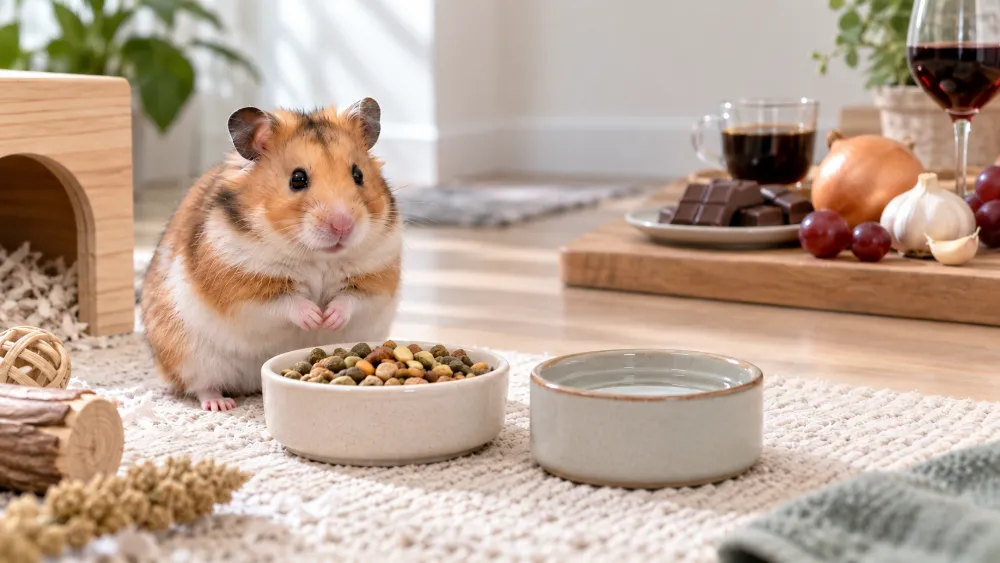
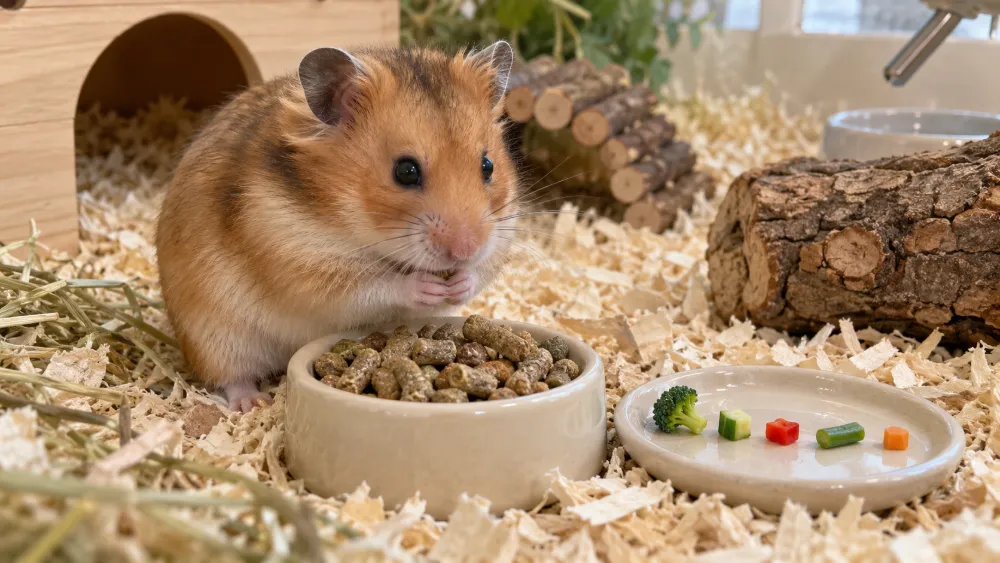
Quick answer: Hamsters can eat small amounts of several fresh fruits, including apple (with the seeds removed), pear, strawberries, blueberries, banana, melon, and peach flesh. Fruit should be an occasional treat rather than a daily food because it contains natural sugars and can upset a hamster’s digestive system when overfed. Serve only a tiny piece, introduce new foods gradually, remove uneaten fresh food promptly, and keep a balanced hamster food as the main part of the diet.

Fresh fruit can be offered to hamsters in very small portions as an occasional treat.
For a broader overview of daily feeding, vegetables, grains and protein treats, see our complete guide to what hamsters can eat.
What Fruits Can Hamsters Eat? Quick Summary Table
| Fruit | Can Hamsters Eat It? | How to Serve It | Main Caution |
|---|---|---|---|
| Apple | Yes | Fresh flesh, cut into a tiny piece | Remove seeds and core |
| Pear | Yes | Small piece of ripe flesh | Remove seeds |
| Strawberry | Yes | Washed, tiny piece | High-water fruit; do not overfeed |
| Blueberry | Yes | A small piece or part of one berry | Still a sugary treat |
| Banana | Yes | Very small piece | Sweet and calorie-dense |
| Melon | Yes | Tiny seedless piece of flesh | Watery and sugary |
| Peach | Yes | Tiny piece of flesh only | Never give the pit |
| Citrus fruit | Best avoided | Choose another fruit instead | Veterinary guides commonly advise against citrus |
| Rhubarb | No | Do not feed | Potentially harmful to hamsters |
| Grapes | Conflicting guidance | Safest choice is to skip them | Reputable sources disagree about their suitability |
Safe Fruits for Hamsters
Fruit is not an essential part of a hamster’s diet, but a few well-chosen fruits can be used as occasional treats. The safest approach is to stick with fruits that appear consistently in veterinary or animal-welfare feeding guidance and to keep the serving very small.
Apples
Hamsters can eat fresh apple flesh. Remove the seeds and core before serving it. Apple is one of the fruits specifically mentioned in hamster-feeding guidance from animal-welfare organizations.
A tiny cube is enough. There is no advantage to giving a hamster a large apple slice, and a large piece is more likely to be carried into the bedding and stored until it spoils.
Pears
Pear flesh is another suitable occasional treat. Wash the fruit, remove the seeds, and offer only a small piece. Ripe pear is soft and easy to chew, but it is also sweet, so portion control matters.
Strawberries
A small piece of strawberry is generally suitable for a healthy hamster. Wash it well and give only a tiny amount. Because strawberries contain a lot of water, too much may contribute to soft stools or digestive upset.
Blueberries
Blueberries can be offered in small amounts. A whole large blueberry may be more than a tiny hamster needs, so cutting one into a smaller portion is sensible, especially for dwarf hamsters.
Do not assume that berries are “free foods” simply because people consider them healthy. For a hamster, fruit is still a treat.
Bananas
Banana is safe in a very small serving, but it is particularly easy to overfeed because it is soft, sweet, and calorie-dense. A thin fragment is plenty.
Fresh banana is preferable to sweetened banana chips. Many packaged dried-fruit snacks contain added sugar or provide a much more concentrated dose of natural sugar than fresh fruit.
Melon
Small amounts of melon flesh can be offered occasionally. Remove all seeds and rind. Watermelon, cantaloupe, and similar melons contain plenty of water, so keep portions especially small and remove leftovers before they become wet or spoiled.
Peaches
Hamsters can have a tiny amount of ripe peach flesh, but the stone or pit must be removed completely. The same general rule applies to other stone fruits: never allow a hamster to chew the pit.
How Much Fruit Should a Hamster Eat?
There is no single scientifically established serving size that fits every hamster species, age, body condition, and diet. A practical conservative rule is to offer a piece roughly comparable to the size of the hamster’s ear, or smaller, and to treat fruit as an occasional extra rather than a daily ingredient.
For many healthy adult hamsters, fruit once or twice a week is more than enough when other treats are also being offered. Dwarf hamsters need smaller portions than Syrian hamsters simply because their bodies are smaller.
The rest of the diet should come mainly from a nutritionally complete food formulated for hamsters. Fruit should never replace the balanced food that supplies the protein, fat, fiber, vitamins, and minerals a hamster needs.
Should Dwarf Hamsters Eat Fruit?
Dwarf hamsters can physically eat many of the same fruits as Syrian hamsters, but extra caution is sensible. Some dwarf hamster lines, particularly Campbell’s dwarf hamsters and hybrids, have a recognized predisposition to diabetes.
If you have a dwarf hamster, keep sweet treats exceptionally small and infrequent. For a hamster that is overweight, has diabetes, drinks unusually large amounts of water, urinates much more than normal, or is under veterinary treatment, do not add fruit without discussing the diet with a veterinarian experienced in small mammals.
If you are unsure which type of hamster you have, our guide to popular pet hamster types can help you understand the common species and varieties kept as pets.
Fruits and Fruit Parts Hamsters Should Avoid
Some foods are clearly unsuitable, while others fall into a more cautious “better avoided” category. That distinction matters: not every food that is a poor choice is necessarily a proven poison.
Rhubarb
Do not feed rhubarb to a hamster. The RSPCA specifically warns against it, and veterinary hamster-care guidance also lists rhubarb among foods to avoid.
Fruit Seeds and Pits
Remove apple and pear seeds and never give stone-fruit pits such as peach pits. Seeds and pits are unnecessary, can be difficult to chew safely, and some contain cyanogenic compounds that can release cyanide when damaged or chewed.
Serving only the clean fruit flesh is the simplest rule.
Citrus Fruits
Several veterinary hamster-care guides recommend avoiding citrus fruits such as oranges, lemons, limes, and grapefruit. Citrus is not needed nutritionally, and it may irritate the digestive system. With many better-established fruit choices available, there is little reason to use it as a hamster treat.
Grapes and Raisins
Advice about grapes is inconsistent. The RSPCA advises owners not to feed grapes because they may be harmful to rodents, while some other pet-welfare and veterinary sources allow very small amounts.
Because a hamster does not need grapes and safer fruit choices are readily available, the most cautious recommendation is simply to skip grapes and raisins. Raisins also contain more concentrated sugar than fresh fruit.
Dried and Sweetened Fruit
Dried fruit is not automatically toxic, but it is easy to overfeed. Removing water concentrates the fruit’s sugar and calories into a much smaller piece. Sweetened dried fruit, candied fruit, fruit snacks, jam, and fruit-flavored human foods should not be used as hamster treats.
Fruit Juice
Do not give fruit juice as a substitute for water or whole fruit. Juice delivers sugar without the chewing and fiber of a tiny piece of whole fruit and provides no useful advantage in a balanced hamster diet. Fresh, clean water should always be available.
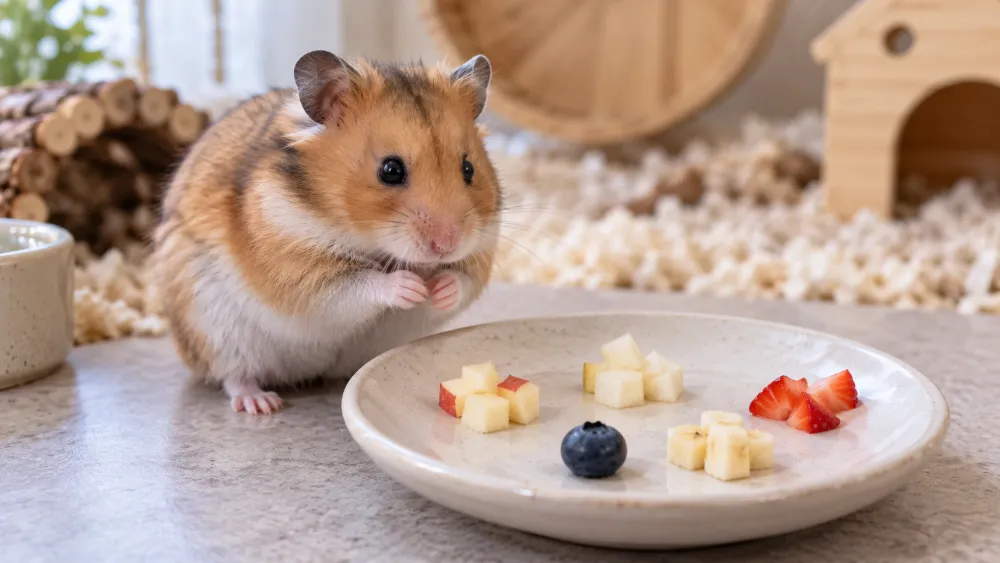
Choose simple fresh fruit, remove seeds or pits, and keep every portion very small.
How to Prepare Fruit Safely for a Hamster
Wash fresh fruit thoroughly before serving it. Remove seeds, pits, stems, tough rinds, and any spoiled or bruised areas. Cut the fruit into a very small piece that matches the size of your hamster.
Introduce only one unfamiliar food at a time. A gradual approach makes it easier to notice whether a particular food causes loose stools or another digestive problem.
Hamsters naturally carry food in their cheek pouches and hide it for later. That behavior is normal, but fresh fruit can rot inside a food hoard. Check the enclosure and remove uneaten fresh food before it spoils.
What Should Hamsters Eat Instead of Lots of Fruit?
A balanced hamster food should form the foundation of the diet. Depending on the product and veterinary guidance, this may be a nutritionally complete pelleted food or an appropriately formulated hamster mixture.
Small amounts of suitable fresh vegetables can provide variety without relying heavily on sweet fruit. Hamsters are omnivores, and a properly formulated diet should cover their essential nutritional requirements rather than depending on human snack foods.
If you are comparing the feeding needs of different small pets, see our hamster vs guinea pig guide. Although both are rodents, their diets are not interchangeable.
What If Your Hamster Eats Too Much Fruit?
A slightly oversized piece of a normally safe fruit does not automatically mean an emergency, but watch your hamster closely. Too much fresh produce can cause digestive upset, and sugary extras can contribute to unhealthy weight gain when they become a regular habit.
Stop offering fresh treats if your hamster develops diarrhea or unusually soft droppings. If the hindquarters become wet or soiled, the hamster stops eating, becomes lethargic, or symptoms persist, contact a veterinarian promptly. Small mammals can deteriorate quickly when they are ill.
Final Takeaway
Hamsters can eat apple without seeds, pear, strawberries, blueberries, banana, melon, and peach flesh in tiny amounts. The key is moderation: fruit is an occasional treat, not a daily food or a major source of nutrition.
Remove seeds and pits, avoid rhubarb and citrus, and consider skipping grapes because reputable guidance conflicts. Keep servings even smaller for dwarf hamsters, especially when diabetes risk is a concern. A balanced hamster food and fresh water should always remain the core of the diet.
FAQs
Can hamsters eat apples?
Yes. Hamsters can eat a small piece of fresh apple flesh. Remove the seeds and core before serving it.
Can hamsters eat bananas?
Yes, but only in a very small amount. Banana is sweet and calorie-dense, so it is best used as an occasional treat rather than a regular food.
Can hamsters eat strawberries?
Yes. A tiny washed piece of strawberry is suitable for most healthy hamsters. Large portions of watery fruit may contribute to digestive upset.
Can hamsters eat blueberries?
Yes. Blueberries can be offered occasionally in small portions. For a dwarf hamster, part of a berry is usually more appropriate than a large whole berry.
Can hamsters eat grapes?
Guidance is inconsistent. The RSPCA advises against grapes, while some other reputable sources allow them in small amounts. Because grapes are not necessary and other fruits have clearer guidance, skipping them is the cautious choice.
Can hamsters eat oranges?
It is better to avoid oranges and other citrus fruits. Several veterinary hamster-care guides recommend against citrus, and there is no nutritional need to include it when safer treat choices are available.
Can hamsters eat fruit every day?
Fruit is better treated as an occasional extra, not a daily requirement. A tiny serving once or twice a week is a conservative approach for many healthy hamsters, while dwarf hamsters may need even stricter limits.
What is the best fruit for a hamster?
There is no single “best” fruit. Apple with the seeds removed, pear, strawberry, or blueberry are practical choices because they are widely listed as suitable when served in tiny amounts.