Claws help animals survive by gripping prey, climbing, digging, and defending themselves. Their shape usually matches their job: cats use sharp claws to catch and hold, birds of prey use talons to seize, reptiles use claws for traction and climbing, and burrowers use strong foreclaws to dig or tear open nests.
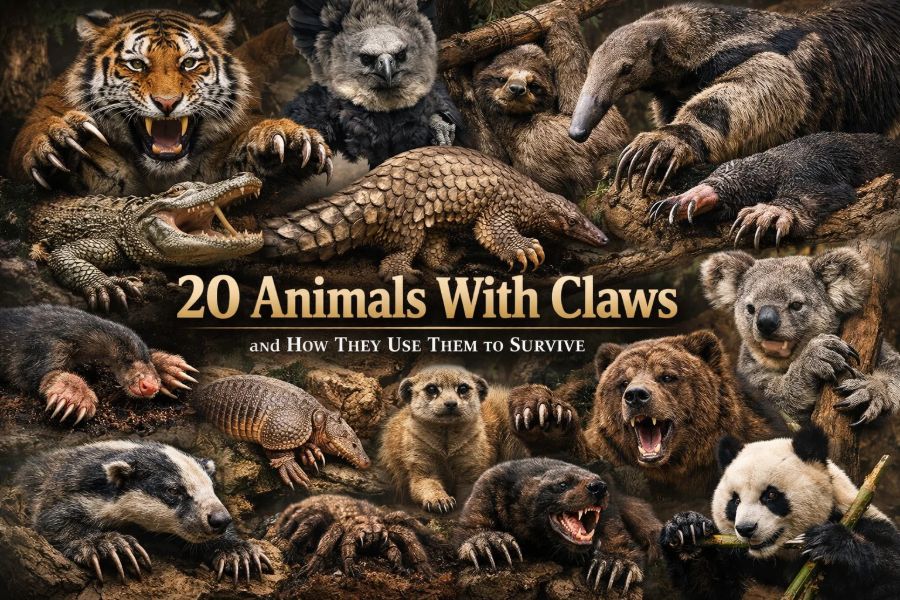
That is why animals with claws are found in so many parts of the tree of life. A tiger uses retractable claws to seize prey, a mole uses spadelike claws to tunnel through soil, a sloth hangs from branches with hooklike claws, and a harpy eagle grips monkeys and sloths with talons larger than a grizzly bear’s claws. The same basic anatomical structure has been reshaped again and again to solve very different ecological problems.
| Animal | Claw Type | Main Use |
|---|---|---|
| Domestic cat | Sharp, retractable claws | Hunting, defense, climbing |
| Cheetah | Semi-retractable claws | Traction during high-speed running |
| Tiger | Long retractable claws | Grabbing and holding large prey |
| Lion | Curved claws | Attacking and controlling prey |
| Harpy eagle | Massive talons | Seizing and carrying heavy prey |
| Bald eagle | Strong hooked talons | Catching prey |
| Great horned owl | Powerful talons | Gripping and killing prey |
| Crocodile | Clawed toes | Traction on land, digging nests or burrows |
| Green iguana | Curved climbing claws | Clinging to bark and branches |
| Giant anteater | Long hooked foreclaws | Tearing open ant and termite nests |
| Mole | Broad, spade-like claws | Tunneling through soil |
| American badger | Heavy front claws | Digging burrows and prey |
| Meerkat | Short strong foreclaws | Digging up hidden prey |
| Pangolin | Strong foreclaws | Breaking into termite and ant nests |
| Nine-banded armadillo | Digging claws | Burrowing and foraging underground |
Predators use claws as grappling hooks
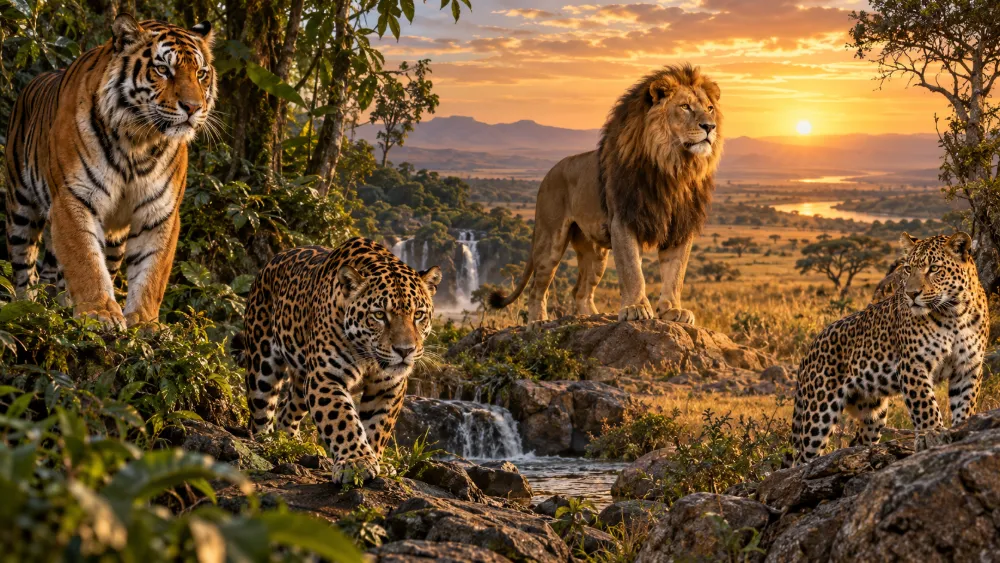
In carnivores, claws are often part of a prey-control system. Cats are the clearest example. Domestic cats use their claws for defense, hunting, climbing, and clinging, while most felids keep those claws retracted when walking so they stay sharp. Tigers use long retractable claws to grapple prey, and lions use curved claws together with teeth to bring down medium- and large-sized animals.
Cheetahs show a fascinating variation on that feline theme. Unlike most cats, their claws are not fully retractile. Instead, the exposed claws act more like running spikes, giving extra traction during high-speed pursuit. For a cheetah, claws are not just for grabbing prey at the end of the chase—they also help make the chase possible in the first place.
Birds of prey take the same basic idea into the air. Eagles and owls have sharp curved claws called talons, and these are central to how they kill. Harpy eagles use massive talons to seize large arboreal prey, bald eagles use talons to catch prey and carrion, and great horned owls use a powerful grip to immobilize and kill mammals and birds. In these animals, claws function more like hooks and vises than like blades.
Some claws are really digging tools
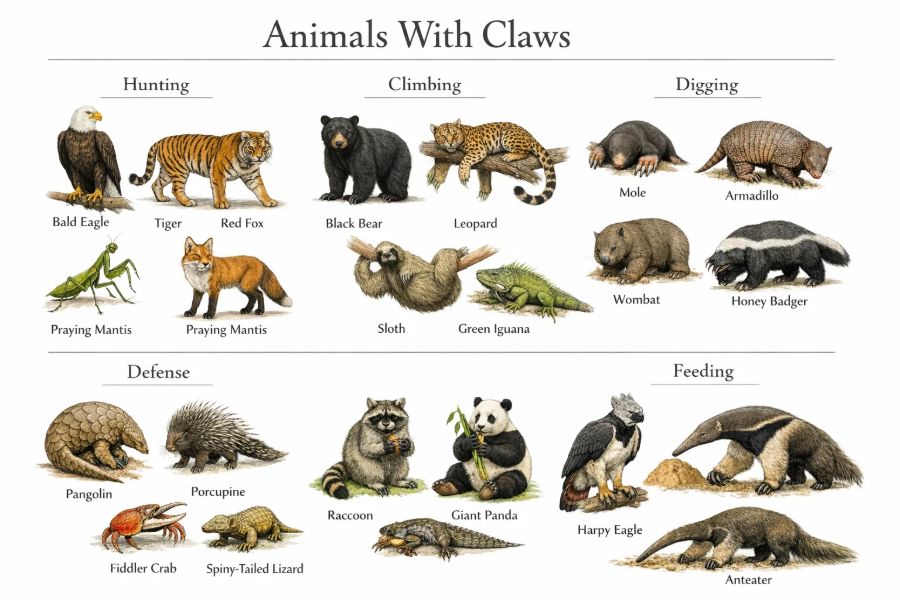
Another major survival role of claws is excavation. Moles are among the clearest examples: their broad, spadelike claws are specialized for tunneling through soil, and their forelimbs are rotated outward to work almost like paired digging paddles.
Armadillos and badgers use claws in a different but equally effective way. Nine-banded armadillos loosen soil with the forelimbs and nose to create burrows, while American badgers use strong incurved front claws both to dig burrows and to rapidly excavate rodent prey. In these species, claws are part shovel, part crowbar.
Meerkats also rely heavily on claws for a more small-scale form of digging. They use them to uncover insects, spiders, scorpions, and other prey hidden under stones, logs, and soil, and they can also use the foreclaws to batter larger prey before tearing it apart.
Insect-eaters often use claws like crowbars
Some of the most specialized claw users are animals that feed on social insects. Giant anteaters tear open ant and termite nests with long, sharp, curved foreclaws, and the same claws can also be used in defense. Pangolins use strong forefeet and claws to rip open termite and ant nests as well. Sloth bears do something similar, using long curved claws to break into termite mounds and bee nests before sucking up the insects with their modified snout and lips.
This is a good reminder that claws are not always about violence. In these animals, claws are feeding tools first. They open doors to food that would otherwise be sealed shut.
Tree-dwellers turn claws into climbing gear
For arboreal animals, claws become anchors. Sloths use long curved claws to hang from branches, often upside down, and those claws are central to their slow but secure canopy lifestyle. Koalas likewise use strong clawed feet and opposable digits for grasping branches and climbing eucalyptus trees. Green iguanas also rely on claws as clinging and climbing structures in arboreal life.
Even giant pandas, though better known for bamboo feeding than climbing, use sharp claws and powerful limbs to ascend trees. Their claws are part of a broader set of climbing adaptations that help them rest, forage, or escape danger in forested mountain habitat.
Bear claws show how one structure can do many jobs
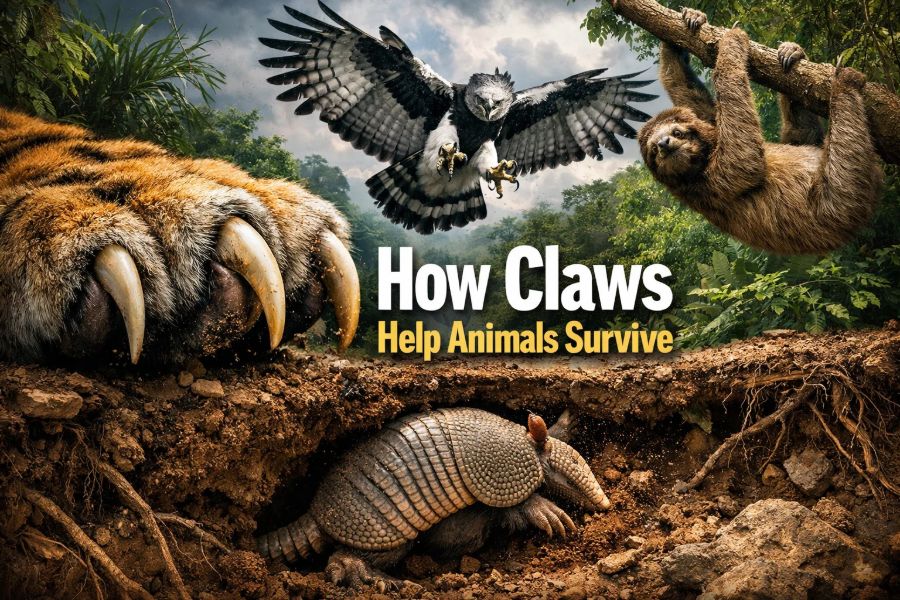
Bears are especially interesting because their claws are often general-purpose tools rather than extreme specializations. Britannica notes that bear claws are large and nonretractile, and in different species they may be adapted for digging. Sloth bears use theirs to tear open insect nests, grizzlies dig vigorously for rodents and roots and also scratch bark to mark territory, and even giant pandas use claws in climbing.
That flexibility helps explain why claws are so evolutionarily successful. A claw can be tuned for one dominant task, but it can still retain enough versatility to serve several others. Bears, perhaps more than almost any other mammal group, show that “multi-tool” potential clearly.
Reptiles use claws differently from mammals and birds
Reptile claws are often less about gripping prey directly and more about traction, climbing, or substrate interaction. Crocodiles have clawed webbed toes that help with land movement, and some species also dig burrows or nest holes. Arboreal lizards such as iguanas use claws to cling to branches, showing that even without the flexible shoulder and grasping hand of a mammal, claws can still solve the problem of vertical life.
This broadens the lesson of the article: claws are not one invention with one purpose. They are a repeated structural solution for contact with the environment—whether that means bark, ice, prey, soil, or nest material.
What all these animals teach us
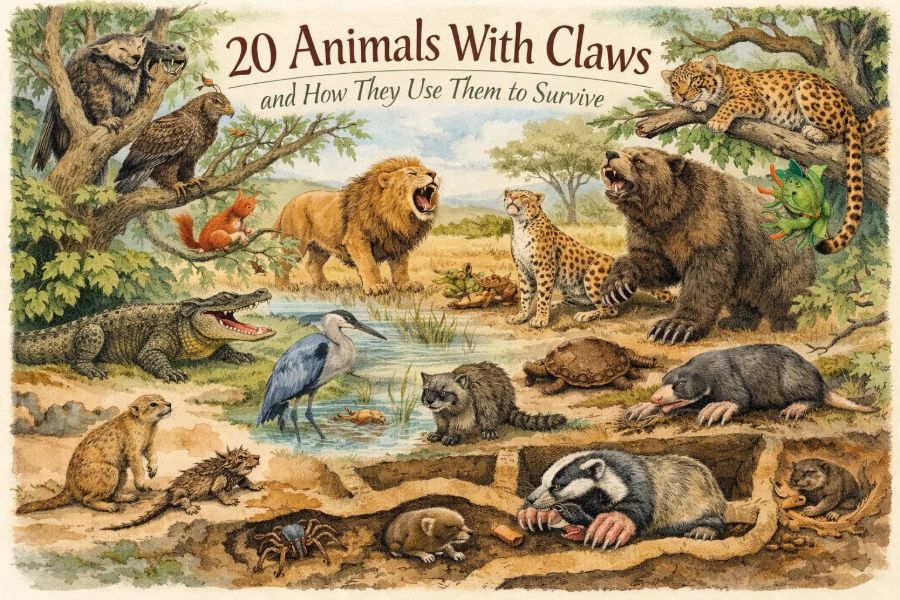
Across these 20 animals, claws repeatedly serve six major survival roles:
| Main claw function | Example animals |
|---|---|
| Catching and holding prey | Tiger, lion, harpy eagle, owl, bald eagle |
| Running traction | Cheetah |
| Digging burrows or prey out of the ground | Mole, armadillo, badger, meerkat, grizzly bear |
| Opening insect nests | Giant anteater, pangolin, sloth bear |
| Climbing or hanging | Sloth, koala, green iguana, giant panda, domestic cat |
| Mixed survival use | Crocodile, bear species, cats |
These roles are all documented examples of the general zoological rule that claw shape tends to match an animal’s way of getting food or surviving in its habitat.
Suggested conclusion:
Claws are survival tools, not just weapons. Cats use them to catch and hold prey, birds of prey use talons to seize and kill, reptiles use claws for traction and climbing, and burrowing animals use powerful foreclaws to dig or tear open nests. Looking at claw shape is one of the fastest ways to understand how an animal lives.
References
Britannica. Claw. General definition and major functions of claws.
Britannica. Feline and Cat behavior. General cat claw function and retractility.
San Diego Zoo / Britannica. Cheetah. Semi-retractile claws used for traction in running.
National Geographic. Tiger. Retractable claws used to grip prey.
Britannica Kids / Britannica. Lion. Curved claws used in attacking prey.
San Diego Zoo. Harpy Eagle. Giant talons used to seize heavy prey.
Britannica Kids / All About Birds / Britannica. Bald eagle and owl entries. Talons used to capture prey.
Smithsonian National Zoo / Britannica Kids. Sloth. Curved claws used for hanging and branch grasping.
Britannica. Koala. Clawed, grasping feet for climbing.
Britannica. Anteater. Curved foreclaws used to tear open insect nests and for defense.
Britannica. Pangolin. Strong foreclaws used to rip open termite and ant nests.
Animal Diversity Web. Dasypodidae and Dasypus novemcinctus. Armadillo claws used in digging and defense.
Britannica. Mole. Spadelike claws for digging.
Britannica. Badger. Heavy front claws used for digging prey and burrows.
Britannica. Meerkat. Heavy foreclaws used for digging prey and battering large prey.
Britannica. Sloth bear and bear. Long curved claws used to open insect nests; bear claws broadly adapted for digging.
Britannica. Grizzly bear. Claws used for digging and territorial marking.
Britannica. Crocodile and Reptile: clinging and climbing. Clawed toes in locomotion, burrowing, and branch-clinging lizards such as iguanas.
Smithsonian National Zoo / Britannica. Giant panda. Sharp claws used in climbing.