Mosquitoes bite some people more than others largely because people release different combinations of skin odors that mosquitoes can detect. Research has linked greater attraction to certain carboxylic acids found in human skin emissions. Mosquitoes also use carbon dioxide from breathing, visual cues, body heat, and thermal infrared radiation to locate potential hosts. However, no single factor explains every mosquito bite. Blood type is not a proven universal predictor, and the idea that mosquitoes prefer people with sweeter blood is a myth. The importance of different signals varies by mosquito species and environmental conditions.
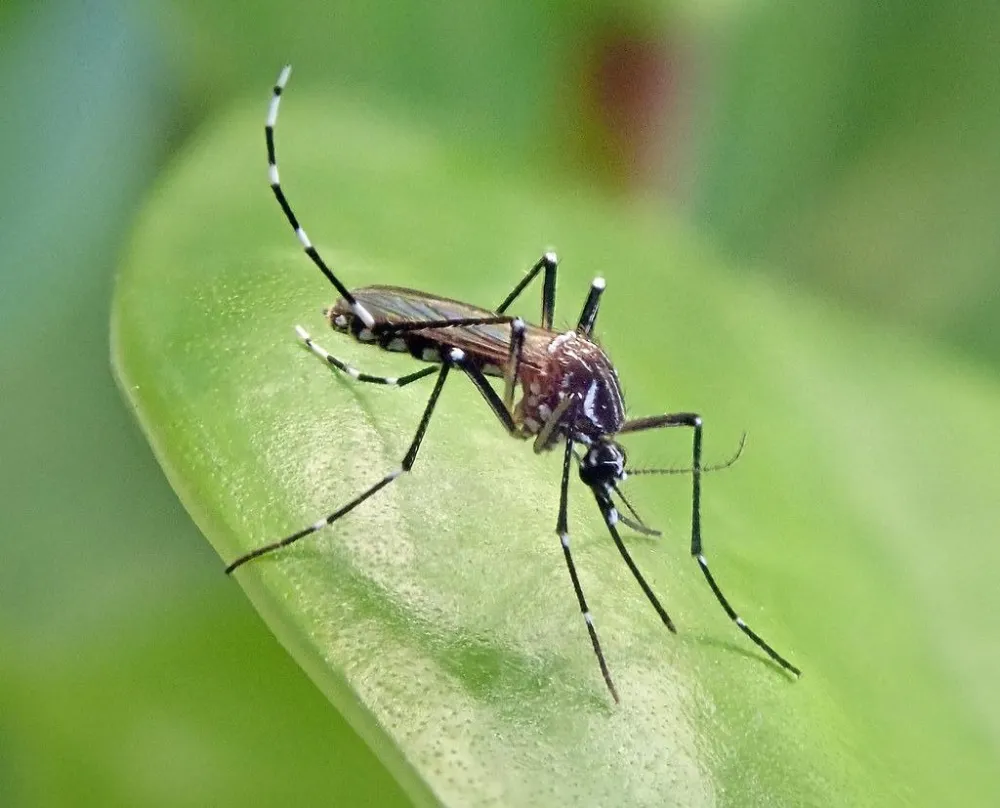
Female mosquitoes combine chemical and physical cues to locate people and other potential blood-meal hosts.
Why Do Mosquitoes Bite Some People More Than Others?
Many people have noticed that mosquitoes seem to prefer certain individuals, even when several people are sitting close together.
Scientific research confirms that differences in attraction are real. Some people produce combinations of skin chemicals that are more attractive to particular mosquito species.
However, attracting mosquitoes is not the same as being bitten successfully. The number of bites someone receives also depends on clothing, movement, exposure time, mosquito abundance, and whether a mosquito successfully obtains a blood meal.
The strongest scientific evidence points toward a complex sensory process rather than one simple explanation such as blood type or body temperature alone.
How Do Mosquitoes Choose Who to Bite?
Host-seeking female mosquitoes combine information from several senses.
They can detect carbon dioxide associated with the breath of humans and other animals. They also respond to volatile chemicals released from the skin.
Visual information helps them identify possible targets, while heat-related cues become important as they approach a host.
However, these signals do not all act at the same distance or in the same way.
A mosquito's response is influenced by the combination of cues available at a particular moment.
Why Is Human Body Odor Important?
Human skin releases numerous volatile organic compounds, often abbreviated as VOCs.
These compounds arise from the skin itself, skin secretions, and chemical activity involving microorganisms that live on the body.
Different people produce different odor mixtures, even when they follow similar hygiene routines.
Mosquitoes possess specialized chemical receptors that detect parts of these mixtures.
Research shows that the composition of skin odor can strongly influence how attractive a person is to certain mosquito species.
What Did Scientists Discover About Mosquito Magnets in 2022?
In October 2022, researchers published Differential Mosquito Attraction to Humans Is Associated with Skin-Derived Carboxylic Acid Levels in the journal Cell.
The scientists collected human skin odors using nylon material worn on participants' forearms. They then tested the attractiveness of these odor samples to female Aedes aegypti mosquitoes.
Some people's odors consistently attracted far more mosquitoes than others.
Chemical analyses showed that the highly attractive individuals generally had higher levels of several skin-associated carboxylic acids.
The researchers concluded that these compounds are important candidates for explaining differences in mosquito attraction.
However, the study established a strong association. It did not prove that increasing or decreasing carboxylic acids on human skin would always cause a corresponding change in mosquito bites.
Can Someone Be 100 Times More Attractive to Mosquitoes?
One participant in the 2022 study had an experimental attraction score more than 100 times greater than those of the least attractive participants.
This remarkable difference was measured using a particular laboratory assay.
It does not mean that the participant received exactly 100 times more mosquito bites in everyday life.
The researchers measured mosquito preferences toward collected human odors under controlled conditions.
Nevertheless, the result demonstrates that individual differences can be exceptionally large.
Are Mosquito Magnets Always Attractive to Mosquitoes?
Some individual differences appear to remain relatively stable over time.
The 2022 study tracked selected participants across repeated trials and found that the strongest and weakest attractors often remained in similar positions in the ranking.
However, attractiveness is not permanently fixed under every condition.
Changes in physiology, skin microbiota, personal-care products, activity, and the environment may influence the odor signals available to mosquitoes.
Additionally, different mosquito species may respond differently to the same person.
What Are Carboxylic Acids?
Carboxylic acids are a broad class of chemical compounds containing a characteristic carboxyl functional group.
Some occur naturally in human skin secretions and contribute to the chemical mixture released from the body.
The 2022 study identified higher levels of certain carboxylic acids in the skin odors of highly attractive participants.
These included pentadecanoic, heptadecanoic, and nonadecanoic acids.
However, the findings do not suggest that one acid alone determines whether a mosquito will bite someone.
The overall mixture of compounds appears to be important.
Do Skin Bacteria Attract Mosquitoes?
Skin microorganisms can influence the odors released from a person's body.
Bacteria break down substances present in sweat and skin secretions, producing volatile chemicals.
These chemical products may be attractive or less attractive to particular mosquito species.
Research therefore suggests that the composition of the skin microbiome contributes to differences in human attractiveness.
However, this does not mean ordinary skin bacteria are harmful or that eliminating the skin microbiome would prevent mosquito bites.
What Did the 2024 Skin Microbiome Study Show?
A 2024 study investigated whether changing bacterial odor production could reduce mosquito attraction.
Researchers genetically modified particular skin-associated bacteria to produce less lactic acid.
When these engineered bacteria were introduced onto the skin of mice, mosquito attraction and feeding were reduced in the experimental system.
The result demonstrates that microbial odor production can influence mosquito behavior.
However, this was an animal experiment, not an established mosquito-repellent treatment for humans.
What Did Scientists Discover in 2026?
A study published in iScience in May 2026 examined differences in body odor attractiveness among 42 female participants.
The researchers collected volatile chemicals and tested mosquito responses using controlled behavioral experiments.
They identified 27 candidate compounds detected by the mosquitoes' sensory system.
One compound, 1-octen-3-ol, was more abundant in odors associated with higher attractiveness and in samples from certain pregnant participants.
Experiments with artificial odor blends showed that changing the amount of this compound or the proportions of different chemicals could alter mosquito preferences.
These findings support the idea that mosquitoes evaluate mixtures of signals rather than responding to a single universal human scent.
However, the study was conducted on a limited participant population and does not establish a prediction system for every person.
What Is 1-Octen-3-ol?
1-Octen-3-ol is a volatile organic compound that can occur in biological odor mixtures.
It is sometimes called mushroom alcohol because it is associated with the characteristic smell of certain fungi.
Some mosquitoes possess receptors capable of detecting this molecule.
The 2026 study found that its relative abundance contributed to differences in attraction under experimental conditions.
However, the compound's biological effect depends on the overall odor mixture, its concentration, and the mosquito species.
How Do Mosquitoes Smell Humans?
Mosquitoes use sensory structures associated with their antennae and maxillary palps to detect chemicals in the air.
These structures contain nerve cells with specialized chemical receptors.
When particular odor molecules bind to receptors, the sensory neurons produce signals interpreted by the mosquito's nervous system.
This process helps the animal locate potential hosts.
However, the system is more complex than the human experience of identifying one familiar smell.
Why Is Mosquito Smell So Effective?
Many host-seeking mosquito species have evolved sensory systems that respond to several overlapping odor signals.
A 2022 study in Cell, titled Non-canonical Odor Coding in the Mosquito, revealed that some mosquito sensory neurons express multiple types of chemoreceptors.
This arrangement can provide overlapping pathways for detecting human odor.
It helps explain why removing one category of odor receptor does not necessarily eliminate attraction to humans.
However, the relative importance of different receptor systems varies among odor molecules and mosquito species.
Do Mosquitoes Smell Carbon Dioxide?
Yes. Carbon dioxide is an important cue used by many blood-feeding mosquitoes.
Humans and other animals release carbon dioxide when breathing.
Female mosquitoes can detect changes in the concentration of this gas, helping them identify areas where potential hosts may be present.
However, carbon dioxide does not uniquely identify an individual person.
It works together with body odors, visual information, and heat-related cues.
Does Breathing More Make Someone More Attractive?
Greater carbon dioxide release can influence mosquito host-seeking behavior.
For example, a person engaged in physical activity may produce more carbon dioxide than when resting.
However, this does not guarantee that the person will receive more bites in every situation.
Outdoor airflow, mosquito abundance, skin chemistry, clothing, and exposure all affect the result.
Carbon dioxide is a useful host-location signal, but it is not the only determinant of attraction.
Can Mosquitoes See Humans?
Yes. Mosquitoes possess compound eyes that detect visual patterns and movement.
Visual signals can help them approach potential hosts after detecting other clues such as carbon dioxide.
However, the visual system of a mosquito differs from human vision.
Different species respond to different wavelengths and patterns of light.
It is therefore inaccurate to assume that mosquitoes recognize clothing colors in exactly the same way that people do.
What Colors Attract Mosquitoes?
A 2022 study in Nature Communications examined visual preferences in the mosquito Aedes aegypti.
After exposure to carbon dioxide, the mosquitoes showed stronger attraction to certain visual signals, including wavelengths perceived by humans as red, orange, and cyan, as well as dark visual targets.
The researchers also found that the effects were linked to sensory genes involved in vision and carbon dioxide detection.
However, the experiments were performed under controlled conditions with a particular mosquito species.
Wearing a certain color should not be presented as a reliable substitute for proven mosquito-bite prevention.
Do Mosquitoes Prefer Dark Clothes?
Dark objects can provide strong visual contrast against their surroundings.
Some mosquito species are attracted to particular dark or long-wavelength visual targets under specific conditions.
However, clothing color is only one part of host seeking.
A person wearing light-colored clothing may still be attractive because of skin odor, carbon dioxide, or heat.
Clothing coverage and fabric structure are generally more important for practical bite prevention than a single color choice.
Can Mosquitoes Detect Body Heat?
Yes. Female mosquitoes can respond to heat-related signals when approaching a host.
Body temperature and warm air can help a mosquito distinguish a living animal from a nonliving surface.
However, the mosquito does not rely on one simple body-temperature measurement.
Several forms of thermal information can contribute, including heat transferred through air and infrared radiation.
Can Mosquitoes Detect Infrared Radiation?
Yes. Research published in Nature in 2024 showed that female Aedes aegypti mosquitoes can detect thermal infrared radiation under suitable conditions.
In the experiments, infrared radiation strengthened host-seeking behavior when combined with carbon dioxide and human odor.
The researchers identified sensory proteins associated with this response.
However, infrared radiation alone did not trigger the same strong host-seeking behavior.
This demonstrates that mosquitoes integrate several senses rather than depending entirely on heat vision.
How Far Away Can Mosquitoes Detect Infrared?
The 2024 experiments found that Aedes aegypti could preferentially respond to thermal infrared radiation at distances up to approximately 70 centimeters under the tested conditions.
That distance was greater than the range over which the mosquitoes could detect certain forms of warm-air convection in the same experiment.
However, 70 centimeters is not a universal maximum detection distance for every mosquito and environment.
Infrared responses depended on accompanying signals and experimental conditions.
How Do Mosquitoes Find People? A Multisensory Process
| Sensory Cue | What Mosquitoes Detect | Main Role |
|---|---|---|
| Carbon dioxide | Gas released during breathing | Indicates that a possible host is nearby |
| Skin odors | Volatile organic compounds and chemical mixtures | Helps distinguish attractive hosts |
| Vision | Movement, contrast, and certain wavelengths | Helps locate and approach a target |
| Thermal infrared | Radiation emitted by warm objects | Assists orientation under suitable conditions |
| Warm-air cues | Heat transfer and local temperature changes | Assists close-range host recognition |
| Contact information | Surface cues encountered after landing | Helps guide landing and feeding behavior |
The relative importance of these cues differs by species, distance, environmental conditions, and the mosquito's physiological state.
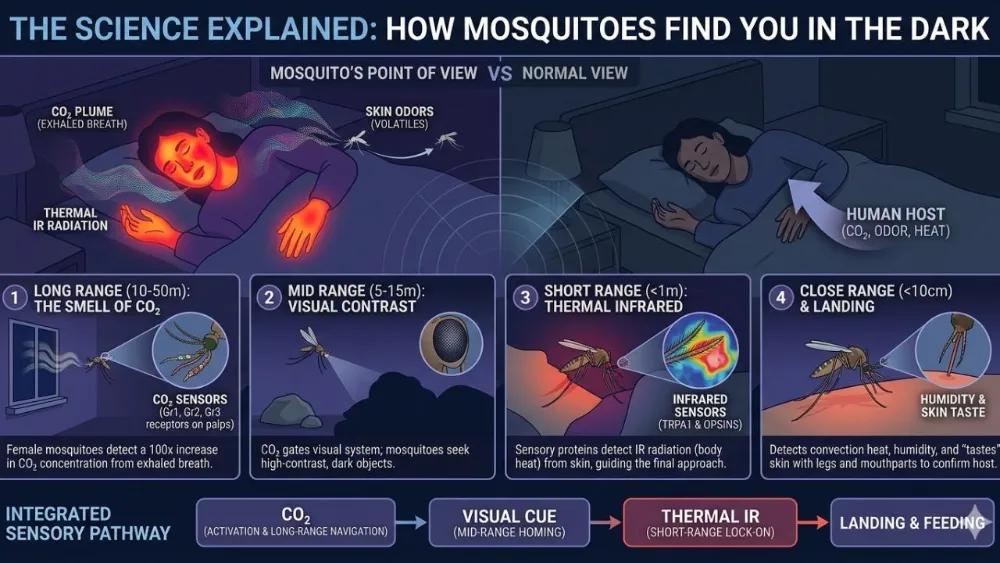
Scientific illustration: mosquitoes combine chemical, visual, and thermal signals while locating potential hosts.
Do Mosquitoes Prefer Type O Blood?
The claim that mosquitoes always prefer people with type O blood is not supported by consistent scientific evidence.
Some small studies have reported associations between blood type and attraction in particular mosquito species.
However, other experiments have produced conflicting findings.
A 2024 scientific review concluded that the relationship between ABO blood type and mosquito feeding preference remains ambiguous.
The 2026 iScience study did not find a statistically significant association between ABO blood group and attraction in its participant sample.
Blood type should therefore not be treated as a reliable explanation for why one person gets more bites than another.
Do Mosquitoes Prefer Sweet Blood?
No reliable evidence shows that mosquitoes select people because their blood tastes sweeter.
Mosquitoes locate a host before obtaining a blood meal, using signals such as skin odor, carbon dioxide, vision, and heat.
The animal cannot normally evaluate the sweetness of a person's blood from a distance.
Therefore, the expression sweet blood is a folk explanation rather than an established biological mechanism.
Does Eating Sugar Attract Mosquitoes?
There is no strong evidence that eating sugary food directly makes a person more attractive to mosquitoes because their blood becomes sweet.
Diet may influence aspects of metabolism and body odor, but the relationship is complicated.
Individual dietary habits should not be treated as a reliable predictor of mosquito-bite frequency without controlled evidence.
Researchers continue investigating how chemical changes in the body influence host attraction.
Does Sweat Attract Mosquitoes?
Sweat and associated skin chemistry can influence mosquito attraction.
Human skin and sweat contain substances that may be transformed into volatile compounds by microorganisms.
Some of these compounds contribute to the chemical signals recognized by mosquitoes.
However, not all sweat has the same composition, and sweating more does not guarantee that every mosquito species will prefer one person.
The important factor is the combined odor profile rather than the mere presence of moisture.
Does Exercise Increase Mosquito Attraction?
Exercise can change several signals that mosquitoes use to locate hosts.
Physical activity may increase carbon dioxide production, skin temperature, and perspiration.
However, the combined effect depends on the type of activity and environmental conditions.
A person may also become more exposed to mosquitoes by spending longer outdoors.
Therefore, exercise is a plausible influence on attraction, but it does not explain every difference in biting frequency.
Does Pregnancy Attract Mosquitoes?
Some studies have reported greater mosquito attraction toward pregnant individuals under certain conditions.
Possible contributing factors include changes in respiration, skin temperature, and body odor.
The 2026 iScience study found that some pregnant participants had odor profiles associated with increased attraction, including higher levels of 1-octen-3-ol.
However, the participant sample was limited, and not every pregnant individual was more attractive than every nonpregnant participant.
The findings should be interpreted as evidence of possible physiological influences, not a universal rule.
Does Drinking Beer Attract Mosquitoes?
A small number of studies have investigated whether alcohol consumption changes mosquito attraction.
Some experiments have reported increased attraction after beer consumption under their particular conditions.
However, the evidence is too limited to conclude that drinking any amount of alcohol always increases mosquito bites.
Alcohol can influence physiology and odor, but the outcome is likely affected by several factors.
This remains a less certain explanation than the role of skin odor chemistry.
Can Soap Change How Mosquitoes Smell You?
Soap and other personal-care products can change the chemical compounds present on the skin.
Scientific research has found that different soap products may alter mosquito attraction in different ways.
However, a soap that changes attraction in one experiment is not automatically a dependable mosquito repellent.
The interaction depends on the product, the person's natural odor, and the mosquito species.
For reliable bite prevention, products specifically evaluated as insect repellents are more appropriate.
Are Mosquitoes Attracted to Perfume?
Fragrances contain mixtures of volatile compounds that mosquitoes may detect.
Some floral or plant-associated odors can influence mosquito behavior, including their attraction to nectar sources.
However, different perfumes have very different chemical compositions.
It is inaccurate to say that all perfumes attract mosquitoes or that every fragrance repels them.
Effects observed in a laboratory should not be generalized to every personal-care product.
Why Do Only Female Mosquitoes Bite?
Only female mosquitoes obtain blood meals from people and other animals.
Many female mosquitoes need nutrients from blood to support egg production.
Male mosquitoes do not bite humans for blood. They obtain energy from nectar and other sugar sources.
Female mosquitoes also feed on sugar sources, but blood provides additional nutrients associated with reproduction.
However, feeding behavior differs among mosquito species, and not every species relies on human blood.
Do Male Mosquitoes Find Humans?
Male mosquitoes do not take blood meals, but this does not mean they can never respond to human-associated signals.
Research on male Aedes aegypti has documented attraction to humans under certain field-like experimental conditions.
Such behavior may be associated with mating opportunities rather than blood feeding.
However, only females possess the feeding adaptations normally responsible for biting people.
Do All Mosquitoes Prefer Human Blood?
No. Different mosquito species have different host preferences.
Some are strongly attracted to people. Others feed preferentially on birds, other mammals, amphibians, or reptiles.
Some species use more than one type of host.
The research described in this article focuses heavily on Aedes aegypti, a mosquito known for its strong association with humans.
Its sensory preferences should not automatically be generalized to every member of the mosquito family Culicidae.
Why Do Mosquitoes Bite at Different Times of Day?
Mosquito species differ in their daily activity patterns.
Some are active during daylight hours, while others are most active around dusk, dawn, or at night.
Environmental conditions such as temperature, humidity, and wind can also influence activity.
However, it is inaccurate to claim that mosquitoes bite only at night.
The CDC notes that mosquito bites can occur during both daytime and nighttime.
Are More Mosquito Bites Always Caused by Greater Attraction?
No. The number of bites observed on a person depends on more than chemical attractiveness.
Time spent outdoors, clothing coverage, availability of uncovered skin, and the number of mosquitoes nearby all affect exposure.
Some people may also notice or react to bites differently from others.
A 2024 scientific review emphasized that host attraction, host availability, and actual feeding success are related but distinct variables.
Therefore, counting itchy spots alone is not a precise way to measure innate attractiveness to mosquitoes.
Why Do Mosquito Bites Itch?
During feeding, a mosquito introduces saliva containing substances that help it obtain blood.
The human immune system can react to components of this saliva.
This response contributes to itching, swelling, and redness around the bite.
However, reactions vary among individuals.
Someone who develops large, itchy welts may appear to receive more bites than another person whose reactions are less noticeable.
Can You Become Less Attractive to Mosquitoes?
It may be possible for the odor signals associated with mosquito attraction to change over time.
However, current research has not established a simple, reliable method for permanently changing a person's natural attractiveness.
Skin chemistry involves genetics, physiology, microbial communities, and environmental influences.
Rather than trying to eliminate particular natural skin chemicals, practical protection should focus on reducing contact with biting mosquitoes.
How Can You Reduce Mosquito Bites?
The CDC recommends using insect repellents registered with the United States Environmental Protection Agency, following the product label instructions.
Recommended active ingredients include DEET, picaridin, IR3535, oil of lemon eucalyptus, PMD, and 2-undecanone in appropriate registered formulations.
Additional measures include wearing loose-fitting long sleeves and trousers, maintaining window and door screens, and removing standing water from containers where mosquitoes can breed.
Permethrin-treated clothing can provide additional protection, but permethrin products intended for treating fabrics should not be applied directly to skin.
Children require age-appropriate product selection. In particular, CDC guidance advises against products containing oil of lemon eucalyptus or PMD for children younger than three years.
Do Garlic or Vitamin B Supplements Repel Mosquitoes?
Claims that eating garlic or taking vitamin B supplements reliably prevents mosquito bites are not well supported.
The 2022 Cell study discussed the uncertain evidence surrounding such popular home remedies.
Even when a dietary change affects body odor, this does not establish that it provides dependable protection against mosquitoes.
People should not rely on unproven dietary remedies in situations where mosquito-borne disease prevention matters.
Does Washing More Often Stop Mosquito Bites?
Washing can temporarily alter substances and odors on the skin.
However, the body's natural secretions and resident microorganisms continue producing chemical signals.
The 2022 research suggests that some differences in mosquito attractiveness are stable over long periods.
Therefore, there is no evidence that simply showering more frequently will reliably eliminate a person's attractiveness to mosquitoes.
Basic hygiene is important, but it is not a substitute for effective bite prevention.
Can Mosquito Science Help Develop Better Repellents?
Yes. Understanding mosquito senses may help researchers identify new methods for disrupting host detection.
Studies of odor receptors, skin chemistry, infrared detection, and visual responses reveal several potential targets for future technologies.
For example, experiments using altered skin-associated bacteria have shown reduced mosquito attraction in mice.
However, laboratory findings are not automatically ready for human use.
Any new method would require evidence of safety, effectiveness, and practical performance before becoming an established repellent technology.
Why Is Mosquito Attraction Research Important?
Mosquitoes are not merely irritating insects. Certain species can transmit pathogens that cause diseases such as dengue, malaria, and West Nile fever.
Understanding how female mosquitoes identify hosts is therefore important for both insect biology and public health.
Scientists hope that identifying reliable attractants and sensory pathways will improve surveillance, traps, and prevention methods.
However, host attraction is only one part of disease transmission.
Mosquito abundance, pathogen prevalence, human exposure, and environmental conditions also influence overall risk.
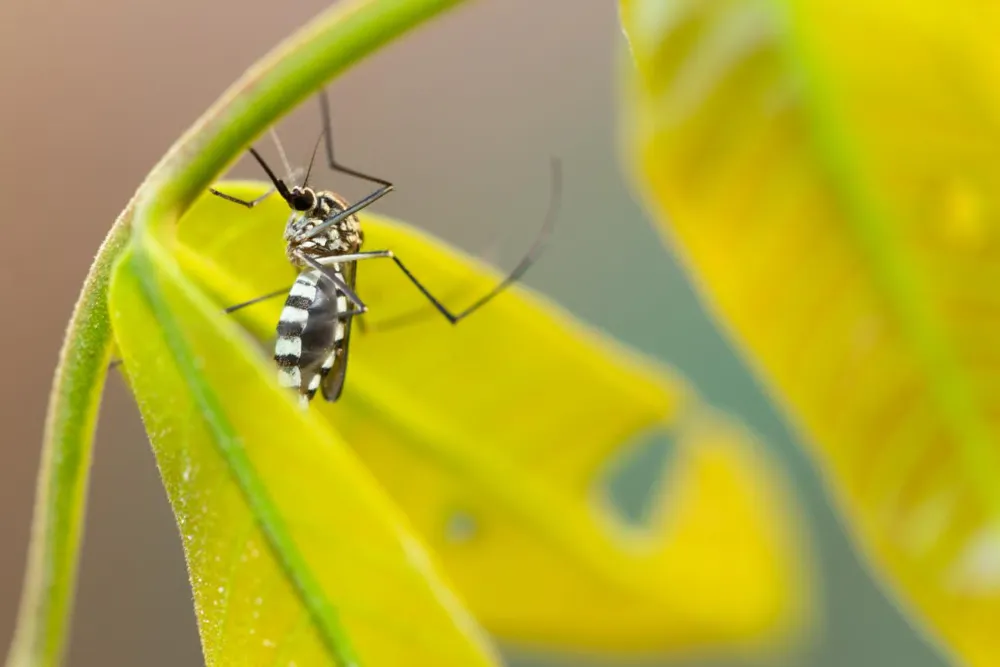
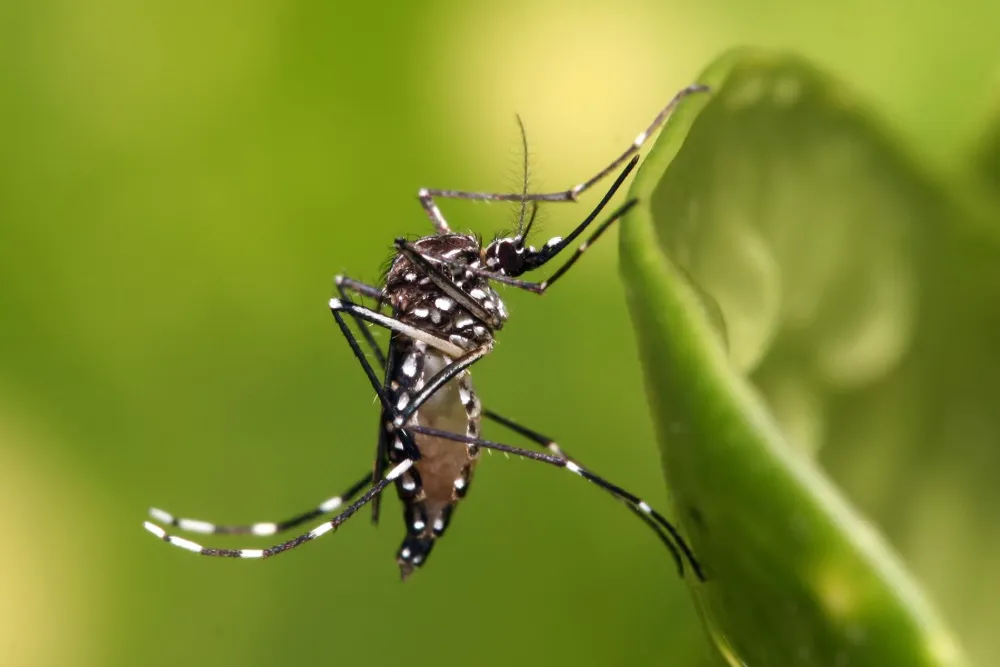
The yellow fever mosquito, Aedes aegypti, is a major research model for understanding how mosquitoes detect and select human hosts.
Frequently Asked Questions
Why do mosquitoes bite some people more than others?
People release different combinations of skin odors, and certain chemical profiles are more attractive to some mosquito species. Carbon dioxide, vision, and heat also influence host seeking.
Why do mosquitoes bite me more than my friends?
Your skin odor, local exposure, clothing, activity, and other sensory cues may make you more attractive or accessible to mosquitoes. No single factor can explain every situation.
What makes someone a mosquito magnet?
Research suggests that particular skin odor profiles, including higher levels of certain carboxylic acids, are associated with strong mosquito attraction.
Do mosquitoes prefer type O blood?
Scientific studies have reported conflicting results. Blood type is not an established universal predictor of mosquito attraction.
Do mosquitoes like sweet blood?
No reliable evidence shows that mosquitoes choose hosts because their blood tastes sweeter.
Can mosquitoes smell humans?
Yes. Mosquitoes have specialized chemical receptors that detect compounds released from human skin and breath.
Do mosquitoes detect carbon dioxide?
Yes. Carbon dioxide from respiration is an important host-seeking cue for many mosquito species.
Can mosquitoes detect body heat?
Yes. They respond to heat-related signals, including thermal infrared radiation under particular experimental conditions.
What colors attract mosquitoes?
Experiments with Aedes aegypti found attraction to certain visual signals including red, orange, cyan, and dark targets after carbon dioxide exposure. Results may differ among species.
Does sweating attract mosquitoes?
Sweat and associated skin chemistry can influence mosquito attraction, particularly through compounds produced or modified by skin microorganisms.
Do pregnant people attract more mosquitoes?
Some studies have found increased attraction under certain conditions, but results vary and do not establish a universal rule.
Does drinking alcohol attract mosquitoes?
Some limited experiments suggest an effect, but evidence is insufficient to predict mosquito attraction reliably from alcohol consumption alone.
Do skin bacteria affect mosquito attraction?
Yes. Skin microorganisms can influence the odors that mosquitoes detect.
Why do only female mosquitoes bite?
Females of blood-feeding mosquito species use blood nutrients to support egg production. Males do not feed on blood.
Can male mosquitoes be attracted to humans?
Yes, under some conditions. However, male mosquitoes do not bite people for blood.
Can garlic repel mosquitoes?
There is no strong evidence that eating garlic provides reliable protection against mosquito bites.
Can mosquitoes be active during the day?
Yes. Many mosquito species, including Aedes aegypti, can be active during daylight hours.
How can I prevent mosquito bites?
Use proven insect repellents according to the label, wear protective clothing, maintain window screens, and remove standing water where mosquitoes breed.
The Bottom Line
Mosquitoes bite some people more than others because their host-seeking behavior depends on a combination of chemical, visual, and thermal signals.
Scientific research shows that differences in human skin odor are particularly important. The 2022 Cell study associated high mosquito attractiveness with elevated levels of certain carboxylic acids, while research published in 2026 identified additional contributions from volatile compounds and their relative proportions.
Other studies demonstrate how mosquitoes use carbon dioxide, visual wavelengths, and thermal infrared radiation to locate possible hosts.
However, blood type and claims about sweet blood do not provide reliable universal explanations.
The most accurate answer is that mosquito attraction is a complex interaction between insect senses, human chemistry, behavior, and environment.
Sources & Further Reading
De Obaldia et al. (2022) — Differential Mosquito Attraction to Humans Is Associated with Skin-Derived Carboxylic Acid Levels. Cell. Original experimental research on human attractiveness and skin odor chemistry.
Hinze et al. (2026) — Cyphers and Cycles: A Chemical Basis of the Differential Attraction of Mosquitoes to Human Odor. iScience. Research on odor mixtures, 1-octen-3-ol, pregnancy, and attraction in Aedes aegypti.
Thermal Infrared Directs Host-Seeking Behaviour in Aedes aegypti Mosquitoes (2024). Nature. Original research demonstrating infrared detection combined with other host cues.
National Institutes of Health (2024) — Mosquitoes Use Infrared Detection to Help Find People. Research summary of infrared sensing and host-location mechanisms.
The Olfactory Gating of Visual Preferences to Human Skin and Visible Spectra in Mosquitoes (2022). Nature Communications. Original study of carbon dioxide and visual attraction.
Herre et al. (2022) — Non-Canonical Odor Coding in the Mosquito. Cell. Study of overlapping odor receptor expression in mosquito sensory neurons.
Engineered Skin Microbiome Reduces Mosquito Attraction to Mice (2024). Experimental evidence connecting bacterial odor production with mosquito behavior.
À la Carte: How Mosquitoes Choose Their Blood Meals (2024). Trends in Parasitology. Scientific review discussing human attractiveness, blood type evidence, and biting behavior.
Montell (2025) — The Sensory Arsenal Mosquitoes Use to Find Us. Trends in Parasitology. Review of multimodal mosquito sensory systems.
Centers for Disease Control and Prevention — About Mosquitoes. Authoritative mosquito biology and feeding information.
Centers for Disease Control and Prevention — Preventing Mosquito Bites. Evidence-based protection recommendations.