Moles are small mammals in the family Talpidae, best known for their underground lifestyle, powerful digging limbs, sensitive snouts, and velvety fur. Different types of moles live in North America, Europe, and Asia. Some are expert tunnel builders, some are semi-aquatic, and others look more like shrews than the classic garden mole.
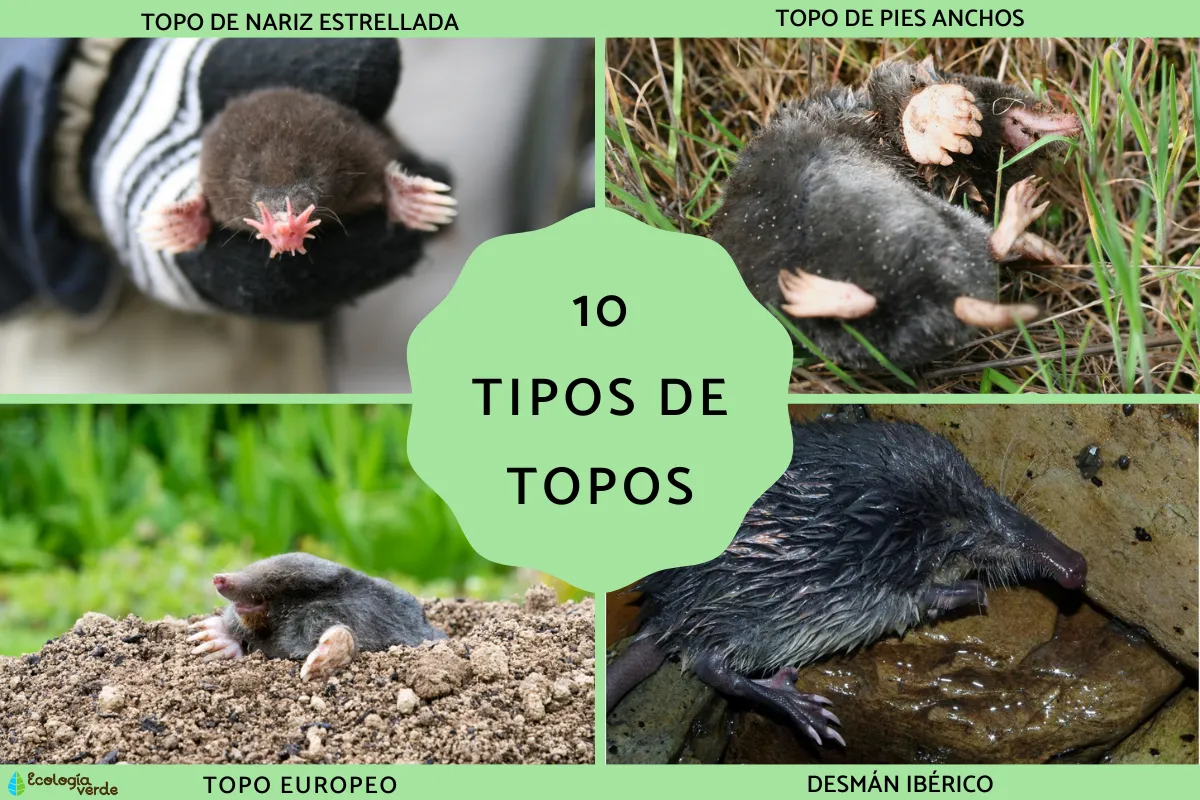
Quick Overview of Mole Types
| Mole Type | Scientific Name | Main Region | Key Feature |
|---|---|---|---|
| Star-nosed mole | Condylura cristata | North America | Star-shaped nose with 22 sensitive tentacles |
| Hairy-tailed mole | Parascalops breweri | Eastern North America | Short hairy tail and broad digging feet |
| Eastern mole | Scalopus aquaticus | North America | Powerful tunnel builder with hidden eyes and ears |
| Broad-footed mole | Scapanus latimanus | Western United States | Large front feet adapted for digging |
| Long-tailed mole | Scaptonyx fusicaudus | China, Myanmar, Vietnam | Long tail and high-altitude forest habitat |
| European mole | Talpa europaea | Europe and western Asia | Classic molehill-forming underground species |
| Iberian mole | Talpa occidentalis | Iberian Peninsula | Smaller mole with eyes covered by fur |
| True’s shrew mole | Dymecodon pilirostris | Japan | Small shrew-like mole with dark fur |
| American shrew mole | Neurotrichus gibbsii | Pacific Northwest | Small mole that often uses shallow tunnels |
| Pyrenean desman | Galemys pyrenaicus | Northern Iberia and southern France | Semi-aquatic mole relative with a long flexible snout |
What Are Moles?
Moles are small insect-eating mammals that belong to the family Talpidae. They are not rodents, even though many people mistake them for mice or rats. Instead, moles are closer to shrews and hedgehogs within the broader group of small insectivorous mammals.
The most familiar moles are underground diggers with cylindrical bodies, short legs, tiny eyes, hidden ears, and large front feet shaped like shovels. Their bodies are built for pushing through soil rather than running above ground.
Not all moles look exactly the same. Some are highly specialized tunnel builders, while others are semi-aquatic, and a few resemble shrews more than typical moles. This variety makes the mole family more diverse than many people realize.
Main Characteristics of Moles
Most moles have compact bodies, pointed snouts, strong shoulders, and front feet adapted for digging. Their fur is short, dense, and velvety, allowing them to move forward or backward through tight tunnels without the hair catching on soil.
Their eyes are usually very small because vision is less important underground. In some species, the eyes are partly or completely covered by fur. Their external ears are also reduced or hidden, helping protect them from dirt while tunneling.
Moles rely heavily on touch, smell, and vibration. Their snouts are extremely sensitive, helping them detect earthworms, insect larvae, and other small invertebrates in the soil. The star-nosed mole takes this ability to an extreme with its famous ring of sensory tentacles.
Where Do Moles Live?
Moles live in many parts of North America, Europe, and Asia. They are most often found in areas with soft, moist soil because loose soil is easier to dig through and usually contains more earthworms and invertebrates.
Common mole habitats include woodlands, meadows, fields, gardens, orchards, riverbanks, pastures, mountain forests, and humid grasslands. Some species prefer dry open areas, while others need wet soil, dense vegetation, or high-altitude forest environments.
A few members of the mole family are not strictly underground animals. Desmans, for example, are semi-aquatic and live near clean mountain streams and rivers. They still belong to the same broader family, but their bodies are adapted for swimming as well as digging.
What Do Moles Eat?
Moles are mainly carnivorous insectivores. Their diet includes earthworms, insect larvae, beetles, ants, centipedes, millipedes, spiders, snails, and other small soil-dwelling animals.
Earthworms are especially important for many mole species. A mole’s tunnel system acts like a food trap: as worms and insects move through the soil, the mole patrols its tunnels and captures prey with quick movements.
Moles do not usually eat plant roots as a main food source. Garden damage often happens because their tunnels disturb soil, lift roots, or create molehills. They may indirectly affect lawns and gardens, but they are primarily hunters of small invertebrates.
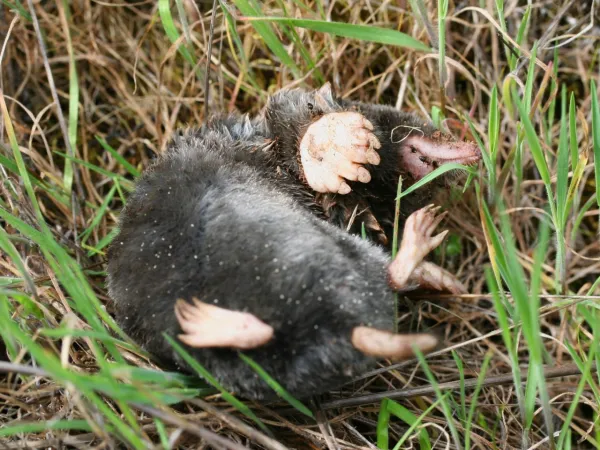
Star-Nosed Mole
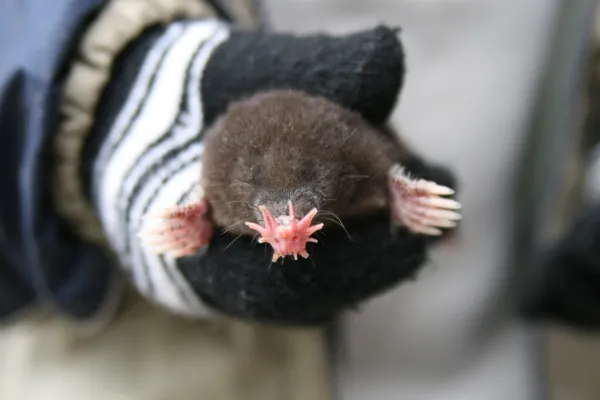
The star-nosed mole is one of the most unusual mammals in the world. Its most famous feature is the pink, star-shaped structure around its nose. This structure has 22 flexible tentacle-like appendages packed with sensory receptors.
This mole uses its star-shaped nose to detect prey with remarkable speed and accuracy. It lives in wet habitats such as marshes, stream edges, wet meadows, and moist forests in North America, especially in the northeastern United States and southeastern Canada.
Unlike many other moles, the star-nosed mole is also a strong swimmer. It can forage in mud, shallow water, and underground tunnels. Its diet includes worms, insect larvae, small aquatic invertebrates, and other tiny animals.
Adult star-nosed moles are usually about 15 to 20 centimeters long. Their dense dark fur helps keep them insulated in damp environments, while their sharp claws allow them to dig through wet soil and tunnel systems.
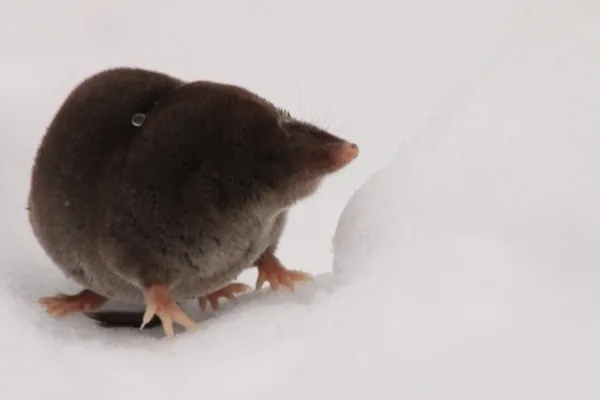
Hairy-Tailed Mole
The hairy-tailed mole is a North American mole found mainly in the northeastern United States and southeastern Canada. It lives in forests, open fields, meadows, and areas with dry or loose soil.
This species is named for its short, hairy tail, which helps distinguish it from some other moles. It usually measures around 15 centimeters long, including the tail, and weighs about 55 grams.
The hairy-tailed mole has dark gray to brownish fur, a pointed snout, and broad front feet shaped for digging. Like other moles, it spends most of its life underground, where it hunts for worms and insects.
Its tunnels may appear as raised ridges in the soil or small mounds on the surface. Although people sometimes view it as a garden pest, it also helps aerate soil and reduce populations of soil insects.
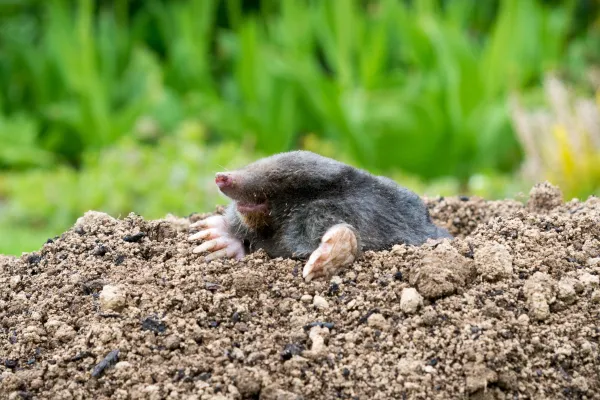
Eastern Mole
The eastern mole, also known as the common mole in parts of North America, is one of the best-known mole species in the United States. Despite its scientific name, Scalopus aquaticus, it is not an aquatic animal. It is mainly a terrestrial burrower.
This species has gray-brown fur, a pointed nose, a short tail, and powerful front limbs. Its eyes are tiny and often hidden by fur, while its ears are not externally visible. These traits help protect the animal while it moves through soil.
Eastern moles can grow to about 16 centimeters long and are strong diggers. Their tunnel networks may include shallow feeding tunnels near the surface and deeper tunnels used for nesting, resting, and protection.
They feed mainly on earthworms and insect larvae. In lawns and gardens, they may create visible molehills and raised ridges, but their presence often indicates soil rich in invertebrate life.
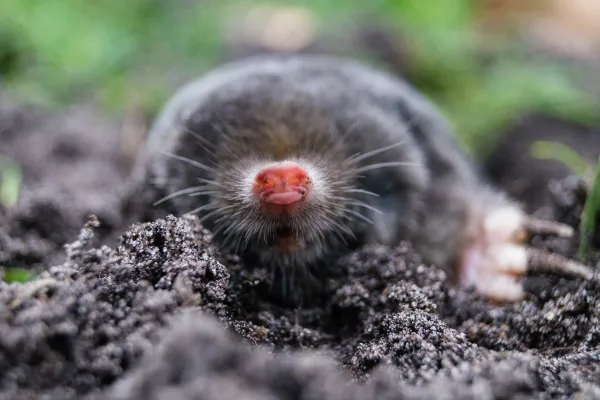
Broad-Footed Mole
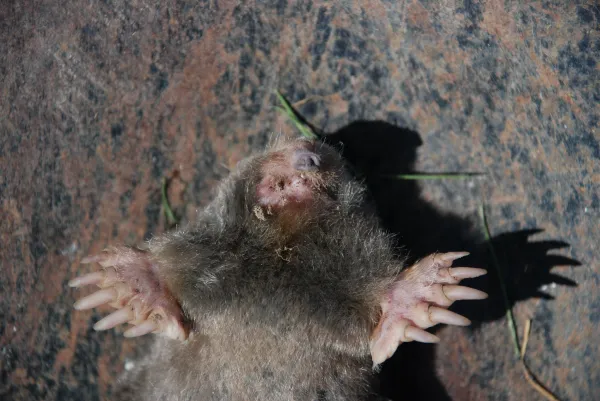
The broad-footed mole is native to the western United States, especially parts of California, Oregon, and Nevada. As its name suggests, it has large, wide front feet that are well adapted for digging.
This species creates underground tunnel systems and pushes extra soil to the surface, forming molehills. It may dig both shallow feeding tunnels and deeper burrows depending on soil type, moisture, and season.
The broad-footed mole has short, soft, plush-like fur that may range from dark brown to silvery gray. Its smooth coat helps it move through narrow tunnels with less friction.
Like other moles, it feeds largely on soil invertebrates. It plays an important ecological role by mixing soil layers, improving aeration, and influencing underground insect populations.
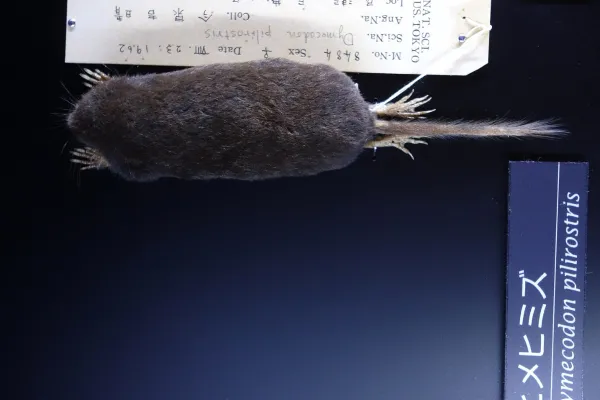
Long-Tailed Mole
The long-tailed mole is the only species in the genus Scaptonyx. It is found in parts of China, Myanmar, and Vietnam, especially in mountain forest habitats.
This mole prefers high-altitude environments, often between about 2,000 and 4,100 meters. It is associated with moist, loose soils in montane coniferous forests and other cool forest habitats.
Although it is small, the long-tailed mole is considered a true mole. It appears to be strongly adapted to underground life and digs shallow burrows with smaller tunnel diameters than those made by larger Chinese mole species.
Its ecology is still less familiar than that of common European or North American moles. Because it is linked to specialized forest habitats, changes in mountain forests could affect its populations.
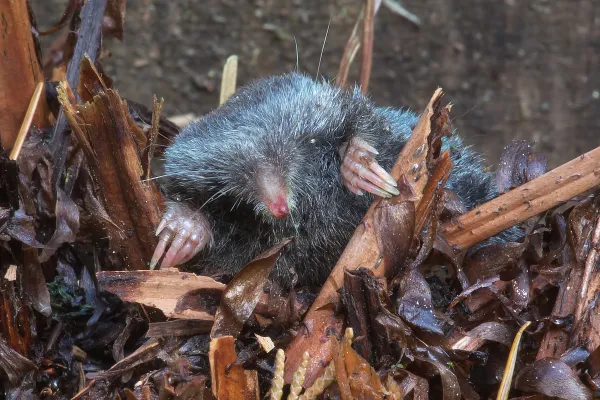
European Mole
The European mole is the classic mole species familiar across much of Europe. It has a cylindrical body, dense black or dark gray fur, a pointed snout, tiny eyes, and no visible external ears.
This species usually measures about 10 to 15 centimeters long, with a short tail of around 3 centimeters. It lives in woodlands, meadows, fields, gardens, pastures, and grasslands where the soil is suitable for digging.
The European mole is famous for producing molehills. These mounds form when the animal pushes excavated soil up to the surface while expanding its tunnel system.
Although molehills can be frustrating in lawns, the European mole is an important predator of underground invertebrates. Its tunneling also helps mix and aerate soil, making it part of the hidden engineering system of many temperate landscapes.
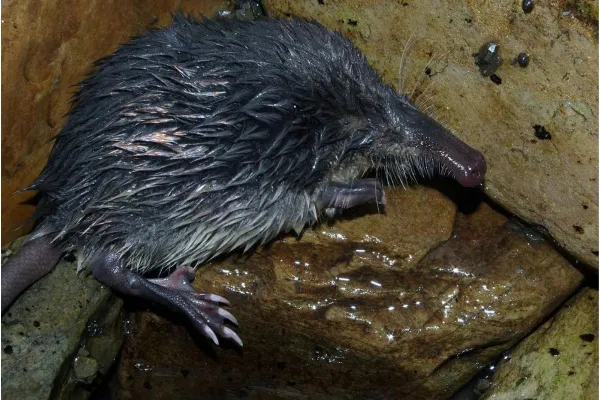
Iberian Mole
The Iberian mole is found in western and central parts of the Iberian Peninsula. It is closely related to the European mole but differs in size, skull shape, and certain external features.
This species is generally smaller than the European mole. Its eyes are completely covered by fur, and it has a more elongated and narrower skull. White hairs may appear on the hands and snout, helping distinguish it from similar species.
The Iberian mole lives in meadows, irrigated fields, cultivated areas with organic soil, and riparian woodlands with trees such as poplars, ashes, and elms. It depends on soils that allow digging and support enough invertebrate prey.
Because its range is more limited than that of the European mole, habitat quality is especially important for this species. Changes in agricultural land, soil moisture, and vegetation can influence where it survives.
True’s Shrew Mole
True’s shrew mole is a small mole species endemic to Japan. It belongs to the family Talpidae but looks more shrew-like than the classic broad-footed moles familiar in gardens and fields.
This animal has a small body, dark brown fur, and a pointed snout. Its body length is only about 6.5 centimeters, making it one of the smaller mole relatives.
True’s shrew mole lives in terrestrial habitats such as forests, shrublands, grasslands, and areas with dense vegetation. It likely feeds on small invertebrates in leaf litter, soil, and shallow underground spaces.
Shrew moles are important because they show that the mole family is not made up only of powerful deep diggers. Some members are smaller, more surface-active, and closer in appearance to shrews.
American Shrew Mole
The American shrew mole, Neurotrichus gibbsii, is found in the Pacific Northwest of North America, including parts of the western United States and British Columbia in Canada.
This species is one of the smallest mole relatives in North America. It often lives in moist habitats with soft soil, including wet forests, riparian areas, shrublands, damp meadows, and coastal vegetation zones.
Unlike heavy-bodied digging moles, the American shrew mole is more shrew-like in form. It may use shallow tunnels, leaf litter, and soft surface soils while searching for insects, worms, and other small invertebrates.
Its small size and secretive habits make it less noticeable than larger moles, but it is an important part of the forest-floor ecosystem.
Pyrenean Desman
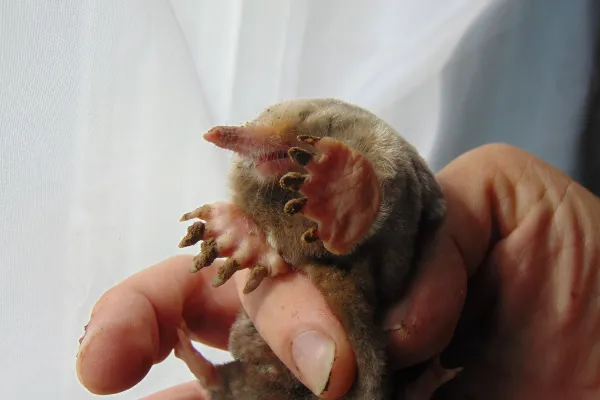
The Pyrenean desman is one of the most unusual members of the mole family. Unlike typical moles, it is semi-aquatic and lives along clean mountain streams in northern parts of the Iberian Peninsula and southern France.
It has a long, flexible snout that helps it search for aquatic insect larvae and other small prey among stones and streambeds. Its hind feet are strong and help it move efficiently in water.
The front part of the body has some mole-like traits, including limbs useful for digging burrows near riverbanks. These burrows provide shelter, nesting sites, and protection from predators.
The Pyrenean desman is closely tied to clean, fast-flowing streams. Because of this, it is sensitive to water pollution, river modification, habitat fragmentation, and changes in mountain water systems.
Why Do Moles Dig Tunnels?
Moles dig tunnels for feeding, shelter, nesting, and movement. Their tunnels allow them to search for earthworms and insects while staying protected from many surface predators.
Shallow tunnels are often used for feeding and may appear as raised ridges across lawns or fields. Deeper tunnels are more permanent and may be used for nesting, resting, escaping harsh weather, and moving safely through their territory.
Molehills are not nests. They are piles of soil pushed to the surface during excavation. A single mole can create many surface mounds while expanding its underground network.
Are Moles Blind?
Moles are not completely blind, but their eyesight is usually very poor. Most species can detect light and movement, but they do not rely on vision the way above-ground mammals do.
Living underground reduces the need for large eyes. Small or hidden eyes are less likely to be injured by soil and debris. Instead of strong vision, moles use touch, smell, hearing, and vibration sensitivity to navigate and find prey.
Some species, such as the Iberian mole, have eyes covered by fur. This does not mean they are helpless; it simply reflects the fact that their underground world is navigated mostly through other senses.
Are Moles Useful or Harmful?
Moles can be both useful and inconvenient, depending on the situation. In natural ecosystems, they are beneficial because they aerate soil, mix organic matter, and help control soil-dwelling insects.
In gardens, lawns, golf courses, and farmland, their tunnels and molehills may be considered a problem. They can disturb plant roots, create uneven ground, and damage the appearance of managed landscapes.
However, moles are not usually the animals eating vegetables, bulbs, or roots. That damage is more often caused by rodents such as voles. Moles are mainly hunting worms and insects, not feeding on garden crops.
Interesting Facts About Moles
Moles are mammals, not rodents.
Most moles are specialized for underground life.
Their front feet work like natural digging shovels.
Mole fur can lie smoothly in different directions, helping them move through tight tunnels.
Many moles have tiny eyes and no visible external ears.
The star-nosed mole has one of the most sensitive touch organs among mammals.
Some mole relatives, such as desmans, are adapted to life in water.
Molehills are made from soil pushed upward during tunnel construction.
Moles mainly eat worms, insects, and other invertebrates.
Different mole species live in North America, Europe, and Asia.
Types of Moles FAQs
How many types of moles are there?
There are many species in the mole family Talpidae, including true moles, shrew moles, shrew-like moles, and desmans. They vary in size, habitat, digging ability, and lifestyle.
What is the most unusual type of mole?
The star-nosed mole is often considered the most unusual type because it has 22 sensitive tentacles around its nose and can also hunt in wet or aquatic environments.
Are moles rodents?
No. Moles are not rodents. They belong to the family Talpidae and are insect-eating mammals more closely related to shrews and hedgehogs than to mice or rats.
Do all moles live underground?
Most moles spend much of their lives underground, but not all are strictly subterranean. Some shrew moles are more surface-active, and desmans are semi-aquatic relatives that live near streams.
What do moles eat?
Moles mainly eat earthworms, insect larvae, beetles, spiders, centipedes, and other small invertebrates found in soil or leaf litter.
Are moles blind?
Moles are not usually completely blind, but their eyesight is very limited. They rely more on touch, smell, vibration, and hearing than on vision.
Why do moles make molehills?
Molehills are piles of soil pushed to the surface as moles dig tunnels. They are not the mole’s nest, but a byproduct of underground excavation.
Are moles harmful to gardens?
Moles can disturb lawns and garden soil with their tunnels, but they usually do not eat plant roots. They mainly hunt worms and insects. Plant damage is often caused by other animals such as voles.
What is the difference between a mole and a vole?
A mole is an insect-eating mammal with digging feet and a pointed snout. A vole is a rodent that looks more like a small mouse and often eats plants, roots, bark, and seeds.
Where are European moles found?
European moles are found across much of Europe and parts of western Asia. They live in meadows, forests, fields, gardens, and grasslands with suitable soil.