Caimans do not usually hunt humans as normal prey, but they can be dangerous. Like other crocodilians, they are powerful ambush predators with strong jaws, fast strikes, and excellent camouflage in water. Under the wrong conditions, a caiman may bite, injure, or even kill a person.
The level of risk depends on the species, the size of the animal, the location, and the situation. Small caimans are generally much less dangerous than very large ones, while big species such as the black caiman can be serious predators capable of taking large prey.
In this guide, you will learn whether caimans eat humans, how attacks happen, which species are most risky, and how to stay safe in areas where caimans live.
Quick answer
| Question | Answer |
|---|---|
| Do caimans eat humans? | Not usually, but large caimans can attack humans and may treat a person as prey in rare situations |
| Are caimans dangerous? | Yes, all caimans should be treated as potentially dangerous wild predators |
| Which caiman is most dangerous? | The black caiman is generally the most dangerous because of its size and strength |
| Are small caimans a major threat? | Usually less so, but they can still bite and cause serious injury |
| How do attacks usually happen? | Most risk comes from surprise encounters, nesting defense, close approach, handling, or entering water where caimans live |
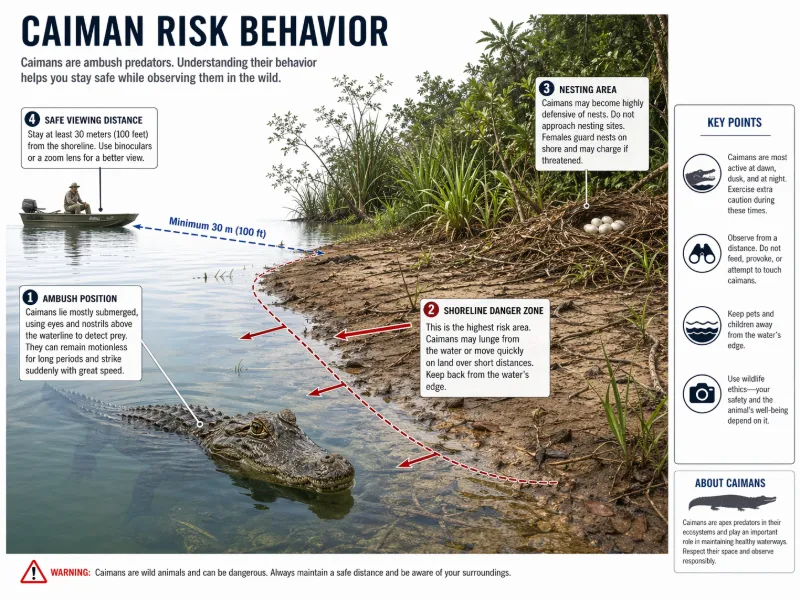
Caimans are predators, but humans are not their usual prey
Caimans are carnivores that normally feed on fish, crustaceans, amphibians, reptiles, birds, and mammals that live near the water. Their usual prey depends on species and size, but humans are not the normal target in the way fish or wetland mammals are.
That said, a large crocodilian does not need to see a person as a normal food source to be dangerous. If the animal is large enough, if a person enters the water, or if the caiman is stressed or defensive, a serious attack can happen.
So the best answer is this: caimans do not generally specialize in eating humans, but they are fully capable of harming people under the wrong circumstances.
Large caimans can be a real danger
The risk changes greatly with body size. A small caiman may be able to bite and injure a hand or foot, but it is not the same kind of threat as a very large adult.
Large caimans are much more dangerous because they have stronger jaws, more body mass, and the ability to overpower bigger prey. A big animal in deep or muddy water is especially risky because it can strike suddenly and pull a victim off balance.
Among caimans, the black caiman is the most serious example. It is one of the largest predators in South American wetlands and is powerful enough to take large mammals. That means it should always be treated with extreme caution.
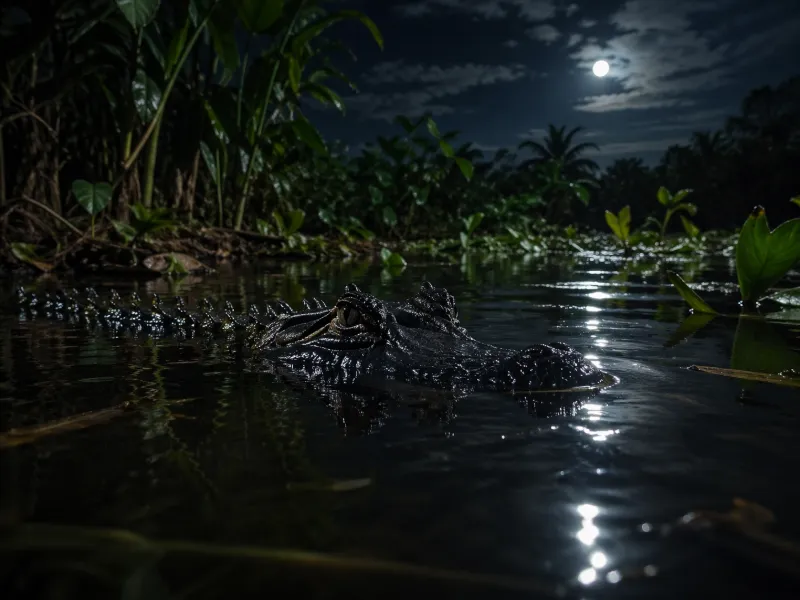
Most caiman attacks are not simple hunting events
When people hear that a crocodilian attacked someone, they often imagine a deliberate hunting event. Sometimes that may happen, especially with very large animals, but many incidents are more complicated.
A caiman may bite because a person came too close, stepped into shallow water unexpectedly, disturbed a nesting female, tried to handle the animal, or entered water where the caiman felt cornered or threatened.
In other words, not every bite means the caiman was actively trying to eat a person. Some attacks are defensive, territorial, or opportunistic rather than a clear feeding attempt.
Black caimans are the highest-risk species
If one caiman species deserves the most caution, it is the black caiman. This species can grow very large and is one of the top predators in parts of the Amazon basin and other South American wetlands.
A big black caiman has the size and strength to be dangerous to any large animal near the water, including humans. While attacks are not everyday events, the potential risk is far greater than it is with small or medium-sized caimans.
That is why people working, fishing, boating, or swimming in black caiman habitat should take the same basic attitude they would take around other very large crocodilians: respect distance, avoid risky water entry, and never assume the animal is harmless.
Smaller caimans are usually less dangerous, but not harmless
Medium-sized and small caimans are usually less likely to cause fatal attacks than the biggest individuals of large species. However, that does not mean they are safe to approach.
Even a smaller caiman can bite hard, slash with its teeth, and twist powerfully once it grabs something. A defensive animal can cause serious injury, especially to hands, legs, or children.
Nesting females can also be more aggressive than people expect, and a stressed animal at close range may react faster than a person can move away.
When are people most at risk?
The highest-risk situations usually involve close contact with water where caimans are active. This can include swimming, wading, washing, fishing from low banks, cleaning fish at the water’s edge, or walking in shallow water at night.
Night is especially risky because caimans are often more active after dark and are harder to see. Murky water makes danger even worse because people may not notice an animal nearby.
People are also at higher risk if they approach a caiman too closely for photographs, try to catch it, harass it, or feed it. Feeding is especially dangerous because it can teach crocodilians to associate humans with food.
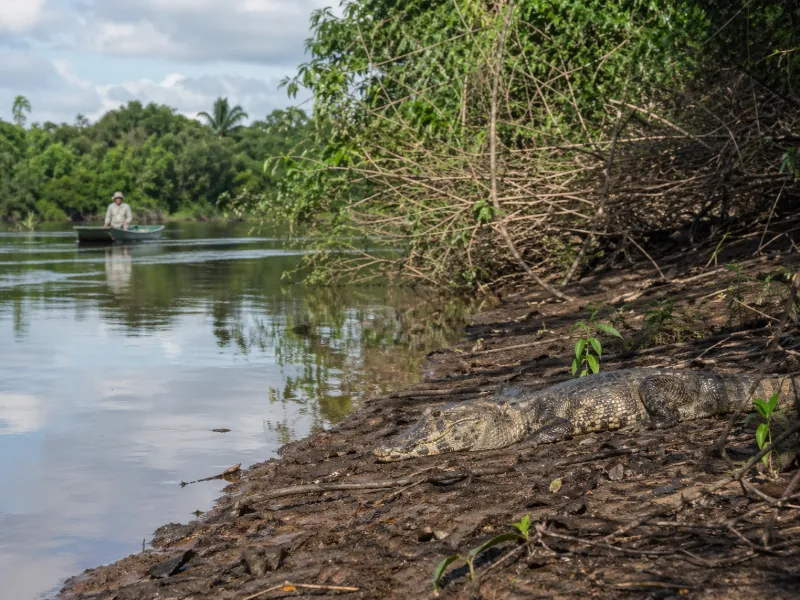
Do caimans attack boats or people on land?
Caimans are primarily water-based ambush predators, so the greatest risk is usually near or in the water. That said, they can move on land, especially near shorelines, nests, or wetland edges.
A caiman may lunge at something on land if it feels threatened or if prey comes within range. Small boats, canoes, and low riverbanks can also bring people close enough for an animal to react.
Most people are safer when they stay in larger, more secure boats and avoid leaning over the water in places known for large crocodilians.
Do caimans see children as easier prey?
Smaller people are generally more vulnerable to large predators than larger adults are, and that includes crocodilians. A large caiman may view a child, or any small person near the water, as easier to overpower than a full-grown adult.
This does not mean children are specifically targeted in every place where caimans live, but it does mean families should be especially careful. Children should never play alone near caiman habitat, especially at dusk, dawn, or night.
In crocodilian country, keeping children away from the water’s edge is one of the most important safety rules.
Why caimans sometimes attack people
There are several common reasons a caiman may attack. One is mistaken identity or opportunistic feeding, especially if the person is in the water and creating splashing movements. Another is defense, particularly around nests, young, or favored resting spots.
Some attacks happen because people get too close while trying to photograph, handle, or chase the animal. Others happen because the caiman has become used to human presence and has lost its natural caution.
In general, attacks become more likely when natural distance is reduced and the animal is given a reason to react.
How caimans usually hunt
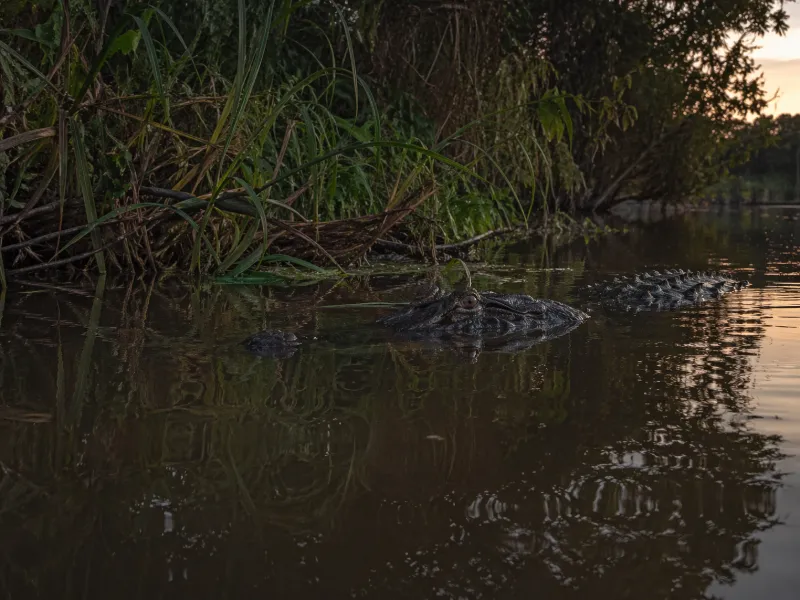
Caimans normally hunt by ambush. They wait quietly in the water with only the eyes and nostrils visible, then strike when prey comes close enough. This strategy works well on fish, birds, reptiles, and mammals that come to the bank.
Because of this hunting style, a person entering shallow water or standing at the edge of a muddy bank may place themselves in the exact zone where a caiman expects prey to appear.
That is why caution around the shoreline is so important. You do not need to be far offshore to be within striking distance of a hidden crocodilian.
Can a caiman pull a person into the water?
A large caiman can pull a person off balance or into the water, especially if the person is already standing in shallow water, leaning over a bank, or in a small unstable boat. This is one reason crocodilian attacks can become so dangerous very quickly.
Once the victim loses footing, escape becomes harder. Water reduces balance, visibility, and mobility, while the caiman remains in its strongest environment.
The risk depends heavily on the size of the caiman. Small individuals are limited in what they can overpower, but large adults are much more serious threats.
How to stay safe around caimans
The best safety rule is simple: stay away from the water’s edge in places where large caimans are known to live, especially at night or in low visibility.
Do not swim or wade in caiman habitat unless local experts clearly say it is safe
Keep children and pets far from the water’s edge
Do not feed caimans or leave fish waste near shore
Do not approach nests, young animals, or basking adults
Use caution when fishing, washing, or collecting water
Stay in secure boats and avoid leaning over the side in risky areas
Use lights carefully at night and remain alert near marshes, rivers, and flooded banks
These precautions reduce the chance of surprise contact and help keep caimans from associating people with food.
What should you do if you see a caiman nearby?
If you see a caiman, keep your distance and do not move toward it for a closer look. Back away calmly, stay out of the water, and keep others away as well.
If you are in a boat, remain stable and avoid sudden movements near the edge. If you are on shore, give the animal a clear path and do not corner it.
The goal is to end the encounter without making the caiman feel threatened or giving it a chance to test the distance.
Why feeding caimans is a bad idea
Feeding a caiman may seem like a quick way to get a close view, but it is one of the worst things people can do. Once a crocodilian learns that humans may bring food, it can become bolder and more dangerous.
That change in behavior increases the chance of future attacks on local people, pets, and tourists. It also puts the animal at risk, because problem crocodilians are often removed or killed after human-caused incidents.
Wild caimans should stay wild. Feeding destroys the natural distance that keeps both sides safer.
Are caimans more dangerous than alligators or crocodiles?
In general, the largest crocodile species are usually considered more dangerous overall than most caimans because they reach greater size and are involved in more severe attacks in some parts of the world.
Alligators are often considered somewhat less aggressive than the most dangerous crocodiles, although they can still be extremely risky. Caimans vary more by species. Small caimans may be less dangerous than large alligators, while a huge black caiman can be a very serious predator.
So the better question is not simply “Are caimans more dangerous?” but rather “Which species, and how large is the animal?”
Final takeaway
Caimans do not usually eat humans as normal prey, but they can be dangerous and large individuals are fully capable of attacking people. The biggest risk comes from large species such as the black caiman, close contact with the water’s edge, nighttime activity, surprise encounters, and situations where the animal feels threatened or sees an easy opportunity.
The safest approach is to treat every caiman as a wild predator, keep your distance, stay out of risky water, and never feed or approach one in the wild.
FAQs
Do caimans hunt humans?
Usually no, not as normal prey, but large caimans can attack humans in rare situations and should always be treated as dangerous.
Which caiman is most dangerous to humans?
The black caiman is generally considered the most dangerous because it is the largest caiman species.
Are baby or small caimans dangerous?
They are less dangerous than large adults, but they can still bite and cause injury if handled or cornered.
Can caimans attack at night?
Yes. Many caimans are especially active at night, which is one reason nighttime water activity can be risky in caiman habitat.