A Montana farmhouse snake infestation usually means snakes have found shelter, warmth, food, or a hibernation site inside an old foundation, basement, crawl space, wall void, or entryway. In Montana, the most likely snakes around homes are nonvenomous garter snakes, gopher snakes, racers, or rubber boas, but prairie rattlesnakes also occur in the state. The safest solution is exclusion, habitat cleanup, rodent control, and professional removal when needed.
| Issue | What It Means in a Montana Farmhouse | Why It Matters |
|---|---|---|
| Most likely snake | Garter snakes are common around yards, foundations, gardens, and damp areas | They are nonvenomous but can cause fear and nuisance problems indoors |
| High-risk venomous species | Prairie rattlesnake in suitable Montana habitats | Any unidentified snake should be treated cautiously until identified |
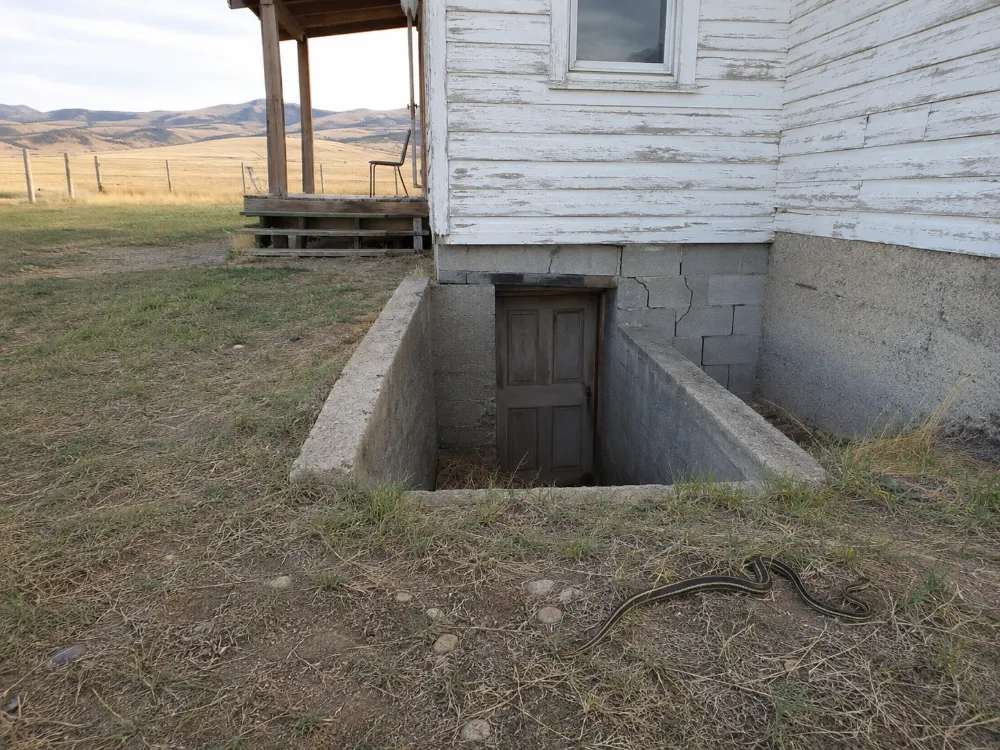
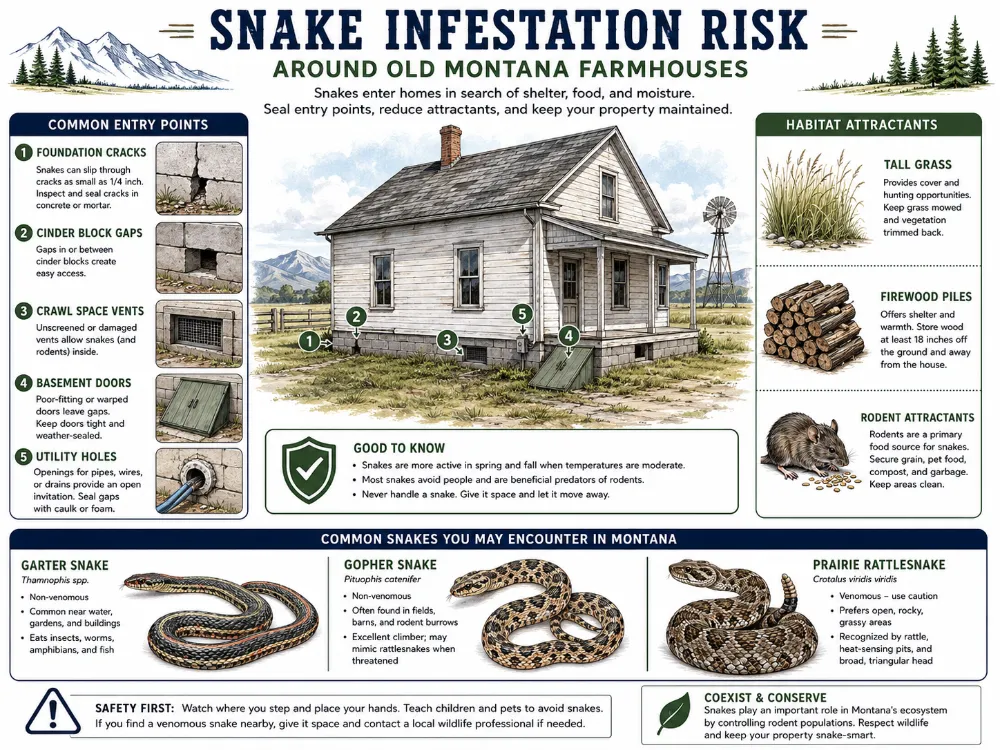
| Common entry points | Cinder block gaps, foundation cracks, basement openings, door gaps, vents, utility holes | Old farmhouses often have many small access points |
| Why snakes gather | Warmth, shelter, rodents, insects, water, winter denning, or spring emergence | Large numbers often mean the house is acting like a shelter or den site |
| Seasonal pattern | More sightings in spring and fall | Snakes move during emergence, breeding, feeding, and overwintering periods |
| Health risk | Most Montana snakes are not dangerous, but bites, fear, stress, and pet encounters can occur | Identification and safe handling matter |
| Best long-term fix | Seal entry points, repair foundation, reduce prey, clear cover, and install exclusion barriers | Killing individual snakes does not solve access or habitat problems |
| When to call help | Large numbers, unknown species, rattlesnake risk, snakes in walls, or repeated indoor sightings | Wildlife professionals can remove snakes and identify the source safely |
What Is a Montana Farmhouse Snake Infestation?
A snake infestation in a farmhouse means snakes are appearing repeatedly inside or immediately around the building. One snake indoors may be a random accident. Several snakes over time, especially coming from the same foundation, wall, basement, or entryway, suggests the house is providing something the snakes need.
In rural Montana, older farmhouses can unintentionally become excellent snake shelters. Cinder block foundations, stone basements, crawl spaces, gaps under doors, cracked concrete, loose siding, and old utility openings create hidden pathways. If the structure also has mice, insects, damp areas, or warm winter spaces, snakes may return again and again.
The word “infestation” sounds dramatic, but biologically it usually means the building has become part of the snakes’ seasonal shelter system. The snakes are not trying to attack people. They are following heat, cover, prey, and safe hiding places.
Why Would Snakes Enter a Montana Farmhouse?
Snakes enter buildings for practical survival reasons. A farmhouse may offer stable temperatures, dark hiding spaces, prey, moisture, and protection from predators. Old rural buildings are especially attractive because they often have many cracks and gaps.
Common reasons include:
Warmth: Basements, foundations, and wall voids can hold heat.
Winter shelter: Snakes may use protected spaces to overwinter.
Spring emergence: Snakes leaving winter shelters may appear suddenly in large numbers.
Rodents: Mice and voles attract larger snakes such as gopher snakes.
Insects and worms: Garter snakes may feed on small invertebrates and amphibians near damp areas.
Moisture: Leaky foundations, wet basements, and nearby water sources can attract prey and snakes.
Cover: Tall grass, boards, hay, firewood, brush, and debris provide hiding places.
Why Old Farmhouses Are Vulnerable
Old farmhouses often have structural features that make snake entry easier. A newer sealed foundation may have fewer access points, but older buildings can have gaps that have widened over decades through settling, freezing, thawing, water damage, and repairs.
Common farmhouse vulnerabilities include:
Cinder block foundation gaps
Cracked concrete
Loose basement doors
Unsealed crawl space vents
Gaps around pipes and wires
Old cellar windows
Rotten wood near entryways
Loose siding or skirting
Stone foundation crevices
Openings under porches and steps
A snake can pass through a surprisingly small opening if the gap is wide enough for its head and body. For this reason, a house may look secure to a person but still be easy for snakes to enter.
Which Snakes Are Most Likely in a Montana Farmhouse?
Montana has a small number of native snake species compared with warmer states. Around farmhouses, the most likely snakes are usually nonvenomous species, especially garter snakes or gopher snakes. However, prairie rattlesnakes live in Montana too, so identification is important.
| Snake | Venomous? | Why It May Be Near a Farmhouse | Identification Clue |
|---|---|---|---|
| Common garter snake | No | Damp areas, gardens, foundations, insects, worms, amphibians | Long body with stripes running lengthwise |
| Plains garter snake | No | Grasslands, yards, wet areas, shelter near buildings | Striped body, often yellow or orange stripe tones |
| Terrestrial garter snake | No | Varied habitats, cover, moisture, and prey | Striped or patterned body, variable color |
| Gopher snake / bullsnake | No | Rodents around barns, sheds, hay, grain, and foundations | Large tan snake with dark blotches; may hiss and mimic rattlesnakes |
| North American racer | No | Open yards, grasslands, fields, and sunny edges | Long, fast, slender snake |
| Rubber boa | No | Cool, hidden places, logs, rocks, and rural shelter sites | Small, smooth, brownish snake with blunt tail |
| Prairie rattlesnake | Yes | Dry grassland, rocky slopes, rodent habitat, rural outbuildings | Triangular head, blotched body, heat-sensing pits, rattle on tail |
Why Garter Snakes Are Often Involved
Garter snakes are among the most commonly encountered snakes in Montana. They are adaptable, active during the warmer months, and often live near yards, gardens, damp areas, ditches, wetlands, and old foundations.
They are nonvenomous and generally harmless to people. If handled, they may release a strong-smelling musk, thrash, or nip defensively. They are not aggressive predators of humans. Their main goal is to escape.
Garter snakes may feed on:
Earthworms
Slugs
Insects
Small fish
Frogs
Toads
Small rodents in some cases
If many garter snakes are appearing in one house, the building may be near a long-used shelter site or seasonal denning area.
What Is a Snake Den?
A snake den, or hibernaculum, is a protected place where snakes spend the cold season. In a northern state like Montana, winter survival is a serious challenge for reptiles. Snakes need frost-protected spaces where temperatures remain cold but not lethal.
Natural den sites may include rock crevices, mammal burrows, root systems, slopes, and underground cavities. Human structures can mimic these natural shelters. An old farmhouse foundation, cinder block wall, crawl space, or basement gap may act like an artificial den.
If a house is functioning as a den, snakes may appear in waves during spring emergence and fall return. This can make the problem seem sudden, even if the animals have been using the structure for years.
Why Snakes May “Drop” From a Foundation or Wall
When snakes are seen dropping from a foundation, wall, or entryway, they may be moving through hidden voids inside the structure. Cinder blocks, stone walls, crawl spaces, and unfinished basements can create vertical and horizontal channels.
Possible pathways include:
Open cores inside cinder blocks
Gaps between foundation and framing
Cracks behind steps or porches
Unsealed sill plates
Voids behind basement walls
Loose trim or old entryway framing
Drainage gaps and utility penetrations
To the homeowner, it may look like snakes are appearing from nowhere. To the snake, the foundation is simply a sheltered travel route.
Are Montana Farmhouse Snake Infestations Dangerous?
Most snake infestations in Montana farmhouses are more frightening than dangerous, especially when the snakes are garter snakes. However, the situation should still be taken seriously. Repeated snakes indoors can cause emotional stress, surprise encounters, pet interactions, and sanitation concerns from shed skins or droppings.
The major safety concern is misidentification. Montana has venomous prairie rattlesnakes, so any snake with a rattling tail, heavy body, triangular head, vertical pupils, heat-sensing pits, or defensive coiling should be treated with extreme caution.
Safety rules include:
Do not grab an unidentified snake.
Do not reach into dark foundation gaps or wall voids.
Keep children and pets away from snake entry points.
Use photos from a safe distance for identification.
Call professionals if a rattlesnake is possible.
Do not rely only on color for identification.
How to Tell Garter Snakes From Rattlesnakes
Garter snakes and prairie rattlesnakes look very different, but fear can make identification harder. The safest approach is to observe from a distance and avoid handling any unknown snake.
| Feature | Garter Snake | Prairie Rattlesnake |
|---|---|---|
| Venom | Nonvenomous to humans | Venomous |
| Body shape | Slender | Heavier and thicker |
| Pattern | Usually lengthwise stripes | Blotches or bands, not clean full-length stripes |
| Tail | No rattle | Rattle on tail, though young snakes may have small rattles |
| Head | Narrower, less triangular | Broader, triangular-looking head |
| Behavior | Often flees, may musk or nip if handled | May coil, rattle, and strike if threatened |
Never assume a snake is harmless if you cannot identify it clearly. Take a photo from a safe distance and contact local wildlife professionals when in doubt.
Signs of a Snake Infestation
Snakes are secretive, so the first sign may be a live snake crossing a basement floor or appearing near a door. In a more established problem, signs may repeat over weeks or seasons.
Possible signs include:
Multiple snake sightings indoors
Snakes appearing from the same wall, doorway, or foundation area
Shed skins in basements, crawl spaces, or utility rooms
Small droppings with white urate caps
Snake tracks in dust or loose soil
Strong musky odor after garter snake disturbance
Rodent activity near the same area
Seasonal spikes in spring or fall
Repeated sightings from a specific entry point are especially important. They help identify the part of the house that needs repair.
Why Killing Snakes Does Not Solve the Problem
Killing individual snakes does not fix a farmhouse infestation if the building still has entry points, shelter, prey, and suitable den conditions. More snakes may enter later because the underlying attraction remains.
Long-term control requires exclusion and habitat management. This means physically blocking access, reducing hiding places, and removing food sources such as rodents.
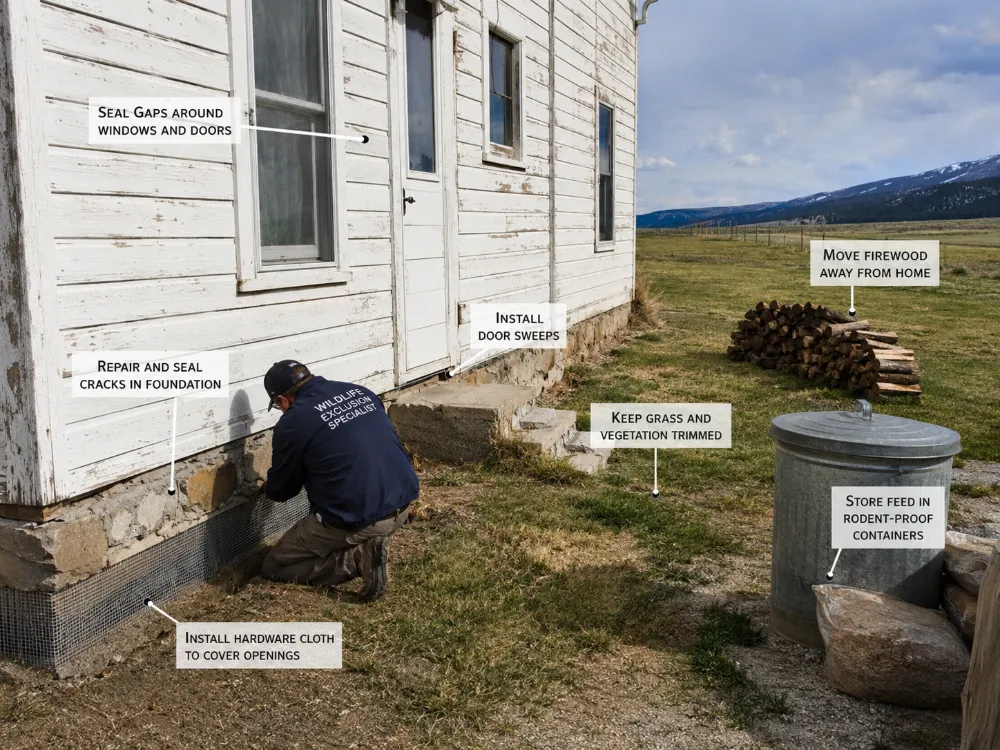
Better long-term solutions include:
Seal foundation cracks
Repair cinder block gaps
Install door sweeps
Screen vents
Remove rodents
Reduce yard clutter
Cut tall grass near the house
Move firewood and boards away from the foundation
Use professional wildlife exclusion when needed
How to Remove a Snake From a House Safely
If a nonvenomous snake is inside and you are calm, it may be guided into a container or toward an open door. However, many people are too frightened to do this safely, and that is understandable. If you are unsure of the species or uncomfortable, call a professional.
Safe steps include:
Keep people and pets away from the room.
Close interior doors to contain the snake.
Do not corner the snake with bare hands.
Use a broom gently only if the snake is clearly nonvenomous and you can guide it safely.
Place a towel under door gaps to prevent movement into other rooms.
Take a photo from a safe distance for identification.
Call animal control, wildlife removal, or a pest professional if needed.
If the snake may be a rattlesnake, do not attempt removal yourself.
What Not to Do During a Snake Infestation
Some common reactions can make the problem worse or create unnecessary danger.
Do not use glue traps where snakes or other wildlife may suffer.
Do not put your hands into wall gaps or foundation holes.
Do not pour gasoline, bleach, or chemicals into cracks.
Do not rely on mothballs or strong odors as a complete solution.
Do not seal openings while snakes may be trapped inside living spaces.
Do not leave pet food or grain where it attracts rodents.
Do not ignore repeated sightings from one entry point.
Do not handle a snake unless you are certain it is nonvenomous and you know what you are doing.
Humane exclusion is safer, more effective, and more responsible than panic-based control.
How to Snake-Proof a Montana Farmhouse
Snake-proofing begins with inspection. Walk around the house slowly and look for every possible entry point, especially at ground level. Snakes use gaps that people often ignore.
Key repairs include:
Seal cracks in foundation walls
Repair broken cinder blocks
Fill gaps around pipes and wires
Install tight-fitting door sweeps
Repair basement windows
Cover vents with sturdy hardware cloth
Seal gaps under siding
Close openings around porches and steps
Repair crawl space doors
Use durable materials instead of temporary foam alone in high-risk gaps
Expanding foam can help in some small gaps, but snakes, rodents, weather, and building movement may defeat weak repairs. For larger openings, use mortar, metal flashing, hardware cloth, concrete patching, and proper carpentry.
Foundation Repair and Cinder Block Problems
Cinder block foundations can create special snake problems if the blocks have open cores, cracks, broken mortar, or hidden channels. A snake may move inside the block wall and appear in unexpected places.
Important repair areas include:
Cracked mortar joints
Open block ends
Gaps at the sill plate
Doorway framing gaps
Loose basement steps
Old foundation vents
Drain openings
Spaces behind unfinished interior walls
A serious infestation may require a contractor and wildlife exclusion specialist working together. The goal is not only to remove snakes, but to rebuild the boundary between wildlife habitat and living space.
Yard Cleanup Around a Snake-Prone Farmhouse
Snakes like cover. A farmhouse surrounded by tall grass, brush, boards, unused equipment, hay piles, stacked materials, and rodent habitat is more likely to have snake activity.
Helpful yard changes include:
Mow grass near the house
Remove brush piles
Store firewood away from the foundation
Elevate wood piles off the ground
Remove old boards, metal sheets, and debris
Trim vegetation away from walls
Keep compost away from entrances
Control rodents around barns and sheds
Clean spilled grain and feed
Keep chicken coops and animal feed areas rodent-resistant
The less cover and prey around the foundation, the less attractive the farmhouse becomes.
Rodents and Snake Infestations
Rodents are one of the biggest reasons snakes stay around rural buildings. Mice and voles attract gopher snakes, bullsnakes, racers, and sometimes rattlesnakes. Even garter snakes may benefit indirectly from messy habitat that supports insects, worms, and other small prey.
Rodent control should focus on prevention:
Store feed in sealed metal containers
Clean spilled grain
Seal gaps into barns and sheds
Remove junk piles
Keep weeds down near buildings
Use traps in safe, targeted ways
Avoid poison baits where they may harm pets, wildlife, or predators
Snakes are often symptoms of a larger habitat issue. If the prey remains, the snake pressure may continue.
Seasonal Timing in Montana
Snake activity in Montana is seasonal because winters are cold. Snakes are most likely to be seen during warmer months, especially in spring and fall transition periods.
| Season | Snake Activity Around Farmhouses | Homeowner Priority |
|---|---|---|
| Spring | Snakes emerge from winter shelters and may appear suddenly | Inspect entry points and remove visible snakes safely |
| Summer | Snakes feed, move, breed, and use cool shaded shelter | Reduce cover, rodents, and moisture near the house |
| Fall | Snakes seek overwintering sites and may enter foundations | Finish exclusion work before cold weather |
| Winter | Snakes are usually inactive but may appear indoors if warmed | Identify hidden access routes and plan structural repairs |
Fall exclusion is especially important. If snakes enter the structure to overwinter, spring may bring a sudden wave of indoor sightings.
Are Snake Repellents Effective?
Many commercial snake repellents promise easy results, but they should not be the main strategy for a farmhouse infestation. Odor-based products may have limited or inconsistent effects, especially when a house offers strong shelter, warmth, and prey.
Repellents cannot repair a cracked foundation. They cannot remove rodents. They cannot block a basement gap. They also may be unsafe if used incorrectly around pets, livestock, children, or indoor spaces.
Use exclusion and habitat management first. If a product is used, follow the label exactly and treat it as a supporting measure, not a complete solution.
Should You Use Traps?
Trapping can be part of professional snake management, but homeowners should be careful. Glue traps are especially problematic because they can cause suffering to snakes, birds, rodents, pets, and other wildlife. They may also create a difficult situation if a live snake is stuck and defensive.
Better options include:
Professional live removal
One-way exclusion devices where appropriate
Physical barriers
Structural sealing after animals are out
Monitoring with cameras in problem areas
Any trapping plan should be legal, humane, and species-appropriate.
When to Call a Professional
A professional is the best choice when snakes are numerous, hidden in walls, entering repeatedly, or not clearly identified. Professional help is also important if rattlesnakes are possible or if the homeowner is too fearful to manage the situation safely.
Call help when:
You see multiple snakes indoors
Snakes are emerging from the foundation
A snake may be venomous
Snakes are inside walls, ceilings, or crawl spaces
Children, pets, or livestock are at risk
You cannot identify the entry point
Previous repairs failed
The issue repeats every spring or fall
The best professional approach combines removal, inspection, exclusion, habitat cleanup, and follow-up monitoring.
How to Live Safely With Snakes in Rural Montana
Rural Montana is snake habitat. The goal is not to remove every snake from the landscape. Snakes help control rodents, insects, and other small animals. The realistic goal is to keep snakes out of the living space and reduce risky encounters.
Good safety habits include:
Wear boots in tall grass or around wood piles
Use a flashlight at night near barns and sheds
Look before reaching under boards or equipment
Teach children not to handle snakes
Keep pets away from unknown snakes
Learn local snake identification
Respect nonvenomous snakes outdoors when they are not causing a problem
Fear of snakes is common and understandable. Education and prevention can make rural living safer and less stressful.
What If You Have a Snake Phobia?
A snake infestation can be emotionally exhausting, especially for someone with a strong fear of snakes. Even harmless garter snakes can make a home feel unsafe if they appear in living rooms, bedrooms, basements, or entryways.
Practical steps can help reduce stress:
Create a closed “safe zone” in the home while repairs are underway
Seal bedroom door gaps temporarily
Use door sweeps and draft blockers
Keep floors clear so snakes are easier to see
Ask someone else to inspect high-risk rooms
Work with professionals instead of trying to handle snakes yourself
Focus on permanent exclusion rather than daily panic
Fear does not mean a person is overreacting. A home should feel livable. The solution is not simply being told that snakes are harmless; the solution is stopping snakes from entering the home.
Ecological Role of Snakes Around Farmhouses
Snakes are important predators in Montana ecosystems. They eat rodents, insects, worms, amphibians, and other small animals. Gopher snakes and racers can help control rodents around fields and barns. Garter snakes help balance small prey populations in gardens, wetlands, and grassland edges.
Snakes are also prey for hawks, owls, badgers, foxes, coyotes, and other wildlife. They are part of the food web, not simply pests.
The best wildlife-friendly approach is to exclude snakes from the house while allowing nonvenomous snakes to remain outdoors when they are not creating a safety problem.
Common Myths About Montana Farmhouse Snake Infestations
Myth: A snake indoors means the house is dirty.
Fact: Snakes enter clean homes too if there are gaps, warmth, shelter, or prey.Myth: Garter snakes are dangerous to people.
Fact: Garter snakes are nonvenomous and generally harmless, though they may musk or nip if handled.Myth: Snake repellents alone will fix the problem.
Fact: Exclusion and habitat changes are more important.Myth: Killing snakes will stop an infestation.
Fact: More snakes can enter if the foundation remains open.Myth: All Montana snakes are rattlesnakes.
Fact: Montana has several nonvenomous snake species and only one venomous rattlesnake species.Myth: A small crack is too small for snakes.
Fact: Many snakes can use surprisingly narrow openings.
Final Takeaway
A Montana farmhouse snake infestation usually happens because an old building has become attractive snake habitat. The house may offer warmth, shelter, foundation voids, rodents, insects, moisture, or overwintering space. Garter snakes are often involved and are nonvenomous, but prairie rattlesnakes also live in Montana, so identification and caution are important.
The best long-term solution is not panic, poison, or killing individual snakes. It is exclusion: seal the foundation, repair gaps, block vents, install door sweeps, remove cover, reduce rodents, and monitor seasonal movement.
Snakes belong in Montana’s outdoor ecosystems, not inside bedrooms, basements, and entryways. A safe farmhouse plan respects both human comfort and wildlife biology by removing snakes humanely and closing the doors they used to get in.
FAQs About Montana Farmhouse Snake Infestations
Why are snakes getting into my Montana farmhouse?
Snakes may enter a farmhouse for warmth, shelter, prey, moisture, or overwintering space. Old foundations, cinder blocks, crawl spaces, vents, and door gaps often provide easy access.
What snakes are most likely to infest a farmhouse in Montana?
Garter snakes are among the most likely snakes to appear around homes, especially in damp or sheltered areas. Gopher snakes, racers, rubber boas, and other nonvenomous snakes may also occur. Prairie rattlesnakes are the main venomous concern.
Are garter snakes dangerous in a house?
Garter snakes are nonvenomous and generally harmless to people. They may release a bad-smelling musk or nip if handled, but they are not aggressive. The main issue indoors is fear, surprise, and nuisance.
Can a house become a snake den?
Yes. If a foundation, basement, crawl space, or wall void provides protected winter shelter, snakes may use the structure like a den or hibernation site.
Why do snakes appear in spring?
Snakes become active as temperatures rise. If they overwintered in or near the house, they may emerge in spring and appear suddenly in living spaces, entryways, or basements.
Why do snakes appear in fall?
In fall, snakes search for protected places to survive winter. A warm, cracked farmhouse foundation can attract snakes looking for overwintering shelter.
How do I keep snakes out of my farmhouse?
Seal foundation cracks, repair cinder blocks, install door sweeps, screen vents, fill utility gaps, remove brush and boards near the house, control rodents, and keep grass short around the foundation.
Do snake repellents work?
Snake repellents are not reliable as a complete solution. Physical exclusion, foundation repair, habitat cleanup, and rodent control are much more effective for long-term prevention.
Should I kill snakes found in my house?
Killing snakes is not a good long-term solution. More snakes can enter if gaps remain. Safe removal and exclusion are more effective and more humane.
What should I do if I find a snake indoors?
Keep people and pets away, close doors to contain the snake, take a photo from a safe distance, and call a professional if you are unsure of the species or uncomfortable removing it.
How can I tell if it is a rattlesnake?
Prairie rattlesnakes usually have a heavier body, blotched pattern, triangular head, heat-sensing pits, and a rattle on the tail. If you are unsure, do not approach or handle the snake.
Can snakes damage a house?
Snakes do not chew wood, damage wiring, or eat building materials. However, their presence may reveal existing structural gaps, rodent problems, or foundation issues that need repair.
Do snakes mean there are mice in the house?
Not always, but rodents can attract snakes. If larger snakes such as gopher snakes are around barns, sheds, or basements, rodent control should be part of the prevention plan.
When should I call a professional?
Call a professional if you see multiple snakes, cannot identify the species, suspect a rattlesnake, find snakes in walls or crawl spaces, or have repeated seasonal sightings from the same foundation area.
Are snakes beneficial around farms?
Yes. Snakes help control rodents, insects, and other small animals. The goal is not to remove all snakes from the land, but to keep them out of human living spaces.