Yes, axolotls can regrow lost limbs. These aquatic salamanders can regenerate an entire leg, including new skeletal elements, muscles, nerves, blood vessels, and skin. The process begins with wound healing, followed by the formation of a specialized mass of regenerative cells called a blastema. The cells receive signals that help them rebuild the missing structures in the correct positions. However, regeneration takes time, becomes slower with age, and is not guaranteed to succeed after every injury. Axolotls are remarkable animals, but they are not immune to damage.
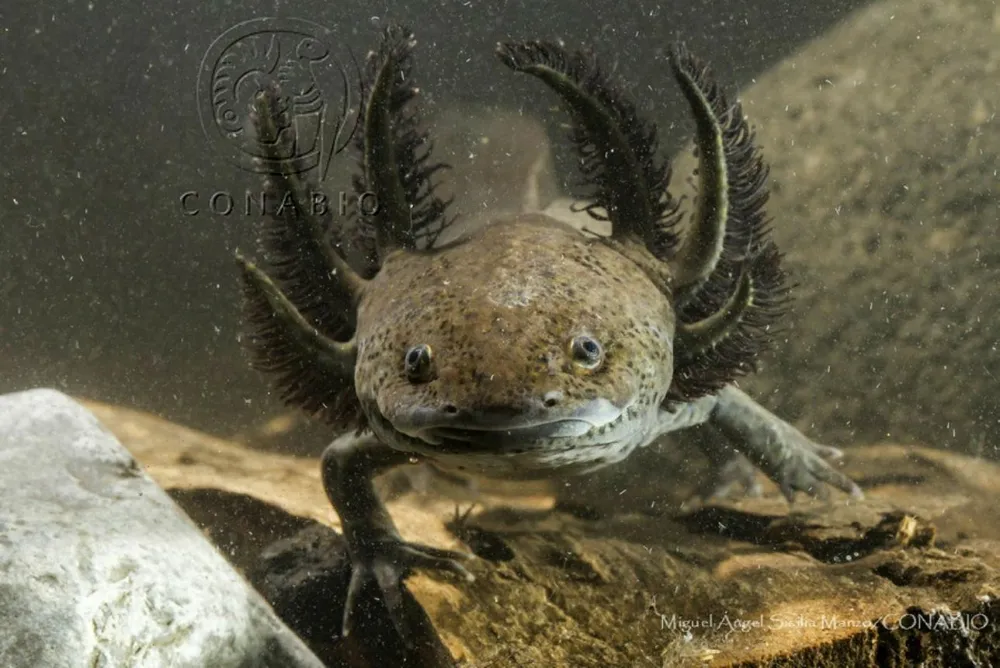
Axolotls are aquatic salamanders capable of rebuilding complex tissues, including the bones, muscles, nerves, and skin of lost limbs.
Can Axolotls Regrow Their Limbs?
Axolotls are among the best-known animals capable of regenerating complete limbs. If an axolotl loses part of a leg, surviving tissues can initiate a biological program that rebuilds the missing structures.
Unlike simple wound healing, this process restores organized anatomy. A regenerating limb can eventually develop new digits, skeletal elements, muscles, nerves, and connective tissues.
Scientists have studied this ability for decades because most adult mammals cannot accomplish the same kind of complex limb replacement.
However, successful regeneration requires coordinated cellular responses and suitable conditions. The process is not instantaneous or unlimited.
What Is an Axolotl?
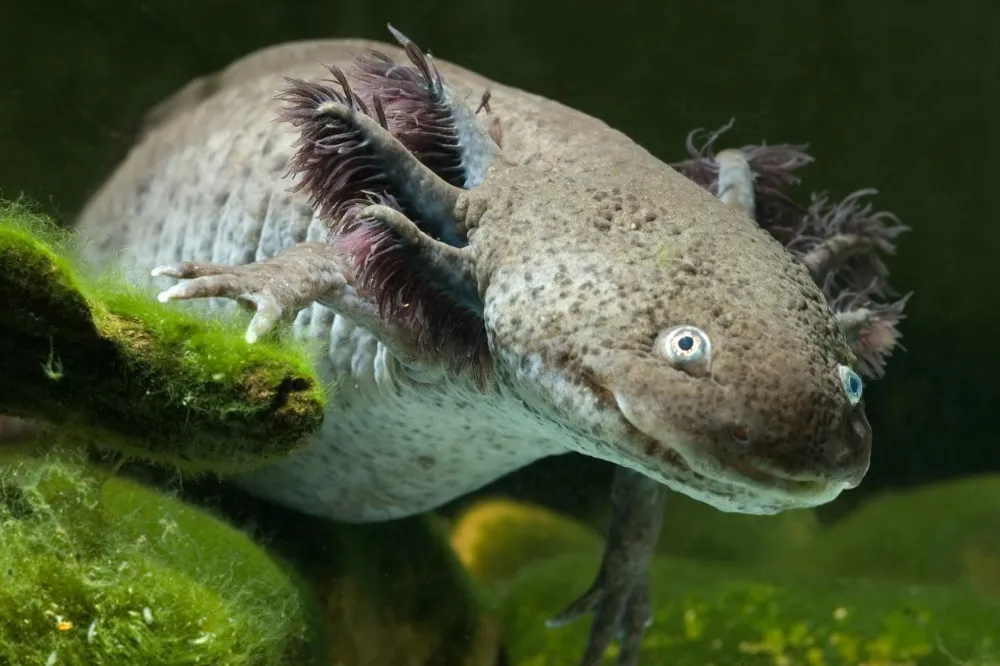
The axolotl, Ambystoma mexicanum, is an aquatic salamander native to Mexico.
It belongs to the amphibian order Caudata, which includes salamanders and newts. Despite sometimes being called the Mexican walking fish, the axolotl is not a fish.
Its broad head, feathery external gills, flattened tail, and short limbs are characteristic features.
Axolotls are also famous for neoteny, meaning they usually become sexually mature while retaining juvenile characteristics such as external gills and an aquatic lifestyle.
What Makes Axolotl Regeneration Special?
Many animals can repair damaged tissues, but relatively few adult vertebrates can replace a complete limb.
Axolotls can rebuild structures that must work together mechanically and physiologically. These include skeletal elements, muscles, tendons, skin, nerves, and blood vessels.
The regenerated limb must also establish the correct arrangement of parts. For example, an animal that loses a hand must regenerate the appropriate structures beyond the injury site rather than creating a second shoulder or an unorganized mass of tissue.
Scientists study how axolotl cells retain information about their original locations and respond to developmental signals during this process.
How Do Axolotls Regrow Their Legs?
Axolotl limb regeneration occurs through several overlapping stages.
First, cells at the injury site rapidly close the wound. A specialized wound epidermis develops over the exposed area.
Next, cells beneath that covering change their activity. Some become more flexible in their developmental state, while others are recruited from nearby tissues.
These cells contribute to the formation of a blastema, a regenerative structure that grows and organizes the missing tissues.
As development progresses, the new limb forms its characteristic shape. Digits appear, tissues mature, and connections with the remaining limb are established.
What Are the Stages of Axolotl Limb Regeneration?
| Stage | Main Biological Event | Result |
|---|---|---|
| 1. Wound closure | Epidermal cells cover the injured surface | A protective wound covering forms |
| 2. Regeneration signaling | Local tissues interact with nerves and immune cells | Conditions favorable to regeneration develop |
| 3. Blastema formation | Regenerative progenitor cells gather and proliferate | A growing bud forms beneath the wound covering |
| 4. Limb patterning | Cells respond to positional signals | New structures develop in the correct arrangement |
| 5. Tissue differentiation | Cells form specialized tissues | Skeletal, muscular, nervous, and other structures appear |
| 6. Growth and maturation | New tissues enlarge and integrate with the body | Function gradually improves |
Scientists also use more detailed stages, including early bud, medium bud, late bud, palette, and digital outgrowth. The exact timing varies with animal size, age, and experimental conditions.
What Happens Immediately After an Axolotl Loses a Limb?
After an injury, the remaining limb must protect its internal tissues and establish conditions for repair.
Epidermal cells move across the exposed wound to create a covering. This is an early and essential step, but it does not by itself guarantee that the limb will regenerate.
Immune cells arrive, tissue signals change, and neighboring cells respond to the new environment.
Research published in 2013 showed that the early immune response is particularly important. When scientists experimentally reduced macrophage populations, wounds could still close, yet normal limb regeneration failed.
What Is the Wound Epidermis?
The wound epidermis is a layer of epithelial cells that covers the injured surface during the early stages of regeneration.
It forms through the movement of cells from surrounding skin and protects the tissues beneath.
However, it also participates in the signaling environment required for regeneration.
With appropriate tissue and nerve signals, the wound covering develops into a more specialized structure often called the apical epithelial cap.
This structure helps support the growth and organization of the blastema beneath it.
What Is the Apical Epithelial Cap?
The apical epithelial cap, or AEC, is a specialized epithelial structure associated with a regenerating limb.
It forms over the developing blastema and helps maintain the cellular environment needed for growth.
Researchers have identified interactions between the AEC, regenerating cells, and nerve-related signaling pathways.
However, the cap is not a separate organ that builds the limb by itself. Regeneration requires coordinated activity between the surface covering and many underlying tissues.
What Is a Blastema?
A blastema is a population of regenerative progenitor cells that develops near the injury site and contributes to rebuilding missing structures.
During axolotl limb regeneration, cells from surviving tissues become activated and contribute to this growing region.
The blastema may initially appear as a small bud beneath the wound covering. As it develops, its cells proliferate and receive signals that help establish the shape of the new limb.
However, a blastema is not a single kind of cell. It contains multiple cellular populations with different origins and developmental capacities.
Is the Blastema Made of Stem Cells?
The blastema contains cells with regenerative potential, including progenitors that can produce new tissues.
However, scientists no longer generally describe it as one pool of completely interchangeable, all-purpose stem cells.
A 2009 study in Nature tracked the descendants of cells from different axolotl limb tissues. It found that the cells usually retained restrictions related to their tissue of origin.
This means that the regeneration of a complete limb can be achieved through the coordinated behavior of different progenitor populations rather than requiring every cell to become fully pluripotent.
What Did the 2009 Nature Study Discover?
Researchers led by Martin Kragl and colleagues used genetic cell labeling to follow the contributions of different tissues during axolotl limb regeneration.
They investigated whether mature cells become completely undifferentiated and capable of forming any tissue.
The results showed that blastema cells retain important information about their tissue origins.
For example, cells derived from different limb tissues generally contributed to related categories of regenerated tissues rather than freely changing into every possible cell type.
The findings established that a complex regenerative structure can arise from a collection of progenitor populations with restricted developmental capacities.
What Is Cell Dedifferentiation?
Dedifferentiation occurs when a specialized cell changes its state and loses some characteristics associated with its mature function.
This can increase its ability to participate in tissue repair or regeneration.
Axolotl regeneration involves changes in cellular identity and activity, but those changes are not identical in every tissue.
Some cells may dedifferentiate, while others are supplied by tissue-specific stem cells or progenitor populations.
The 2009 lineage-tracing research showed that these cells can retain restrictions even after becoming part of the blastema.
Do Axolotl Cells Remember Where They Came From?
Yes. Some regenerative cells maintain information about their original position within the limb.
This ability is called positional memory.
It is important because a regenerating limb must replace only the missing structures and arrange them correctly.
For example, cells from the front and back of the limb contribute different positional information during regeneration.
Scientists investigate how this memory is established during development, maintained in adult tissues, and reactivated after injury.
How Do Axolotls Know Which Body Parts to Regrow?
Regeneration depends on molecular signals that help cells determine where they belong in the developing limb.
These signals coordinate the front-to-back and other spatial dimensions of the regenerating tissue.
In 2025, a study published in Nature identified a feedback circuit involving the transcription factor Hand2 and the signaling molecule Sonic hedgehog, or Shh.
This circuit helps maintain positional information associated with the posterior side of the limb.
However, Hand2 and Shh are part of a larger network. No single molecule alone contains every instruction needed to reconstruct an entire limb.
What Did the 2025 Positional Memory Study Find?
The 2025 Nature study, Molecular Basis of Positional Memory in Limb Regeneration, examined how connective-tissue cells preserve information about their position.
The researchers found that posterior limb cells maintain Hand2 expression associated with their developmental history.
After injury, this memory helps establish a region of Shh signaling. The two factors then participate in a feedback mechanism important for patterning.
The team also experimentally changed the positional identity of some cells by manipulating the relevant signaling system.
These findings helped explain how regenerating tissues can rebuild a correctly organized body part rather than merely producing new tissue mass.
Why Are Fibroblasts Important in Limb Regeneration?
Fibroblasts are connective-tissue cells that contribute to the structure of many tissues.
In axolotl regeneration, connective-tissue-derived cells are especially important for positional information and limb patterning.
They can participate in signaling interactions that help guide other cells during tissue reconstruction.
However, fibroblasts do not independently generate every tissue of the regenerated limb.
Muscle, nerve, epidermal, vascular, and other components involve their own cellular sources and developmental processes.
Why Are Nerves Important for Axolotl Regeneration?
Nerves do more than eventually provide sensation and movement to the new limb.
They also participate in signaling that supports early regeneration.
Classic salamander studies showed that insufficient nerve support can prevent normal blastema growth.
More recent experiments have investigated the molecular signals that make regenerating cells capable of responding to patterning instructions.
However, the relevant nerve signals are complex, and scientists continue to study how different neural pathways interact with tissues at the injury site.
Can Axolotls Regenerate Without Nerves?
Normal axolotl limb regeneration depends strongly on neural signaling.
Experimental disruption of nerve supply can interfere with blastema formation or growth.
However, the outcome depends on the timing, experimental design, developmental stage, and remaining signaling environment.
Researchers use specialized laboratory models to investigate which signals are necessary and whether particular molecular combinations can substitute for some nerve-related functions.
These experiments do not mean a healthy axolotl can routinely regenerate a fully functional limb with no neural contribution.
Do Immune Cells Help Axolotls Regenerate?
Yes. Immune cells play a crucial role in creating the conditions for regeneration.
The immune system helps respond to damage, clear cellular debris, and coordinate the behavior of other tissues.
In axolotls, the early immune response includes signals associated with both inflammation and the resolution of inflammation.
This balance appears to help establish an environment in which a blastema can develop.
However, not all inflammation promotes regeneration. The timing and character of the immune response matter.
What Are Macrophages?
Macrophages are immune cells involved in responding to tissue damage and maintaining tissue health.
They can engulf cellular debris and help coordinate inflammatory and repair-related signals.
In many mammals, macrophages contribute to wound healing and tissue repair.
In axolotls, their activity is also essential to the environment that allows complex limb regeneration.
Research demonstrates that the presence of macrophages at appropriate stages can make the difference between regenerative healing and a more scar-associated repair response.
What Did the 2013 Macrophage Study Prove?
A study published in Proceedings of the National Academy of Sciences by Godwin, Pinto, and Rosenthal experimentally examined immune-cell contributions to axolotl limb regeneration.
The researchers reduced macrophage populations during the early injury response.
Under these conditions, wounds still closed, but regeneration did not proceed normally.
Instead, the tissues developed fibrosis and failed to form a normal regenerative blastema.
The study provided important evidence that macrophages help organize a regeneration-permissive tissue environment, rather than simply removing dead cells after injury.
Does Axolotl Regeneration Involve the Whole Body?
Although regeneration is most visible at the injury site, the response is not necessarily confined to that location.
A study published in Cell in 2025 found that injury can trigger changes in cellular activity in distant parts of the axolotl's body.
The researchers identified a role for the sympathetic nervous system and adrenergic signaling in coordinating these responses.
Some of the systemic cellular changes were associated with faster subsequent limb regeneration in experimental animals.
However, the precise biological significance of these responses under natural conditions is still being investigated.
What Did the 2025 Cell Study Discover?
The study, Adrenergic Signaling Coordinates Distant and Local Responses to Amputation in Axolotl, investigated how injury affects cells beyond the damaged limb.
Researchers found that sympathetic nerve signaling could stimulate broader cell-cycle activity in the animal.
The response involved adrenergic receptors and the mTOR signaling pathway.
Experimentally activated animals showed faster limb regeneration than comparison animals under the study conditions.
The findings challenged the idea that all regenerative cell activation occurs only in the immediate wound region.
However, such laboratory findings do not provide a direct treatment for human limb loss.
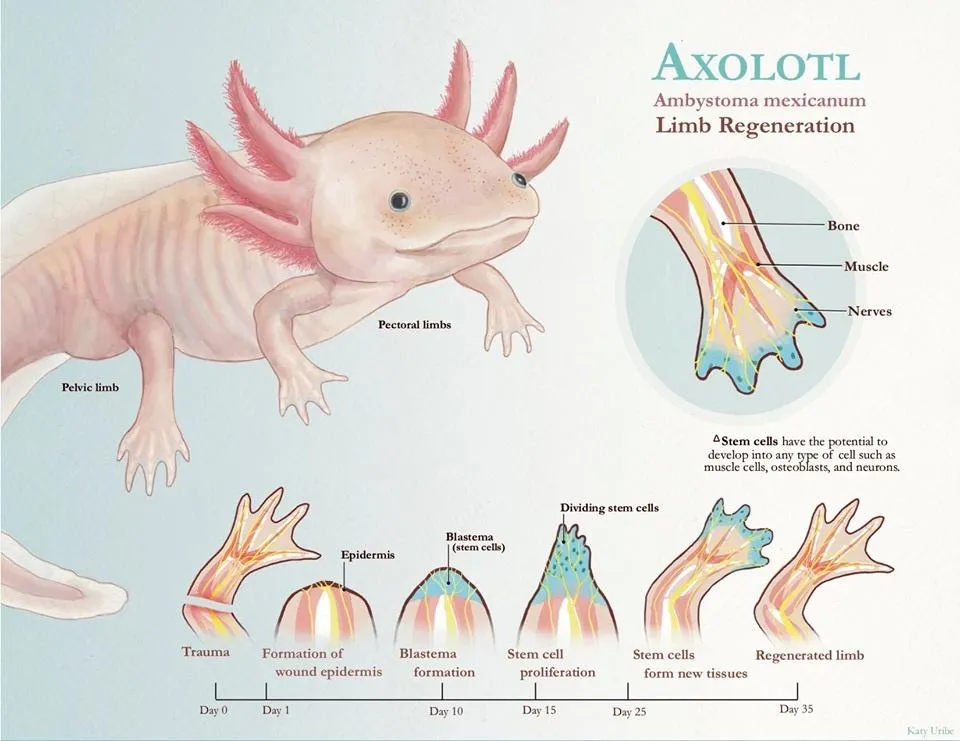
Scientific illustration: wound closure, blastema formation, tissue patterning, and gradual growth are major phases of axolotl limb regeneration.
How Long Does It Take an Axolotl to Regrow a Limb?
Axolotl limb regeneration usually takes weeks to months, depending strongly on the animal's size and age.
The University of Kentucky's axolotl research resource describes a juvenile axolotl regenerating a limb in approximately 40 to 50 days under appropriate conditions.
However, larger or sexually mature axolotls often take longer.
Research reviews describe regeneration occurring over weeks in small larval animals and over months in adults.
It is therefore misleading to claim that every axolotl always regrows a limb in exactly 30 days.
Can Axolotls Regrow a Limb in 40 Days?
Some juvenile axolotls can complete substantial limb regeneration within roughly six to seven weeks.
However, that is not a universal timetable.
The University of Kentucky identifies approximately 40 to 50 days as a useful estimate for a juvenile animal.
More extensive injuries, larger body size, older age, and environmental conditions can change the duration.
Researchers also distinguish the appearance of digits from the later growth and maturation of the regenerated limb.
Do Adult Axolotls Regenerate More Slowly?
Generally, yes. Regeneration tends to become slower as axolotls grow larger and older.
A 2020 review described regeneration taking weeks in smaller larval animals and months in sexually mature adults.
One reason is that larger limbs contain more tissue that must be reconstructed.
However, chronological age is not the only factor. Size, tissue condition, previous injury, and experimental circumstances also contribute.
Adult axolotls retain regenerative abilities, but they are not guaranteed to regenerate as quickly or completely as younger animals.
What Affects Axolotl Regeneration Speed?
Several interacting factors influence how quickly regeneration progresses.
Body size and developmental stage affect the amount of tissue that must be rebuilt. The location and severity of the injury also matter.
Environmental temperature, nutrition, water quality, infection, and general health may influence recovery.
However, exact regeneration times are best interpreted from controlled research involving animals of comparable size and condition.
Regeneration is not a race, and deliberately changing conditions to accelerate tissue growth can harm the animal.
Does the Regenerated Limb Look Normal?
Successful axolotl regeneration can produce a limb with the major structures and functions of the original.
New digits, skeletal elements, muscles, and nerves may develop in an organized arrangement.
However, regeneration is not always perfect.
Some injuries or experimental conditions can result in delayed growth, missing structures, abnormal digit patterns, or other developmental differences.
Therefore, the scientifically accurate claim is that axolotls can regenerate complex, functional limbs, not that every injury always heals without a visible or functional consequence.
Can Axolotls Regrow Fingers and Toes?
Yes. Digit formation is an important stage of complete limb regeneration.
As the regenerating blastema grows, new structures begin to take on the pattern of a limb.
Digits emerge and later increase in size and maturity.
Axolotls normally have four digits on each forelimb and five on each hind limb.
However, abnormal regeneration can produce unusual digit arrangements, so the normal pattern should not be assumed after every severe injury.
Can Axolotls Regrow Bones?
Yes. Regenerating axolotl limbs can rebuild their skeletal structures.
The appendicular skeleton includes cartilage and bone-related tissues that develop in the correct anatomical positions.
However, skeletal regeneration is not a process in which an entire missing bone simply reappears instantly.
Cells must first organize developing structures, produce appropriate extracellular materials, and support later maturation.
The regenerated skeleton must also integrate with the surviving limb.
Can Axolotls Regrow Muscles?
Yes. Regenerated limbs can develop new skeletal muscle.
Muscle regeneration involves specialized cellular sources, including cells associated with muscle tissue.
These cells contribute to rebuilding contractile structures that support movement.
However, muscle development must be coordinated with skeletal, nervous, and connective tissues.
A newly visible limb may continue maturing after its external outline has formed.
Can Axolotls Regrow Nerves?
Yes. Axolotls can regenerate peripheral nervous tissue as part of limb rebuilding.
This is important because a functional limb requires neural connections for sensory information and movement control.
Nerves also contribute signaling during earlier regenerative stages.
However, the ability to regrow nerves should not be interpreted as immunity to every possible nervous-system injury.
The outcome depends on the tissue involved and the biological context.
Can Axolotls Regrow Blood Vessels?
Yes. New blood vessels develop during limb regeneration.
Growing tissues require an adequate supply of oxygen and nutrients.
Vascular development therefore occurs alongside the rebuilding of other structures.
However, circulation, nerve signaling, and tissue growth must be coordinated rather than occurring as completely independent processes.
Successful restoration of limb anatomy involves integration across these systems.
Can Axolotls Regrow Their Tails?
Yes. Axolotls can regenerate damaged or missing portions of their tails.
The tail contains multiple tissue types, including muscles, connective tissues, nervous structures, and a central spinal-cord component.
Regeneration can rebuild organized structures within the missing region.
However, tail regeneration is not identical to limb regeneration. The tissues and patterning requirements differ.
Both abilities make axolotls valuable models for comparative regeneration research.
Can Axolotls Regrow Their Gills?
Yes. Axolotls can regenerate damaged external gill structures in appropriate conditions.
Their characteristic feathery gills are important for aquatic gas exchange.
However, regeneration depends on the degree of injury and the animal's health.
Persistent gill deterioration can also be related to environmental problems, infection, or other causes that require attention.
A pet axolotl with damaged gills should not be subjected to further injury in an attempt to observe regrowth.
Can Axolotls Regrow Their Heart?
Axolotls have remarkable regenerative abilities involving certain heart tissues.
Research has investigated repair of experimentally damaged cardiac structures.
However, it is misleading to claim that an axolotl can replace an entirely missing heart and continue living normally.
Scientific findings concern particular tissues and injury models.
Heart regeneration is an important research area because adult human heart muscle has much more limited regenerative capacity after major injury.
Can Axolotls Regrow Brain Tissue?
Research has documented regeneration in parts of the axolotl central nervous system, including specific brain regions under experimental conditions.
However, these results do not show that an axolotl can regenerate an entire missing head or brain under ordinary circumstances.
The term brain regeneration can refer to cellular and tissue repair within a surviving nervous system.
It does not mean every neural structure is rebuilt perfectly after unlimited damage.
Can Axolotls Regrow Their Spinal Cord?
Axolotls can regenerate portions of spinal cord tissue, particularly in studied injury and tail-regeneration contexts.
Researchers investigate how neural cells proliferate and reconstruct organized nervous structures.
However, spinal cord regeneration involves different biological challenges from the regeneration of an external limb.
Results depend on the location and extent of damage.
The studies are scientifically valuable but do not imply that human spinal cord injuries can already be treated using the same mechanisms.
What Body Parts Can Axolotls Regenerate?
| Body Part or Tissue | Documented Regenerative Ability | Important Limitation |
|---|---|---|
| Limbs | Regeneration of complex missing limb structures | Speed and completeness vary |
| Tail | Regrowth of tail tissues | Depends on injury and development |
| External gills | Regrowth of damaged structures | Not guaranteed in every condition |
| Peripheral nerves | Rebuilding neural connections during limb regeneration | Requires coordinated tissue repair |
| Spinal cord | Regeneration documented in specific experimental models | Not equivalent to unlimited complete nervous-system replacement |
| Heart tissue | Repair and regeneration studied after certain injuries | Does not mean an entire heart can be removed and replaced |
| Brain regions | Regeneration observed in particular contexts | Not regeneration of a completely lost head |
| Skin | Strong wound-healing and tissue-repair capacity | Severe injury may still cause complications |
The National Institute of General Medical Sciences identifies axolotls as an important model for studying regeneration across multiple organ systems. However, findings from one organ or experimental procedure should not be generalized to every type of injury.
Can Axolotls Regenerate Forever?
No. Axolotls are extraordinarily regenerative, but their capacity is not literally infinite.
Regeneration can become slower with age, and repeated injuries may impair the process.
In a 2017 study, scientists repeatedly examined regeneration after experimental limb loss at the same anatomical position.
The proportion of limbs capable of regenerating to the digit stage declined after multiple repetitions.
This study provides direct evidence against the idea that axolotls can endlessly replace limbs under all conditions without accumulating biological costs.
What Did the 2017 Repeated-Regeneration Study Show?
The study, Identification of Regenerative Roadblocks via Repeat Deployment of Limb Regeneration in Axolotls, investigated what happens when regeneration is repeatedly required at the same limb location.
All limbs in the initial experimental group reached the digit stage after the first injury.
However, after repeated experimental injuries, the success rate declined considerably.
By the fifth injury in the study, approximately one-quarter of the examined limbs reached the defined digit-stage endpoint.
These findings describe particular laboratory conditions, not the probability of recovery after every naturally occurring injury. They nevertheless establish that regenerative capacity can have limits.
Do Axolotls Heal Without Scars?
Axolotls often show remarkably regenerative wound healing compared with adult mammals.
However, calling all axolotl wound healing completely scar-free is an oversimplification.
The 2013 macrophage study demonstrated that disrupting an important immune-cell population could cause fibrosis and prevent normal regeneration.
This means scar-associated repair and regeneration are different potential outcomes influenced by the tissue environment.
Scientists study these differences to understand why mammals usually form scar tissue after major injuries.
Why Can't Humans Regrow Limbs Like Axolotls?
Humans possess important tissue-repair abilities, but we cannot naturally reconstruct a complete missing arm or leg.
Adult human injury responses often emphasize wound closure and scar formation.
Axolotls, by contrast, can establish a specialized regenerative environment that supports a blastema and coordinated reconstruction of complex anatomy.
Differences in immune responses, cellular plasticity, tissue signaling, and developmental programs all contribute to the contrast.
However, scientists have not identified one simple genetic switch whose activation would allow humans to regenerate complete limbs.
Can Humans Regenerate Any Body Parts?
Yes. Human bodies continuously renew many cell populations and can repair certain tissues after injury.
The skin and blood-forming system show substantial renewal. Bones can heal after fractures, and the liver can restore considerable mass after partial removal or injury.
However, these abilities are not equivalent to growing an entirely new hand with fingers, nerves, joints, and muscles.
Complex limb regeneration requires reconstruction of multiple tissues in the correct spatial arrangement.
Could Axolotl Research Help Regenerative Medicine?
Axolotl studies help scientists investigate biological processes that are limited or absent in adult humans.
These include blastema formation, positional memory, immune-cell coordination, and nerve-dependent tissue growth.
Research published in 2025 identified molecular circuits that influence positional information and broader cellular responses to injury.
Such findings may inform future approaches to tissue repair and regenerative medicine.
However, there is currently no established clinical treatment that allows humans to regrow a complete lost limb by copying axolotl biology.
Why Is the Axolotl Genome Important?
The axolotl genome is exceptionally large.
In 2018, researchers published a genome assembly measuring approximately 32 billion DNA base pairs, substantially larger than the human genome.
This provided a major resource for investigating axolotl development, tissue regeneration, and evolutionary biology.
However, genome size alone does not explain regeneration.
Scientists must also investigate how genes are regulated, how cells communicate, and which processes determine regenerative outcomes.
Are Axolotls Baby Salamanders?
Axolotls are often described as looking like permanently young salamanders because they retain external gills and other juvenile characteristics.
However, a sexually mature axolotl is an adult animal capable of reproduction.
The retention of larval features is known as neoteny or paedomorphosis.
This developmental pattern is separate from limb regeneration, although the axolotl's biology makes it an especially useful research organism.
What Is Neoteny in Axolotls?
Neoteny occurs when the development of certain body characteristics is slowed or altered relative to reproductive maturity.
In axolotls, this allows the animal to become sexually mature while retaining aquatic features such as external gills and a tail fin.
However, neoteny should not be confused with the ability to regenerate limbs.
Other salamanders can regenerate tissues even after undergoing metamorphosis.
Can Axolotls Undergo Metamorphosis?
Axolotls normally retain their aquatic larval characteristics throughout life.
However, metamorphosis can be induced under certain experimental conditions involving thyroid hormones.
This causes significant changes in anatomy and physiology.
Such transformation is not part of normal pet care and can pose serious risks to the animal.
It should not be attempted to test regeneration or change an axolotl's appearance.
Are Axolotls the Only Salamanders That Regenerate?
No. Other salamanders and newts also possess regenerative abilities.
However, the extent and speed of regeneration vary among species and developmental stages.
Some terrestrial salamanders regenerate limbs more slowly than aquatic juvenile axolotls.
The University of Kentucky's salamander research resource describes large differences in regeneration times among several species of Ambystoma.
Axolotls are especially useful in laboratories because of their biological characteristics and extensive scientific research history, not because they are the only regenerating salamanders.
Can Frogs Regrow Their Legs?
Regenerative ability varies widely among frogs and their developmental stages.
Some tadpoles can regenerate damaged appendages during certain periods of development.
However, most adult frogs have much more limited capacity to regenerate a complete, anatomically normal limb.
Experimental research has examined ways to modify this response.
These findings should not be confused with the naturally strong limb-regeneration ability of adult axolotls.
Axolotl vs. Human Limb Regeneration
| Feature | Axolotl | Human |
|---|---|---|
| Regrow a complete missing limb | Possible under suitable conditions | Not naturally possible |
| Form a limb blastema | Yes | Not a comparable normal adult response |
| Replace complex skeletal structures | Yes, during limb regeneration | Can repair fractures, not replace a lost limb |
| Regenerate peripheral nervous tissue | Extensive capacity in suitable contexts | Limited capacity under certain conditions |
| Typical response to major injury | Can initiate regeneration | Often wound repair and scarring |
| Regenerative capacity is unlimited | No | No |
Where Do Axolotls Live in the Wild?
Axolotls are native to freshwater habitats associated with the Xochimilco region of Mexico City.
Historically, related lake habitats in the Valley of Mexico supported the species.
However, urban expansion, water management changes, and habitat degradation have drastically reduced suitable environments.
Wild axolotls are now restricted to a small and fragmented range.
Their biological importance in laboratories does not mean the species is abundant in nature.
Are Axolotls Endangered?
Yes. The axolotl is classified as Critically Endangered on the IUCN Red List.
Major threats include habitat destruction, pollution, altered water conditions, and introduced aquatic species.
Captive-bred axolotls are widely kept and studied, but those populations do not replace the need to protect wild animals and their natural ecosystem.
Conservation efforts focus on habitat improvement, reducing environmental threats, and protecting surviving wild populations.
Why Are Axolotls Pink?
The pale pink or white axolotls familiar from aquariums often have a color form called leucism.
These animals typically have reduced body pigmentation while retaining dark eyes.
However, wild-type axolotls are usually darker, with mottled brown, gray, or olive coloring.
Both color forms belong to the same species, Ambystoma mexicanum.
Body color does not establish whether an axolotl can regenerate a limb.
Do Axolotls Feel Pain When Injured?
Axolotls have nervous systems and respond to damaging stimuli.
However, scientists cannot directly measure the subjective experience of pain in an axolotl in the same way a person reports pain.
It would be irresponsible to assume that regeneration makes injury painless.
The animal may experience stress, physical damage, infection, and other complications even when regenerative healing is possible.
Axolotls should therefore be protected from avoidable injury.
Is It Safe to Test an Axolotl's Regeneration at Home?
No. Deliberately damaging or removing a pet axolotl's limb to observe regeneration is unnecessary and harmful.
Scientific regeneration experiments are conducted under specialized laboratory conditions with veterinary oversight and ethical review.
Natural regenerative capacity does not prevent suffering or guarantee recovery.
Anyone concerned about an injured pet axolotl should seek advice from a veterinarian experienced with amphibians.
Why Are Axolotls Important to Science?
Axolotls allow scientists to investigate how complex structures develop, become damaged, and sometimes grow again.
Their limb regeneration provides a particularly valuable model for studying interactions between cells, nerves, immune responses, and molecular patterning signals.
Major studies published in 2009, 2013, 2017, and 2025 have revealed important mechanisms and limitations.
However, scientific progress in understanding axolotls should not be confused with the immediate availability of regenerative treatments for humans.
The major contribution is the discovery of biological principles that can guide future research.
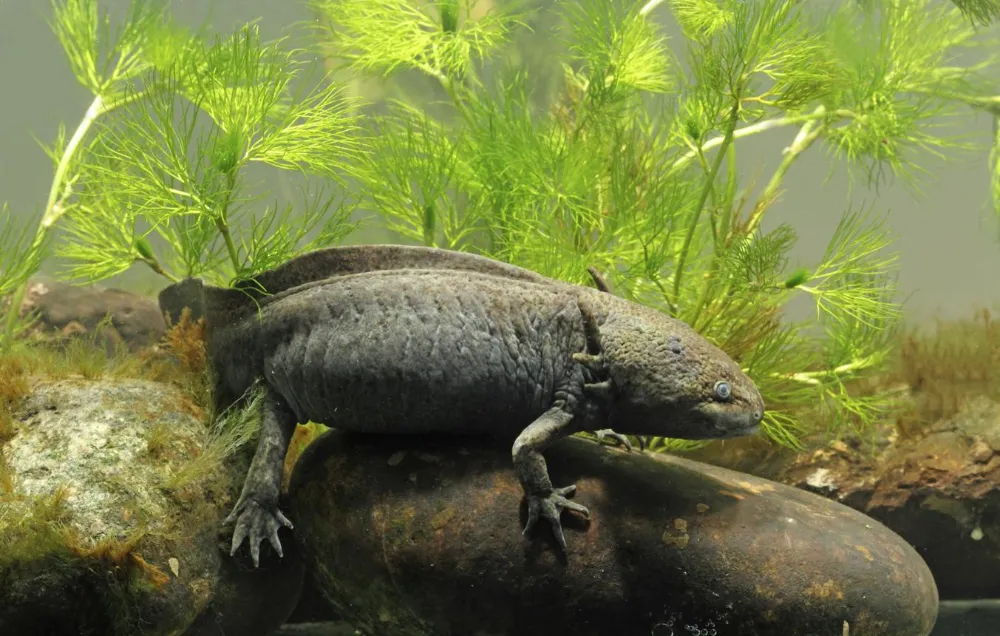
The axolotl is both a major research organism in regenerative biology and a critically endangered amphibian in its native habitat.
Frequently Asked Questions
Can axolotls regrow their limbs?
Yes. Axolotls can regenerate lost limbs, including skeletal elements, muscles, nerves, blood vessels, and skin.
How do axolotls regenerate limbs?
They close the wound, form a specialized wound covering and blastema, then use coordinated cellular signals to rebuild the missing tissues.
What is an axolotl blastema?
A blastema is a population of regenerative progenitor cells that forms near the injury site and helps reconstruct the missing body structures.
How long does an axolotl take to regrow a leg?
It typically takes weeks to months. Some juveniles regenerate a limb in approximately 40 to 50 days, while larger adults often require longer.
Can axolotls regrow their fingers?
Yes. Digit development is part of successful complete limb regeneration.
Can axolotls regenerate bones?
Yes. The regenerated limb can develop new skeletal structures along with other necessary tissues.
Can axolotls regrow nerves?
Yes. Peripheral nervous tissue regenerates during limb rebuilding, and nerve signals are important for initiating and organizing regeneration.
Can axolotls regrow their tails?
Yes. Axolotls can regenerate damaged or missing tail tissues.
Can axolotls regrow their gills?
Yes. Damaged external gill structures can regenerate under suitable conditions, although recovery is not guaranteed after every injury.
Can axolotls regrow their hearts?
They can regenerate certain damaged cardiac tissues in studied circumstances, but this is not equivalent to replacing an entirely missing heart.
Can axolotls regrow their brains?
Regeneration has been documented in certain brain regions and nervous-system tissues, but axolotls cannot be assumed capable of regenerating an entire missing head.
Can axolotls regenerate forever?
No. Aging and repeated injuries can reduce regenerative speed or success.
Do axolotls have stem cells?
They have tissue-specific stem cells and regenerative progenitors, but limb regeneration does not depend on one universal type of all-purpose stem cell.
Why are macrophages important for regeneration?
Macrophages help establish an immune environment that supports blastema formation and regenerative healing.
Why can't humans regrow limbs like axolotls?
Human wound healing usually does not create the specialized blastema and coordinated patterning responses needed to rebuild a complete limb.
Are axolotls salamanders?
Yes. Axolotls are aquatic salamanders belonging to the species Ambystoma mexicanum.
Are axolotls endangered?
Yes. Wild axolotls are classified as Critically Endangered, mainly because of habitat loss, pollution, and introduced species.
Is it safe to injure an axolotl to watch it regrow a limb?
No. Regeneration does not make injury harmless. Deliberately injuring an axolotl is unnecessary and can cause serious complications.
The Bottom Line
Axolotls can regenerate lost limbs through a complex biological process involving wound healing, blastema formation, positional signaling, and the development of multiple tissue types.
Studies have shown that the regenerative cells retain important information about their tissue origins and positions within the body.
Nerves and immune cells, particularly macrophages, also help create the conditions required for successful regeneration.
However, regeneration is neither instantaneous nor unlimited. Its speed and completeness depend on age, injury history, and other factors.
Axolotl research is helping scientists understand why some vertebrates can rebuild complex structures while adult humans generally cannot.
At the same time, the species faces severe conservation threats in the wild, making protection of its natural habitats as important as understanding its remarkable biology.
Sources & Further Reading
National Institute of General Medical Sciences (2024) — Research Organism Superheroes: Axolotls. Overview of axolotl regenerative abilities and scientific value.
Kragl et al. (2009) — Cells Keep a Memory of Their Tissue Origin During Axolotl Limb Regeneration. Nature. Original lineage-tracing research on blastema cell origins and restricted developmental potential.
Godwin, Pinto and Rosenthal (2013) — Macrophages Are Required for Adult Salamander Limb Regeneration. PNAS. Experimental demonstration of macrophage involvement in regeneration.
Bryant et al. (2017) — Identification of Regenerative Roadblocks via Repeat Deployment of Limb Regeneration in Axolotls. npj Regenerative Medicine. Study showing limitations after repeated regeneration challenges.
Nowoshilow et al. (2018) — The Axolotl Genome and the Evolution of Key Tissue Formation Regulators. Nature. Genome research supporting molecular studies of regeneration.
Advancements to the Axolotl Model for Regeneration and Aging (2020). Review of regenerative biology and changes in regeneration with age.
University of Kentucky — How Long Does It Take for a Salamander to Regenerate a Limb? Species and age-related differences in regeneration timing.
Otsuki et al. (2025) — Molecular Basis of Positional Memory in Limb Regeneration. Nature. Experimental study of Hand2–Shh signaling and positional memory.
Adrenergic Signaling Coordinates Distant and Local Responses to Amputation in Axolotl (2025). Cell. Research identifying body-wide cellular activation and sympathetic nervous system signaling.
San Francisco Zoo & Gardens — Axolotl. Species identification, native habitat, and conservation status.