Yes, butterflies can taste with their feet. Many butterflies have specialized chemical sensors called gustatory sensilla on their legs, particularly on the lower foot segments known as tarsi. When a butterfly lands on a leaf or flower, these sensors can detect certain chemicals on the surface. For female butterflies, tasting plants is especially important because their caterpillars often depend on specific host plants. By tapping leaves with their forelegs, females can evaluate chemical cues before deciding whether to lay eggs. However, butterflies also possess chemical sensors in other parts of their bodies, and they do not experience taste exactly as humans do.
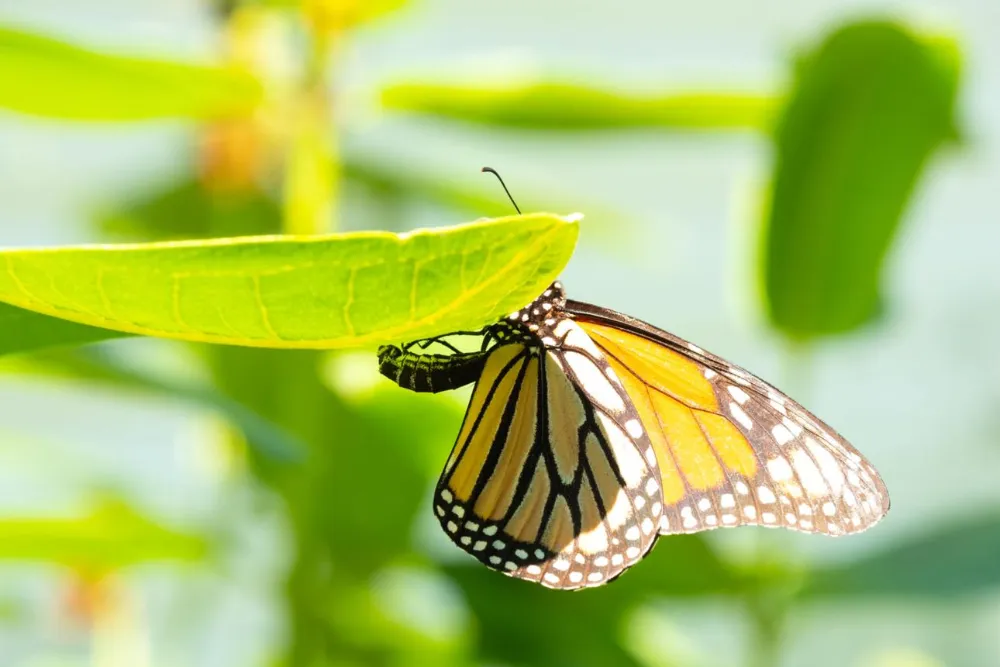
Butterflies can detect chemical cues through specialized sensory structures on their feet, helping them evaluate the plants they land on.
Can Butterflies Taste With Their Feet?
Yes. Butterflies possess taste-sensitive structures on their feet.
These structures allow them to detect certain chemicals when their legs make contact with plants or other surfaces.
Unlike humans, who primarily taste food using receptors associated with the tongue and mouth, insects can distribute gustatory receptors across several body regions.
In butterflies, the legs are especially important for detecting the chemical properties of a surface.
Female butterflies often use this ability when searching for places to lay their eggs.
They may drum their forelegs against leaves, allowing specialized receptors to sample plant chemicals.
Experiments have demonstrated that these responses can influence whether a butterfly accepts or rejects a plant as an egg-laying site.
Therefore, tasting with the feet is not simply a colorful expression. It describes a real and experimentally demonstrated sensory ability.
How Do Butterflies Taste With Their Feet?
Butterflies use specialized taste-sensitive structures called gustatory sensilla.
These structures often resemble tiny hairs or pegs under a microscope.
They contain sensory neurons capable of responding to particular chemicals.
When a butterfly touches a suitable surface, certain dissolved chemical compounds can interact with receptors in these sensory structures.
That interaction produces electrical signals in sensory neurons.
The signals travel through the nervous system and can influence the butterfly's behavior.
For example, the butterfly may continue feeding, investigate another part of the plant, or decide whether to lay an egg.
However, not every chemical is detected by the same receptor.
Different gustatory neurons respond to different substances.
What Are Gustatory Sensilla?
Gustatory sensilla are small sensory structures associated with chemical detection.
In butterflies, many important gustatory sensilla occur on the tarsi of the legs.
The tarsus is a segmented structure near the end of an insect's leg.
Some sensilla contain multiple sensory neurons.
These neurons may respond to sugars, salts, bitter compounds, or particular chemicals associated with host plants.
A 2017 study of the endangered swallowtail butterfly Papilio hospiton recorded sensory responses to salts, carbohydrates, bitter substances, and plant extracts.
The researchers found that different chemicals produced different patterns of neural activity.
These findings support the idea that butterfly feet contain a sophisticated chemical detection system rather than a single universal taste switch.
What Part of a Butterfly's Foot Detects Taste?
The lower segments of the legs, especially the tarsi, contain many of the relevant chemical sensors.
In several butterfly species, the forelegs are particularly important during host plant selection.
A female may repeatedly contact the surface of a leaf with her front legs.
Specialized sensilla near the tarsal tips can detect chemicals associated with the plant.
However, the arrangement and number of these structures differ among species and between sexes.
Not every butterfly possesses exactly the same distribution of receptors.
Scientific studies therefore identify the species and specific leg structures being examined.
Why Do Butterflies Taste Leaves?
One of the most important reasons is to choose suitable host plants for their offspring.
Many caterpillars can feed successfully on only a limited range of plants.
Because newly hatched caterpillars are often relatively small and cannot travel long distances easily, egg placement is critical.
If a female deposits eggs on an unsuitable plant, the caterpillars may have difficulty finding food.
Butterfly females can use plant chemicals as signals indicating whether a particular leaf belongs to an appropriate host species.
This creates a strong connection between adult sensory biology and larval survival.
The same taste system that allows the adult to evaluate a surface can help determine where the next generation begins life.
How Do Female Butterflies Choose Where to Lay Eggs?
Female butterflies often combine several types of information when choosing egg-laying sites.
They may use vision to identify the shape or appearance of a plant.
Airborne odors can also provide clues.
After landing, the butterfly may touch the surface with its feet and evaluate chemical signals more directly.
Some species use repeated foreleg tapping, commonly called drumming.
This behavior allows the tarsal taste receptors to sample chemicals associated with the leaf surface.
If the sensory information is appropriate, the female may proceed to lay eggs.
However, plant selection also depends on species-specific preferences and the female's physiological state.
Why Do Butterflies Tap Leaves With Their Front Legs?
Foreleg tapping or drumming is a recognizable behavior in many egg-laying butterflies.
By repeatedly touching a leaf, the female can contact the surface with taste-sensitive structures.
In some species, the movement may help expose small amounts of plant sap or surface chemicals to the sensory receptors.
The signals can help the butterfly distinguish appropriate host plants from unsuitable vegetation.
Researchers have connected this behavior directly to gustatory neurons in the forelegs.
However, the specific movements vary among butterfly species.
Some may drum repeatedly, while others use somewhat different exploratory behaviors.
What Is a Host Plant?
A host plant is a plant that supports an insect during a particular part of its life cycle.
For many butterflies, the larval host plant is the plant on which caterpillars feed.
The adult butterfly may drink nectar from many flowering plants, but its caterpillars may depend on a much narrower range.
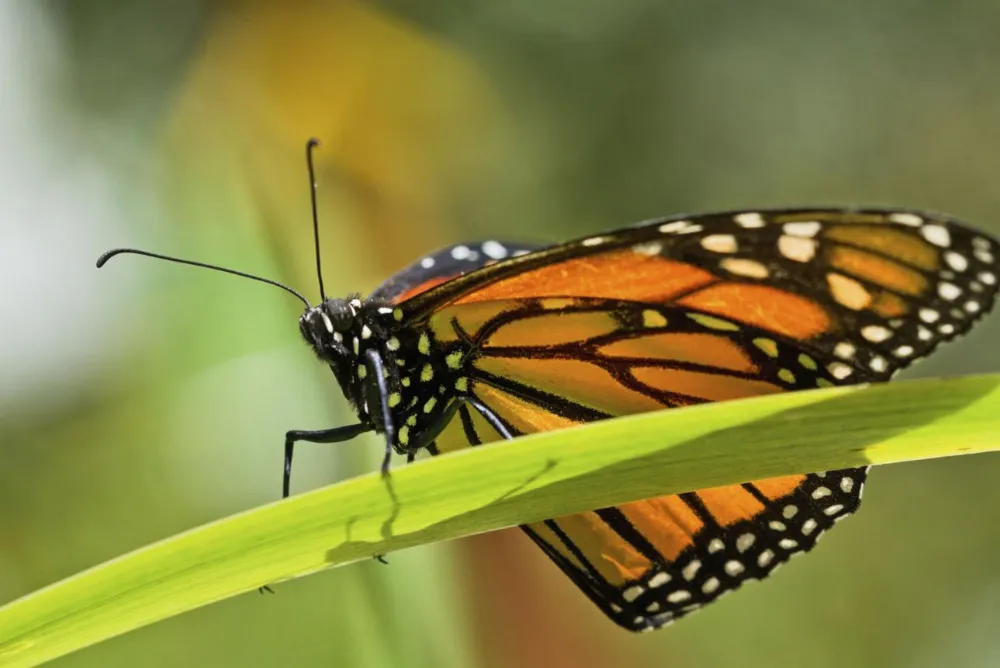
For example, monarch butterfly caterpillars are closely associated with milkweeds.
Many swallowtail butterflies have their own particular host plant preferences.
The adult female's ability to recognize appropriate host plants is therefore crucial.
It connects chemical sensing with the survival and development of her offspring.
Do Monarch Butterflies Taste Milkweed With Their Feet?
Female monarch butterflies use chemical information when choosing milkweed plants for egg laying.
Their caterpillars depend on milkweed plants as their main larval food source.
Female monarchs can investigate candidate plants through contact behaviors that involve the legs.
Chemical signals from milkweed help influence host plant recognition.
However, the detailed gustatory receptor mechanisms documented in other butterflies should not automatically be assigned to monarchs without species-specific experimental evidence.
The broader conclusion is that monarch egg laying involves recognizing suitable milkweed hosts through multiple sensory cues.
Why Are Milkweed Plants Important to Monarch Butterflies?
Milkweeds provide the primary food source for monarch caterpillars.
Milkweed plants contain chemical compounds called cardenolides.
These substances contribute to the plant's defenses against herbivores.
Monarchs have evolved adaptations that allow their larvae to feed on milkweed despite these compounds.
However, milkweed species differ in chemical composition, leaf properties, and growing conditions.
Female monarchs may respond differently to different plants.
The relationship between adult host plant selection and caterpillar development is an important area of butterfly ecology.
What Did the 2011 Butterfly Taste Study Discover?
In 2011, researchers published a major study in Nature Communications investigating the swallowtail butterfly Papilio xuthus.
The researchers identified a gustatory receptor involved in recognizing a plant chemical called synephrine.
The receptor was named PxutGr1.
The study showed that the receptor responded to synephrine in laboratory experiments.
The researchers also reduced the function of the receptor in developing butterflies using a gene-silencing approach.
This reduced the sensitivity of foreleg gustatory sensilla to synephrine.
It also reduced the relevant egg-laying response.
These findings provided strong experimental evidence that a specific taste receptor helps female butterflies recognize host plant chemicals during reproduction.
What Is Synephrine?
Synephrine is a naturally occurring chemical found in certain plants.
In the 2011 Papilio xuthus experiments, it was identified as one of the compounds involved in stimulating egg-laying behavior.
The researchers found that a specific gustatory receptor, PxutGr1, responded to synephrine.
However, the butterfly does not rely on this chemical alone to recognize every potential host.
The selection process can involve combinations of plant compounds and other sensory information.
Therefore, the study should not be simplified into the claim that every butterfly needs synephrine before laying eggs.
Do Butterflies Have Taste Receptor Genes?
Yes. Butterflies possess genes encoding gustatory receptors.
These genes produce proteins involved in the detection of chemical substances.
However, different receptor genes may be expressed in different tissues and at different levels.
A 2013 study examined gustatory receptor gene expression in Heliconius butterflies.
The researchers found female-biased expression of several receptors in the legs.
They also identified patterns of gene duplication that may reflect evolutionary adaptation to host plant selection.
This demonstrated that taste biology can be shaped by the distinct ecological tasks performed by male and female butterflies.
Do Female Butterflies Have More Taste Sensors Than Males?
In some studied butterfly species, females have more specialized taste-sensing structures or greater expression of certain gustatory receptor genes in their legs.
This is consistent with their need to identify suitable plants for egg laying.
The 2013 Heliconius study reported female-biased expression of gustatory receptors in the legs.
A 2026 Washington State University article also describes structural differences between male and female postman butterflies.
However, the degree of difference varies among species.
It would be inaccurate to say that every female butterfly has exactly twice as many taste sensors as every male.
How Do Male Butterflies Use Taste?
Male butterflies also need to locate food and obtain nutrients.
Taste-sensitive receptors can help them evaluate nectar, minerals, or other resources.
Some male butterflies visit moist soil or other surfaces to acquire nutrients.
However, the reproductive task of choosing larval host plants usually falls to females.
This difference may help explain why some butterflies show sex-specific patterns of taste receptor development and expression.
Male vs. Female Butterfly Taste
| Feature | Male Butterflies | Female Butterflies |
|---|---|---|
| Can detect chemicals with their feet | Yes, in studied species | Yes, in studied species |
| Food and nutrient evaluation | Important | Important |
| Host plant selection for eggs | Generally not their reproductive role | Often highly important |
| Specialized foreleg sensilla | Present in studied species | Can be more elaborate in some species |
| Taste receptor gene expression | Varies by species | Some genes show female-biased expression |
These are broad patterns supported by particular studies, not universal quantitative rules for every butterfly species.
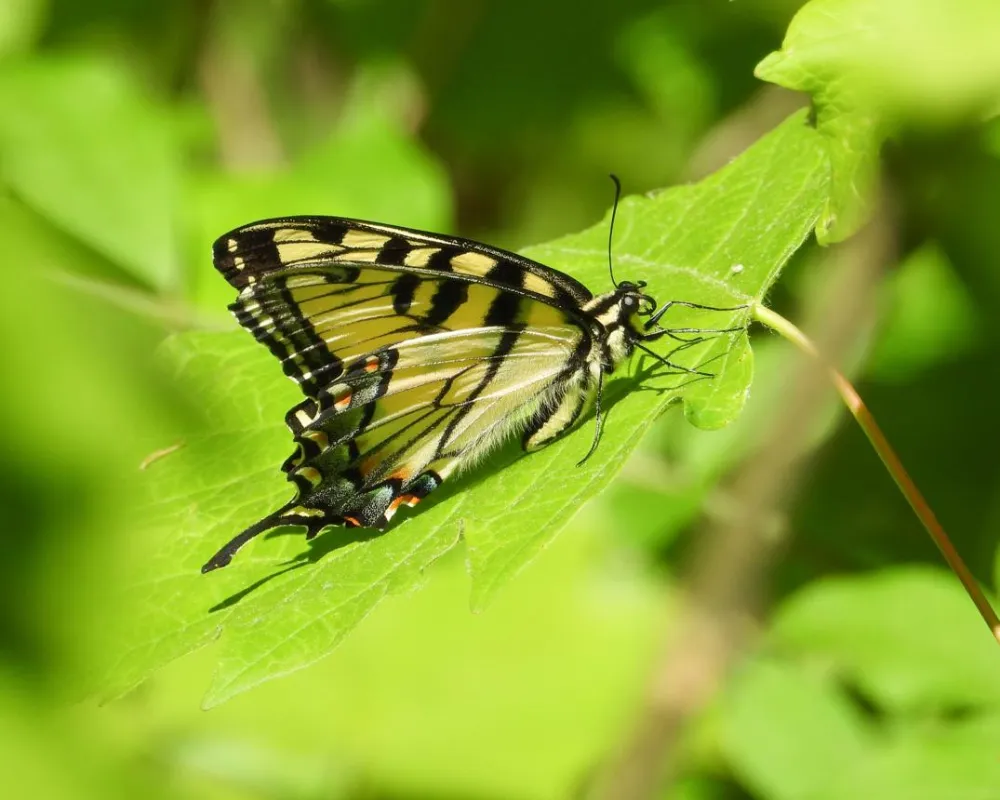
Female butterflies of many species use sensory structures on their forelegs to evaluate potential egg-laying plants.
Can Butterflies Taste Sugar?
Yes. Butterflies can detect certain sugars using gustatory receptors.
Sugars are important energy sources for many adult butterflies.
They can be present in floral nectar and other food resources.
The taste system helps an insect evaluate whether a substance contains useful nutrients.
However, not every gustatory receptor responds to sugar.
Some respond to salts, plant defense chemicals, or other substances.
The exact receptor repertoire varies among species.
Can Butterflies Taste Bitter Substances?
Some butterfly taste neurons respond to bitter or potentially deterrent compounds.
This can influence food choice and host plant recognition.
For example, the 2017 study of Papilio hospiton recorded sensory responses to bitter compounds in tarsal sensilla.
However, a plant compound that tastes deterrent to one insect may be useful as a host-recognition signal to another.
Therefore, the human categories sweet, salty, and bitter do not fully explain butterfly chemical ecology.
Can Butterflies Taste Salt?
Yes. Chemical sensors in butterflies can respond to salts and other dissolved minerals.
These substances can be important in nutrition and physiological regulation.
Some butterflies visit damp soil, puddles, or other mineral-rich surfaces.
They may use taste receptors to evaluate those resources.
However, behavior differs among species and between males and females.
Salt sensitivity should not be assumed identical across all butterfly groups.
Why Do Butterflies Land on People?
Butterflies may land on people for several reasons.
One possibility is that they are attracted to moisture or dissolved salts on the skin.
Human sweat contains salts that can be of interest to some insects.
Washington State University explains that butterflies may use their feet to detect salt in sweat.
However, not every butterfly that lands on a person is necessarily seeking salt.
The animal may also be stopping temporarily, exploring a surface, or responding to other environmental cues.
Butterflies do not need to recognize a person as a food source in order to investigate their skin.
Why Do Butterflies Drink From Mud?
Some butterflies gather on damp soil or puddles in a behavior called puddling.
They may take in water containing dissolved minerals.
Sodium and other nutrients can be especially valuable in certain ecological circumstances.
Male butterflies often participate in puddling, although patterns vary by species.
The taste system can help evaluate the chemical properties of these surfaces.
However, puddling involves more than taste alone.
Finding the location, landing, and using the proboscis also require other sensory and motor processes.
What Is Butterfly Puddling?
Puddling is the behavior of obtaining dissolved nutrients from moist surfaces.
Butterflies may gather around mud, wet sand, or other mineral-containing resources.
The behavior is particularly familiar in several swallowtail and pierid butterflies.
However, not every species puddles regularly.
The ecological importance depends on nutrient availability, sex, and local conditions.
Butterfly feet can contribute to assessing these surfaces through contact chemoreception.
Can Butterflies Taste Tears?
Some butterflies and moths have been observed feeding on tears from other animals.
This behavior is known as lachryphagy.
Tears can contain salts and other substances.
However, it is not a common behavior of every butterfly species.
Washington State University describes it as one of the unusual ways some butterflies obtain nutrients.
Observing a butterfly near an animal's face does not automatically prove it is feeding on tears.
Identification of the insect and its actual feeding behavior is necessary.
Do Butterflies Taste With Their Tongues?
Butterflies do not possess a human-like tongue.
Most adult butterflies drink liquids through a specialized feeding tube called the proboscis.
Chemical sensors can also occur on insect mouthparts.
However, in many butterflies, the feet provide important taste information before the insect begins feeding.
Therefore, saying butterflies taste with their feet does not mean they have no chemical detection associated with feeding structures.
How Does a Butterfly Proboscis Work?
The proboscis is a long, flexible feeding structure.
When not in use, it is commonly coiled beneath the head.
During feeding, the butterfly uncoils it and inserts it into a suitable liquid source.
Many species use the proboscis to drink flower nectar.
However, the proboscis is not identical to a human tongue.
Its primary role is fluid uptake.
Contact taste receptors on the feet may help the butterfly decide whether a particular surface is worth investigating.
How Do Butterflies Know Which Flowers Have Nectar?
Butterflies can use vision, smell, and contact chemical detection while searching for food.
Flower color, shape, and scent may provide clues before landing.
After landing, taste receptors can contribute information about accessible sugars or other compounds.
However, a butterfly does not necessarily know the exact nectar volume inside every flower from foot contact alone.
The process involves multiple sensory cues and learned or inherited preferences.
These abilities help butterflies forage efficiently in environments containing many plant species.
Do Butterflies Smell With Their Feet?
Taste and smell are both forms of chemical sensing, but they are usually distinguished by the type of interaction with chemical substances.
Taste generally involves contact with chemicals on a surface or in a liquid.
Smell generally involves detecting airborne molecules.
Butterfly antennae are important in olfaction.
Feet are especially well documented for contact taste.
However, insect chemical sensing is biologically more diverse than these simple categories imply.
The accurate conclusion is that butterflies can use different sensory organs to detect different chemical cues.
Can Butterflies Smell With Their Antennae?
Yes. Butterfly antennae contain sensory structures that detect airborne chemical information.
Odors can help butterflies find flowers and recognize suitable habitats.
Chemical signals can also be relevant during mating.
However, antennae are not simply noses in the human anatomical sense.
They are multifunctional insect sensory organs.
Different types of sensilla can respond to different physical or chemical stimuli.
Butterfly Taste vs. Butterfly Smell
| Feature | Taste | Smell |
|---|---|---|
| Typical stimulus | Chemicals contacted directly | Airborne chemical molecules |
| Important structures | Tarsal gustatory sensilla and some other body regions | Antennal olfactory sensilla |
| Common function | Host plant evaluation and food assessment | Finding flowers, habitats, or chemical signals |
| Example | Female tapping a leaf before egg laying | Butterfly detecting floral odor before landing |
The distinction is useful for understanding the main functions, although insect sensory systems can be more complicated than a strict two-category division.
Can Caterpillars Taste?
Yes. Caterpillars possess taste-sensitive structures that help them evaluate food.
Unlike many adult butterflies, caterpillars usually feed by chewing plant material.
Their mouthparts contain chemosensory structures that respond to plant compounds.
These can help determine whether a plant is suitable for feeding.
The 2025 review of host plant selection described how caterpillars and adult butterflies use different sensory organs to interact with host plant chemicals.
However, the specific structures and receptors vary among species.
How Do Caterpillars Recognize Their Food Plants?
Caterpillars can use taste receptors on their feeding structures to detect plant chemicals.
Some compounds encourage feeding.
Others can discourage it.
These responses are shaped by the evolutionary relationship between the insect and its host plants.
For example, compounds that deter many insects can serve as recognition cues for specialists adapted to those plants.
However, caterpillar food choice also depends on experience, plant condition, and the available environment.
Are Butterfly Feet More Sensitive Than Human Tongues?
This question cannot be answered with one universal ranking.
Butterfly taste receptors and human taste receptors operate in different anatomical and ecological contexts.
Some butterfly receptors may be extremely sensitive to particular host plant compounds.
However, humans may detect other substances at different concentration thresholds.
A meaningful comparison would require controlled measurements involving the same chemical and comparable detection criteria.
Therefore, it is not scientifically justified to claim that butterfly feet are always a fixed number of times more sensitive than human tongues.
Can Butterflies Taste Poisonous Plants?
Some butterflies can detect plant chemicals that are toxic or unpalatable to other organisms.
These responses can help an adult female identify suitable or unsuitable host plants.
However, a chemical that is harmful to one insect may be tolerated or even preferred by another.
The 2025 host selection review describes specialized receptors involved in detecting plant defense compounds.
In the butterfly Atrophaneura alcinous, females use foreleg taste structures to detect compounds associated with their host plants.
These findings demonstrate that plant chemical defenses can become part of an insect's host-recognition system.
What Did the 2025 Butterfly Taste Review Find?
A scientific review published in 2025 examined host plant selection through taste in butterflies.
It discussed how adult females use foreleg gustatory sensilla to recognize chemicals important for egg laying.
The review also examined how caterpillars detect plant substances through their mouthparts.
Research on Atrophaneura alcinous identified responses to aristolochic acid and sequoyitol.
The findings showed that adult and larval stages can possess different but complementary systems for interacting with the chemical environment of host plants.
However, the results are species-specific and should not be treated as identical across every butterfly lineage.
Why Is Butterfly Taste Important to Evolution?
Butterfly host plant selection is closely connected to the evolution of plant-insect relationships.
Many butterfly species specialize on particular plant groups.
The ability to detect distinctive host plant chemicals can support this specialization.
Changes in taste receptor genes may influence which plants are recognized as suitable.
Over evolutionary time, such differences can contribute to ecological divergence among butterfly populations or species.
The 2013 Heliconius study found variation in the number and expression of certain gustatory receptor genes.
This provided evidence that host-selection behavior can be associated with changes in sensory gene families.
However, evolutionary specialization involves many interacting traits rather than taste receptors alone.
Do All Butterflies Taste With Their Feet?
Foot-based chemical sensing is widespread and well documented in several butterfly groups.
However, the exact receptors, sensilla, and behaviors differ among species.
Scientists have investigated swallowtails, cabbage whites, and Heliconius butterflies in particular detail.
It is therefore reasonable to describe foot tasting as a characteristic butterfly ability.
However, not every living butterfly species has been examined experimentally.
The strongest scientific conclusions identify the relevant species and biological context rather than claiming every butterfly responds identically.
How Do Scientists Study Butterfly Taste?
Researchers use several methods to investigate insect gustation.
Microscopy reveals the structures of taste sensilla.
Electrophysiological recordings measure how sensory neurons respond to chemical stimulation.
Gene expression studies identify potential receptor proteins.
Behavioral experiments measure whether a female accepts or rejects a plant for egg laying.
Some researchers also reduce the activity of particular receptor genes to test their function.
The 2011 Papilio xuthus study combined molecular, physiological, and behavioral methods.
This made it possible to connect one specific receptor with chemical detection and an important reproductive behavior.
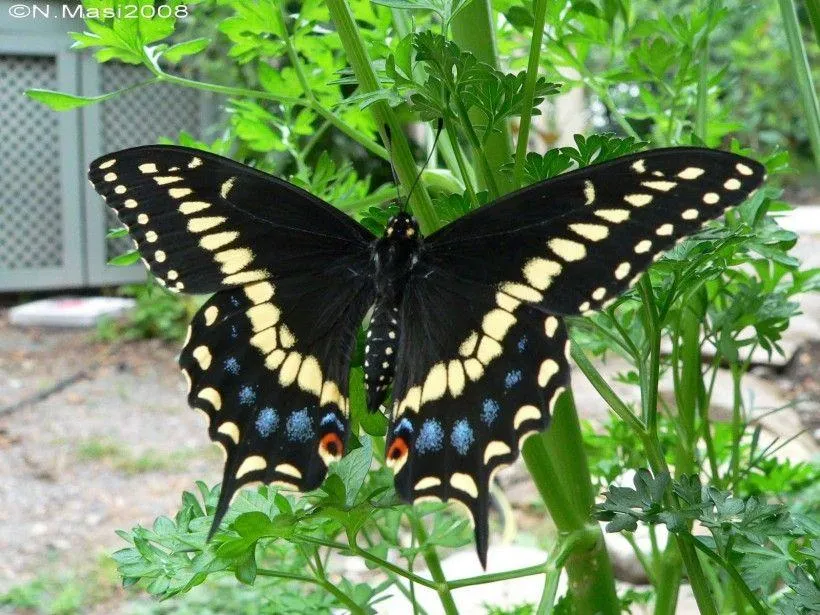
Female swallowtail butterflies evaluate potential host plants through contact with specialized taste sensors in their feet.
Frequently Asked Questions
Can butterflies taste with their feet?
Yes. Butterflies have gustatory receptors on their legs, especially on the tarsi, that detect certain chemicals through contact.
Why do butterflies taste with their feet?
Foot-based tasting helps them evaluate surfaces, including food sources and plants suitable for egg laying.
How do butterflies taste plants?
Specialized sensory structures on their feet detect chemical compounds and transmit information through the nervous system.
Why do female butterflies tap leaves?
In many species, females drum their forelegs on leaves to sample chemicals associated with suitable host plants.
Do butterflies have taste buds?
They have chemical taste receptors and gustatory sensilla, but not human-style taste buds on a tongue.
Do monarch butterflies taste milkweed?
Female monarchs use chemical and other sensory cues to identify milkweed plants that can support their caterpillars.
Can butterflies taste sugar?
Yes. Many butterflies can detect sugars through their gustatory systems.
Can butterflies taste salt?
Yes. Some butterflies detect and seek salt-containing moisture or other mineral resources.
Why do butterflies land on people?
They may be exploring the surface or detecting moisture and salts, including substances in human sweat.
Why do butterflies gather around mud?
Some species engage in puddling to obtain water and dissolved nutrients from moist soil.
Do male butterflies taste with their feet?
Yes. Males also possess taste receptors, although females of some species have more specialized structures related to host plant selection.
Do butterflies smell with their feet?
Feet are especially important for contact taste, while antennae often play major roles in detecting airborne odors.
Can caterpillars taste?
Yes. Caterpillars have taste-sensitive structures associated with their mouthparts that help them evaluate food plants.
Do butterflies use their feet to choose where to lay eggs?
Yes. In several studied species, female butterflies detect host plant chemicals through foreleg gustatory receptors before laying eggs.
Are butterfly feet more sensitive than human tongues?
There is no reliable universal comparison. Sensitivity depends on the chemical and species being tested.
The Bottom Line
Butterflies really can taste with their feet.
Specialized gustatory sensilla on the legs detect chemicals on leaves, flowers, and other surfaces.
This ability is particularly important for female butterflies because their caterpillars often require specific host plants.
Scientific experiments have identified individual taste receptors that help butterflies recognize suitable egg-laying plants.
However, butterflies also use vision, smell, and other sensory information when making decisions.
Their foot-based taste system is one part of a sophisticated biological strategy connecting insect senses, plant chemistry, reproduction, and evolution.
Sources & Further Reading
A Gustatory Receptor Involved in Host Plant Recognition for Oviposition of a Swallowtail Butterfly (2011). Nature Communications. Primary experimental evidence for the PxutGr1 receptor and synephrine detection.
Female Behaviour Drives Expression and Evolution of Gustatory Receptors in Butterflies (2013). Research on female-biased gustatory receptor expression in Heliconius butterflies.
Taste-Testing Tarsi: Gustatory Receptors for Glucosinolates in Cabbage Butterflies (2021). Discussion of specialized plant chemical receptors in cabbage white butterflies.
Taste Input From Tarsal Sensilla Is Related to Egg-Laying Behavior in Papilio hospiton (2017). Electrophysiological evidence linking taste sensitivity and host plant selection.
Host Plant Selection Based on Taste in Butterflies: Adult Egg Laying and Larval Feeding (2025). Review of adult and larval host plant chemical sensing.
Washington State University (2026) — How Do Butterflies Taste With Their Feet? Entomologist-supported explanation of foot taste, sweat salts, and host plant selection.
Smithsonian Institution — Butterfly Sensory Educational Notes. Background on how butterflies use antennae, feet, and the proboscis.