No, ants do not have lungs. Instead, they breathe through a network of tiny openings called spiracles and branching air tubes known as tracheae. Oxygen enters through the spiracles, travels along the tracheal system, and reaches tissues throughout the ant's body. Carbon dioxide moves in the opposite direction and eventually leaves through the respiratory openings. Unlike humans, ants do not need lungs or red blood cells to deliver most of the oxygen required by their tissues.
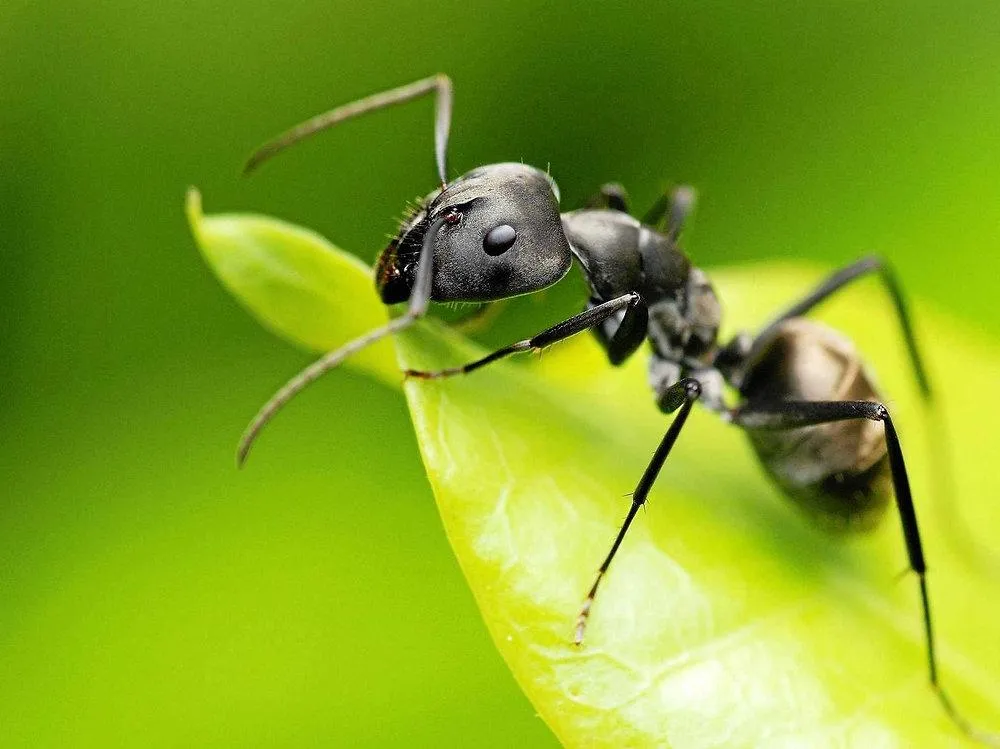
Ants breathe through tiny openings along their bodies rather than using lungs like humans.
How Do Ants Breathe Without Lungs?
Ants use a respiratory system called the tracheal system.
This system consists of branching, air-filled tubes that distribute oxygen to the ant's tissues.
Air enters through small external openings called spiracles. These openings connect to larger tracheal tubes, which divide into progressively smaller branches.
The finest branches, called tracheoles, reach close to the cells that need oxygen.
Oxygen moves from the air-filled tubes into the surrounding tissues, while carbon dioxide moves toward the respiratory system for removal.
This arrangement differs fundamentally from the human respiratory system.
In humans, oxygen enters the lungs and is transported around the body primarily by blood.
In ants, oxygen is delivered largely through the tracheal network itself.
What Are Spiracles in Ants?
Spiracles are tiny respiratory openings located along the sides of an ant's body.
They connect the outside environment to the internal tracheal system.
Ants generally have spiracles in the thoracic and abdominal regions, although their precise arrangement varies among species.
Each spiracle is associated with structures that help regulate gas movement and limit unnecessary water loss.
Spiracles are extremely small, so they are difficult to see with the naked eye.
They are not equivalent to nostrils, and ants do not breathe through their mouths in the way humans do.
Harvard Forest identifies spiracles as the principal openings through which ants take in oxygen and release carbon dioxide.
Where Are an Ant's Breathing Holes?
The breathing openings are positioned along the body rather than on the face.
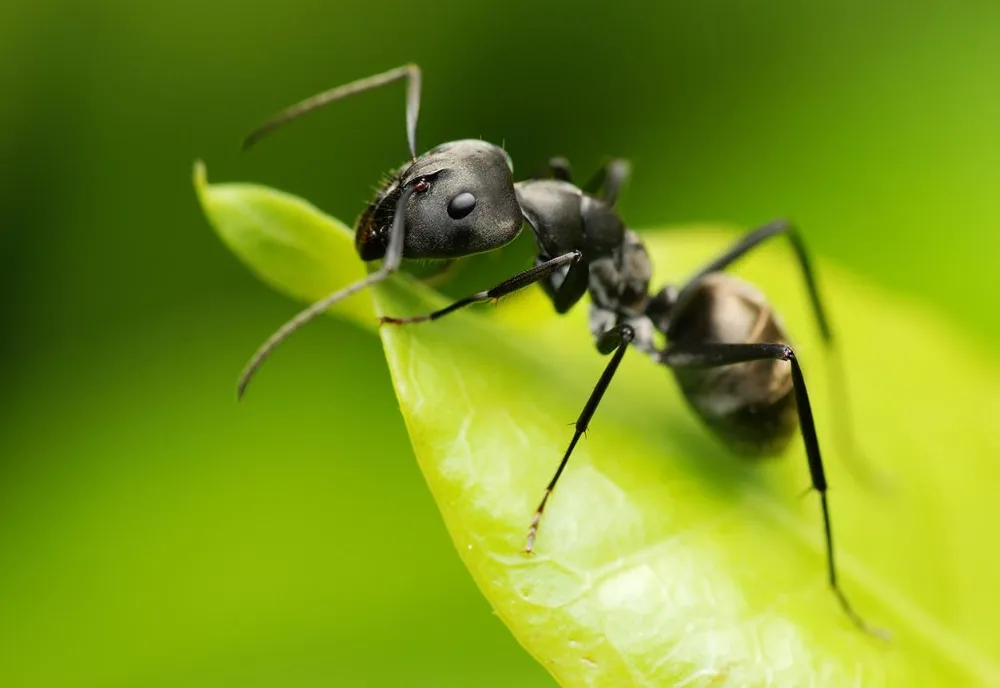
An ant's body consists of a head, a thoracic region, a narrow waist, and an enlarged rear abdominal region called the gaster.
The respiratory openings occur on specific body segments and lead to internal air passages.
Because ants have a hard external skeleton, or exoskeleton, gases cannot simply diffuse rapidly through the entire body surface.
The spiracles provide controlled pathways for air to enter and leave.
Different ant species may have different spiracle sizes and arrangements associated with their anatomy and physiology.
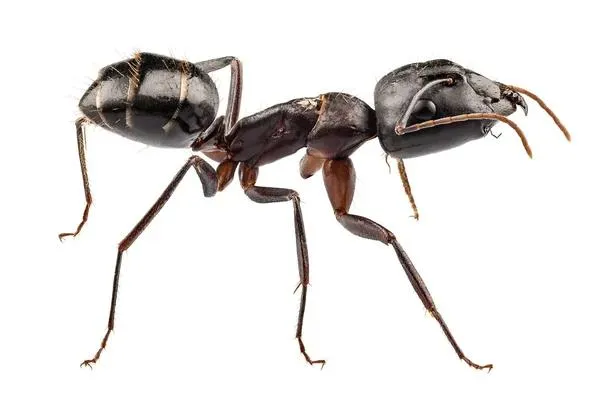
A side view of an ant helps illustrate the body regions where microscopic respiratory spiracles are located.
How Does an Ant's Tracheal System Work?
The tracheal system forms a network of tubes extending through the insect's body.
Its main components include:
Spiracles: External openings that connect the respiratory system to the air.
Tracheal trunks: Larger tubes that carry air through major body regions.
Tracheal branches: Smaller tubes that distribute gases toward organs and tissues.
Tracheoles: Very fine terminal tubes that allow gas exchange close to living cells.
The tracheae are reinforced with specialized cuticular structures that help prevent collapse while allowing flexibility.
This is important because an ant's body must continue functioning as it walks, climbs, bends, and performs other activities.
Some insects also use body movements or internal pressure changes to help move air through the tracheal system.
The importance of active ventilation varies among insects and environmental conditions.
Do Ants Breathe Oxygen?
Yes. Ants need oxygen to survive.
Like other aerobic animals, ants use oxygen in cellular respiration, a process that helps release usable energy from nutrients.
This energy supports walking, feeding, digestion, nervous-system activity, and other essential functions.
When oxygen reaches cells, it participates in metabolic reactions that produce energy in the form of ATP.
Carbon dioxide is produced as a waste product of metabolism and must be removed.
The tracheal system helps maintain this exchange.
Without sufficient oxygen, an ant cannot maintain normal cellular activity indefinitely.
Do Ants Breathe Through Their Mouths?
No. Ants do not normally breathe through their mouths.
Their mouths are used for feeding and manipulating food, while their respiratory system relies on spiracles connected to tracheal tubes.
An ant's antennae also do not function as respiratory tubes.
Antennae are primarily sensory structures involved in detecting chemical signals, touch, and other environmental information.
This distinction explains why insect breathing differs substantially from the breathing mechanisms of mammals.
Can Ants Hold Their Breath?
Ants do not hold their breath in the same way humans voluntarily stop breathing.
However, insect spiracles can open and close, allowing changes in the movement of gases between the body and the environment.
In some insects, gas exchange occurs in intermittent or discontinuous cycles.
Researchers studying the desert ant Cataglyphis bicolor found that respiratory activity changes between resting and active conditions.
The study documented differences in how thoracic and abdominal spiracles contribute to gas exchange.
These patterns demonstrate that insect respiration can be regulated without lungs.
However, closing spiracles does not allow an ant to survive indefinitely without oxygen.
Can Ants Breathe Underwater?
Most terrestrial ants cannot obtain oxygen from water as efficiently as animals with aquatic gills.
Their tracheal systems are primarily adapted to breathing air.
However, some ants can tolerate temporary immersion under particular conditions.
For example, air trapped around the body or within the tracheal system may provide a temporary source of oxygen.
Some ant species also have behaviors or physical adaptations that reduce exposure to flooding.
The ability to survive underwater depends on species, water temperature, oxygen availability, and the duration of immersion.
It is therefore inaccurate to claim that all ants can breathe underwater or survive a particular number of hours while submerged.
Can Ants Drown?
Yes. Ants can drown when immersion prevents them from obtaining enough oxygen.
Although some ants survive temporary flooding, this does not mean they can remain underwater indefinitely.
Water may interfere with normal gas exchange through the spiracles.
Low oxygen availability can eventually prevent normal cellular respiration.
However, apparent immobility does not always indicate death.
Cool temperatures and oxygen deprivation can reduce insect activity, and some individuals may recover if suitable conditions return before irreversible damage occurs.
Survival varies greatly between species and circumstances.
How Do Fire Ants Survive Floods?
Some fire ants are known for forming floating rafts during floods.
Workers link their bodies together, creating a living structure that can support colony members at the water surface.
The raft's organization and the water-repellent properties of the ants' bodies help keep many individuals in contact with air.
This behavior is particularly associated with the red imported fire ant (Solenopsis invicta).
The ants do not develop underwater lungs or gills.
Instead, rafting allows them to avoid prolonged complete submersion and maintain access to atmospheric oxygen.
Flood survival also depends on environmental conditions and the colony's ability to reach suitable ground.
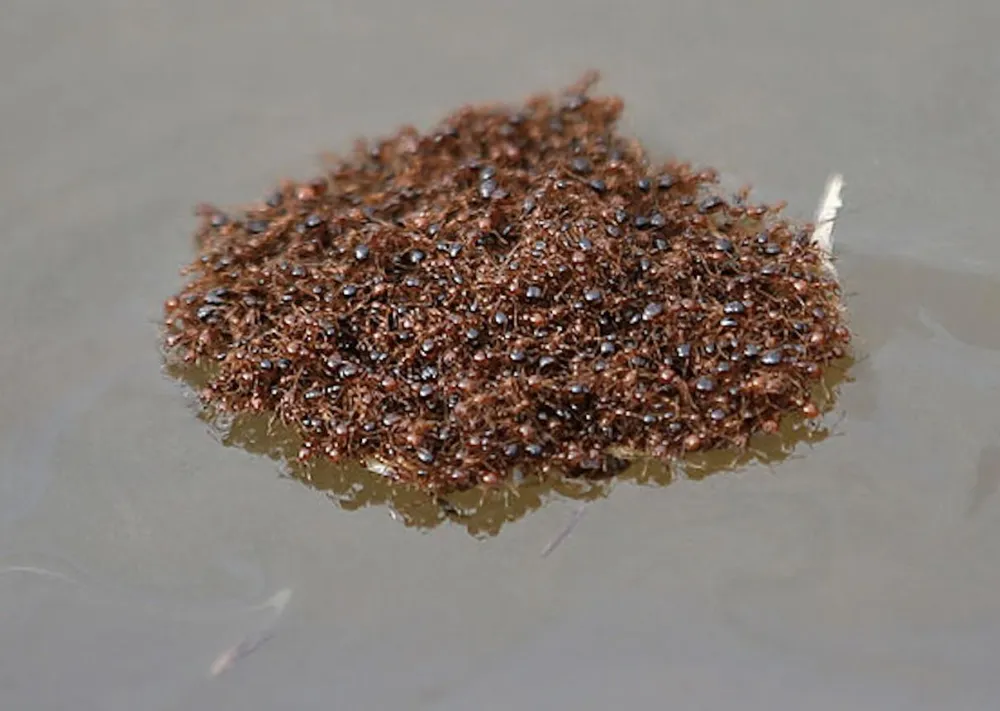
Some fire ants survive flooding by linking their bodies into floating rafts that maintain contact with air.
Do Ants Have Blood to Carry Oxygen?
Ants have a circulating body fluid called hemolymph, but it does not perform the same primary oxygen-transport function as human blood.
In humans, red blood cells contain hemoglobin, which carries oxygen from the lungs to body tissues.
In ants and most other insects, the tracheal system delivers oxygen directly to tissues.
Hemolymph circulates nutrients, signaling molecules, metabolic products, and other substances.
It also contributes to immune defense and internal physiological regulation.
However, its role in routine oxygen transport is generally much smaller than that of blood in vertebrates.
Do Ants Have Hearts?
Yes. Ants have a circulatory organ, although it is very different from a human heart.
Insects possess an open circulatory system, which allows hemolymph to move through the body cavity.
A dorsal vessel helps circulate this fluid.
The rear portion of this vessel functions as a heart-like pumping structure.
Unlike the human cardiovascular system, the ant's circulatory system is not primarily responsible for distributing oxygen from lungs.
Instead, the respiratory and circulatory systems perform largely separate roles.
Do Ants Breathe Faster When They Run?
Activity increases an ant's demand for metabolic energy and oxygen.
As insects become more active, their gas exchange requirements generally increase.
Their respiratory systems can respond through changes in spiracle activity, gas movement, and internal ventilation.
Research on Cataglyphis bicolor demonstrated that the relative contributions of different spiracles change during activity.
However, an ant does not necessarily breathe faster in the same visible way a running human increases chest movements.
Because insect respiration involves both diffusion and specialized ventilation mechanisms, changes in breathing are often difficult to observe directly.
Why Are Ants So Small?
The structure of insect respiratory systems is one factor associated with limits on insect body size.
Gas diffusion becomes more challenging across increasing distances, particularly when oxygen demands are high.
Large insects may require more elaborate tracheal systems and active ventilation mechanisms.
However, respiratory anatomy is not the only factor influencing insect size.
Body size also depends on evolutionary history, development, ecology, temperature, food availability, and mechanical constraints.
Some insects are considerably larger than common worker ants, demonstrating that tracheal breathing can support a wide range of body sizes.
Do All Insects Breathe Like Ants?
Most adult terrestrial insects use a tracheal respiratory system with spiracles.
Examples include beetles, butterflies, grasshoppers, bees, and many other insects.
However, respiratory adaptations differ among groups.
Some aquatic insect larvae obtain oxygen from surrounding water using specialized gills or body surfaces.
Other aquatic insects carry air bubbles or access atmospheric oxygen at the water surface.
Therefore, the basic tracheal system is widespread among insects, but not all insects obtain oxygen in exactly the same way.
Ant Breathing vs. Human Breathing
| Feature | Ants | Humans |
|---|---|---|
| Lungs | No | Yes |
| Main breathing openings | Spiracles | Nose and mouth |
| Air distribution | Tracheal tubes | Airways and lungs |
| Main oxygen delivery | Directly through tracheal system | Through blood circulation |
| Circulatory fluid | Hemolymph | Blood |
| Respiratory regulation | Spiracle control and gas movement | Breathing muscles and neural regulation |
Both ants and humans require oxygen, but their respiratory systems have evolved very different ways of delivering it to cells.
Frequently Asked Questions
How many lungs does an ant have?
Ants have zero lungs. They use spiracles and branching tracheal tubes to exchange oxygen and carbon dioxide.
Do ants have noses?
No. Ants do not have human-like noses. They rely on antennae for many sensory functions and spiracles for breathing.
Where do ants breathe from?
Ants breathe through small spiracles located along their thoracic and abdominal regions.
Do ants need oxygen?
Yes. Ants need oxygen for cellular respiration and energy production.
Can ants breathe in water?
Most terrestrial ants cannot extract dissolved oxygen from water using gills. Some can survive temporary immersion through air retention or other adaptations.
Can an ant suffocate?
Yes. If an ant cannot obtain enough oxygen, its normal cellular functions will eventually fail.
Do queen ants have lungs?
No. Queen ants also use tracheal respiratory systems with spiracles. Their body size and physiology differ from workers, but they do not possess lungs.
Can ants close their breathing holes?
Ant spiracles can be regulated, allowing insects to adjust gas exchange and reduce water loss.
Do ants breathe through their skin?
Ants obtain most of their oxygen through spiracles and internal tracheal tubes, not by relying on gas exchange across their entire outer body surface.
Do ants breathe while sleeping?
Yes. Ants continue to exchange gases during periods of rest or reduced activity because their cells still need oxygen.
The Bottom Line
Ants do not have lungs, but they still need oxygen to survive.
They breathe through tiny openings called spiracles, which connect to an extensive network of tracheal tubes. This network delivers oxygen directly to body tissues and allows carbon dioxide to leave.
The ant respiratory system is remarkably different from human breathing, but it provides an effective way for these small insects to remain active without lungs.
Sources & Further Reading
The following university resources and scientific research explain ant anatomy, spiracles, tracheal respiration, and the regulation of gas exchange in insects.
Harvard Forest — Ant Body Structure. Explains ant spiracles, oxygen uptake, and the differences between insect and human respiration.
North Carolina State University — Insect Respiratory System. Describes tracheae, tracheoles, spiracles, gas exchange, and insect ventilation.
Oregon State University — Insect Internal Anatomy. Explains the structure of the insect tracheal system and its respiratory functions.
Ventilation in Cataglyphis bicolor: Regulation of Carbon Dioxide Release from the Thoracic and Abdominal Spiracles. Peer-reviewed research on gas exchange and spiracle activity in desert ants.