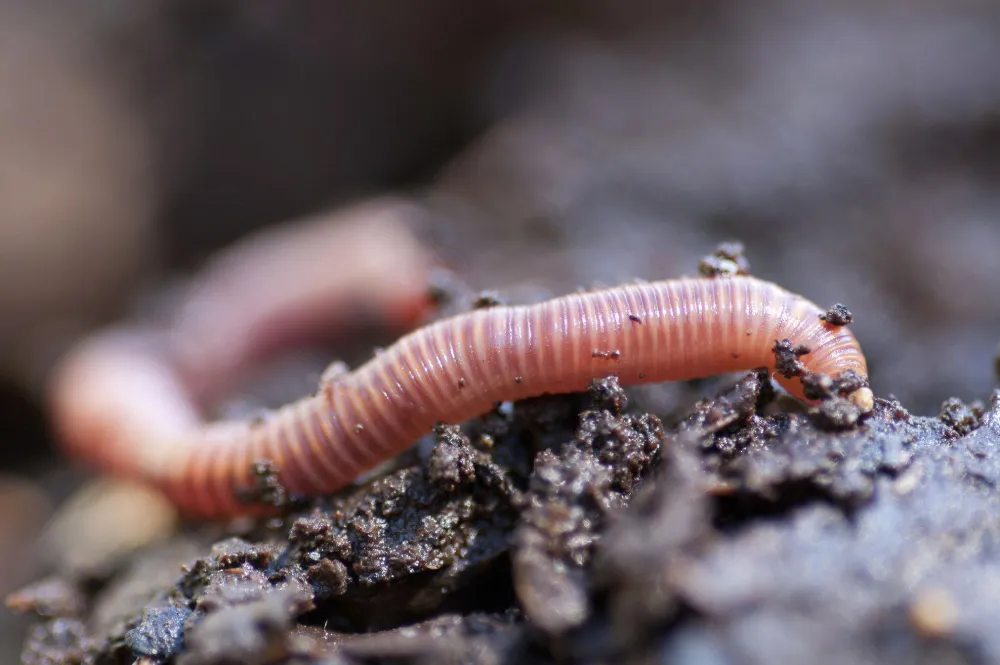
No, earthworms do not have eyes, but they can sense light through their skin. Instead of eyeballs, lenses, or retinas, common earthworms have specialized light-sensitive cells called photoreceptors. These cells are found in different parts of their bodies, particularly near the front end. They help earthworms detect changes in brightness and respond by moving toward darker, more sheltered places. Earthworms cannot see detailed images like humans, but their ability to detect light is an important adaptation for living underground.
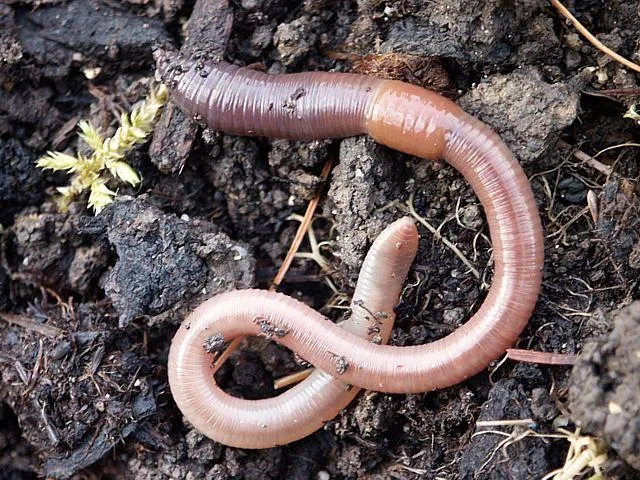
Earthworms have no eyes, but light-sensitive cells in their skin help them respond to changes in brightness.
How Do Earthworms Sense Light Without Eyes?
Earthworms detect light using specialized sensory cells called photoreceptors.
Unlike the photoreceptors in human eyes, these cells are not arranged into a large image-forming organ.
Instead, they are distributed through parts of the earthworm's skin and associated sensory tissues.
When light reaches these cells, it can trigger physiological signals that influence the worm's behavior.
For example, an earthworm exposed to strong light may contract, change direction, or move toward a shaded area.
These responses help the animal avoid environmental conditions that could be dangerous.
The University of Illinois Extension explains that earthworms are especially sensitive to light near their anterior, or front, end.
Scientists have studied the location and microscopic structure of these sensory cells for more than a century.
Where Are an Earthworm's Light-Sensitive Cells?
Earthworm photoreceptors are found in the skin, with particularly important concentrations toward the front of the body.
The anterior end includes a small structure called the prostomium, which extends over the mouth.
In the common earthworm (Lumbricus terrestris), researchers have identified light-sensitive cells in multiple body segments.
Photoreceptors are particularly abundant in the anterior region, although they also occur farther along the body.
A classic study by Walter N. Hess examined the distribution, structure, and function of these cells.
The research demonstrated that their arrangement is more complex than a single patch of light-sensitive tissue.
However, even where photoreceptor cells are present, they do not form a conventional eye.
Earthworms cannot simply focus light through a lens and produce a detailed image of their surroundings.
Can Earthworms Actually See?
Earthworms can detect light, but they do not see in the ordinary image-forming sense.
Human vision relies on eyes that focus light onto organized retinas, allowing the brain to process shapes, colors, and detailed visual patterns.
Earthworms lack those image-forming structures.
Instead, their sensory cells help them detect differences in illumination.
An earthworm may respond to an increase in brightness without knowing the detailed shape of the object producing the light.
For example, movement from dark soil into an exposed area may trigger avoidance behavior.
This response does not require the worm to recognize trees, birds, people, or other objects visually.
Its light sensitivity provides environmental information rather than detailed sight.
Why Do Earthworms Avoid Light?
Many earthworms avoid strong light because exposed environments can increase the risk of dehydration and predation.
Earthworms breathe through their moist skin, so maintaining suitable moisture levels is essential for survival.
Sunlight often coincides with warmer, drier conditions that increase water loss.
Exposed earthworms may also become more visible to predators such as birds.
Moving toward darker environments can therefore provide several advantages:
Moisture conservation: Shaded soil generally reduces exposure to drying conditions.
Predator avoidance: Underground shelters make worms less accessible to many predators.
Temperature protection: Burrows can buffer rapid changes in surface temperature.
Suitable habitat: Moist soil supports respiration, feeding, and movement.
The tendency to move away from light is called negative phototaxis.
However, responses depend on species, light intensity, environmental conditions, and time of day.
What Is Negative Phototaxis in Earthworms?
Negative phototaxis is movement away from a source of light.
In many earthworms, illumination of the body can trigger movements that help the animal return to darkness.
The response is particularly noticeable when a worm is suddenly exposed to bright light.
Phototaxis differs from vision because the animal does not need to form a detailed visual image.
It only needs sensory information that helps guide movement relative to a light source.
Some experiments have also shown that earthworm responses to light are more complicated than a universal tendency to avoid every light level.
For example, research on Lumbricus terrestris has documented differences in responses to weak and strong illumination.
Therefore, the most accurate general statement is that earthworms commonly avoid bright, exposed conditions rather than claiming that they always move away from any amount of light.
Can Earthworms Detect Light With Their Whole Bodies?
Earthworms can detect light through photoreceptors distributed across several regions of their bodies.
However, sensitivity is not identical everywhere.
The highest concentrations of known photoreceptors in Lumbricus terrestris are associated with parts of the anterior region.
Additional sensory cells occur in other body segments, including regions toward the tail.
This distribution may help earthworms respond when different portions of the body become exposed.
For example, a worm partly emerging from its burrow may detect environmental light even when much of its body remains underground.
The specific distribution and sensitivity of the cells can vary among earthworm species.
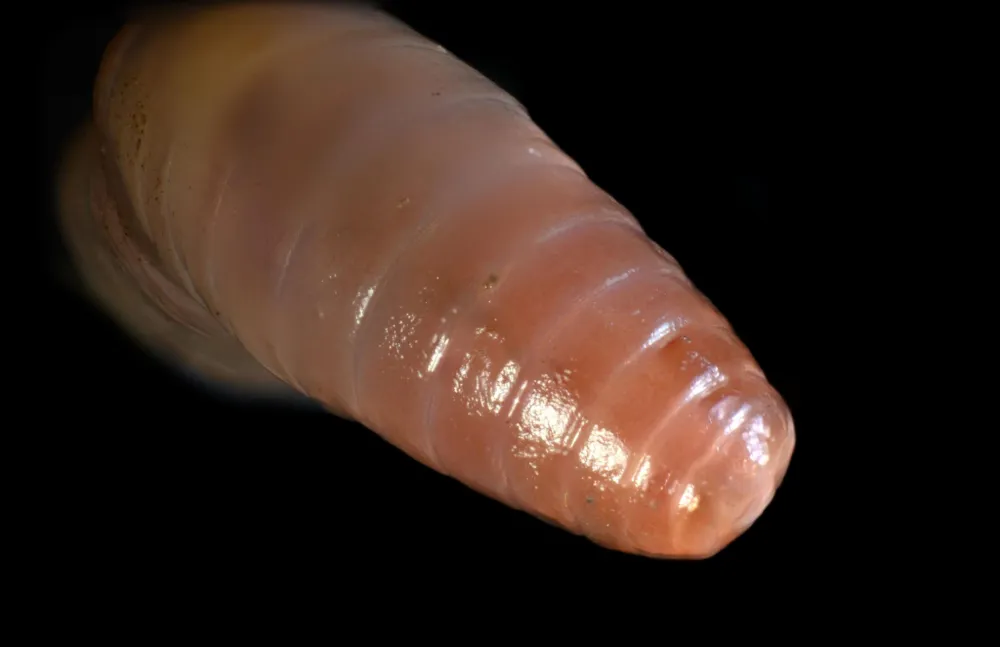
The anterior region of an earthworm contains important light-sensitive tissues, although no visible eyes are present.
Do Earthworms Have Brains?
Earthworms have nervous systems that include a pair of cerebral ganglia near the front of the body.
These structures are sometimes described as a simple brain.
They help coordinate sensory information and behavior.
A ventral nerve cord extends along the body and connects with segmental nerves and ganglia.
This organization allows signals to travel between different body regions.
The nervous system coordinates activities such as movement, feeding, touch responses, and reactions to environmental changes.
Although earthworms lack eyes, signals from light-sensitive cells can influence their nervous-system activity.
Having a nervous system does not automatically mean an animal has human-like perception or thought.
Do Earthworms Have Ears?
No. Earthworms do not have external ears or specialized hearing organs like mammals.
However, they can detect physical disturbances and vibrations through sensory structures in their bodies.
These responses may help worms react to movement in their surroundings.
For example, vibrations transmitted through soil can trigger movement or retreat into a burrow.
It is important to distinguish detecting vibrations from hearing airborne sounds in the same way humans do.
Earthworms rely on several sensory pathways rather than conventional eyes and ears.
How Do Earthworms Find Their Way Underground?
Earthworms navigate through soil using a combination of touch, chemical sensing, moisture detection, and other environmental cues.
Their bodies contain sensory receptors that respond to contact with soil particles and surrounding surfaces.
They can also detect chemical conditions relevant to feeding and habitat selection.
Earthworms move using coordinated muscle contractions and tiny bristles called setae.
Alternating contractions of circular and longitudinal muscles allow the body to extend, shorten, and move through the soil.
The setae help anchor different body sections during movement.
These mechanisms allow earthworms to move effectively despite having no legs or image-forming eyes.
How Do Earthworms Find Food Without Seeing?
Earthworms feed on organic material associated with soil, including decaying plant matter and microorganisms.
They do not need detailed vision to locate these resources.
Chemical and tactile information can help them respond to suitable material in their environment.
Different species have different feeding strategies.
For example, the common nightcrawler (Lumbricus terrestris) may pull leaves and other plant material toward the entrance of its burrow.
Red wigglers (Eisenia fetida) often live in surface layers rich in decaying organic matter.
These differences reflect ecological specialization, not differences in the presence of conventional eyes.
Can Earthworms Tell Day From Night?
Earthworms can respond to changes in environmental light, and some species display daily activity patterns.
The common nightcrawler is especially known for its nocturnal surface activity.
It often emerges from its burrow during the night to feed or perform other activities.
Changes in light, temperature, soil moisture, and internal biological rhythms can all influence these patterns.
A scientific study of Lumbricus terrestris at high latitudes examined how light conditions affect surface activity.
The results showed that light availability can influence when worms emerge above ground.
However, the relationship is not determined by light alone.
Earthworms also respond to seasonal and local environmental conditions.
Why Do Earthworms Come Out at Night?
Nighttime often provides conditions that favor earthworm activity near the soil surface.
Air temperatures may be lower, humidity may be higher, and direct sunlight is absent.
These conditions can reduce water loss from the skin.
For species such as Lumbricus terrestris, surface activity may include feeding and mating.
However, earthworms do not emerge only at night.
They may also appear during cloudy weather, after rain, or under other favorable conditions.
Different species occupy different soil layers and have distinct activity patterns.
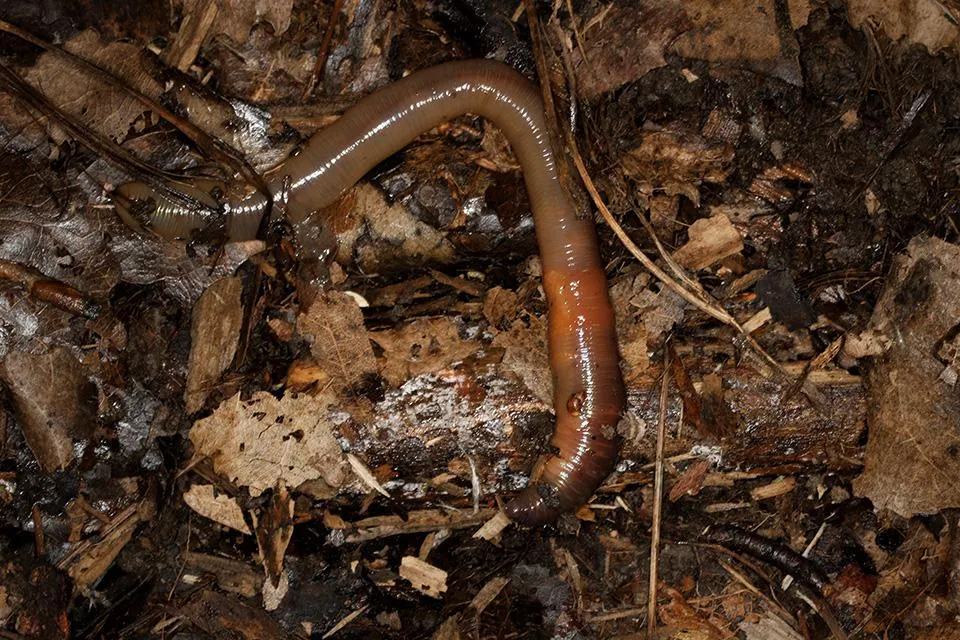
Nightcrawlers often become active near the soil surface after dark, when conditions are typically cooler and more humid.
Does Sunlight Hurt Earthworms?
Prolonged exposure to direct sunlight can be harmful to earthworms.
One major danger is dehydration.
Earthworms rely on moist skin for gas exchange, so losing too much water can interfere with respiration and other essential processes.
Strong solar radiation may also expose them to potentially damaging ultraviolet light.
Bright, hot environments can produce several forms of physiological stress at once.
However, it would be misleading to claim that every brief exposure to daylight immediately kills an earthworm.
Survival depends on moisture, temperature, exposure duration, and the species involved.
Do Baby Earthworms Have Eyes?
No. Young earthworms also lack conventional eyes.
Earthworms hatch from protective cocoons and develop the segmented body structure characteristic of their species.
Their sensory systems develop as they grow.
They do not later develop human-like eyeballs or compound eyes.
As in adults, sensory cells and nervous-system structures help young worms respond to their environment.
The exact development of photoreceptor cells can vary among species.
Do All Worms Have No Eyes?
No. The word "worm" describes many unrelated groups of elongated, soft-bodied animals.
Although familiar garden earthworms lack eyes, other animals commonly called worms may possess simple or complex visual structures.
For example:
Earthworms: Have no conventional eyes but possess light-sensitive cells.
Planarian flatworms: Many have simple eyespots that detect light.
Some marine bristle worms: Possess specialized eyes used for detecting light or movement.
Some fan worms: Have eyes on their feeding appendages that help detect approaching threats.
Many parasitic worms: Have reduced sensory structures suited to their environments.
These animals belong to different evolutionary lineages.
Therefore, an answer about earthworm eyes should not automatically be applied to every animal with a worm-like body.
Earthworm Light Sensing vs. Human Vision
| Feature | Earthworms | Humans |
|---|---|---|
| Conventional eyes | No | Yes |
| Photoreceptor cells | Yes, in skin and sensory tissues | Yes, mainly in retinas |
| Detailed image formation | No | Yes |
| Detection of light intensity | Yes | Yes |
| Visual color discrimination | No demonstrated image-forming color vision | Yes |
| Response to bright light | Commonly moves toward shelter | Multiple visual and behavioral responses |
| Main environmental senses | Touch, chemicals, moisture, light, vibrations | Vision, hearing, touch, smell, taste and others |
This comparison illustrates that detecting light is not necessarily the same as possessing eyes or detailed vision.
What Have Scientists Discovered About Earthworm Photoreceptors?
Scientific interest in earthworm light sensitivity extends back well over a century.
Early researchers examined how earthworms responded to illumination and how their sensory cells were distributed.
Microscopic investigations helped identify specialized photoreceptor cells in the skin.
Modern molecular techniques allow scientists to study proteins and genes involved in light sensing.
A 2022 study of the earthworm Eudrilus eugeniae investigated an arrestin-domain-containing gene associated with sensory regulation.
Researchers examined gene expression in the nervous system and skin and performed experiments involving gene silencing.
The results supported a role for this gene in light sensitivity and avoidance behavior.
These findings add molecular evidence to the anatomical and behavioral studies of earthworm photoreception.
However, they do not mean that every earthworm species has an identical light-sensing system.
Why Are Earthworm Senses Important for Soil Ecosystems?
Earthworm sensory abilities help them locate suitable habitats and avoid dangerous conditions.
By remaining in environments with appropriate moisture, oxygen, and food, earthworms can continue their important ecological activities.
Depending on the species, these activities include:
Breaking down organic material
Moving soil particles through burrowing
Influencing soil structure
Contributing to nutrient cycling
Changing the distribution of organic matter
Earthworms are often described as ecosystem engineers because their activities can modify soil conditions.
However, their effects vary among ecosystems and species.
Some nonnative earthworms can also disrupt ecosystems that evolved without particular earthworm groups, especially certain North American forests.
Understanding earthworm behavior and habitat requirements therefore has practical significance for ecology and soil management.
Frequently Asked Questions
How many eyes does an earthworm have?
Earthworms have zero conventional eyes. They detect light using specialized photoreceptor cells in their skin and related tissues.
Can earthworms see humans?
No. Earthworms cannot form detailed visual images or recognize human faces. They may respond to light changes, touch, and vibrations caused by nearby activity.
Do earthworms have eyes on their heads?
No. The front end contains important light-sensitive cells, but these are not organized into conventional eyes.
How do worms see without eyes?
Garden earthworms do not truly see images. Their skin contains photoreceptors that help them detect changes in light intensity.
Are earthworms blind?
Earthworms lack conventional vision, but they are not completely insensitive to light. They can detect illumination through specialized sensory cells.
Can earthworms detect colors?
Earthworms do not have demonstrated image-forming color vision. Their light-sensitive responses should not be confused with human-like color perception.
Do earthworms have brains?
Earthworms possess cerebral ganglia and a ventral nerve cord, which help process sensory signals and coordinate behavior.
Do earthworms have ears?
No. Earthworms lack conventional ears, but they can detect vibrations and physical contact through sensory structures.
Why do earthworms hide from sunlight?
Bright exposed conditions can increase dehydration and predation risks. Moving into dark, moist environments helps many earthworms avoid these dangers.
Do all worms have eyes?
No. Some worms lack eyes, while others, including certain flatworms and marine worms, possess simple or specialized visual organs.
The Bottom Line
Earthworms do not have eyes, but they can detect light through specialized photoreceptor cells in their skin.
These sensory cells help earthworms respond to changing brightness and avoid conditions that may cause dehydration or increase predation risk.
Although they cannot see detailed images, earthworms use light sensitivity together with touch, chemical signals, and vibrations to navigate their underground environments.
Their sensory adaptations demonstrate that animals can detect useful information without possessing conventional eyes.
Sources & Further Reading
The following university extension resources and scientific studies explain earthworm sensory biology, photoreceptor cells, and light-related behavior.
North Carolina State University Extension — Wormy Facts and Interesting Tidbits. Explains the absence of eyes and how earthworms detect light, touch, and vibrations.
University of Illinois Extension — Worm Facts. Describes earthworm anatomy, light sensitivity, and environmental requirements.
Hess (1925) — Photoreceptors of Lumbricus terrestris, with Special Reference to Their Distribution, Structure, and Function. Classical anatomical research on the location and function of earthworm photoreceptors.
Identification, Tissue Specific Expression Analysis and Functional Characterization of Arrestin Gene (ARRDC) in the Earthworm Eudrilus eugeniae. Molecular research investigating light-sensing mechanisms and photophobic movement.
Dew-worms in White Nights: High-Latitude Light Constrains Earthworm Behaviour at the Soil Surface. Research on the relationship between light conditions and earthworm surface activity.