Yes, spiders have blood, but it is different from human blood. The circulating body fluid of spiders is called hemolymph. It transports oxygen, nutrients, and other substances through an open circulatory system. Spider hemolymph can appear pale blue when oxygenated because many spiders use a copper-containing respiratory protein called hemocyanin instead of the iron-containing hemoglobin found in human red blood cells. Remarkably, hemolymph also helps spiders extend certain leg joints through hydraulic pressure.
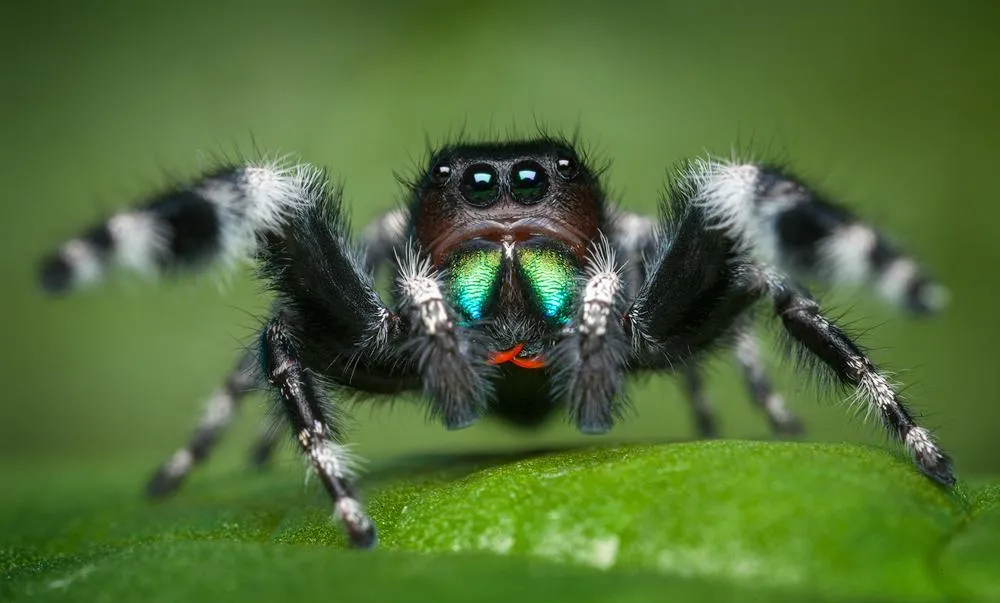
Spiders have a circulating fluid called hemolymph that supports respiration, nutrient transport, and movement.
What Is Spider Blood Called?
Spider blood is scientifically called hemolymph.
Hemolymph is the circulating fluid found in spiders and many other arthropods, including insects and crustaceans.
Although it performs some functions similar to vertebrate blood, its composition and circulation are different.
In humans, blood circulates through a closed network of arteries, veins, and capillaries.
In spiders, hemolymph is pumped through an open circulatory system.
The fluid moves through vessels and body spaces, coming into contact with internal tissues before returning to the heart.
Hemolymph performs several important functions:
Oxygen transport: Hemocyanin carries oxygen through the body.
Nutrient distribution: The fluid transports dissolved nutrients to tissues.
Waste transport: It helps move metabolic products.
Immune defense: Specialized cells participate in protective responses.
Hydraulic movement: Fluid pressure contributes to the extension of certain leg joints.
Hemolymph is therefore much more than simply a substitute for human blood.
What Color Is Spider Blood?
Spider hemolymph is often described as blue, but its actual appearance depends on its oxygenation and composition.
Oxygenated hemocyanin can produce a bluish coloration.
When hemocyanin releases oxygen, the coloration may become less noticeable.
Consequently, spider hemolymph is not necessarily bright blue under all conditions.
It may appear pale blue, nearly colorless, or slightly different depending on the species and physiological state.
The color difference between spider hemolymph and human blood results primarily from their different oxygen-carrying proteins.
Spiders generally use hemocyanin, whereas humans use hemoglobin.
Why Do Spiders Have Blue Blood?
Many spiders have bluish hemolymph because their respiratory protein contains copper.
This protein is called hemocyanin.
Hemocyanin binds oxygen through copper-containing sites within the protein.
When oxygen binds to these sites, the protein can develop a blue color.
Human hemoglobin contains iron in heme groups and gives oxygenated blood its characteristic bright red color.
The two proteins perform similar oxygen-transport functions but have different molecular structures.
Hemocyanin is dissolved in the hemolymph rather than being packaged inside red blood cells as human hemoglobin is.
This distinction is important when comparing arachnid and vertebrate circulatory systems.
Is Spider Blood Always Blue?
No. The description of spider blood as blue is a useful generalization, but it is not an exact description of every sample.
The color depends on factors such as oxygen concentration, hemocyanin concentration, lighting, and other dissolved substances.
Hemolymph may appear relatively clear when little oxygen is bound to hemocyanin.
It may look pale blue when oxygenated.
This differs from the common misconception that spiders contain a vivid, dark-blue liquid throughout their bodies.
Descriptions of spider hemolymph should also not be confused with the color of spider venom.
Venom and hemolymph are distinct biological substances with different functions.
Do Spiders Have Hearts?
Yes. Spiders have hearts.
The spider heart is an elongated, muscular structure located along the dorsal, or upper, side of the abdomen.
It pumps hemolymph through the circulatory system.
The Australian Museum describes the heart as lying along the midline of the abdomen.
In some species, its beating can be observed through relatively thin parts of the body covering.
The heart helps circulate oxygen and nutrients while maintaining internal fluid movement.
However, the spider heart does not work in exactly the same way as the four-chambered human heart.
Spiders have an open circulatory system, so their circulating fluid does not remain enclosed within a complete network of blood vessels.
How Does a Spider's Circulatory System Work?
Spiders possess an open circulatory system.
Hemolymph is pumped from the heart into major blood vessels and eventually enters spaces within the body.
These spaces form part of the hemocoel, the main body cavity through which hemolymph circulates around internal tissues.
As the fluid moves through the body, it participates in gas transport, nutrient delivery, and other physiological functions.
Hemolymph then returns toward the heart.
In spiders that have book lungs, the fluid passes through respiratory regions where oxygen exchange can occur.
Some spiders also possess tracheal respiratory structures.
The relative importance of these respiratory systems varies among spider groups.
The open circulatory arrangement is fundamentally different from the mammalian system of arteries, capillaries, and veins.
How Do Spiders Use Blood to Move Their Legs?
Spiders use hemolymph pressure to help extend certain leg joints.
This is one of the most unusual functions of spider circulation.
Unlike human legs, which rely on opposing muscle groups to bend and straighten joints, some major spider leg joints lack muscles that directly produce extension.
Instead, the spider increases internal fluid pressure to push these joints into an extended position.
Flexor muscles then bend the joints in the opposite direction.
This creates a combined muscular and hydraulic movement system.
Research has documented these mechanisms in several spider species, including hunting spiders and jumping spiders.
The arrangement allows slender legs to generate controlled movement without requiring conventional extensor muscles at every joint.
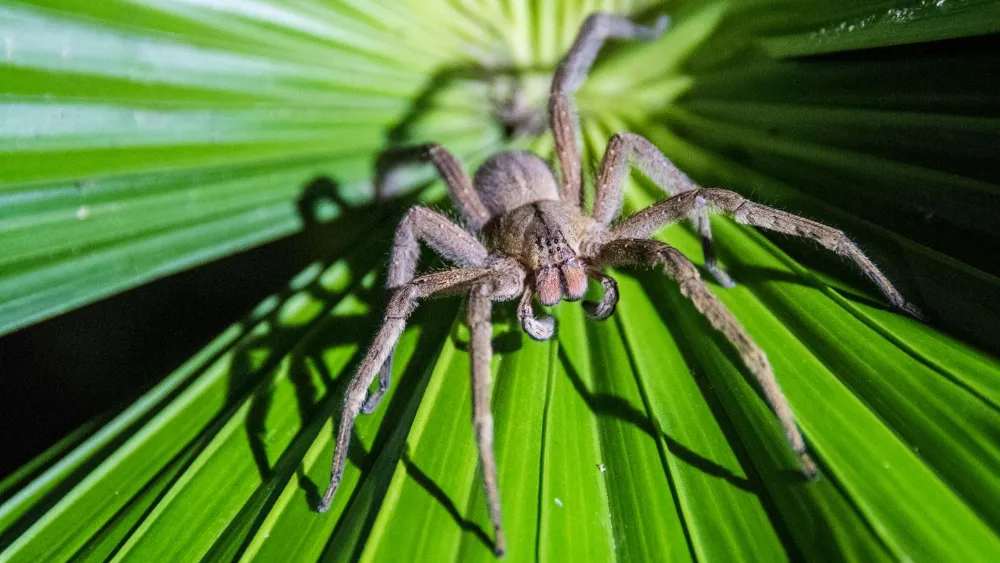
Hydraulic pressure from hemolymph helps extend certain spider leg joints, working together with muscles that produce flexion.
How Does Hydraulic Pressure Extend Spider Legs?
Hydraulic movement depends on changes in pressure within the spider's fluid-filled body compartments.
Muscular contractions in the front body region, called the prosoma, can increase hemolymph pressure.
This pressure is transmitted into spaces within the legs.
At certain joints, the internal pressure acts on flexible joint membranes and causes the joint to extend.
The hydraulic force is balanced by muscles that can bend the leg.
A 2021 study published in Soft Matter examined the fluid mechanics of jumping spider hemolymph.
The researchers found that hemolymph has complex flow properties relevant to this hydraulic system.
They also investigated the internal geometry of spider leg joints and the movement of hemolymph through them.
These findings contribute to a better understanding of how spiders coordinate fast, precise leg movements.
What Did Scientists Discover About Spider Hemolymph in 2026?
A study published in the Journal of Theoretical Biology in March 2026 examined how hemolymph moves through spider legs during muscular movement.
The researchers developed numerical models based on anatomical and physiological properties of the hunting spider Cupiennius salei.
They investigated how the dimensions of hemolymph-filled channels affect fluid movement and muscle-driven leg flexion.
The results indicated that the observed channel dimensions provide a useful balance between fluid transport and muscular performance.
The study also showed that certain changes in channel dimensions have relatively limited effects across a broad range of conditions.
This work contributes to understanding the mechanical relationship between the open circulatory system and spider locomotion.
However, it was a modeling study and should not be interpreted as direct experimental evidence that every spider species has identical leg mechanics.
Why Do Dead Spiders Curl Their Legs?
Dead spiders often have their legs curled inward because the mechanisms responsible for extending certain joints no longer function normally.
While alive, spiders use hemolymph pressure to extend important leg joints.
Flexor muscles and passive mechanical properties contribute to bending the legs.
After death, normal regulation of hydraulic pressure stops.
The remaining mechanical forces can cause the legs to fold inward.
This produces the familiar curled posture seen in many dead spiders.
However, not every spider dies in exactly the same position.
Body size, species, physical contact with surfaces, and the circumstances of death can affect the final posture.
Do All Spiders Have Blue Blood?
Hemocyanin-based oxygen transport is widespread among spiders.
However, the appearance and concentration of the circulating fluid can vary.
Differences in species, oxygenation, and physiological state influence how hemolymph looks.
Therefore, it is more accurate to say that spider hemolymph can appear blue when oxygenated than to claim that every spider always contains visibly blue blood.
The broad similarities in circulation reflect shared arachnid anatomy, but individual physiological details can differ.
Do Tarantulas Have Blood?
Yes. Tarantulas have hemolymph and an open circulatory system like other spiders.
Their heart pumps hemolymph through the body.
Hemocyanin contributes to oxygen transport, while internal pressure also plays a role in leg movement.
Because tarantulas are relatively large spiders, their anatomy has been studied in research on circulatory function and movement.
The University of Chicago journal Physiological Zoology published research examining open circulation in tarantulas and other spiders.
These studies demonstrate that hemolymph circulation is an essential component of spider physiology.
Do Jumping Spiders Have Blood?
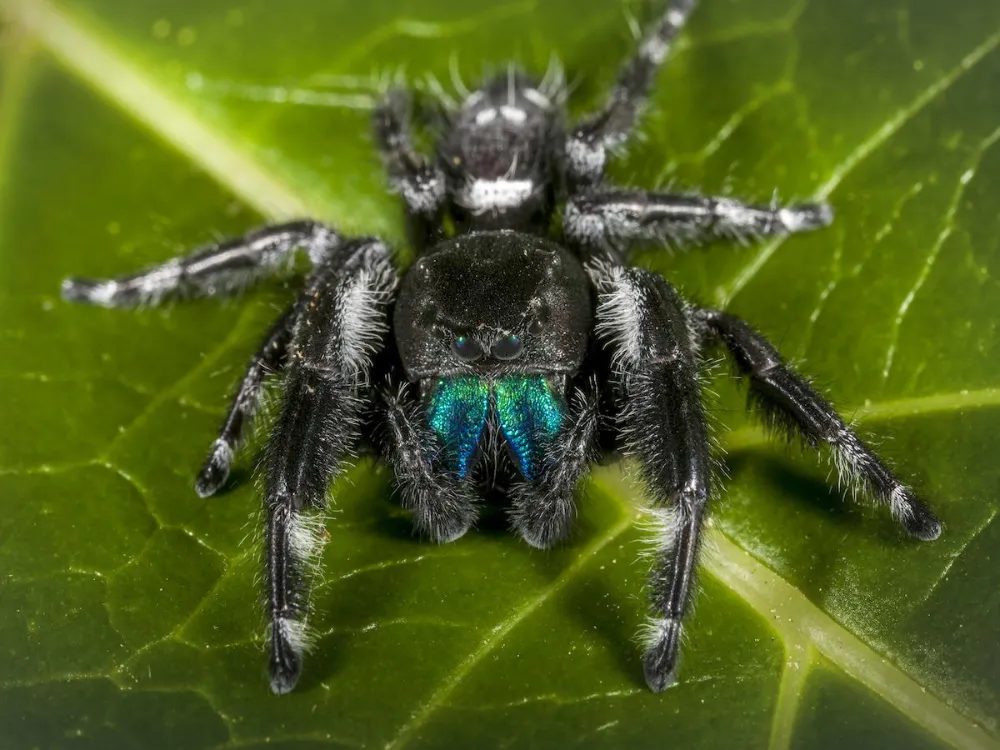
Yes. Jumping spiders have hemolymph, hearts, and open circulatory systems.
Their circulation supplies important body tissues and contributes to hydraulic leg mechanics.
Jumping spiders are particularly interesting because their rapid movements require coordinated interactions between muscles, joint structures, and internal pressure.
Scientific research has examined the fluid properties and movement of hemolymph in jumping spider legs.
These studies help researchers understand both biological movement and the potential development of bio-inspired mechanical systems.
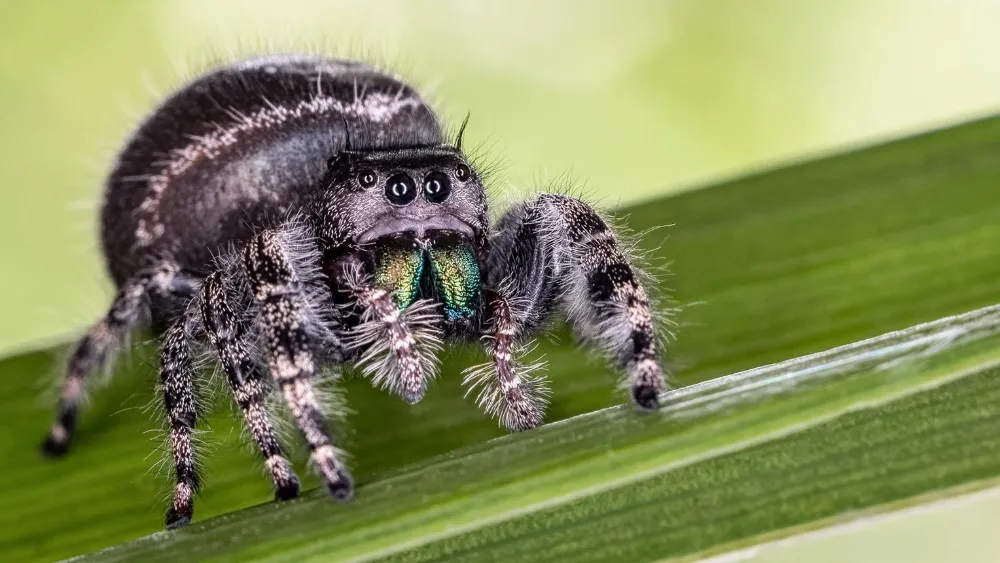
Jumping spiders combine muscular movement and specialized joint mechanics to produce fast and controlled movements.
Do Spiders Have Red Blood Cells?
Spiders do not possess red blood cells like those found in humans.
Human red blood cells contain hemoglobin, an iron-containing protein that transports oxygen.
In spiders, hemocyanin is dissolved in the circulating hemolymph.
Spider hemolymph also contains specialized cells called hemocytes.
These cells participate in immune responses and other physiological processes.
Hemocytes should not be confused with human red blood cells because they do not have the same structure or primary function.
Do Spiders Have Blood Vessels?
Yes. Spiders possess blood vessels, but they do not have a completely closed circulatory system.
Hemolymph leaves the heart through vessels and then circulates through open spaces surrounding internal tissues.
This differs from the continuous enclosed network found in vertebrate circulation.
The presence of blood vessels therefore does not mean that a spider has a closed circulatory system.
Its circulatory anatomy combines vessels, body cavities, and specialized pathways through different organs.
Do Spiders Bleed When Injured?
Yes. When a spider's body is damaged, hemolymph may leak from the injured area.
The loss of hemolymph can interfere with circulation, internal pressure, and normal physiological functions.
Spiders possess mechanisms that help limit fluid loss and respond to tissue damage.
However, serious injuries may be life-threatening, particularly when they affect the body wall, legs, or other important structures.
The fluid released after injury is not necessarily bright blue.
Its appearance depends on the hemolymph's composition and oxygenation, as well as the surrounding conditions.
Spider Blood vs. Human Blood
| Feature | Spiders | Humans |
|---|---|---|
| Circulating fluid | Hemolymph | Blood |
| Circulatory system | Open | Closed |
| Oxygen-carrying protein | Hemocyanin | Hemoglobin |
| Metal in respiratory protein | Copper | Iron |
| Typical oxygenated coloration | Pale blue | Bright red |
| Heart | Elongated dorsal heart | Four-chambered heart |
| Red blood cells | Absent | Present |
| Hydraulic role in legs | Important at certain joints | Not the primary mechanism of limb extension |
Both systems transport vital substances, but their anatomical organization and physiological roles differ substantially.
Do Other Arachnids Have Blue Blood?
Hemocyanin-based oxygen transport also occurs in several other arachnid groups.
Scorpions, for example, have hemolymph containing respiratory proteins related to those of spiders.
However, the diversity of arachnid respiratory systems means that circulatory physiology cannot be assumed to be identical in every group.
Ticks, mites, scorpions, harvestmen, and spiders have different anatomical adaptations.
The presence of hemolymph is widespread among arthropods, but the mechanisms of gas exchange and oxygen transport vary.
Why Is Spider Hemolymph Important to Science?
Spider hemolymph is important for understanding the evolution of arthropod circulation and movement.
Researchers study its oxygen-transport properties, viscosity, flow behavior, and hydraulic functions.
Spider leg mechanics are especially interesting to engineers developing flexible robotic systems.
The use of internal fluid pressure to extend joints provides an example of biological hydraulic actuation.
Research on spider joints has inspired experimental soft robotic mechanisms.
However, engineered devices do not necessarily reproduce every mechanical or physiological feature of living spiders.
Biological studies help identify which aspects of spider movement may be useful for future technologies.
Frequently Asked Questions
Do spiders have blood in their bodies?
Yes. Spiders circulate a fluid called hemolymph, which transports oxygen, nutrients, and other substances.
Is spider blood blue or red?
Spider hemolymph can appear pale blue when oxygenated because it contains copper-based hemocyanin rather than iron-based hemoglobin.
Why is spider blood blue?
Oxygen binding to copper-containing hemocyanin can produce a blue coloration.
Do spiders have hearts?
Yes. Spiders have elongated hearts located along the dorsal side of their abdomens.
How many hearts does a spider have?
A spider has one main heart, which pumps hemolymph through its open circulatory system.
Do tarantulas have blue blood?
Tarantulas use hemocyanin-containing hemolymph, which can appear bluish when oxygenated.
Do jumping spiders have blood?
Yes. Jumping spiders have hemolymph, and it contributes to circulation and leg mechanics.
Do spiders bleed when they lose a leg?
Damage to a spider's leg can cause hemolymph loss. The severity depends on the injury and the spider's condition.
Do spiders use blood to move?
Yes. Many spiders use hemolymph pressure to extend certain leg joints, while muscles produce other movements.
Why do spider legs curl up after death?
After death, normal hydraulic pressure is lost, allowing mechanical forces to bend certain leg joints inward.
The Bottom Line
Spiders have blood-like circulating fluid called hemolymph, which differs considerably from human blood.
Its oxygen-carrying protein, hemocyanin, contains copper and can give oxygenated hemolymph a pale-blue appearance.
Spider hemolymph circulates through an open system powered by an elongated heart. It also performs an unusual mechanical function by helping extend certain leg joints through hydraulic pressure.
These adaptations make spider circulation an important part of both respiratory physiology and movement.
Sources & Further Reading
The following museum resources and peer-reviewed scientific studies explain spider hemolymph, open circulation, oxygen transport, and hydraulic leg movement.
Australian Museum — Spider Structure. Explains spider internal anatomy, the heart, book lungs, and the open circulatory system.
Fluid Mechanics and Rheology of the Jumping Spider Body Fluid (2021). Peer-reviewed research describing hemolymph properties, oxygen transport, and hydraulic movement.
Semi-hydraulic Actuation in Spider Legs (2026). Numerical modeling study of hemolymph transport and muscle-driven movement in spider leg joints.
The Art of a Hydraulic Joint in a Spider's Leg (2019). Research using anatomical modeling and fluid dynamics to investigate spider leg hydraulics.
Hydraulic Leg Extension Is Not Necessarily the Main Drive in Large Spiders (2012). Research exploring the mechanical contribution of hydraulic pressure during spider locomotion.