Fish need water to survive, but scientists do not know whether they experience thirst in the same subjective way humans do. Most marine bony fish regularly drink seawater because they lose water to their salty surroundings. Freshwater bony fish face the opposite problem: water continually enters their bodies through osmosis, so they usually drink little or no water intentionally. Sharks and rays follow a different strategy, using substances such as urea to maintain water balance. The key to understanding fish hydration is a biological process called osmoregulation.
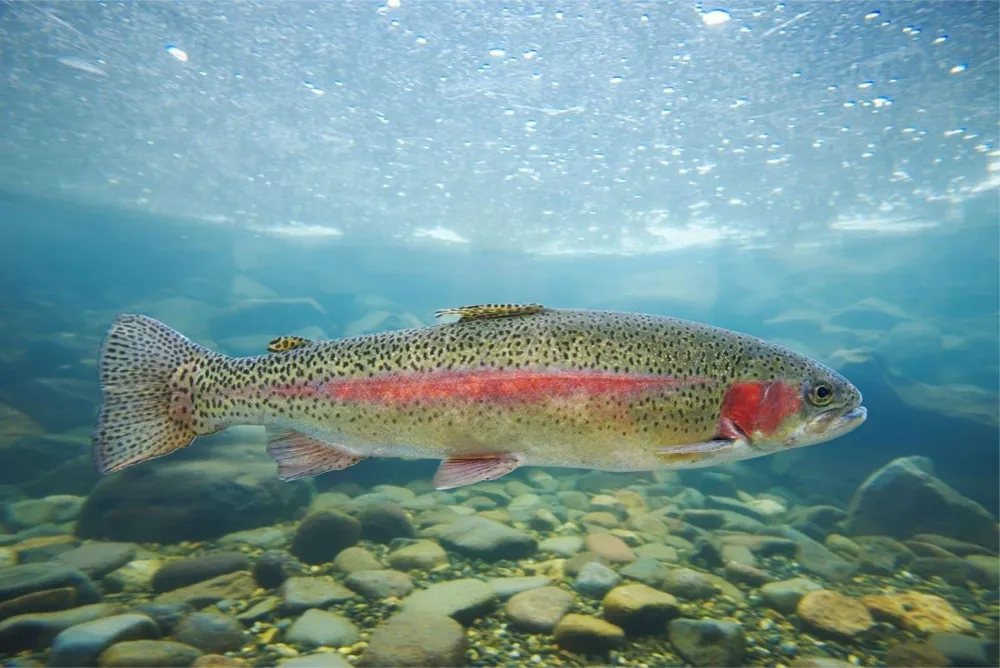
Fish are surrounded by water, but freshwater and marine species face very different challenges when maintaining their internal water balance.
Do Fish Get Thirsty?
Fish can experience physiological conditions in which their bodies need to conserve or obtain water.
However, the everyday word thirsty usually refers to a subjective sensation that motivates humans and other land animals to seek a drink.
Fish live directly in the environment from which they obtain water.
For many species, drinking can be controlled by physiological mechanisms without the same sequence of consciously searching for a water source.
A 2013 review of drinking behavior in teleost fishes explained that marine bony fish can swallow surrounding seawater through relatively direct neural and hormonal mechanisms.
These mechanisms differ from the thirst-related pathways studied in terrestrial mammals.
Therefore, scientists can measure how much water fish drink and how they respond to dehydration.
But these measurements do not establish precisely what thirst, if anything, feels like to a fish.
The most accurate answer is that fish regulate their water balance, while their subjective experience of thirst remains uncertain.
Do Fish Drink Water?
Yes, many fish drink water.
However, different groups of fish use different strategies.
Most marine bony fish swallow seawater to replace water that moves out of their bodies.
Freshwater bony fish generally take in water across body surfaces, especially the gills, and do not need to drink large amounts.
Sharks and rays use another physiological system involving dissolved substances within their body fluids.
Some migratory fishes can change their water-balance mechanisms when they move between freshwater and seawater.
This means there is no single drinking rule that applies to every fish.
Why Do Fish Need Water If They Already Live in Water?
Water is essential for the cells and organs of fish, just as it is for other animals.
It provides the medium for biochemical reactions, helps transport substances, and supports normal cellular function.
However, living underwater does not automatically keep an animal's internal water balance stable.
Water and dissolved salts can move between the animal and its surroundings.
If the surrounding water is more concentrated than the fish's body fluids, the fish may lose water.
If the surrounding water is more dilute than the fish's body fluids, water may enter the fish.
Fish must continually regulate these movements to maintain suitable internal conditions.
What Is Osmosis?
Osmosis is the movement of water across a selectively permeable membrane in response to differences in the concentration of dissolved substances.
Water tends to move from a region with lower solute concentration toward a region with higher solute concentration when the membrane allows water to pass.
Solutes include dissolved salts and other substances.
For fish, osmosis is especially important at the gills, where thin surfaces allow efficient exchange with the surrounding water.
These surfaces are necessary for respiration but also create opportunities for water and dissolved ions to move.
The direction of net water movement depends on the relationship between the fish's internal body fluids and the surrounding environment.
This is why freshwater and seawater present opposite challenges for many bony fishes.
Do Saltwater Fish Drink Water?
Yes. Most marine bony fish regularly drink seawater.
Their internal fluids generally contain a lower concentration of dissolved substances than seawater.
Because of this difference, water tends to leave their bodies by osmosis.
To replace the lost water, marine bony fishes swallow seawater.
The water passes into their digestive systems, where specialized transport processes allow it to be absorbed.
However, drinking seawater also introduces salt.
The fish must therefore remove excess ions while keeping the water it needs.
This combination of drinking, intestinal absorption, and salt excretion is a defining feature of marine teleost osmoregulation.
How Can Saltwater Fish Drink Seawater Without Becoming Dehydrated?
Marine bony fish possess specialized mechanisms for processing the seawater they swallow.
The intestine absorbs water through coordinated transport of ions and other substances.
The gills contain specialized ion-transporting cells that help remove excess sodium and chloride.
The kidneys also participate in regulating salts and conserving water.
A 2023 review published in Physiology explained how marine ray-finned fishes use intestinal processes to absorb water from seawater.
One important process involves the formation of calcium- and magnesium-containing carbonate precipitates within the intestine.
These precipitates help reduce the concentration of dissolved particles in the intestinal contents, supporting water absorption.
This mechanism is important for marine bony fishes and has also attracted scientific interest because the resulting carbonate material can contribute to ocean chemistry.
Why Do Saltwater Fish Lose Water?
Seawater contains more dissolved salts than the body fluids of most marine bony fish.
As a result, the osmotic gradient favors water leaving the fish.
Much of this exchange occurs across the gills because they have large surface areas and thin membranes.
These same characteristics make the gills effective at taking up oxygen.
The fish must therefore balance the benefits of efficient respiration against the challenge of water loss.
Marine fish compensate by drinking seawater and actively regulating ions.
However, the exact rates vary by species, temperature, salinity, and physiological condition.
Do Saltwater Fish Pee?
Yes. Marine bony fish produce urine.
However, they generally conserve water by producing relatively small amounts compared with similarly sized freshwater bony fish.
The kidneys contribute to removing certain ions and other waste products.
Many of the excess sodium and chloride ions are actively secreted through specialized cells in the gills.
It is therefore incorrect to assume that marine fish remove all extra salt through their urine.
The gills and kidneys have complementary but different roles.
The balance between them varies across species.
Do Freshwater Fish Drink Water?
Most freshwater bony fish do not need to intentionally drink large amounts of water.
Their body fluids are more concentrated than the surrounding freshwater.
As a result, water tends to move into the fish across its exchange surfaces.
This creates the opposite challenge from that faced by marine bony fish.
Freshwater fish must remove excess water while retaining the salts needed for normal bodily functions.
They generally accomplish this by producing relatively large amounts of dilute urine and actively absorbing ions from the water.
However, freshwater fish may swallow some water incidentally while feeding.
Therefore, saying that freshwater fish never swallow any water would be too absolute.
Why Don't Freshwater Fish Need to Drink Much?
Freshwater contains relatively few dissolved salts compared with fish body fluids.
This concentration difference causes water to enter the fish by osmosis.
The gills are especially important sites of water and ion exchange.
Because freshwater fish continually gain water, drinking large amounts would generally make their water-balance problem more difficult.
Instead, they rely on physiological mechanisms that remove extra water and maintain essential ions.
The exact mechanisms differ among species, but the overall pattern is well established in teleost physiology.
Do Freshwater Fish Pee More Than Saltwater Fish?
Freshwater bony fishes typically produce larger volumes of more dilute urine than marine bony fishes.
This helps them eliminate water entering their bodies by osmosis.
Their kidneys reabsorb important substances while allowing excess water to leave.
However, urine volume depends on species, body size, environmental conditions, and physiological state.
It is not scientifically accurate to assign one fixed rate of urination to all freshwater fish.
The important distinction is the general direction of water balance.
Freshwater fish must usually remove excess water, while marine bony fish must generally conserve it.
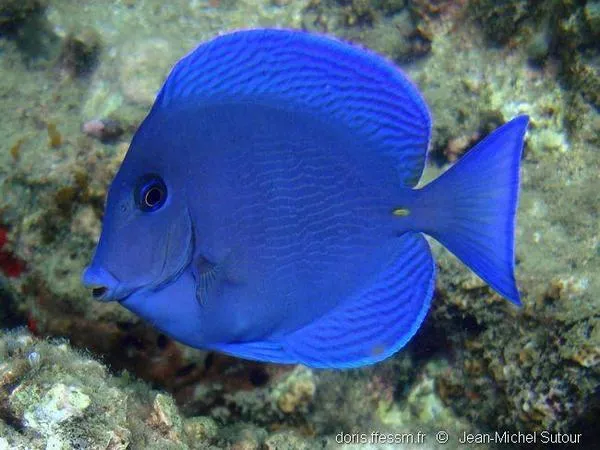
Marine bony fish typically compensate for osmotic water loss by drinking seawater and excreting excess salt.
Freshwater Fish vs. Saltwater Fish: Water Balance
| Feature | Freshwater Bony Fish | Marine Bony Fish |
|---|---|---|
| Surrounding water | Low salinity | High salinity |
| Typical osmotic challenge | Water enters the body | Water leaves the body |
| Drinking behavior | Usually little intentional drinking | Regular seawater drinking |
| Urine volume | Generally relatively high | Generally relatively low |
| Urine concentration | Usually dilute | Variable; water conservation is important |
| Gill ion transport | Helps absorb salts | Helps secrete excess salts |
| Primary challenge | Avoiding excess water and salt loss | Avoiding dehydration and salt accumulation |
This comparison applies mainly to typical freshwater and marine teleost fishes. Sharks, rays, and certain unusual species use different strategies.
Can Fish Get Dehydrated?
Yes. Fish can experience dehydration or physiological water imbalance.
Marine bony fishes naturally face a tendency to lose water to their environment.
Their drinking and ion-regulation systems help prevent harmful dehydration.
If environmental salinity changes beyond the range a species can tolerate, its regulatory systems may be overwhelmed.
Similarly, freshwater fish can experience serious problems if they lose the ability to regulate water and salt effectively.
However, dehydration does not necessarily look the same in fish as it does in humans.
There is no reliable general rule that a fish will visibly become thirsty or search for a bowl of water.
Physiological measurements provide a more meaningful way to assess water balance.
Can Fish Die From Drinking Too Much Water?
Fish can suffer from severe disturbances in water and salt balance, but the phrase drinking too much water is not usually the correct explanation.
Freshwater fishes continually gain water from their surroundings, often without drinking.
They must remove the excess through their kidneys and regulate salt uptake.
If those systems fail or the environment changes beyond the animal's tolerance, cellular functions can be disrupted.
Likewise, marine fishes can be harmed if their salt-excretion and water-absorption systems cannot maintain balance.
The underlying problem is disruption of osmoregulation rather than simply swallowing an unusually large drink.
What Are Ionocytes in Fish Gills?
Ionocytes are specialized cells that transport ions across epithelial surfaces.
In many fishes, important ionocytes are located in the gills.
They are also sometimes called mitochondrion-rich cells because they contain many mitochondria that support energy-demanding transport.
In freshwater teleosts, these cells help absorb essential ions from the surrounding water.
In marine teleosts, specialized ionocytes help secrete excess sodium and chloride.
Proteins within the cell membranes move ions according to carefully regulated processes.
This work requires energy.
A 2008 review of teleost osmoregulation explained how studies of ion transport transformed scientific understanding of freshwater and marine fish physiology.
What Role Do Fish Kidneys Play in Water Balance?
Fish kidneys filter body fluids and help regulate waste products, water, and dissolved ions.
However, their role differs depending on the environment.
Freshwater fishes often need to remove large quantities of excess water.
Marine bony fishes generally need to conserve water while excreting particular ions and metabolic wastes.
The gills and digestive tract also participate in maintaining internal balance.
Consequently, fish osmoregulation is not controlled by the kidneys alone.
It is a coordinated system involving several organs and physiological signals.
Do Fish Absorb Water Through Their Skin?
Water can move across fish body surfaces, but the relative importance of different surfaces varies.
In many adult fishes, the gills are particularly important because of their thin epithelial surfaces and large exchange area.
The outer body is usually protected by skin, mucus, and often scales, which influence permeability.
It would therefore be misleading to imagine that most adult fish absorb water equally across every part of their bodies.
Some fish larvae and specialized species have different patterns of exchange.
The major lesson is that osmosis across permeable surfaces helps determine the direction of water movement.
Do Fish Drink Through Their Gills?
Drinking and exchanging water through gill surfaces are different processes.
When a fish drinks, water is swallowed and enters its digestive tract.
When water moves across the gill epithelium, it passes through tissue surfaces rather than being swallowed.
Marine teleosts rely on swallowed seawater and intestinal absorption to replace water losses.
Freshwater teleosts generally gain water osmotically and therefore have less need to swallow it.
The gills also regulate ion movement, but they are not simply an opening through which the fish drinks.
Can Fish Taste Water?
Fish possess chemical sensory systems that allow them to detect substances in their surroundings.
Many have taste buds in the mouth, and some also possess external taste receptors.
However, sensing dissolved chemicals is different from experiencing thirst.
A fish may respond to changes in salinity or chemical composition without having a human-like conscious desire for a drink.
Osmoregulatory physiology also involves receptors and signaling pathways that monitor internal conditions.
These systems help regulate the animal's response to changing environmental salinity.
How Do Fish Know When to Drink?
In marine teleost fishes, drinking behavior is regulated through neural and hormonal mechanisms.
A 2013 review examined this process in eels and other bony fishes.
The researchers described how hormones such as angiotensin II can promote drinking-related responses.
Other hormonal signals can inhibit or modify drinking.
In eels, part of the control involves a brainstem region called the area postrema.
The neural circuits can influence swallowing muscles and the passage of seawater into the digestive tract.
This mechanism differs from the more elaborate thirst-related behaviors observed in many terrestrial mammals.
It also helps explain why fish can regulate drinking while already surrounded by water.
Do Fish Have the Same Thirst Hormones as Humans?
Fish and other vertebrates share several important hormonal systems involved in fluid regulation.
Angiotensin-related signaling is one example.
However, the anatomical pathways and behavioral effects are not identical among all vertebrates.
In marine teleosts, hormonal regulation can directly influence swallowing behavior and water intake.
In humans, thirst typically involves conscious motivation and additional forebrain pathways.
Researchers therefore recognize evolutionary relationships among fluid-regulation systems while also identifying important differences.
Shared hormones do not prove that fish experience the same subjective sensation of thirst as humans.
Do Sharks Drink Water?
Sharks use a different osmoregulatory strategy from most marine bony fish.
Many marine sharks retain high concentrations of urea and other dissolved substances in their body fluids.
This helps make their internal osmotic concentration similar to, or slightly higher than, the surrounding seawater.
As a result, they do not face the same strong outward movement of water experienced by typical marine teleost fishes.
Water can enter across permeable surfaces rather than requiring the same level of compensatory seawater drinking.
However, shark physiology varies across species and habitats.
It would be inaccurate to claim that no shark ever swallows water.
The key difference is the physiological strategy used to maintain hydration.
Why Do Sharks Have So Much Urea in Their Blood?
Many sharks retain urea as an important organic osmolyte.
An osmolyte is a dissolved substance that contributes to the overall osmotic concentration of body fluids.
By maintaining a high concentration of urea, sharks can reduce the osmotic difference between their body fluids and seawater.
However, high urea concentrations can interfere with some proteins.
Sharks also retain other compounds, including trimethylamine N-oxide, or TMAO, that help counteract certain effects of urea.
This system is a major difference between sharks and most marine teleosts.
Scientists have studied it extensively to understand how cartilaginous fishes regulate their internal environment.
How Do Sharks Get Rid of Extra Salt?
Many sharks possess a specialized organ called the rectal gland.
It secretes fluid containing high concentrations of sodium chloride.
This helps remove excess salt from the body.
A 2024 review of shark rectal gland physiology described decades of experimental research on ion transport and the regulation of salt secretion.
Sharks also use their kidneys and other physiological mechanisms to maintain internal balance.
The rectal gland is especially important because sharks must eliminate excess salt while retaining urea and other useful osmolytes.
Its function differs from the primary gill-based sodium chloride secretion characteristic of many marine teleost fishes.
Sharks vs. Marine Bony Fish: Why Their Hydration Strategies Differ
| Feature | Marine Bony Fish | Many Marine Sharks |
|---|---|---|
| Osmotic relationship with seawater | Body fluids less concentrated | Body fluids often similar to or slightly more concentrated |
| Main water challenge | Osmotic water loss | Maintaining water and salt balance with high internal osmolytes |
| Drinking | Regular seawater drinking | Generally less dependent on compensatory drinking |
| Urea retention | Not the principal marine strategy | Important osmotic strategy |
| Main salt-excretion mechanism | Gill ionocytes | Rectal gland, kidneys, and other processes |
These are broad comparisons. Freshwater sharks and species that move between salinities have additional adaptations.
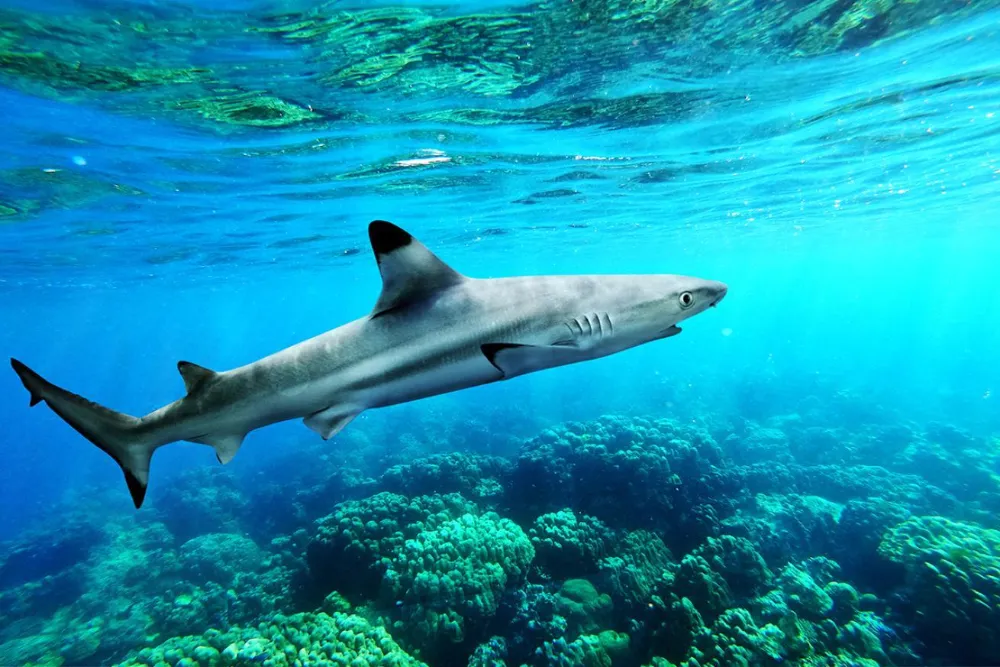
Sharks regulate water balance differently from most marine bony fish, using urea and specialized salt-excreting organs.
Do Rays Drink Seawater?
Rays are cartilaginous fishes closely related to sharks.
Many marine rays use a broadly similar strategy involving retained urea and other osmolytes.
They also possess specialized physiological mechanisms for eliminating excess salt.
However, not all rays live in seawater.
Some species inhabit freshwater, where the osmotic challenges are different.
The exact water-balance strategy depends on the species and its habitat.
It is therefore important not to assume that every ray behaves exactly like a marine shark.
Can Salmon Drink Both Freshwater and Saltwater?
Atlantic salmon (Salmo salar) can live in freshwater and seawater during different stages of their lives.
They hatch and develop in freshwater rivers.
Many later migrate to the ocean, where they feed and grow.
As adults, they may return to freshwater to reproduce.
This life cycle requires major adjustments in water and ion regulation.
Before entering seawater, young salmon undergo physiological changes called smoltification.
Their gills and other organs adjust to the higher salinity.
In seawater, drinking becomes more important for maintaining water balance.
When salmon return to freshwater, their regulatory systems must adjust again.
NOAA Fisheries describes these transitions as central features of Atlantic salmon biology.
What Does Euryhaline Mean?
A euryhaline fish can tolerate a relatively wide range of environmental salinities.
Examples include some salmon, eels, and other fishes adapted to moving between freshwater and saltwater.
These animals possess physiological mechanisms that can change in response to salinity.
Such adjustments may involve gill ion transport, drinking behavior, kidney function, and hormones.
However, euryhaline does not mean that a fish can survive any salinity indefinitely.
Each species still has physiological limits.
Fish that tolerate only a narrow salinity range are described as stenohaline.
What Happens if a Freshwater Fish Is Put in Seawater?
A freshwater fish that is not adapted to seawater may experience severe osmotic stress.
The surrounding seawater can cause the animal to lose water and gain salts.
Its normal freshwater regulatory mechanisms may not be able to compensate.
This can disrupt cellular function and eventually become fatal.
However, some freshwater species are euryhaline and can adapt to changes in salinity under appropriate conditions.
Therefore, the outcome depends on the species and the size and speed of the environmental change.
What Happens if a Saltwater Fish Is Put in Freshwater?
Many marine bony fish are poorly adapted to freshwater.
When placed in a much less saline environment, water tends to enter their bodies while salts may be lost.
If they cannot adjust their ion-transport and water-excretion systems, serious physiological stress can result.
However, some species naturally move between marine and freshwater habitats.
These fish possess mechanisms that allow them to change regulatory strategies.
The important distinction is between species adapted to a narrow salinity range and species capable of tolerating broad changes.
Can Fish Drink Too Much Saltwater?
Marine bony fishes must balance water intake with salt removal.
Drinking more seawater also introduces additional dissolved salts.
The intestine, gills, kidneys, and hormones work together to regulate the process.
If these mechanisms cannot maintain appropriate internal concentrations, physiological stress may occur.
However, healthy marine fishes normally regulate drinking as part of their routine osmoregulatory system.
It is therefore misleading to describe their usual seawater drinking as a dangerous habit.
For many marine teleosts, drinking seawater is essential to survival.
Do Aquarium Fish Need Drinking Water?
Aquarium fish obtain and regulate water according to the salinity of their environment.
Freshwater aquarium species generally absorb water osmotically and remove excess water through the kidneys.
Marine aquarium species may drink seawater and eliminate salts through specialized transport mechanisms.
However, the quality and chemical characteristics of the surrounding water remain essential.
A fish cannot remain healthy merely because water is present.
Unsuitable salinity, poor water quality, or other environmental stressors can impair normal physiology.
Aquarium care therefore needs to account for the particular requirements of each species.
Can Fish Sense Changes in Water Salinity?
Fish possess physiological systems that respond to changes in their internal water and ion balance.
Some species can also detect and behaviorally respond to salinity differences in their environment.
These responses may influence movement between habitats or changes in drinking and ion transport.
However, detecting salinity does not necessarily mean experiencing thirst in the same way a human does.
Scientists distinguish between sensory detection, physiological regulation, and subjective experience.
All three are different biological questions.
Why Is Osmoregulation Important for Fish Survival?
Osmoregulation allows fish to maintain appropriate internal concentrations of water and dissolved ions.
Without effective regulation, cells can experience harmful changes in volume and chemical conditions.
Important processes affected by ion balance include nerve signaling, muscle function, and cellular metabolism.
Fish have evolved different solutions to these challenges.
Freshwater teleosts generally remove excess water and absorb salts.
Marine teleosts drink seawater and excrete excess salts.
Sharks and rays often rely heavily on organic osmolytes and specialized salt-secreting organs.
Migratory fishes can adjust their physiology as environmental conditions change.
These adaptations help explain how fishes occupy environments ranging from freshwater rivers to the open ocean.
Frequently Asked Questions
Do fish get thirsty?
Fish need to regulate their water balance, but whether they experience the subjective sensation of thirst in the same way humans do remains uncertain.
Do fish drink water?
Many fish drink water. Most marine bony fishes regularly swallow seawater, while freshwater bony fishes generally drink little.
Do saltwater fish drink seawater?
Yes. Most marine bony fish drink seawater to replace water lost through osmosis.
Do freshwater fish drink water?
Usually not in large amounts. Water enters their bodies osmotically, so they generally need to remove excess water.
Can fish become dehydrated?
Yes. Fish can experience dangerous water-balance disturbances when their physiological regulation is insufficient.
Why don't saltwater fish die from drinking saltwater?
Marine bony fishes have specialized intestinal, gill, and kidney mechanisms that absorb water while removing excess salts.
Do sharks drink water?
Many marine sharks are less dependent on drinking seawater because they maintain high concentrations of urea and other osmolytes in their body fluids.
Do fish pee?
Yes. Fish produce urine, but the volume and composition vary with species and environmental salinity.
Do freshwater fish pee more than saltwater fish?
Freshwater bony fishes generally produce more dilute urine, while marine bony fishes typically conserve water by producing less urine.
Can fish absorb water through their gills?
Yes. Osmotic water movement occurs across permeable surfaces, including the gills, especially in freshwater fish.
Can salmon live in both freshwater and saltwater?
Yes. Atlantic salmon can change their osmoregulatory physiology as they migrate between rivers and the ocean.
Do fish need fresh drinking water?
Not necessarily. Most marine bony fishes obtain water from seawater, while freshwater fishes generally gain water from their surroundings through osmosis.
What is osmoregulation?
Osmoregulation is the physiological process of maintaining suitable water and dissolved-ion concentrations inside the body.
Can aquarium fish get thirsty?
Aquarium fish have physiological water-balance needs, but scientists cannot reliably determine whether they experience human-like subjective thirst.
The Bottom Line
Fish need water, but they do not all drink it in the same way.
Most marine bony fish regularly drink seawater because they lose water through osmosis. Freshwater bony fish face the opposite challenge and generally gain water through their permeable surfaces.
Sharks and rays use another strategy, retaining compounds such as urea to help maintain osmotic balance.
These processes demonstrate how fishes survive in environments with very different salinities.
However, the biological need to obtain water is not the same question as whether a fish experiences conscious thirst.
The best scientific answer is that fish regulate hydration through highly specialized physiological mechanisms, while their subjective experience of thirst remains uncertain.
Sources & Further Reading
McGill University — Do Fish Drink?. Explains freshwater and seawater osmosis in accessible language.
Evans (2008) — Teleost Fish Osmoregulation: What Have We Learned Since August Krogh, Homer Smith, and Ancel Keys?. Scientific review of gill transport, freshwater ion uptake, and seawater drinking.
Nobata, Ando and Takei (2013) — Hormonal Control of Drinking Behavior in Teleost Fishes: Insights from Studies Using Eels. Research on neural and hormonal drinking regulation.
Grosell and Oehlert (2023) — Staying Hydrated in Seawater. Review of intestinal water absorption and carbonate formation in marine fishes.
The Rectal Gland of the Shark: The Road to Understanding the Mechanism and Regulation of Transepithelial Chloride Transport (2024). Scientific explanation of shark salt excretion.
NOAA Fisheries — Atlantic Salmon: Science. Describes changes in salmon physiology as they move between freshwater and seawater.