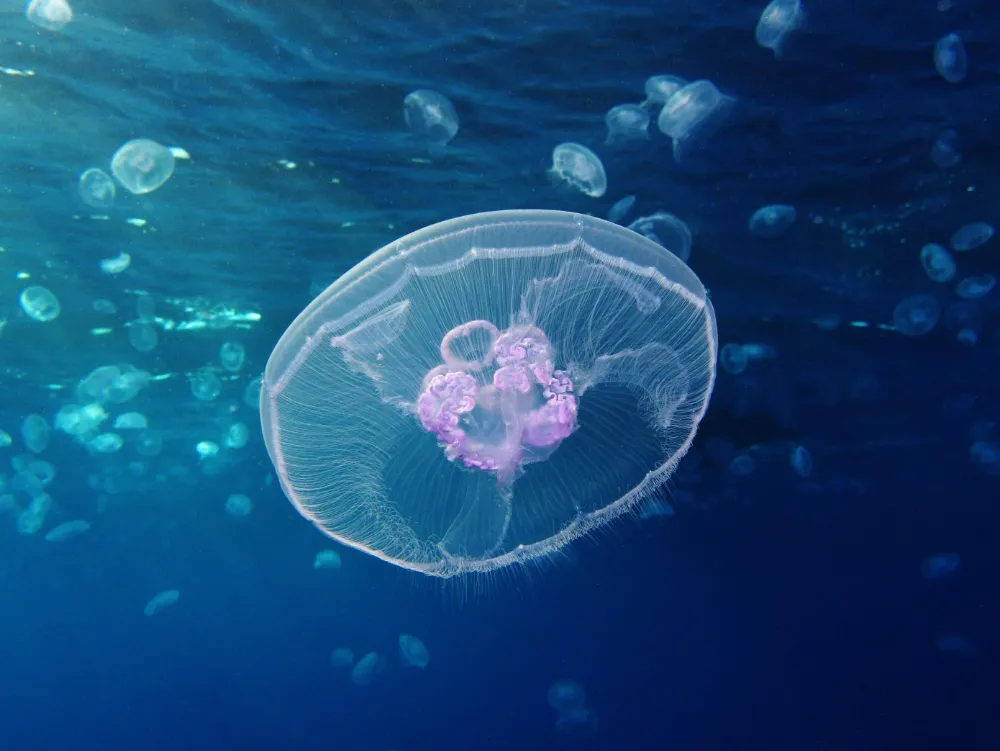
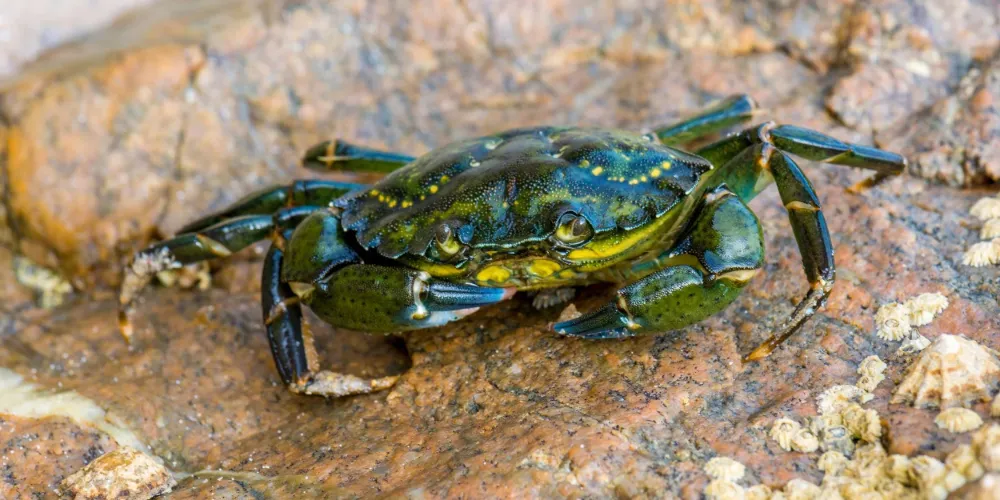
No, sharks do not have true bones, but they do have skeletons. Instead of the hard bony skeletons found in humans and most familiar fish, sharks have skeletons made primarily of cartilage. Cartilage is a flexible connective tissue also found in parts of the human nose and ears. A shark's cartilaginous skeleton supports its body, protects important organs, and provides attachment points for muscles. Some parts become strengthened with mineral deposits, making them much firmer than ordinary cartilage.
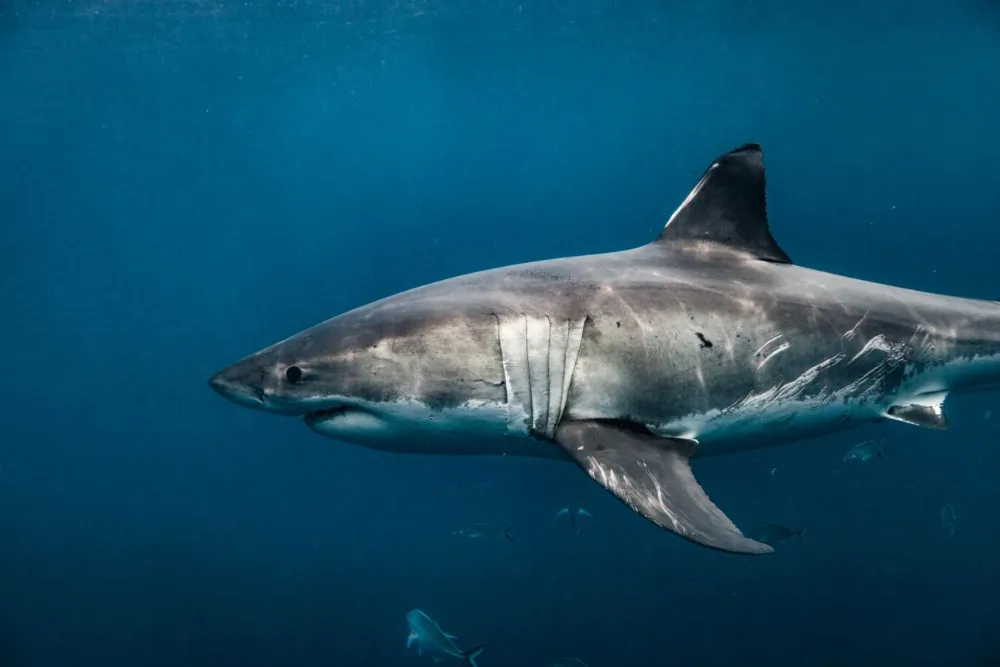
A great white shark has a complete internal skeleton made of cartilage rather than true bone.
What Are Shark Skeletons Made Of?
Shark skeletons consist primarily of cartilage, a strong and flexible form of connective tissue.
Cartilage provides structural support while allowing the body to bend during swimming. In sharks, it forms structures such as the skull, jaws, vertebral column, and supporting elements of the fins.
Not all shark cartilage has the same properties. Areas that experience substantial mechanical stress can become reinforced by mineral deposits, particularly calcium salts.
This process is known as calcification.
Calcified cartilage can be surprisingly firm. However, it is structurally different from the true bone tissue found in mammals and bony fish.
The result is a skeleton that combines flexibility with mechanical support.
Why Do Sharks Have Cartilage Instead of Bones?
Cartilaginous skeletons are a defining feature of the evolutionary group to which sharks belong.
Sharks are members of the class Chondrichthyes, which includes sharks, rays, skates, and chimaeras.
These animals evolved skeletal systems that differ from those of bony fish.
Several characteristics of cartilage are useful for sharks:
Flexibility: Cartilage allows the body to bend during swimming.
Relatively low density: Cartilage generally contributes less skeletal weight than heavily mineralized bone.
Structural support: Reinforced cartilage supports powerful jaws, fins, and swimming muscles.
Locomotion: A flexible skeleton works with the muscles and tail to produce propulsion.
However, sharks did not simply lose their bones because cartilage is always better. Their skeletons reflect a long and complex evolutionary history.
Scientists continue to study how skeletal tissues evolved among early vertebrates and cartilaginous fish.
Do Sharks Have Backbones?
Yes. Sharks have backbones even though they do not have true bony vertebrae.
Sharks are vertebrates, meaning they belong to the group of animals characterized by a vertebral column and related anatomical structures.
The shark's vertebral column consists of a series of cartilaginous vertebral elements that extend along the body.
These structures support the body, contribute to movement, and surround and protect the spinal cord.
In many sharks, parts of the vertebrae become heavily calcified, increasing their strength.
Calcified vertebrae are also important to scientists because they can sometimes preserve in the fossil record.
Do Sharks Have Ribs?
Sharks do not have the same bony rib cage found in humans and many other vertebrates.
Instead, their internal organs are supported and protected through a different arrangement of cartilage, muscles, connective tissues, and surrounding body structures.
Some sharks have cartilaginous elements associated with the body wall, but these should not be confused with a typical mammalian rib cage.
Therefore, the most accurate short answer is that sharks lack true bony ribs.
Do Sharks Have Skulls?
Yes. Sharks have skulls, but their skulls are cartilaginous rather than bony.
The shark skull, often called the chondrocranium, surrounds and protects the brain and supports important sensory structures.
Its shape and proportions vary among species.
For example, hammerhead sharks have unusually wide heads that accommodate their distinctive sensory anatomy.
The jaws are supported by specialized cartilaginous structures associated with the skull.
These adaptations allow sharks to use powerful feeding mechanisms despite the absence of true skeletal bone.
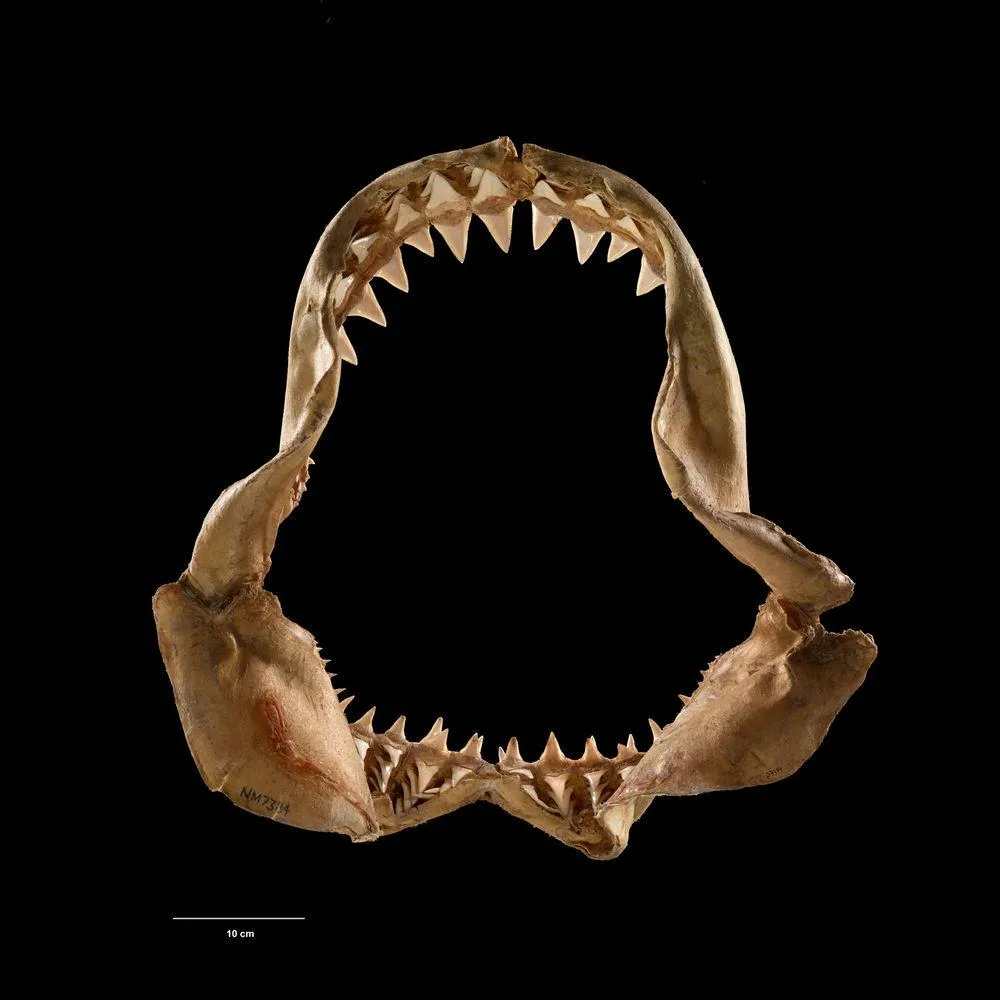
Shark jaws contain reinforced cartilage, while their teeth are separate, highly mineralized structures.
Do Sharks Have Teeth If They Have No Bones?
Yes. Sharks have teeth even though their skeletons are not made of bone.
Teeth and skeletal bones are different anatomical structures.
Shark teeth contain mineralized dental tissues, including dentine and a hard outer layer called enameloid.
These materials make shark teeth resistant to wear and suitable for gripping, cutting, or crushing food.
Most sharks continually replace their teeth throughout life.
New teeth develop in rows and gradually move into functional positions as older teeth become worn or are lost.
The shape of shark teeth depends on diet and feeding behavior.
For example:
Great white sharks: Broad, serrated teeth suited to cutting large prey.
Tiger sharks: Distinctively curved, serrated teeth useful for cutting varied foods.
Sand tiger sharks: Long, narrow teeth adapted for gripping slippery prey.
Some bottom-feeding sharks: Flattened teeth suitable for crushing hard-shelled animals.
Because teeth are highly mineralized, they are much more likely to survive as fossils than most parts of a shark's skeleton.
How Do Sharks Swim Without Bones?
Sharks swim by coordinating powerful muscle contractions with movements of their flexible bodies and tails.
The skeleton provides internal support, even though it is cartilaginous.
As muscles contract, forces are transmitted through the connective tissues and skeletal structures, producing waves of movement along the body.
The tail generates much of the forward thrust, while the fins help with stability, lift, and directional control.
Different shark species use different swimming styles.
Fast-swimming species such as shortfin mako sharks have streamlined bodies and stiffened tail regions adapted for efficient movement.
Other sharks use more pronounced body undulations or maneuver with their pectoral fins near the seafloor.
Cartilage is therefore fully capable of supporting effective, powerful swimming.
How Do Sharks Stay Afloat Without Bones?
Sharks use several adaptations to help maintain buoyancy in water.
Cartilage is generally less dense than heavily mineralized bone, which helps reduce overall body density.
Many sharks also have large livers containing substantial amounts of low-density oils.
These oils help reduce the difference between the shark's body density and the surrounding seawater.
Some sharks also generate hydrodynamic lift through the movement of their pectoral fins and body.
Unlike most familiar bony fish, sharks do not have gas-filled swim bladders.
However, not every shark must swim continuously to survive. Some species can rest on the seafloor and pump water over their gills while remaining relatively still.
Buoyancy and breathing are related to shark activity but should not be treated as the same biological process.
Do Great White Sharks Have Bones?
No. Great white sharks (Carcharodon carcharias) have cartilaginous skeletons like other living sharks.
Their large size does not mean their skeletons are made of bone.
Instead, their jaws, vertebral column, skull, and fin supports are built from specialized cartilage, with some regions strongly calcified.
A great white shark's powerful swimming muscles and streamlined body work together with these skeletal structures.
Its teeth are highly mineralized, but the presence of teeth does not mean it has a bony skeleton.
Do Whale Sharks Have Bones?
No. Whale sharks (Rhincodon typus) also have skeletons made of cartilage.
Although whale sharks are the largest living fish, they belong to the same broad cartilaginous fish lineage as other sharks.
Their enormous bodies are supported by cartilage, connective tissue, and muscular structures.
Whale sharks primarily feed by filtering plankton and other small organisms from the water.
Their large size and specialized feeding behavior show how cartilaginous skeletons can support very different lifestyles within the shark group.
Shark Skeleton vs. Bony Fish Skeleton
| Feature | Sharks | Most Bony Fish |
|---|---|---|
| Main skeletal material | Cartilage | Bone |
| Backbone | Yes, cartilaginous vertebrae | Yes, generally bony vertebrae |
| Skull | Cartilaginous | Primarily bony |
| Gas-filled swim bladder | Absent | Present in many species |
| Teeth | Present in many species | Present in many species |
| Skeletal fossil preservation | Often limited | Bone commonly preserves |
Both groups are vertebrates, but their skeletons differ substantially in composition and evolutionary development.
Can Shark Cartilage Turn Into Bone?
Shark cartilage can become mineralized, but mineralization does not make it identical to true bone tissue.
As some sharks grow, calcium-containing minerals accumulate in parts of their skeletal cartilage.
This produces calcified cartilage that can be stiff and mechanically strong.
Bone is a different tissue with its own cellular structure, organization, and developmental processes.
Therefore, a hardened shark jaw or vertebra should not automatically be described as a true bone.
Why Are Shark Skeletons Rarely Found as Fossils?
Shark skeletons are relatively uncommon in the fossil record because cartilage generally decomposes more readily than bone.
After a shark dies, much of its cartilaginous skeleton may break down before burial and fossilization can occur.
However, certain mineralized structures have a better chance of preservation.
These include:
Mineralized teeth
Calcified vertebral elements
Some calcified skeletal structures
Occasionally, unusually well-preserved portions of cartilage
Shark teeth are especially abundant fossils because sharks continually replace them during their lives.
Scientists use fossil teeth and vertebrae to investigate ancient shark diversity, anatomy, ecology, and evolution.
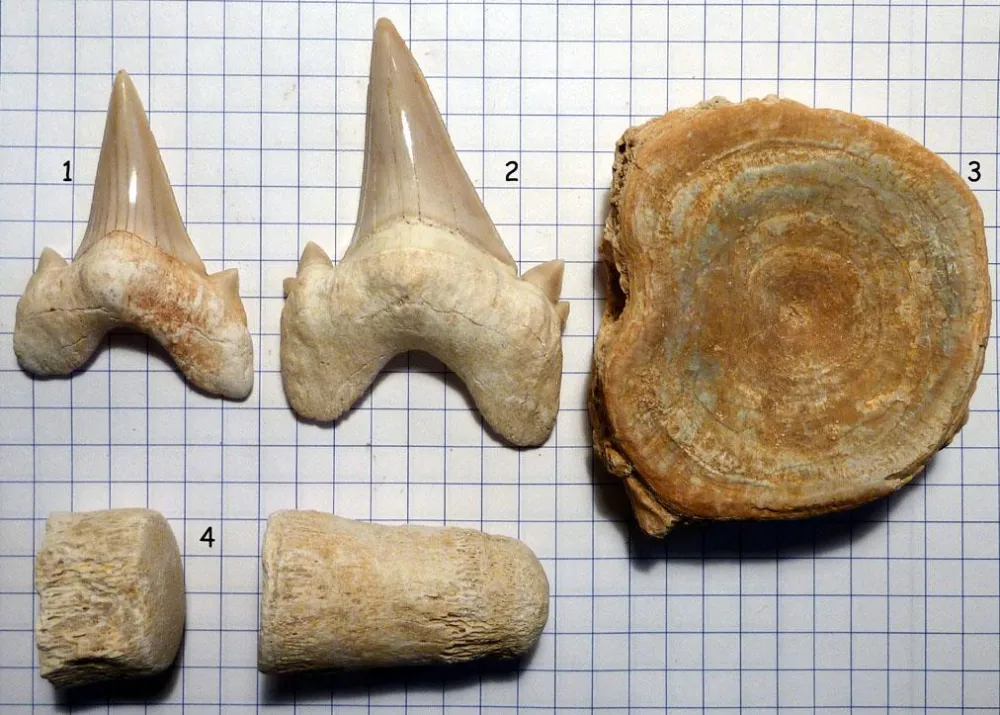
Shark teeth and calcified vertebrae are among the skeletal remains most likely to survive fossilization.
Did Ancient Sharks Have Bones?
Early sharks and their relatives had complex evolutionary histories, and the origins of cartilaginous fish skeletons are an important subject of vertebrate paleontology.
Living sharks lack true bony internal skeletons, but some extinct relatives and early members of the broader cartilaginous fish lineage possessed skeletal features that differed from modern sharks.
Researchers study fossils and developmental biology to understand how bone and cartilage evolved in vertebrates.
It would be inaccurate to assume that the modern shark skeleton represents every skeletal condition found throughout the history of shark evolution.
Nevertheless, cartilage remains one of the defining anatomical features of living sharks.
Frequently Asked Questions
How many bones does a shark have?
A living shark has zero true skeletal bones. Its internal skeleton is made of cartilage, including specialized mineralized cartilage.
Are sharks vertebrates if they have no bones?
Yes. Sharks have vertebral columns made of cartilage, so they are classified as vertebrates.
Are shark jaws made of bone?
No. Shark jaws are formed from cartilage that may be extensively calcified, making them firm and strong.
Do sharks have rib cages?
Sharks lack the typical bony rib cages seen in humans and many other vertebrates.
Is shark cartilage the same as human cartilage?
Both are forms of connective tissue, but shark skeletal cartilage has specialized structures and mineralization patterns adapted to its biological functions.
Are shark teeth made of cartilage?
No. Shark teeth contain mineralized dental tissues, including dentine and enameloid, rather than ordinary cartilage.
Do stingrays have bones?
No. Stingrays are also cartilaginous fish, and their skeletons are composed primarily of cartilage.
Can a shark skeleton fossilize?
Yes. Although most cartilage decomposes relatively easily, calcified skeletal elements and teeth can preserve as fossils.
The Bottom Line
Sharks have complete internal skeletons, but they do not have true skeletal bones. Their skulls, jaws, vertebrae, and fin supports are made of cartilage, often reinforced by mineral deposits.
This combination provides flexibility and strength for swimming, feeding, and supporting the body. Shark teeth are highly mineralized and can fossilize readily, which is why scientists often find ancient shark teeth even when the rest of the skeleton has disappeared.
Sources & Further Reading
The following scientific and educational resources explain shark skeleton anatomy, cartilage, and fossil preservation.
NOAA Fisheries — Fun Facts About Shocking Sharks. Explains why sharks have cartilage instead of bones and how calcified cartilage may fossilize.
Smithsonian Ocean — Sharks. Covers shark anatomy, cartilaginous skeletons, teeth, diversity, and evolution.
Smithsonian Tropical Research Institute — What Is a Shark?. Describes the anatomical differences between sharks and other fish.
Smithsonian Institution — Elasmobranch Fossil. Provides a museum example of a fossilized cartilaginous fish vertebra.