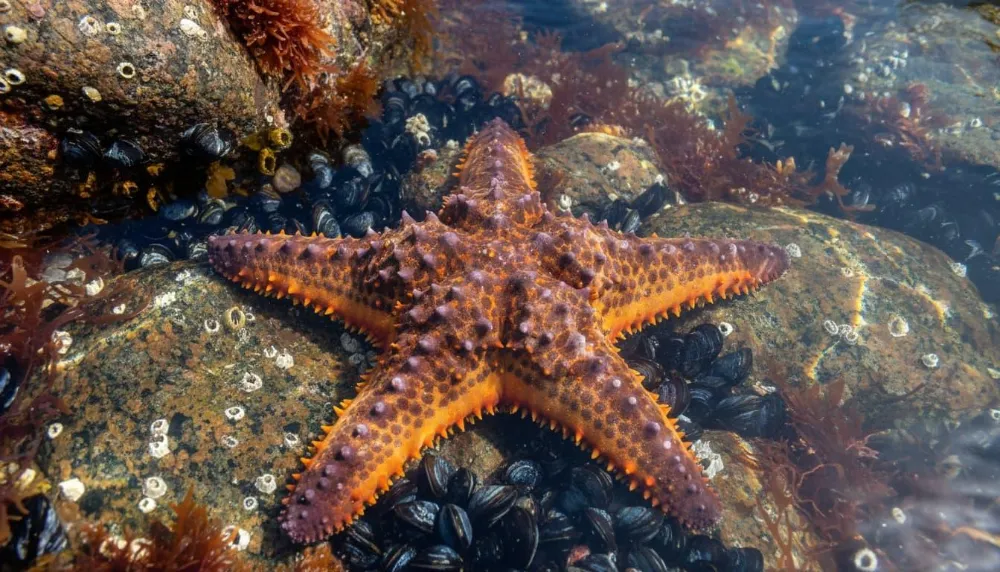
Starfish regrow lost arms through a process called regeneration. After an arm is injured or detached, the wound closes, cells near the injured area change their behavior, and new tissues gradually develop. Over time, the growing arm can rebuild its skeletal elements, muscles, nerves, and tube feet. Most sea stars need to retain their central body disc to regenerate successfully, although a few species can develop an entirely new animal from a detached arm. The process may take months or longer, depending on the species, injury, and environmental conditions.
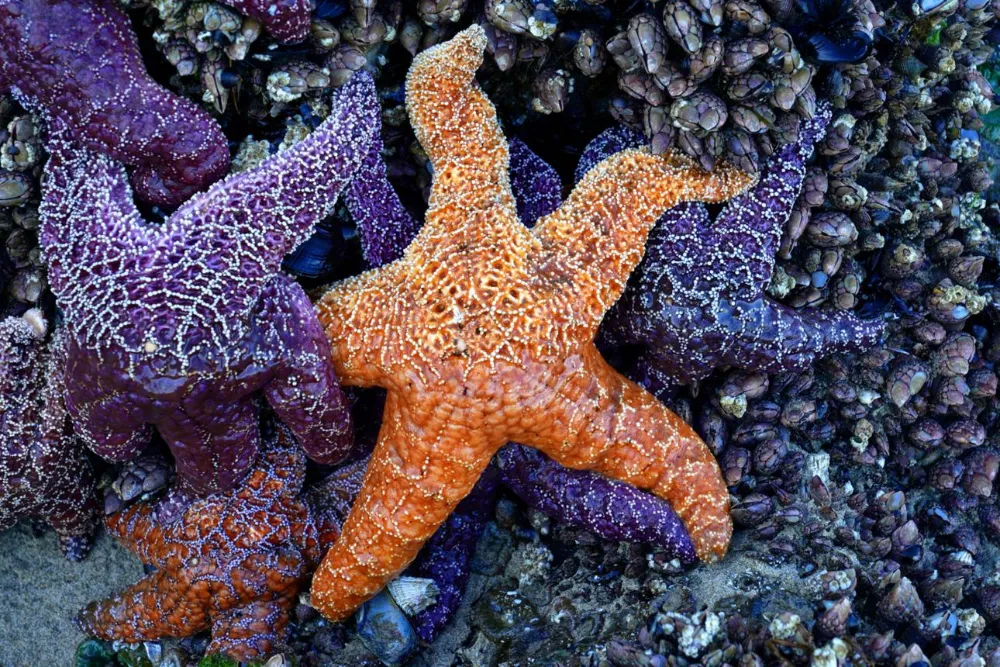
Many sea stars can replace an arm lost to injury or a predator, although their regenerative abilities vary among species.
How Do Starfish Regrow Their Arms?
Starfish, also called sea stars, are marine invertebrates with extraordinary regenerative abilities.
Many species can replace an arm that has been damaged or lost.
This is possible because their bodies can reorganize surviving tissues and generate new structures.
The process begins with wound closure.
Cells then change their activities, migrate into the injured region, and contribute to tissue rebuilding.
Eventually, a new arm can develop with the structures necessary for normal movement and feeding.
However, the cellular details vary among sea star species.
Regeneration is not an instantaneous repair or a simple process of stretching the remaining tissue.
Can Starfish Really Regrow Lost Arms?
Yes. Regeneration of damaged or detached arms is common among sea stars.
The Smithsonian Science Education Center describes this ability as a characteristic feature of many species.
However, the extent of regeneration is influenced by the species and severity of the injury.
Some sea stars can replace a partially damaged arm.
Others can recover from the loss of an entire arm.
The presence of a surviving central disc is usually important for successful regeneration.
A few unusual species possess additional abilities involving whole-body regeneration.
Why Do Starfish Lose Their Arms?
Sea stars can lose arms because of predator attacks, accidental injuries, or disease-related damage.
Some species can also deliberately detach an arm as a defensive response.
This process is called autotomy.
For example, if a predator grabs an arm, the sea star may release it and escape.
However, this is not a harmless action.
Losing an arm removes functional tissues and requires resources for rebuilding.
The regenerative ability helps the animal recover from injury rather than making injuries biologically insignificant.
What Is Autotomy in Starfish?
Autotomy is the controlled detachment of a body part.
It occurs in several animal groups, including sea stars, brittle stars, and some lizards.
In certain sea stars, specialized regions of tissue allow an arm to separate under appropriate physiological conditions.
This can provide a means of escaping a predator.
However, not every detached arm is the result of voluntary autotomy.
Arms can also be severed accidentally or damaged during a predatory attack.
How Can a Starfish Detach Its Own Arm?
Some sea stars possess specialized connective tissues that can change their mechanical properties.
These tissues are sometimes described as mutable collagenous tissues.
They can rapidly alter stiffness in response to physiological signals.
During autotomy, specialized regions may weaken enough for an arm to separate.
A 2023 review of the common sea star Asterias rubens examined the anatomical and physiological structures involved.
However, the exact mechanism varies among species.
Does a Starfish Bleed When It Loses an Arm?
Sea stars have a body-fluid system different from the blood circulation of mammals.
Their bodies contain fluid-filled cavities and a water vascular system.
After an arm is lost, the injured tissues must limit fluid loss and protect the exposed internal structures.
Research on sea star wound repair has described rapid tissue constriction and the involvement of circulating immune-related cells.
However, this should not be described as identical to human blood clotting.
The mechanisms share some broad functional similarities but involve different anatomy.
What Happens Immediately After an Arm Is Lost?
The first priority is to protect the open wound.
Surrounding tissues contract and reduce exposure of the internal body cavity.
Cells at the wound margins move to cover the damaged region.
This establishes a protective surface.
Immune-related cells and other tissues participate in the injury response.
Only after the wound is stabilized can more extensive tissue rebuilding proceed.
However, the timing of these events differs between species and experimental conditions.
What Are the Main Stages of Starfish Regeneration?
| Stage | What Happens | Biological Importance |
|---|---|---|
| 1. Wound closure | The injured region contracts and becomes covered by protective tissue | Reduces exposure and fluid loss |
| 2. Tissue reorganization | Surviving cells change their activity and arrangement | Prepares the damaged region for rebuilding |
| 3. Cell recruitment | Cells migrate and proliferate near the regeneration site | Supplies material for new structures |
| 4. Outgrowth | A new arm tip develops and lengthens | Restores external body form |
| 5. Differentiation and remodeling | Nerves, muscles, skeletal elements and tube feet mature | Restores functional activity |
These stages overlap, and the sequence is a simplified model of a complex biological process.
How Does the Wound Heal?
Wound healing is essential for successful regeneration.
In the sea star Echinaster sepositus, a comparative study found that the wound surface became covered by new epithelium within approximately 48 to 72 hours under the experimental conditions.
Other species can follow different schedules.
Early wound closure involves cells moving from surrounding tissues.
This protective layer helps isolate damaged internal structures from the external environment.
However, closing the wound is only the beginning.
The sea star must still rebuild the missing arm.
What Is the Role of the Wound Epidermis?
The epidermis is the outer tissue layer covering the animal's body.
Following injury, the wound epidermis forms a protective covering.
This layer is important because it creates conditions for tissue rebuilding beneath it.
In a 2016 study of Archaster typicus, researchers observed organized wound epidermal tissue before extensive arm outgrowth.
However, the wound epidermis is not simply a passive bandage.
It interacts with underlying tissues during regeneration.
Do Starfish Use Stem Cells to Regenerate?
Regeneration involves cells capable of contributing to new tissues.
However, the cellular sources are complicated.
Researchers have found evidence that specialized surviving cells can change their characteristics and contribute to rebuilding.
This process is called dedifferentiation.
Some undifferentiated or progenitor-like cell populations may also participate.
However, scientists have not identified one universal starfish stem cell that builds every tissue in every species.
Different tissues may follow different regenerative pathways.
What Is Dedifferentiation?
Dedifferentiation occurs when a specialized cell loses some characteristics associated with its mature function.
The cell may then become capable of participating in tissue repair and regeneration.
Studies of echinoderm regeneration suggest that dedifferentiation is an important process.
For example, cells associated with muscle and internal epithelial tissues may contribute to regenerating structures.
However, dedifferentiation does not mean that every cell becomes capable of forming every possible tissue.
Its biological contribution is more specific and regulated.
What Is a Regeneration Blastema?
A blastema is a collection of cells associated with regenerating tissues.
The term is frequently used in studies of salamander limb regeneration.
Researchers have also described blastema-like structures during regeneration in certain sea stars.
However, sea star regeneration does not necessarily involve an identical cellular structure or process to amphibian limb regeneration.
A 2016 investigation of Archaster typicus documented a blastema-like cell aggregation near the wound.
The authors noted differences from the typical blastemas described in some other regenerating animals.
How Do Starfish Cells Know Where to Grow?
Regenerating tissues must restore appropriate body structures in the correct positions.
Scientists investigate signaling molecules, tissue organization, and interactions between cells to explain this process.
These signals influence where cells migrate, divide, and differentiate.
However, scientists have not completely mapped every molecular instruction involved in adult sea star arm regeneration.
The process is coordinated through multiple pathways rather than one simple regeneration switch.
Are Wnt Genes Involved in Starfish Regeneration?
Research has detected the expression of Wnt-related genes during regeneration in some sea stars.
Wnt signaling is involved in development and tissue patterning across many animal groups.
A 2020 review summarized evidence of Wnt gene activity during arm regeneration in Echinaster sepositus.
However, the detection of gene expression does not by itself demonstrate that one gene controls the entire process.
Additional experiments are required to determine the precise functions of individual signaling pathways.
Can Starfish Regrow Their Nervous System?
Yes. Sea star arm regeneration can include rebuilding nervous tissue.
Each arm contains a radial nerve cord involved in coordinating movement and other functions.
A 2023 study investigated regeneration of the radial nerve cord in Marthasterias glacialis.
The researchers documented anatomical and functional changes as the nervous tissue recovered.
However, recovery depended on the stage and extent of the injury.
The results should not be interpreted as proof that sea stars can regenerate every possible form of neural damage without limitations.
Can Starfish Regrow Their Tube Feet?
Yes. Regenerated arms can develop new tube feet.
Tube feet are important for movement, attachment, and various interactions with the environment.
They are connected to the sea star's water vascular system.
During regeneration, functional recovery requires more than producing a new external arm shape.
The internal channels and associated tissues must also develop.
Studies have observed tube-foot regeneration during the rebuilding of injured arms.
Can Starfish Regrow Their Skeleton?
Sea stars have an internal skeleton composed of small calcified elements called ossicles.
These elements support the body and contribute to its mechanical structure.
Regeneration of an arm requires the formation of new skeletal components.
However, this skeleton is not organized like the bones inside a vertebrate limb.
Sea stars are invertebrates and have a different skeletal architecture.
The regenerated arm must coordinate skeletal development with muscles, nerves, and other tissues.
What Parts of a Starfish Arm Can Regrow?
| Structure | Can It Be Rebuilt? | Important Detail |
|---|---|---|
| Outer body tissues | Yes | Protective epidermis forms early |
| Muscles and connective tissues | Yes | Reorganization and cellular differentiation are involved |
| Skeletal ossicles | Yes | New calcified structures develop |
| Radial nervous tissue | Yes | Restoration has been experimentally documented |
| Tube feet | Yes | Functional appendages develop as the arm grows |
| Internal digestive and reproductive structures | In many species | Extent varies with species and injury |
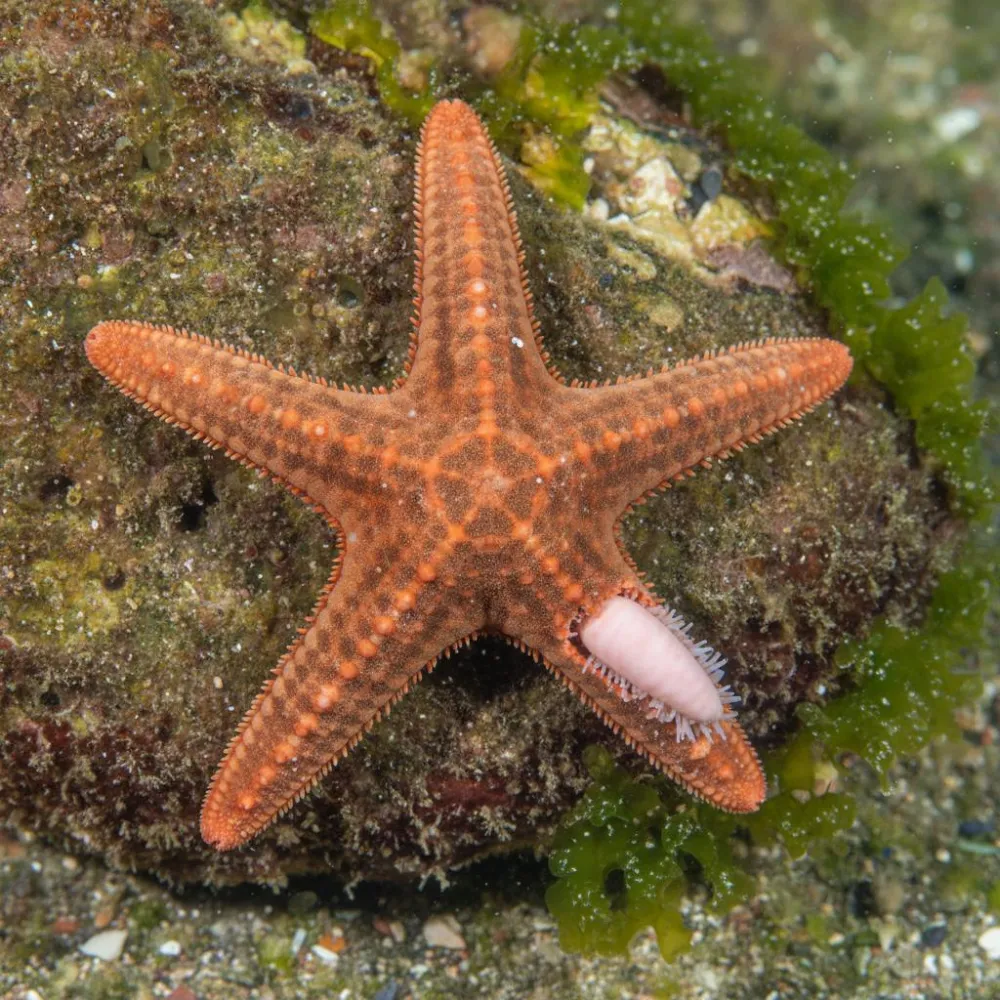
A sea star may develop a small new arm that gradually grows toward the size of its surviving arms.
How Long Does It Take a Starfish to Regrow an Arm?
Regeneration can take months or longer.
The duration depends on species, age, injury severity, nutrition, and environmental conditions.
The Smithsonian describes regeneration as a process that may require months in some sea stars and brittle stars.
However, there is no single recovery time that applies universally.
A small damaged arm tip may recover differently from an entire missing arm.
Regenerating the external shape may also occur before every internal structure becomes fully functional.
Can a Starfish Regrow an Arm in a Week?
A sea star can begin wound repair and early regeneration within days.
However, producing a fully developed arm usually takes much longer.
In a 2016 experiment involving Archaster typicus, small outgrowth was observed by day six.
Additional regeneration continued over subsequent weeks.
These findings should not be confused with complete arm replacement in six days.
The study concerned a particular experimental injury and species.
What Affects the Speed of Regeneration?
Several factors may influence the process.
These include the sea star's species, injury location, nutritional condition, and environmental circumstances.
Temperature can affect physiological activity.
Energy availability is also important because tissue building requires resources.
However, faster regeneration is not necessarily better under all conditions.
A healthy animal must balance repair with its other biological needs.
Can Every Starfish Regrow an Arm?
Arm regeneration is widespread among sea stars.
However, regenerative abilities are not identical across all species.
The injury must leave enough surviving tissue for the animal to recover.
Severe damage, poor health, or unfavorable conditions can interfere with the process.
Therefore, the popular statement that every starfish can always regenerate from any injury is an exaggeration.
Can a Starfish Grow Back From a Single Arm?
Only some sea star species can regenerate an entire body from a detached arm.
Most species need to retain their central disc.
However, certain species in the genus Linckia are known for exceptional regenerative abilities.
In these animals, a detached arm may eventually regenerate a new central disc and additional arms.
However, this is not a universal feature of sea stars.
The ability depends on the species and the condition of the detached tissue.
What Is a Comet Starfish?
The term comet star is used for a sea star undergoing a particular form of regeneration.
Some species can develop a new central body from a detached arm.
During this process, the regenerating individual may look like a long arm with several small developing arms at one end.
This creates a comet-like appearance.
However, comet star is a descriptive term for a regeneration stage, not one universal biological species.
The Smithsonian discusses this remarkable ability in the context of sea star asexual reproduction.
Do Detached Starfish Arms Become New Starfish?
Usually not.
In most sea star species, a detached arm cannot develop into a complete independent animal without the necessary surviving central body tissues.
However, some specialized species can regenerate a new central disc from an arm.
These exceptions help explain why the myth became widespread.
The scientifically accurate answer depends on species identity and the anatomical condition of the detached arm.
Does a Starfish Need Its Central Disc to Regenerate?
For most species, retaining the central disc is important for successful whole-body regeneration.
The central disc contains important body structures and connections between the arms.
However, certain exceptional species have evolved the ability to reconstruct missing central structures from an arm.
The 2014 review Origin and Development of the Germ Line in Sea Stars discusses these differences.
Therefore, the central disc rule is broadly useful but has well-documented exceptions.
What Is the Central Disc of a Starfish?
The central disc is the main body region where the arms connect.
It contains important internal structures and helps coordinate the animal's body plan.
Many sea stars have five arms projecting outward from the central disc.
However, the number of arms varies among species.
The disc is critical to understanding why most detached arms do not regenerate into new animals.
Starfish Arm Regeneration vs. Whole-Body Regeneration
| Feature | Arm Regeneration | Whole-Body Regeneration |
|---|---|---|
| Starting material | Surviving sea star with a damaged or missing arm | Detached arm or body fragment in capable species |
| What develops | Missing arm tissues | New central disc and additional body structures |
| How common | Widespread among sea stars | Restricted to particular species and conditions |
| Biological role | Injury recovery | Can support asexual reproduction |
Can Starfish Reproduce Without Mating?
Some sea stars can reproduce asexually.
This means a new individual develops without fertilization between two parents.
In certain species, body splitting or fragmentation can be followed by regeneration.
However, many sea stars reproduce primarily through sexual reproduction.
The presence of arm regeneration does not automatically mean the species regularly reproduces by splitting.
What Is Fission in Starfish?
Fission is a form of asexual reproduction in which one animal divides into parts that can develop into separate individuals.
Some sea stars can undergo this process.
The fragments then regenerate missing structures.
However, fission must be distinguished from accidental injury.
Not every sea star that loses an arm has reproduced.
The process occurs in particular species with the necessary regenerative abilities.
Are Starfish Clones When They Regenerate?
When a new sea star develops through asexual reproduction from a fragment, it usually inherits essentially the same genetic information as the original individual.
This can produce genetically very similar individuals.
However, spontaneous mutations and other biological processes may introduce differences.
Regeneration of an arm on the original sea star is different.
In that case, the animal remains one individual rather than producing a second sea star.
Do Starfish Feel Pain When They Lose an Arm?
Sea stars possess nervous systems and respond to potentially harmful stimuli.
However, scientists have not established that their subjective experience is equivalent to human pain.
Nociception, the detection and response to damaging stimuli, is not identical to the conscious experience of pain.
Because this question remains scientifically uncertain, deliberate injury should not be justified by assuming sea stars feel nothing.
Sea stars should be handled carefully and left undisturbed in their natural habitats.
Is Regrowing an Arm Painful for a Starfish?
The subjective experience of regeneration in sea stars is not known.
We can observe physiological injury responses and changes in behavior.
However, these observations do not allow scientists to measure subjective pain directly.
It is therefore inaccurate to claim confidently that regrowth is painless or painful in the same way as a human injury.
The responsible approach is to minimize unnecessary harm to the animal.
Can a Starfish Survive With Only One Arm?
Survival depends on the species and how much of the body remains intact.
Some specialized species can survive extensive fragmentation and regenerate missing structures.
However, most sea stars require substantial surviving central body tissues.
A sea star reduced to one arm without the necessary regenerative capacity may not survive.
Therefore, it is wrong to assume any arm fragment can become a healthy new sea star.
Can Starfish Regenerate Multiple Arms at Once?
Some sea stars can regenerate several damaged or missing arms.
However, rebuilding multiple structures requires substantial biological resources.
The success and speed of recovery depend on the extent of damage and the animal's condition.
Regeneration also requires coordination across different tissue systems.
Therefore, extensive arm loss is not automatically harmless simply because regrowth is possible.
Do Starfish Have Bones in Their Arms?
Sea stars do not have vertebrate bones.
However, they possess a skeleton made of small calcified plates or ossicles.
These structures provide support and are connected through living tissues.
During regeneration, the animal must develop new skeletal elements within the growing arm.
The system differs from the bone regeneration seen in humans and other vertebrates.
Do Starfish Have Muscles?
Yes. Sea stars possess muscular tissues that contribute to movement and body control.
However, their locomotion depends heavily on the water vascular system and tube feet.
Regeneration can involve the rebuilding of muscular and connective tissues.
Research has identified changes in muscle-related cells during echinoderm regeneration.
These processes are coordinated with other regenerating structures.
Do Starfish Have Nerves?
Yes. Sea stars have a nervous system organized differently from that of vertebrates.
A nerve ring is associated with the central body region, and radial nerve cords extend into the arms.
These structures help coordinate movement and responses to the environment.
Scientists have studied how damaged radial nerve tissue is rebuilt during regeneration.
However, this system should not be described as having a human-like brain.
Can Starfish Regrow Their Eyes?
Sea stars have light-sensitive structures near the tips of their arms.
These are commonly called eyespots.
When an arm tip is lost, rebuilding the missing sensory structures can be part of restoring the arm.
However, eye regeneration varies by species and injury.
The broader scientific question of how sensory structures regain full function requires detailed study.
Sea star eyespots differ substantially from human eyes.
How Do Starfish Move After Losing an Arm?
Sea stars move using coordinated tube feet and body muscles.
After losing an arm, their movement may become less effective.
However, surviving arms can continue to contribute to locomotion.
As the missing arm regenerates, new tube feet and nervous tissues may restore additional function.
A 2023 study of radial nerve cord regeneration examined how nervous-system injury affected movement.
Recovery was associated with changes in tissue organization and behavior.
How Is Starfish Regeneration Different From Lizard Tail Regeneration?
Both sea stars and some lizards can regrow lost body parts.
However, they belong to very different animal groups.
Sea stars are echinoderms.
Lizards are vertebrate reptiles.
The tissues and structures being rebuilt are different.
Sea stars can regenerate complex arms that contain tube feet, nerves, muscles, and skeletal elements.
Many lizards regenerate tails, but the new tail often differs anatomically from the original.
The cellular pathways can show broad similarities, yet important differences remain.
How Is Starfish Regeneration Different From Axolotl Regeneration?
Axolotls are amphibians that can regenerate limbs and certain other tissues.
Sea stars are marine invertebrates with a different body organization.
Both involve wound repair, cell proliferation, and coordinated tissue patterning.
However, their cellular sources and anatomical structures are not identical.
Scientists study both groups to understand why some animals regenerate more extensively than humans.
It would be inaccurate to assume they use one universal regeneration mechanism.
Are Starfish and Brittle Stars the Same?
No. Sea stars belong to the class Asteroidea.
Brittle stars belong to Ophiuroidea.
Both are echinoderms and possess remarkable regenerative abilities.
However, their anatomy and movement differ.
Brittle stars generally have slender, highly flexible arms that are more distinctly separated from the central disc.
Sea stars typically have broader arms connected more continuously to the body.
Can Brittle Stars Regrow Arms?
Yes. Many brittle stars can regenerate missing arms.
Arm loss can occur during attacks or defensive autotomy.
The animal then rebuilds the missing tissues.
However, regeneration timing and mechanisms vary among species.
Some brittle stars can also reproduce by fission.
The Smithsonian has documented remarkable examples of body splitting and regeneration in brittle stars.
Sea Stars vs. Brittle Stars
| Feature | Sea Stars | Brittle Stars |
|---|---|---|
| Class | Asteroidea | Ophiuroidea |
| Arm shape | Often broad and continuous with central disc | Usually slender and more distinctly separated |
| Arm regeneration | Common | Common |
| Autotomy | Present in many species | Present in many species |
| Asexual reproduction | Occurs in some species | Occurs in some species |
Can Sea Cucumbers Regenerate Body Parts?
Yes. Sea cucumbers are another group of echinoderms with remarkable regenerative abilities.
Some can expel certain internal organs and later regenerate them.
However, this process differs from sea star arm regeneration.
The organs involved and the cellular mechanisms are not identical.
Studying different echinoderms allows scientists to compare how diverse forms of regeneration evolved.
Why Are Starfish Important to Regeneration Research?
Sea stars provide opportunities to investigate how complex tissues can be rebuilt after injury.
They can regenerate skeletal, muscular, nervous, and other structures.
Researchers examine how cells communicate, change identity, and coordinate tissue growth.
These studies are important for understanding the evolution of regeneration.
However, research findings from sea stars cannot be applied directly to humans without substantial additional investigation.
Could Starfish Regeneration Help Human Medicine?
Studying sea star regeneration may reveal general biological principles relevant to tissue repair.
For example, researchers are interested in wound healing, cellular plasticity, and nervous-system regeneration.
A 2023 study of sea star radial nerve cords examined how damaged neural tissues regain structure and function.
However, the discovery of a regenerative mechanism in an echinoderm is not itself a human treatment.
Future medical applications would require extensive research in mammalian tissues and clinical settings.
Why Can't Humans Regrow Arms Like Starfish?
Humans can repair many damaged tissues, but they do not naturally regenerate complete lost limbs.
Our injury responses, developmental programs, and tissue organization differ from those of highly regenerative animals.
Humans often form scars after substantial injuries.
However, some human tissues show meaningful regenerative capacity, including skin and certain components of the liver.
Scientists investigate how regeneration differs across animal groups.
There is currently no established medical method that allows humans to regrow a complete lost arm in the way a sea star can.
Can Starfish Regenerate Forever?
Sea stars have impressive regenerative capacities, but they are not biologically immortal.
Regeneration requires living tissues, energy, and suitable environmental conditions.
Animals can still die from disease, severe injury, starvation, or unfavorable surroundings.
Repeated regeneration may also have biological costs.
Therefore, the ability to regrow arms should not be interpreted as unlimited survival or freedom from aging.
Do Starfish Get Older When They Regenerate?
Regeneration does not automatically reset an animal's biological age.
The surviving tissues remain part of an existing organism.
Newly regenerated structures may be younger as tissues, but that does not mean the animal becomes a newborn again.
Scientists continue to investigate how tissue renewal and aging interact across different animals.
However, there is no basis for claiming that each regenerated arm makes the entire starfish biologically immortal.
How Do Scientists Study Sea Star Regeneration?
Researchers use microscopy, tissue staining, gene-expression analysis, and behavioral observation.
These methods can reveal changes in cells and tissues during regeneration.
For example, a 2016 study examined wound epidermis formation and blastema-like structures in Archaster typicus.
A 2023 study investigated nervous-system repair in Marthasterias glacialis.
Other research has compared different echinoderm species.
However, scientific injury experiments require ethical review and specialized animal-care practices.
People should never injure a sea star simply to observe regeneration.
Can You Touch a Regenerating Starfish?
Wild sea stars should generally be left undisturbed.
Handling may cause stress or physical injury.
Removing a sea star from water can also interfere with normal physiological function, depending on the species and conditions.
A regenerating animal may be especially vulnerable.
The best way to observe one is from a distance in its natural environment.
Do not remove arms, manipulate wounds, or relocate an animal for a photograph.
Why Do Some Starfish Have One Short Arm?
A sea star with one noticeably shorter arm may be regenerating after an earlier injury.
As new tissue grows, the regenerated arm can initially be smaller than the surviving arms.
Over time, it may become more proportional.
However, unusual arm length can also have other explanations.
A photograph alone may not reveal exactly how or when the injury occurred.
What Happens if a Starfish Loses All Its Arms?
Survival depends on how much of the central body remains and whether the species can rebuild the missing structures.
Extensive loss of tissue is a serious biological event.
Some species can recover from major damage.
However, regeneration is not guaranteed after every injury.
The condition of internal organs, body fluids, and remaining tissues is important.
Therefore, a starfish without arms should not automatically be assumed capable of complete recovery.
Why Is Regeneration Important for Sea Star Survival?
Sea stars can encounter predators and environmental hazards throughout their lives.
The ability to regrow arms allows many species to recover after losing important body structures.
This can restore movement, feeding ability, and other functions.
However, regeneration requires energy and time.
The survival benefit depends on whether the animal can remain alive while the missing tissues are rebuilt.
Regeneration is therefore a valuable defense against the consequences of injury rather than a guarantee of safety.
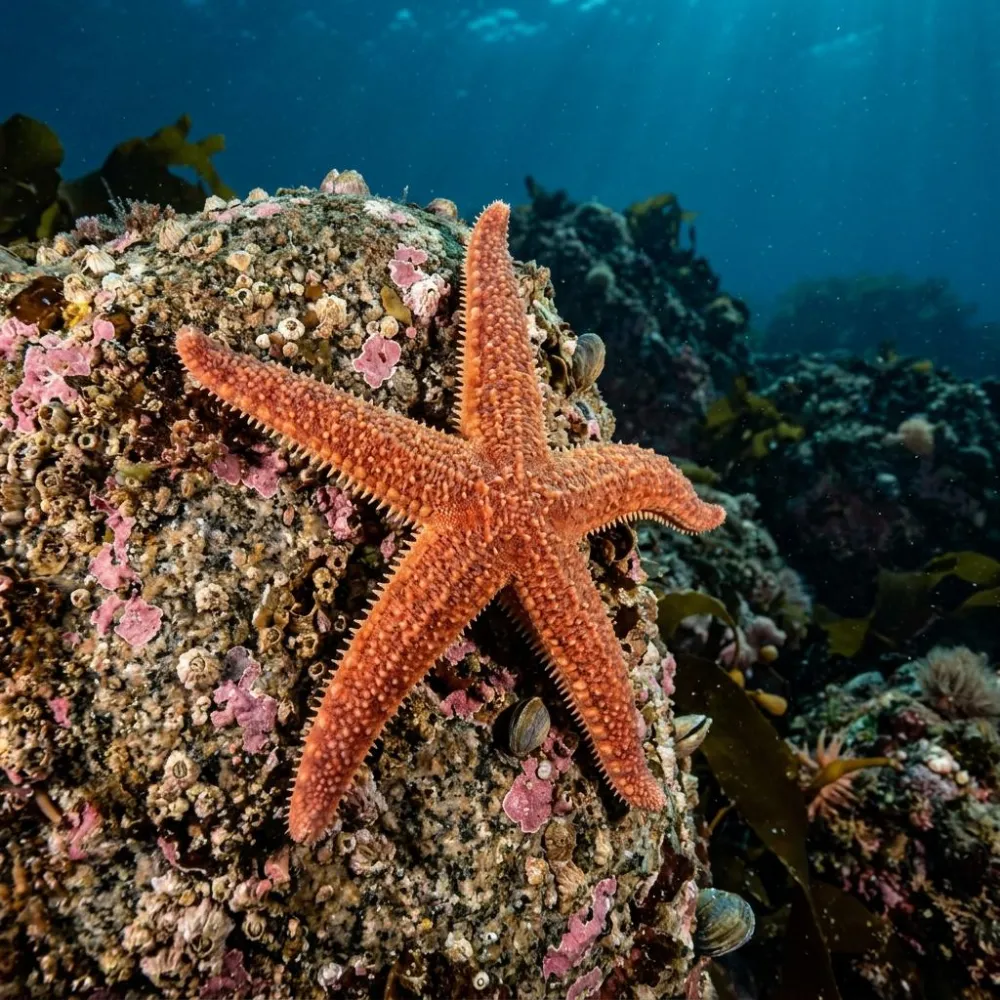
Sea stars are marine echinoderms whose regenerative abilities help them recover from injuries in challenging ocean environments.
Frequently Asked Questions
How do starfish regrow their arms?
They close the wound, reorganize surviving cells, and gradually rebuild the muscles, nerves, skeleton, and tube feet of a new arm.
Can starfish regrow lost arms?
Yes. Arm regeneration is widespread among sea stars, although abilities vary among species.
How long does starfish regeneration take?
It can take months or longer, depending on species, injury severity, and environmental conditions.
Can a starfish grow from one arm?
Only some species can do this. Most need a surviving central disc to regenerate successfully.
Why do starfish lose their arms?
Arms may be lost through predator attacks, injuries, or controlled defensive autotomy.
What is autotomy?
Autotomy is the controlled detachment of a body part, often as a defensive response.
Do starfish have stem cells?
Regeneration involves cells capable of building new tissues, including cells that undergo dedifferentiation, but the exact cellular sources vary.
Can starfish regrow their nerves?
Yes. Research has documented regeneration of radial nerve cord tissue in sea stars.
Can starfish regrow tube feet?
Yes. Functional arm regeneration can include rebuilding tube feet and their associated structures.
Do starfish reproduce by losing arms?
Some species reproduce asexually through fragmentation or fission, but ordinary arm loss is not always reproduction.
What is a comet starfish?
It is a sea star regeneration form in which a detached arm develops a new central body and additional small arms.
Can a starfish survive with one arm?
Some specialized species can survive extreme fragmentation, but most require sufficient central body tissue.
Do starfish feel pain when losing an arm?
They respond to harmful stimuli, but the nature of any subjective pain experience remains scientifically uncertain.
Are starfish and brittle stars the same?
No. They belong to different echinoderm classes, although both can regenerate arms.
Why can't humans regrow arms like starfish?
Human tissues follow different injury and developmental programs and do not naturally regenerate complete lost limbs.
The Bottom Line
Sea stars can regenerate damaged or lost arms through a complex process involving wound healing, cell reorganization, proliferation, and tissue rebuilding.
New arms can develop skeletal elements, muscles, nervous tissues, and tube feet.
Regeneration may take months or longer, and the rate varies among species and environmental conditions.
Most sea stars require a surviving central disc, although a few exceptional species can form an entirely new body from a detached arm.
Some sea stars also use regeneration during asexual reproduction.
These abilities make sea stars important subjects for research on tissue repair and the evolution of regeneration, but they do not make the animals immortal or immune to injury.
Sources & Further Reading
Smithsonian Science Education Center — All About Starfish. General overview of sea star anatomy, arm loss, and regeneration.
Smithsonian Ocean — Echinoderms: Sea Stars, Urchins, Sand Dollars, and Relatives. Background on echinoderm anatomy, regeneration, and reproduction.
Smithsonian Ocean — Brittle Star Splits. Explains autotomy, fission, regeneration, and comet-star examples.
Wessel et al. (2014) — Origin and Development of the Germ Line in Sea Stars. Review of arm regeneration, central disc requirements, and exceptional whole-body regeneration.
Tissue Extract Fractions from Starfish Undergoing Regeneration Promote Wound Healing and Lower Jaw Blastema Regeneration of Zebrafish (2016). Experimental investigation involving regeneration stages in Archaster typicus.
Beyond Adult Stem Cells: Dedifferentiation as a Unifying Mechanism Underlying Regeneration in Invertebrate Deuterostomes (2020). Review of cellular and molecular mechanisms in echinoderm regeneration.
Fundamental Aspects of Arm Repair Phase in Two Echinoderm Models. Comparative research on wound repair in a sea star and a brittle star.
Regeneration of Starfish Radial Nerve Cord Restores Animal Mobility and Unveils a New Coelomocyte Population (2023). Original research on nervous-system regeneration and recovery of movement.
Morphological and Physiological Aspects of Mutable Collagenous Tissue at the Autotomy Plane of the Starfish Asterias rubens (2023). Analysis of specialized tissues involved in arm detachment.