Captive axolotls mainly eat soft, high-protein animal foods such as earthworms, nightcrawlers, blackworms, and high-quality axolotl or salamander pellets. Juveniles usually need feeding more often than adults, while adult axolotls are often fed every one to three days depending on size, appetite, and body condition. The best captive diet is simple, nutritious, easy to digest, and appropriate for the axolotl’s age and mouth size.
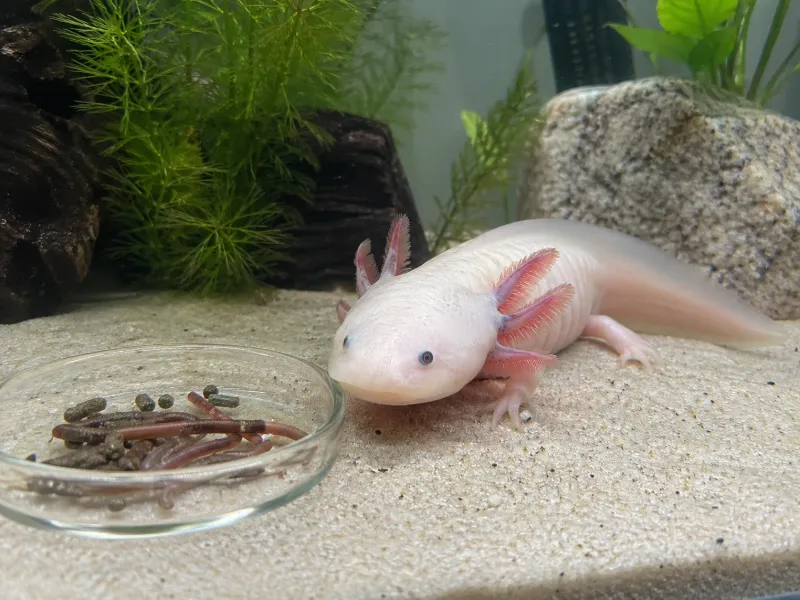
Axolotls are carnivorous amphibians, and in captivity they do best when their diet is based on reliable staple foods rather than random treats. Many feeding problems happen because owners give food that is too large, too fatty, too hard to digest, or simply not suitable for a fully aquatic salamander.
In this guide, you will learn what captive axolotls eat, which foods work best as staples, how often to feed them, and which foods should be limited or avoided.
Quick answer
| Topic | Best guidance |
|---|---|
| Main diet | Earthworms, nightcrawlers, blackworms, and quality sinking axolotl pellets |
| Diet type | Carnivorous |
| Juvenile feeding | Usually once daily or more frequent small meals depending on age and size |
| Adult feeding | Often every one to three days depending on appetite and condition |
| Best staple food | Earthworms or nightcrawlers are widely considered one of the best staples |
| Good backup staple | High-quality sinking pellets made for axolotls or carnivorous salamanders |
| Treat foods | Bloodworms, small soft aquatic invertebrates, or occasional suitable frozen foods |
| Foods to avoid | Hard feeder insects, seasoned meat, mammal meat, large feeder fish, and unsuitable tankmates |
What do captive axolotls eat?
Captive axolotls eat meaty animal foods. They are not plant eaters, and they do not need fruits, vegetables, grains, or prepared foods designed for herbivorous fish. Their digestive system is built for protein-rich prey that is soft enough to swallow whole.
In captivity, the goal is to imitate the nutritional quality of natural prey while keeping feeding safe, simple, and consistent. That usually means worms and high-quality pellets form the core of the diet, with occasional extras used as supplements rather than the main food source.
A good captive diet should be easy to digest, nutritionally balanced enough for long-term health, and offered in pieces the axolotl can swallow without struggle.
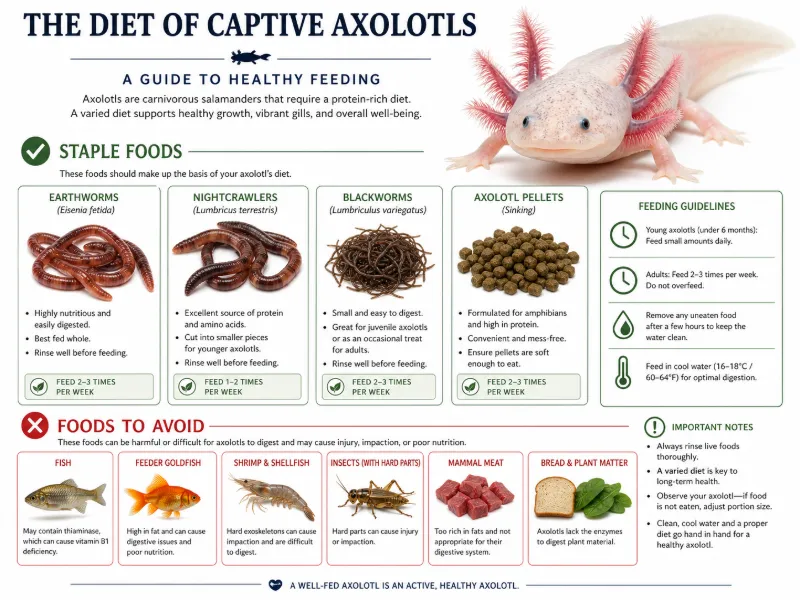
Earthworms are one of the best staple foods
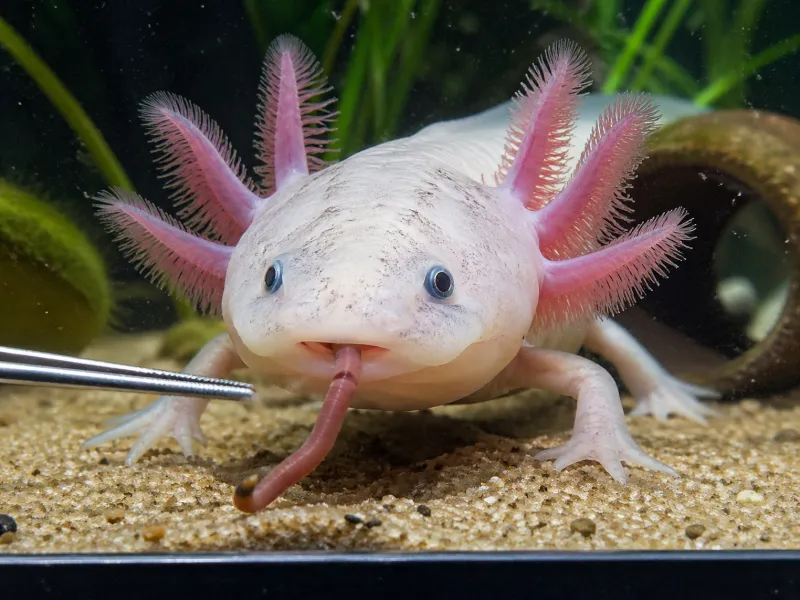
Earthworms, especially nightcrawlers and other safe feeder worms, are widely regarded as one of the best staple foods for captive axolotls. They are nutritious, high in protein, and usually well accepted by healthy animals.
They also have a softness and shape that suits the axolotl’s natural feeding style. An axolotl usually snaps food into its mouth and swallows it whole rather than chewing.
For smaller axolotls, worms can be cut into shorter sections. For larger adults, whole appropriately sized worms are often ideal. Many keepers rely on worms as the main staple because they are practical, clean, and effective over the long term.
Pellets can also be a strong staple
High-quality sinking pellets made for axolotls, carnivorous salamanders, or certain aquatic predators can also work very well. Pellets are especially useful when they are nutritionally consistent and easy to portion.
Not all pellets are equally good, so it helps to choose a product designed for carnivorous aquatic amphibians or a close equivalent. Good pellets should sink, hold together reasonably well, and not create excessive mess in the tank.
Some axolotls prefer worms over pellets, while others accept pellets easily. In many setups, worms and pellets together make a practical long-term feeding plan.
What young axolotls eat
Young axolotls usually need smaller prey and more frequent feeding than adults. Very small juveniles may begin on foods such as live blackworms, baby brine shrimp at an early stage, or other tiny suitable prey depending on age and development.
As they grow, they can transition to larger worms, chopped earthworms, and pellets. The key is matching food size to mouth size. If the food is too large, the juvenile may struggle to swallow it or refuse it entirely.
Young axolotls are growing quickly, so consistent feeding is important. They usually do best when offered appropriately sized food often enough to support growth without leaving large amounts of waste in the tank.
What adult axolotls eat
Adult axolotls generally do best on a simple staple diet based on earthworms, nightcrawlers, and quality sinking pellets. By adulthood, they can usually handle larger prey items than juveniles and often need feeding less often.
Many adult axolotls maintain good body condition on regular worm meals or measured pellet feedings every one to three days, though this varies. Activity level, tank temperature, metabolism, and individual appetite all matter.
Adults usually do not need constant feeding. Overfeeding is more likely to be a problem than underfeeding in a healthy adult with good body condition.
How often should captive axolotls be fed?
Feeding frequency depends mainly on age and size. Juveniles usually need food more often because they are growing, while adults are fed less frequently. Small juveniles are often fed daily, and sometimes younger stages need even smaller meals more than once a day. Larger juveniles may still do well with daily feeding, while adults often eat every one to three days.
There is no single perfect schedule for every axolotl. Appetite, growth rate, body shape, and water temperature all influence feeding needs. Cooler water often slows metabolism, while active growth increases food demand.
It is usually better to watch the animal’s body condition and feeding response rather than follow a rigid schedule without adjustment.
How much should an axolotl eat?
A practical rule is to feed enough that the axolotl eats readily and maintains a healthy body shape without becoming heavy or sluggish. The abdomen is often used as a rough visual guide. In many healthy axolotls, the belly should look reasonably full but not greatly swollen.
If the animal is constantly refusing food, leaving meals unfinished, or looking unusually bloated, portions may be too large or too frequent. If it appears thin, especially around the body behind the head, feeding may need adjustment.
Because foods differ in size and density, portioning by exact item count is less useful than watching overall condition and consistency over time.
Can axolotls eat bloodworms?
Bloodworms are commonly offered to juvenile axolotls and are often accepted eagerly, but they are usually better viewed as a supplemental food than a perfect long-term staple for larger animals. They can be useful for small juveniles or for encouraging appetite, but they are often not as complete or practical as earthworms for long-term growth and maintenance.
For adults, bloodworms are usually too small to serve as the main diet efficiently. A larger adult would need many of them, and there are usually better staple choices available.
So bloodworms can have a place, especially for young animals, but they are usually not the best sole food for a growing or adult axolotl.
Can axolotls eat shrimp, fish, or other treats?
Some captive axolotls may be offered occasional suitable treats such as small soft aquatic invertebrates or carefully chosen frozen foods, but treats should not replace staple foods. The safest long-term diet is still usually worms and good pellets.
Feeder fish are often not recommended as a routine food source because they may introduce parasites, injuries, nutritional imbalance, or unnecessary risk. Hard-bodied or spiny prey can also be a poor choice.
If a keeper uses occasional treats, they should be simple, safe, and appropriate to the axolotl’s size. Treats are best kept occasional rather than frequent.
Foods that are usually best avoided
Several foods are commonly discouraged for captive axolotls. Mammal meat such as beef or chicken is generally not considered an ideal staple. It does not match their natural feeding biology well and may be too fatty or unbalanced for regular use.
Large feeder fish, hard insects, mealworms with tough exoskeletons, and foods seasoned or prepared for human consumption should also be avoided. Tankmates that can bite gills or be swallowed dangerously are a separate risk and should not be treated as casual food sources.
In general, if a food is tough, sharp, heavily processed, nutritionally questionable, or likely to foul the water quickly, it is a poor choice.
Why food size matters
Axolotls swallow food whole, so item size matters a lot. If prey is too large, the axolotl may spit it out, struggle to swallow it, or risk digestive problems. Smaller juveniles especially need chopped or appropriately small food items.
A simple rule is that food should be manageable for the animal’s head and mouth size. Worms can be cut into pieces for younger axolotls and offered whole when the animal is larger.
Matching food size correctly makes feeding safer, reduces waste, and improves the chance that the axolotl actually eats well.
How axolotls find and take food
Axolotls are suction feeders. They often locate food by smell and movement, then suddenly open the mouth and pull the prey inward with water. This is why soft, sinkable, meaty foods usually work better than floating foods.
Many captive axolotls will take food from feeding tongs, from a dish, or directly from the tank bottom. Because they use suction rather than chewing, they often look clumsy at first, but this is normal feeding behavior.
Understanding this feeding style helps explain why worms and sinking pellets are such good captive foods.
How to tell if an axolotl is eating well
A healthy feeding response usually includes alert interest in food, a quick suction strike, and steady maintenance of body condition over time. A well-fed axolotl should not look sharply thin, and it should not constantly refuse suitable food without another reason.
Appetite can vary a little from day to day, especially with temperature changes or minor stress, but long-term refusal, weight loss, floating problems, or obvious weakness are signs that something may be wrong.
Feeding success is not just about whether the animal snaps at food once. It is about stable condition, regular waste production, and consistent behavior over time.
Why water quality and diet are linked
Axolotl feeding cannot be separated from water quality. Uneaten food breaks down quickly, especially meaty foods, and this can foul the tank. Overfeeding often creates both nutritional and water-quality problems at the same time.
It is best to remove leftovers promptly and avoid giving more than the axolotl is likely to eat. Clean feeding habits help protect the animal from stress and illness.
A great diet loses value if poor tank hygiene turns every meal into a source of water problems.
Signs the diet may need improvement
A diet may need adjustment if the axolotl shows poor growth, chronic refusal of staple foods, abnormal thinness, excessive weight gain, messy feeding, or frequent digestive trouble. Sometimes the issue is not the food type itself but the portion size, feeding schedule, or item size.
Young axolotls that are not growing well may need smaller, more frequent meals or more suitable food texture. Adults that become too heavy may need less frequent feeding or more careful portion control.
The best captive diets are not complicated. They are consistent, clean, and easy for the animal to process.
Final takeaway
Captive axolotls do best on a simple carnivorous diet built around earthworms, nightcrawlers, blackworms, and high-quality sinking pellets. Juveniles usually need smaller food and more frequent meals, while adults are commonly fed every one to three days depending on condition and appetite. The most important rules are to choose soft, high-protein foods, match food size to the axolotl’s age, avoid unsuitable treats, and keep the tank clean after feeding.
FAQs
What is the best food for captive axolotls?
Earthworms and nightcrawlers are widely considered among the best staple foods, with quality sinking pellets also being a strong option.
How often should I feed my axolotl?
Juveniles are usually fed more often, often daily, while adults are commonly fed every one to three days depending on appetite and body condition.
Can axolotls eat bloodworms?
Yes, especially smaller juveniles can eat bloodworms, but they are usually better as a supplemental food than as the main long-term staple for larger axolotls.
What foods should axolotls avoid?
They should generally avoid hard-bodied insects, processed human foods, large feeder fish, and unsuitable meats used as routine staples.