Axolotls can live surprisingly long lives for amphibians.
Under good human care, an axolotl commonly lives about 10 to 15 years.
Some individuals may die much younger because of disease, poor water quality, excessive heat or other health problems, while exceptionally well-cared-for animals may exceed the typical range.
There is no guaranteed lifespan for an individual axolotl.
Water temperature, water quality, nutrition, genetics and long-term husbandry all influence how long an axolotl survives.
How Long Do Axolotls Live?
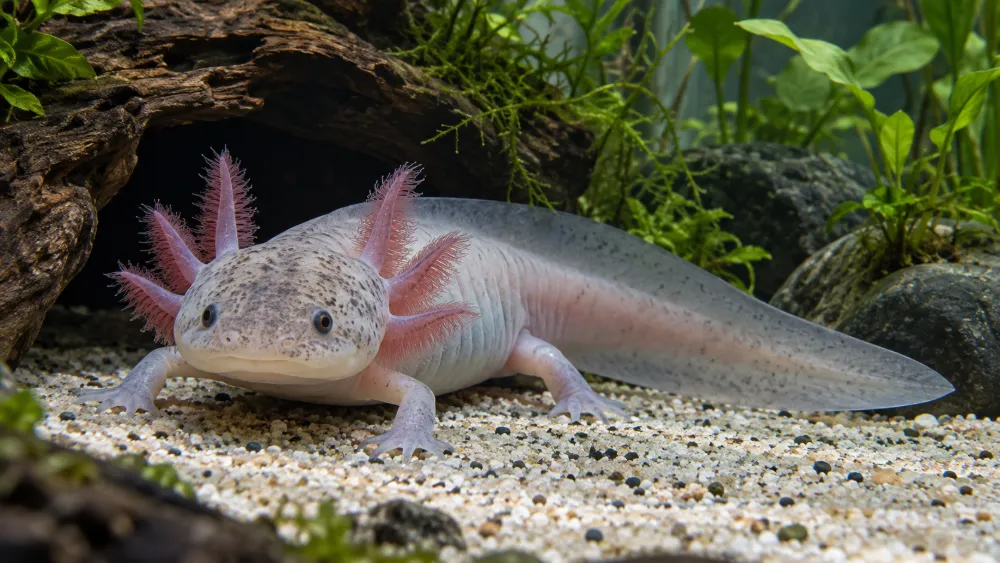
Axolotls kept under appropriate conditions commonly live approximately 10 to 15 years.
| Situation | Expected Lifespan |
|---|---|
| Well-cared-for captive axolotl | About 10–15 years |
| Poor water quality or chronic heat stress | Potentially much shorter |
| Wild axolotl | Not well established |
The 10-to-15-year range should be treated as a realistic general lifespan rather than a promise that every pet axolotl will reach that age.
How Long Do Axolotls Live in Captivity?
Axolotls can do very well under human care when their environment matches their biological needs.
Aquarium of the Pacific gives a lifespan of approximately 10 to 15 years under human care.
Captive animals have several potential advantages:
reliable food;
no natural predators;
controlled water conditions;
monitoring for illness;
and protection from habitat disturbance.
But captivity only helps when husbandry is appropriate.
Axolotls are sensitive aquatic amphibians, and poor aquarium conditions can quickly become harmful.
How Long Do Axolotls Live in the Wild?
The lifespan of wild axolotls is much harder to measure accurately.
Wild Ambystoma mexicanum now survives in a very restricted natural range around the Xochimilco wetland system near Mexico City.
Individuals face environmental pressures that captive axolotls do not, including:
habitat degradation;
pollution;
introduced predatory fish;
food competition;
and changing water conditions.
Because the remaining wild population is critically threatened and difficult to monitor throughout an individual's entire life, there is no equally strong population-wide figure for average wild lifespan.
It is therefore better not to repeat precise wild-lifespan numbers unless they come from long-term field data.
What Affects an Axolotl's Lifespan?
Several factors can strongly influence long-term survival.
1. Water Temperature
Axolotls are cool-water salamanders.
The University of Kentucky's Ambystoma Genetic Stock Center maintains axolotls at approximately 15–18°C (60–65°F).
Its husbandry guidance warns that temperatures around or above 22°C (72°F) can become dangerous, especially when exposure is prolonged.
Chronic overheating can stress axolotls and make them more vulnerable to health problems.
2. Water Quality
For an entirely aquatic amphibian, water is its environment, respiratory medium and contact surface.
Poor water quality can expose axolotls to:
ammonia;
nitrite;
excess organic waste;
chlorine;
and harmful microorganisms.
Stable, properly conditioned water is therefore one of the most important factors in long-term health.
3. Diet
Axolotls are carnivorous.
A nutritionally appropriate diet supports:
growth;
body condition;
tissue maintenance;
and normal physiological function.
Young axolotls require more frequent feeding than adults.
For detailed feeding information, see our Axolotl Diet Guide.
4. Genetics
Genetics can affect general health and disease susceptibility.
Color morph itself does not automatically determine lifespan.
A wild-type, leucistic, albino or melanoid axolotl can potentially live a long life when otherwise healthy and appropriately cared for.
5. Disease Prevention
Stressed animals are more vulnerable to opportunistic infections.
The Ambystoma Genetic Stock Center notes that poor husbandry and adverse environmental conditions increase susceptibility to bacterial disease.
Loss of appetite and deterioration of the external gills can be early warning signs of illness.
What Temperature Helps Axolotls Live Longer?
There is no special “longevity temperature,” but axolotls should be maintained within an appropriate cool-water range.
University of Kentucky research colonies commonly keep adults at approximately 15–18°C.
More important than chasing one exact number is avoiding:
chronic overheating;
large sudden temperature swings;
direct sunlight on the aquarium;
and warm tropical-aquarium conditions.
At What Age Is an Axolotl an Adult?
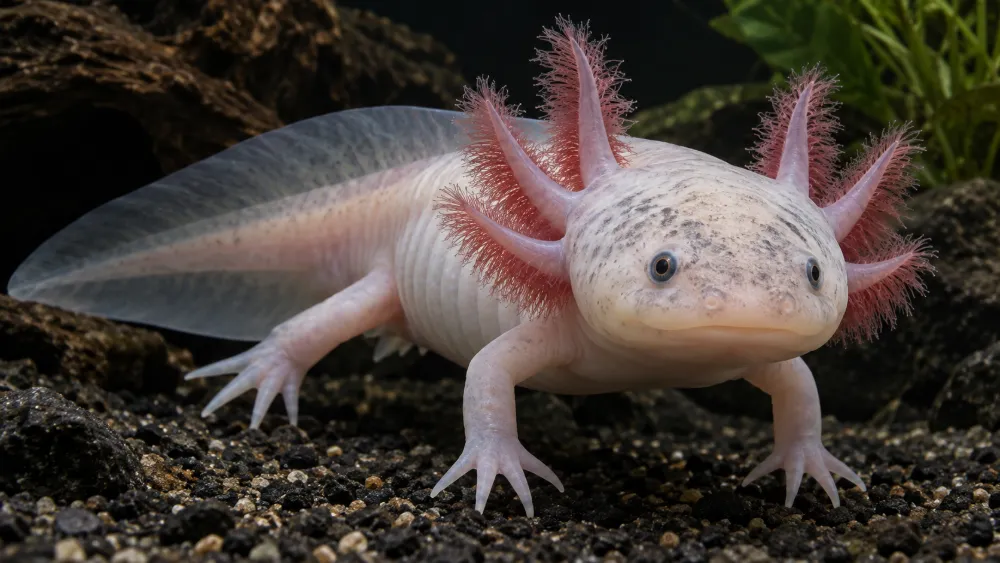
Axolotls generally reach sexual maturity at around one year of age, although development varies among individuals and environmental conditions.
Unlike many other salamanders, they usually remain permanently aquatic and retain juvenile-looking features such as:
external gills;
a tail fin;
and an aquatic body form.
This trait is called neoteny.
An adult axolotl therefore still looks somewhat like the larval stage of many other salamanders.
Do Axolotls Stay Babies Forever?
No.
The popular phrase “axolotls stay babies forever” refers to their appearance, not their actual biological age.
They become sexually mature adults while retaining several larval anatomical features.
An adult axolotl is still a fully mature animal even though it keeps its external gills.
How Can You Tell How Old an Axolotl Is?
It is difficult to determine the exact age of an adult axolotl simply by looking at it.
Young animals grow rapidly, so body size can provide a rough clue during early development.
But after maturity, size becomes a poor age indicator because it is also influenced by:
genetics;
sex;
nutrition;
temperature;
and previous growth conditions.
The most reliable way to know an axolotl's exact age is to know its hatch date or breeding history.
How Big Is an Adult Axolotl?
Adult axolotls commonly reach roughly 8 to 12 inches in length, although individual size varies.
Some can grow larger.
Size should not be used as a direct lifespan calculator.
A 10-inch axolotl could be relatively young or many years old.
Does Regeneration Make Axolotls Live Longer?
Axolotls are famous for their regenerative abilities.
They can regenerate complex tissues including:
limbs;
tail tissue;
parts of the spinal cord;
and other structures.
But regeneration does not make an axolotl immortal.
Axolotls still experience aging, disease, infection, organ dysfunction and environmental stress.
The ability to replace a damaged limb is very different from being able to indefinitely reverse the aging process.
Are Axolotls Immortal?
No.
This is a myth created partly by their extraordinary regenerative biology.
An axolotl can repair some tissues unusually well, but it still has a finite lifespan.
A healthy captive individual may live for more than a decade, but eventually biological aging and other health risks still apply.
Can Axolotls Live 20 Years?
Claims of axolotls living around 20 years or longer occasionally appear in hobby discussions.
Exceptional longevity may be possible, but it should not be presented as the normal expected lifespan without reliable documentation.
For practical care planning, 10 to 15 years is a much better evidence-based expectation.
What Shortens an Axolotl's Lifespan?
Common long-term risk factors include:
water that is consistently too warm;
poor water quality;
chronic ammonia or nitrite exposure;
inappropriate diet;
untreated infection;
repeated stress;
injuries;
and unsuitable tank conditions.
Many of these risks are preventable with appropriate husbandry.
Do Black Axolotls Live Longer?
No evidence shows that black melanoid axolotls naturally have a longer lifespan simply because of their pigmentation.
Melanoid describes a color morph.
For more detail, see our Black Axolotl Guide.
Do Albino Axolotls Live Shorter Lives?
Albino pigmentation alone should not be assumed to dramatically shorten lifespan.
Overall health, genetics and environmental conditions are much more important.
Different breeding lines can carry different genetic backgrounds, so it is better to evaluate an individual animal rather than make lifespan predictions from color alone.
How Can You Help an Axolotl Live Longer?
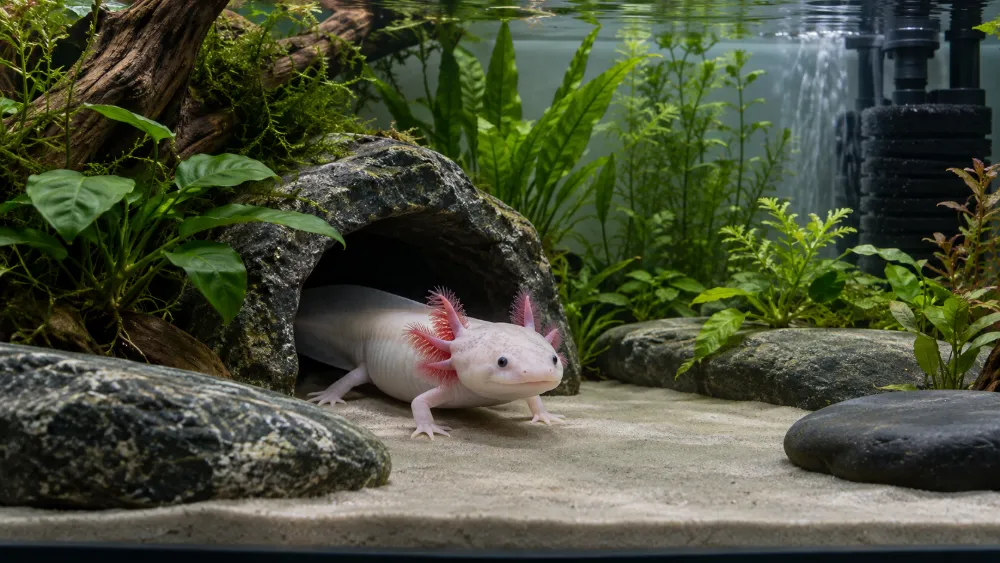
The best strategy is not a special supplement or “anti-aging” food.
Focus on basic husbandry:
Keep water cool and stable.
Maintain excellent water quality.
Use properly conditioned water.
Provide suitable hiding areas.
Avoid strong currents and unnecessary handling.
Feed an appropriate carnivorous diet.
Monitor appetite, skin and gill condition.
Respond quickly to signs of illness.
Good long-term consistency matters more than constantly changing the aquarium setup.
Are Axolotls Hard to Keep Alive?
They are not necessarily fragile when their environmental needs are met.
The University of Kentucky's research colony describes properly cared-for axolotls as hardy animals that seldom become ill.
The challenge is that their needs differ from those of many common tropical aquarium animals.
In particular, they require cool, clean water.
How Long Is the Commitment When Getting an Axolotl?
Potential owners should plan for more than a decade of care.
A realistic commitment is approximately 10 to 15 years.
That includes long-term responsibility for:
aquarium maintenance;
temperature control;
food;
water testing;
and veterinary care when needed.
FAQ
How long do axolotls live?
Axolotls commonly live about 10 to 15 years under good human care.
How long do pet axolotls live?
A well-cared-for pet axolotl can reasonably be expected to live around 10 to 15 years, although individual lifespan varies.
Can an axolotl live 20 years?
Exceptional long lifespans are sometimes reported, but 20 years should not be treated as the normal expectation. Ten to fifteen years is a better documented range.
How long do axolotls live in the wild?
Wild lifespan is not as well established as captive longevity. Remaining wild populations face severe habitat degradation, pollution and introduced predators.
At what age is an axolotl fully grown?
Axolotls generally become sexually mature at around one year, although growth and final body size vary.
Are axolotls immortal?
No. Their powerful regenerative abilities do not prevent aging or make them immortal.
Does regeneration extend an axolotl's lifespan?
Regeneration helps repair certain damaged tissues, but there is no evidence that it gives axolotls unlimited lifespan.
Do black axolotls live longer?
No evidence shows that melanoid coloration itself produces a longer lifespan.
Do albino axolotls live shorter lives?
Not simply because they are albino. Husbandry, genetics and overall health are more important predictors of longevity.
What temperature should axolotls live in?
Axolotls need cool water. University of Kentucky's Ambystoma Genetic Stock Center maintains its animals around 15–18°C (60–65°F) and warns against excessive heat.
Final Answer
Axolotls commonly live about 10 to 15 years under good human care.
They can therefore be a much longer commitment than many first-time owners expect.
The biggest factors affecting lifespan are not color morph or regenerative ability but basic environmental conditions—especially cool temperatures, clean water, appropriate nutrition and early response to illness.
Axolotls may be able to regenerate limbs and other complex tissues, but they are not immortal.
For anyone considering keeping one, the safest assumption is simple: prepare to care for the animal properly for well over a decade.
Related Reading
Sources Used for Fact Checking
Aquarium of the Pacific — Axolotl Species Profile
University of Kentucky Ambystoma Genetic Stock Center — Guide to Axolotl Husbandry
University of Kentucky Ambystoma Genetic Stock Center — Axolotl Biology