The ocean contains enormous predators, tiny venomous animals and masters of camouflage that can be dangerous long before a swimmer realizes they are nearby.
But “dangerous” does not mean the same thing for every marine animal.
A box jellyfish can inject extremely powerful venom through microscopic stinging cells. A stonefish is dangerous because people may accidentally step on its venomous spines. A saltwater crocodile is a powerful predator, while a stingray usually injures people only when defending itself.
For that reason, this is not a scientific ranking from deadliest to least deadly. Instead, these are 10 sea creatures with well-documented ways of seriously injuring humans.
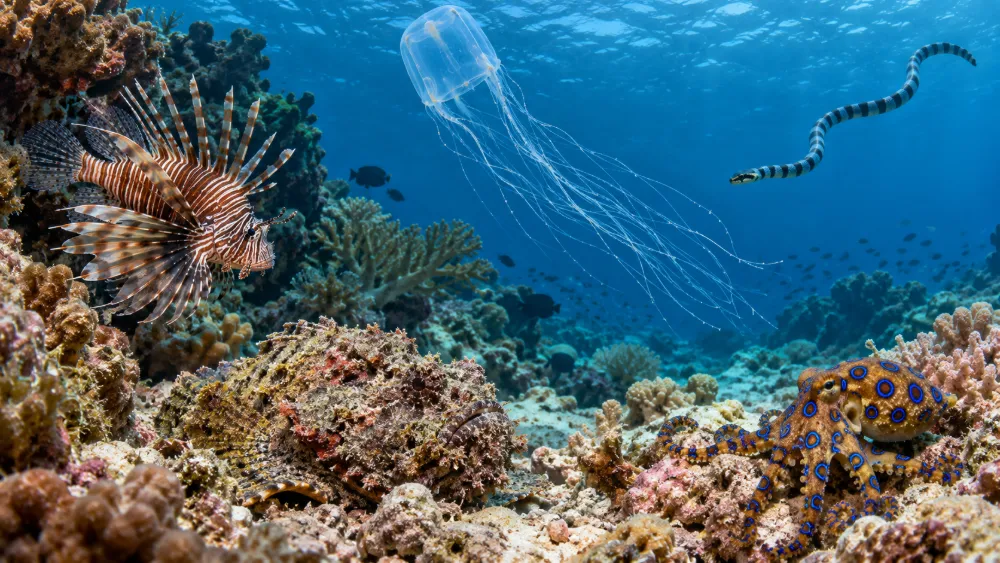
10 Dangerous Sea Creatures at a Glance
| Animal | Main Danger | Typical Risk |
|---|---|---|
| Australian box jellyfish | Extremely potent venom | Tentacle contact |
| Reef stonefish | Venomous dorsal spines | Stepping on a camouflaged fish |
| Blue-ringed octopus | Paralyzing neurotoxin | Handling or disturbing the animal |
| Cone snail | Venom-injecting harpoon tooth | Picking up a live cone shell |
| Sea snake | Powerful venom | Rare defensive bites |
| Saltwater crocodile | Large predatory attack | Entering crocodile habitat |
| Large predatory sharks | Severe bite trauma | Rare shark-human encounters |
| Stingray | Venomous tail spine | Accidentally stepping on one |
| Lionfish | Venomous fin spines | Handling or accidental contact |
| Portuguese man o' war | Long stinging tentacles | Swimming or beach contact |
1. Australian Box Jellyfish
Scientific name: Chironex fleckeri
The Australian box jellyfish deserves a place on any list of dangerous marine animals because of the extraordinary potency of its venom.
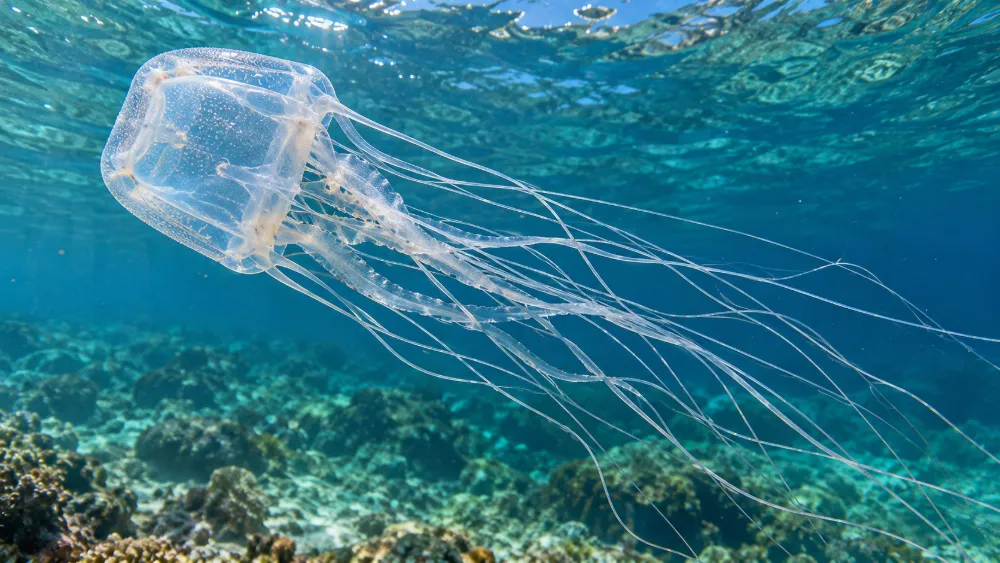
NOAA describes the Australian box jellyfish as the most venomous marine animal.
Its tentacles contain thousands of microscopic structures called nematocysts. When triggered, these structures fire tiny venom-delivering darts into the skin.
Severe envenomation can cause:
intense pain;
paralysis;
cardiovascular effects;
cardiac arrest;
and potentially death.
Not every box jellyfish species is equally dangerous. The most medically serious species occur primarily in tropical Indo-Pacific waters, including northern Australia.
2. Reef Stonefish
Scientific name: Synanceia verrucosa
The reef stonefish may be the ultimate example of danger through camouflage.
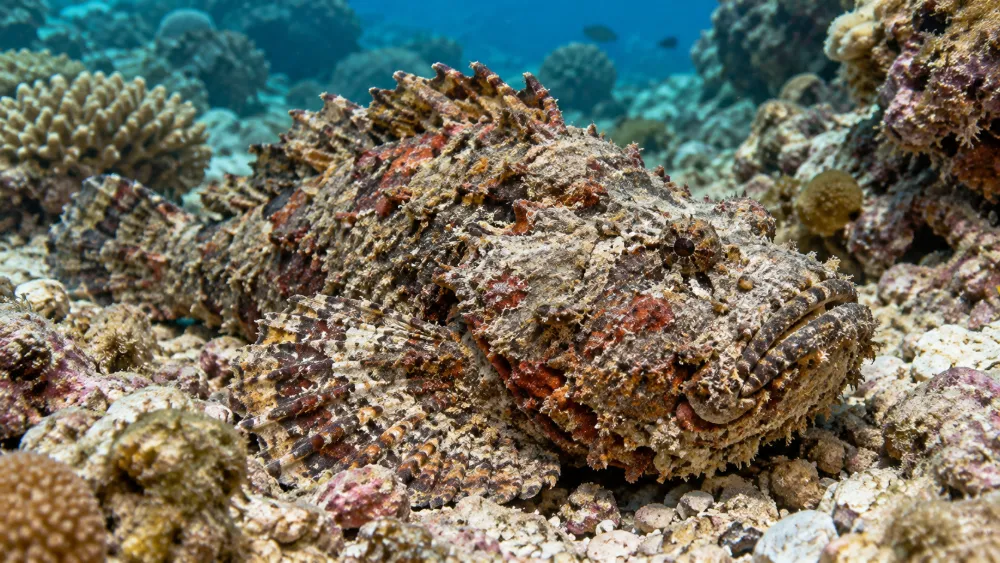
Its rough, irregular body can look almost exactly like coral-covered rock.
The problem is hidden along its back.
The Australian Museum reports that reef stonefish possess 13 stout dorsal spines capable of injecting extremely potent venom.
A person wading barefoot through shallow reef habitat may not see the fish before stepping on it.
The sting can cause extraordinarily severe pain and requires urgent medical attention.
The stonefish does not chase swimmers. The danger comes from its combination of camouflage and defensive venomous spines.
3. Blue-Ringed Octopus
Genus: Hapalochlaena
Blue-ringed octopuses show why size is a poor measure of danger.
These small octopuses can fit comfortably into a human hand, but that is exactly why they should never be handled.
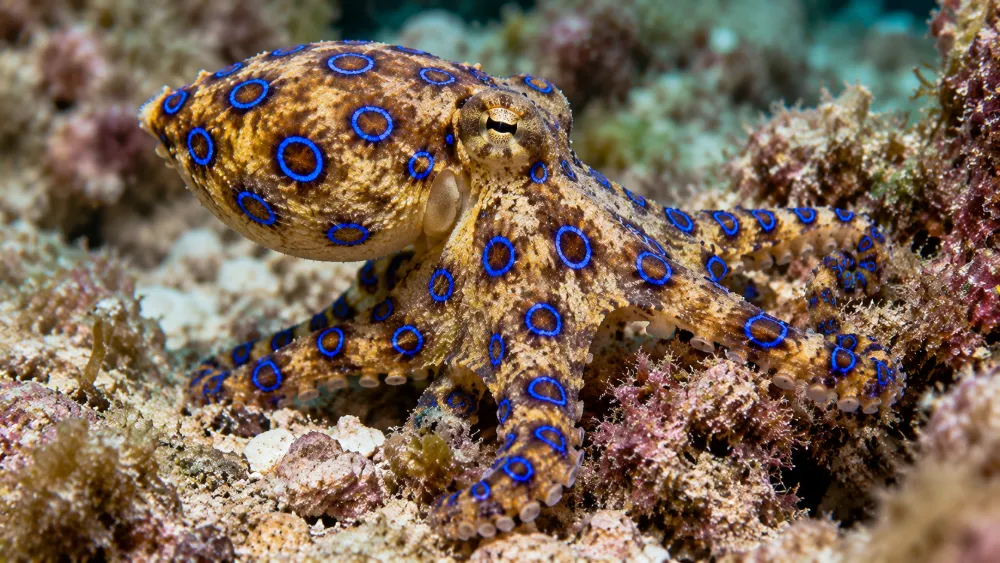
When disturbed, their electric-blue rings or lines become much more conspicuous.
Their saliva contains tetrodotoxin, a powerful neurotoxin capable of blocking nerve transmission and causing respiratory paralysis.
The bite may initially be surprisingly difficult to notice.
Despite their formidable venom, Australian Museum sources describe blue-ringed octopuses as shy and non-aggressive animals. They normally retreat from people.
Serious incidents are most likely when a person picks one up, handles it or accidentally traps it against the skin.
4. Cone Snails
Genus: Conus
A beautiful patterned shell on a tropical beach can contain a living predatory snail armed with one of the strangest venom-delivery systems in nature.
Cone snails use specialized hollow teeth like miniature harpoons.
The tooth is loaded with venom and fired into prey such as:
marine worms;
other mollusks;
or small fish.
Some large fish-eating cone snail species possess venom capable of causing severe or potentially fatal human envenomation.
This is why a live cone shell should not be picked up simply because it looks attractive.
5. Sea Snakes
Sea snakes live primarily in tropical Indo-Pacific waters.
They are highly adapted marine reptiles capable of spending much or all of their lives in the ocean.
Their venom can have powerful effects on:
the nervous system;
skeletal muscles;
and breathing.
CDC guidance notes that sea snake bites may initially cause little pain, yet serious neurological and muscular symptoms can develop later.
Fortunately, most sea snakes do not actively pursue people.
Bites are associated more with handling, fishing activity or close accidental contact than with deliberate predation on humans.
6. Saltwater Crocodile
Scientific name: Crocodylus porosus
The saltwater or estuarine crocodile represents an entirely different category of marine danger.
It is not dangerous because of venom.
It is dangerous because it is an enormous apex predator capable of treating humans as potential prey.
Adult males can exceed 5 meters, and exceptionally large individuals grow even bigger.
Saltwater crocodiles inhabit:
estuaries;
tidal rivers;
mangroves;
coastal wetlands;
and sometimes marine environments.
The Australian Museum warns that many attacks occur when people swim, canoe or approach the water's edge in crocodile habitat.
Unlike most animals on this list, a large saltwater crocodile is physically capable of actively preying on a human.
7. Large Predatory Sharks
Few marine animals have a more exaggerated reputation than sharks.
Some large species—including white sharks, tiger sharks and bull sharks—are physically capable of causing catastrophic injury.
That makes shark encounters worth taking seriously.
However, NOAA emphasizes an equally important fact:
Humans are not part of the normal diet of sharks.
Most shark species present little danger to people, and shark attacks remain unusual considering how many humans enter the ocean every year.
A large shark's danger comes from its size, powerful jaws and the potential severity of even a single exploratory or defensive bite—not because sharks routinely hunt swimmers for food.
8. Stingrays
Stingrays usually want nothing to do with humans.
Problems occur because many species spend time resting partially buried in shallow sand.
A swimmer or wader can accidentally step directly on one.
The ray may then whip its tail upward in defense.
The tail carries a serrated spine capable of producing:
a puncture wound;
severe pain;
venom exposure;
and sometimes secondary complications.
Florida Museum notes that stingrays do not normally attack people and that most stings occur when someone accidentally steps on a concealed ray.
Most injuries are painful rather than fatal.
9. Lionfish
Genus: Pterois
Lionfish are visually spectacular reef predators with long fan-like fins and striped bodies.
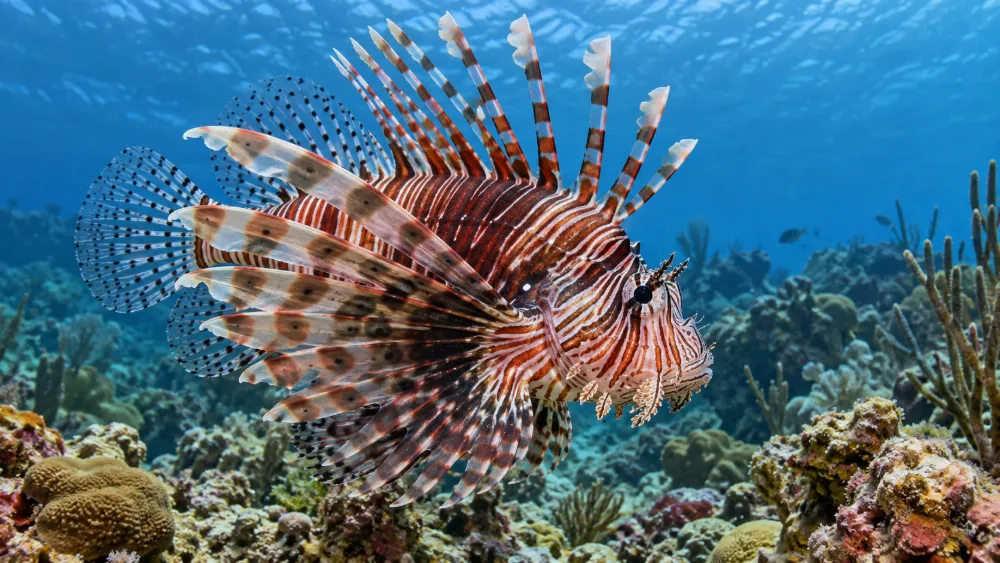
The danger lies in their venomous spines.
NOAA reports that lionfish stings can cause:
extreme pain;
sweating;
respiratory distress;
and in severe cases neurological effects such as paralysis.
Lionfish do not inject venom by chasing and biting people.
The spine must puncture the skin, so incidents often involve:
divers;
fishers;
aquarium keepers;
or people handling captured lionfish.
They are also ecologically important because invasive lionfish have spread widely through the western Atlantic and Caribbean.
10. Portuguese Man o' War
Scientific name: Physalia physalis
The Portuguese man o' war is often called a jellyfish, but it is actually a siphonophore—a colony of specialized organisms functioning together as one.
Its blue, pink or purple float sits at the surface while extremely long tentacles trail beneath it.
NOAA reports that those tentacles average around 10 meters in length and can occasionally extend much farther.
The stinging cells are designed to paralyze fish and other prey.
Human contact typically causes intense pain and raised welts.
Deaths are rare, but the animal deserves respect for another reason: detached tentacles and stranded animals can still sting.
A colorful man o' war lying on the beach should therefore not be touched.
Which Sea Creature Has the Most Powerful Venom?
NOAA identifies the Australian box jellyfish, Chironex fleckeri, as the most venomous marine animal.
But that does not automatically make it responsible for the greatest number of injuries.
Danger depends on both:
how harmful the animal can be;
and how likely humans are to encounter it.
An extremely venomous animal that rarely encounters humans may cause fewer incidents than a less toxic species common on crowded beaches.
What Is the Most Venomous Fish?
The reef stonefish is widely described as the world's most venomous fish.
Its danger comes from venom glands associated with the dorsal spines.
The almost perfect camouflage makes accidental contact particularly likely in shallow tropical reef habitat.
What Is the Difference Between Poisonous and Venomous?
The terms are often confused.
Venomous animals actively deliver toxins through structures such as:
fangs;
stingers;
spines;
or harpoon-like teeth.
A stonefish, sea snake and cone snail are venomous.
A poisonous animal causes harm when its toxins are eaten, absorbed or otherwise contacted rather than deliberately injected.
Some animals can blur these categories, but “venomous” is the correct term for most of the marine animals in this guide.
Are Sharks the Most Dangerous Animals in the Ocean?
No.
Sharks can cause severe traumatic injuries, but their reputation is far larger than their actual role as a danger to humans.
NOAA states that most sharks are not dangerous to people and that humans are not their normal prey.
Several much smaller marine animals can cause life-threatening envenomation without the dramatic appearance of a large shark.
Why Are Small Sea Creatures Sometimes So Dangerous?
Venom allows a small predator to immobilize prey much larger or faster than would otherwise be possible.
That is why tiny animals such as:
blue-ringed octopuses;
cone snails;
and jellyfish
can possess chemical defenses or hunting systems far more powerful than their body size suggests.
The toxins evolved primarily for capturing prey or defending against predators—not specifically for harming humans.
FAQ
What is the most dangerous sea creature?
There is no single scientific ranking because danger can mean venom potency, likelihood of encounter or ability to cause physical trauma. The Australian box jellyfish stands out for extremely powerful venom, while saltwater crocodiles are among the most formidable large marine and estuarine predators.
What is the most venomous marine animal?
NOAA identifies the Australian box jellyfish (Chironex fleckeri) as the most venomous marine animal.
What is the most venomous fish?
The reef stonefish is widely described as the world's most venomous fish.
Are blue-ringed octopuses aggressive?
No. They are generally shy and avoid people. Serious bites usually occur after the animal is handled, trapped or disturbed.
Can a cone snail kill a person?
Some large cone snail species have venom capable of causing severe and potentially fatal envenomation. Live cone shells should never be handled casually.
Are sea snakes dangerous?
Sea snake venom can be extremely dangerous, but bites are uncommon because most species do not actively seek conflict with humans.
Do stingrays attack people?
Normally, no. Most injuries happen when someone accidentally steps on a stingray and the animal uses its tail spine defensively.
Are lionfish venomous?
Yes. Their fin spines can inject venom and cause intense pain and other symptoms if they puncture the skin.
Can a Portuguese man o' war sting after it dies?
Yes. Stranded animals and detached tentacles can continue to sting, so they should not be touched on the beach.
Do sharks hunt humans?
No. Humans are not part of sharks' normal diet, and most shark species present little danger to people.
Final Thoughts
The most dangerous sea creatures are not necessarily the biggest or most aggressive-looking.
A nearly invisible stonefish can cause extreme pain with a defensive spine. A tiny blue-ringed octopus carries a potent neurotoxin. A transparent box jellyfish can deliver medically serious venom through delicate tentacles.
At the same time, several animals with frightening reputations are less aggressive than people assume. Stingrays usually sting only in defense, blue-ringed octopuses prefer to hide, and sharks do not consider humans normal prey.
The best way to understand marine danger is therefore not to ask which animal is the “scariest.” It is to understand how the animal causes injury, when humans are likely to encounter it and how easily that encounter can be avoided.