Found a small brown bug near your bed? It might be a bed bug—but several insects and even an arachnid can be mistaken for one. This photo guide compares eight common look-alikes, from bat bugs and spider beetles to carpet beetle larvae, ticks and fleas. The safest way to identify a suspicious bug is to examine the specimen, not guess from a bite mark.
Start with the real bed bug below. Then compare the mystery insect's body shape, number of legs, antennae, hairs, movement and where it was found. Some close relatives look too similar to separate without a specialist.
What Does a Real Bed Bug Look Like?
The common bed bug (Cimex lectularius) is a wingless insect. Adults are roughly 5–7 mm long, reddish brown and broadly oval. Before a meal they are unusually flat; after feeding the abdomen becomes fuller. Their six legs, short antennae and visible abdominal segments are useful clues. Newly hatched nymphs are smaller and paler, so don't rely on adult size or color alone.
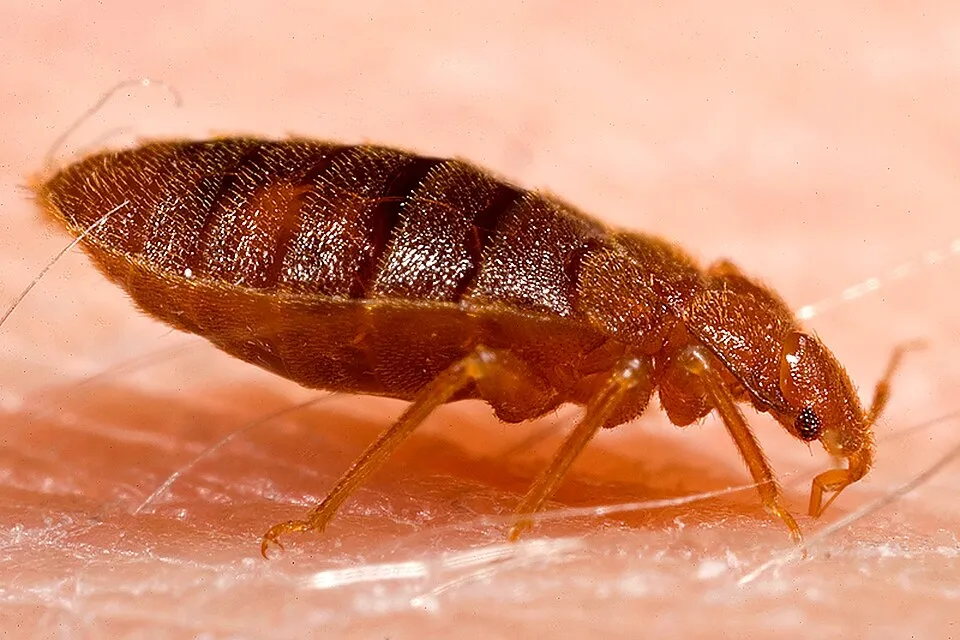
Reference photo: CDC · Public Domain. Original photograph and license. This reference shows a bed bug feeding on a person's arm.
A bed bug photograph can be helpful, but itchy spots are not a reliable species ID. Skin reactions overlap with other insects and non-insect causes. The US Environmental Protection Agency recommends looking for live bugs, shed skins, eggs and dark fecal stains around resting areas.
Quick Comparison: Bed Bug or Something Else?
| Possible ID | Most useful visual clue | Legs | Where you may find it | Next check |
|---|---|---|---|---|
| Bed bug | Flat, broadly oval; exposed abdominal bands | Six | Mattress seams, bed frames, furniture crevices | Confirm with specimen |
| Bat bug | Almost identical to bed bug | Six | Near bat roosts or adjoining rooms | Expert microscopy |
| Adult carpet beetle | Rounded dome; hard patterned wing covers | Six | Windowsills, clothing, fabric | Look for hard shell |
| Carpet beetle larva | Hairy and elongated | Six | Rugs, wool, lint, closets | Visible bristles |
| Spider beetle | Shiny and globular | Six | Stored goods, dry debris | Rounded, hard body |
| Booklouse | Tiny pale body, relatively large head | Six | Damp rooms, books, stored goods | Head proportions |
| Cockroach nymph | Long antennae; elongated shape | Six | Kitchen/appliance crevices | Antennae and cerci |
| Tick (adult/nymph) | Oval body, no antennae | Eight | Skin, pets, outdoors | Eight legs |
| Flea | Narrow side view; jumps | Six | Pets and their bedding | Jumping behavior |
Note: Numbers above refer to typical adult or nymph stages. Tick larvae have six legs, not eight; identification requires more than one clue.
8 Bugs That Look Like Bed Bugs: Photos and Differences
1. Bat Bug
Scientific identification: Cimex adjunctus.
Bat bugs are the most difficult imposters on this list. They belong to the same insect family as human bed bugs and have much the same flattened, oval, reddish-brown shape. A close-up of a lone bug on a mattress often cannot settle the identification. This is especially important when bats have been roosting in an attic, wall void or roof space. A bug wandering into a bedroom is not automatically a human-feeding bed bug.
The distinguishing character used by entomologists is the fringe of hairs along the pronotum, the shield-like region behind the head. Bat bugs generally have longer hairs relative to eye width than common bed bugs. That detail is not reliably visible in many smartphone pictures. Bat bugs primarily use bats as hosts, although they may bite people when hosts become unavailable. If a suspected specimen appears near a former bat roost, save it for professional identification before choosing a treatment.
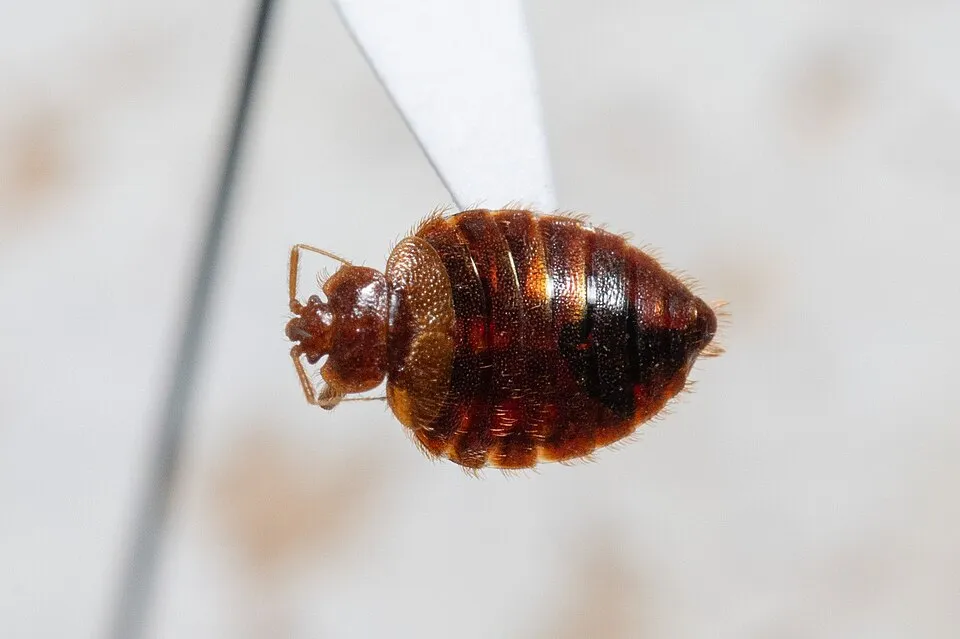
Actual identification photo: kalvinchan · CC BY 4.0. View original file and reuse license. An actual bat bug; species-level distinction often needs magnification.
Identification takeaway: Closest resemblance: very high. Best clue: possible nearby bat activity, followed by microscopic examination. Do not assume location alone proves the species.
2. Adult Carpet Beetle
Scientific identification: Anthrenus verbasci.
An adult varied carpet beetle is tiny and oval, so it can raise an alarm when found on a windowsill or bedding. Under a clear photograph, however, it looks like a compact dome, not a flattened bed bug. Its hard wing covers form a neat seam down the back. The pale, brown and dark speckles are made of scales, rather than the exposed abdominal segmentation of a bed bug.
Adult carpet beetles do not feed on people. Larvae are the stage associated with damage to animal-based fibers and some stored materials. A beetle repeatedly found at sunny windows may be attracted to light. One small beetle in a bedroom is not proof of a bed bug infestation. Look for the domed outline and hard shell before making a conclusion, and remember that a photograph needs enough detail to show the back.
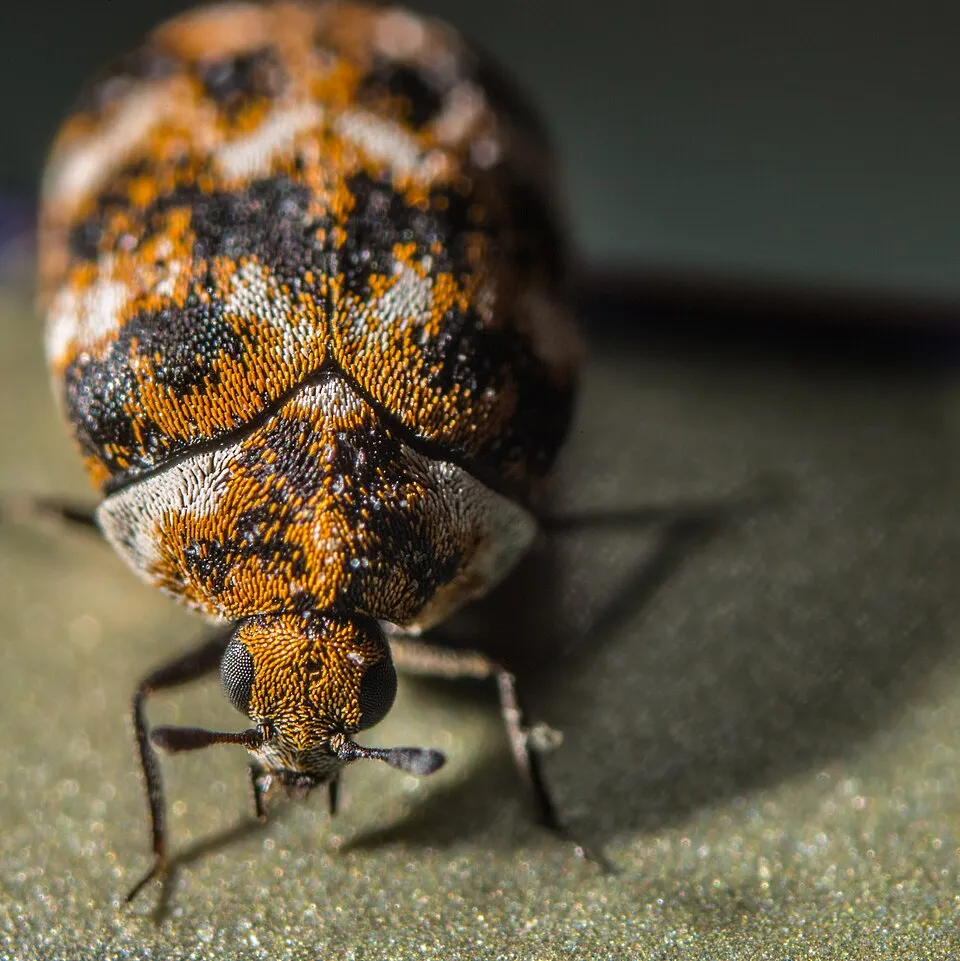
Actual identification photo: Brian Tomlinson · CC BY 2.0. View original file and reuse license. Varied carpet beetle adult with a rounded, patterned shell.
Identification takeaway: Closest resemblance: mainly small size and oval shape. Best clue: mottled, rounded shell and wing covers.
3. Carpet Beetle Larva
Scientific identification: Anthrenus verbasci, larval stage.
A carpet beetle larva is a different-looking source of confusion. It is elongated, often banded, and densely covered with bristles. Some people discover one in a bed, a rug or a closet and mistake it for a young bed bug. But bed bug nymphs resemble small, relatively smooth versions of adults; they are not hairy, wormlike larvae.
The location can help you look for an explanation. Carpet beetle larvae may occur around lint, pet hair, wool and stored fabrics. Their hairs can irritate sensitive skin, but they do not feed on human blood. The image in this guide shows several actual carpet beetle larvae together, rather than pretending to show a bed bug nymph. Use the bristly surface as the key visual distinction.
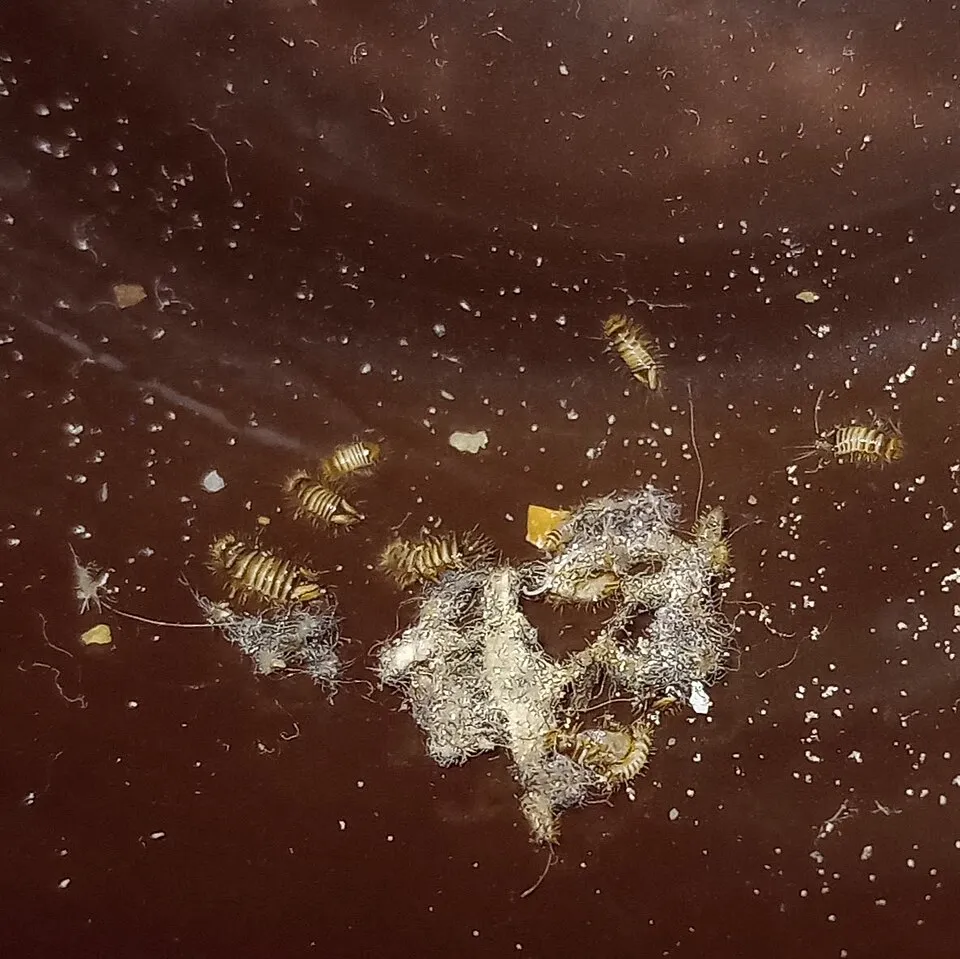
Actual identification photo: Greenteasalsa · CC BY 4.0. View original file and reuse license. Hairy larvae of varied carpet beetles, not bed bugs.
Identification takeaway: Closest resemblance: small indoor arthropod found near fabric. Best clue: conspicuous hairs and an elongated body.
4. Spider Beetle
Scientific identification: Gibbium aequinoctiale, representative spider beetle.
Spider beetles can be remarkably round and reddish brown. In dim light their tiny heads, long legs and glossy abdomens make them look like miniature spiders or engorged bed bugs. Their resemblance is mostly about size and color, not body structure. The photograph here is of a genuine spider beetle identified as Gibbium aequinoctiale.
A bed bug's abdomen is broadly oval and visibly segmented, and its wingless body is flattened when unfed. A smooth spider beetle has a hard, globular body that rises above the surface. Spider beetles are associated with stored foods, dried plant material and other dry organic debris. If similar insects are appearing around a pantry, old animal feed or stored goods, examine those locations as well as the bedding.
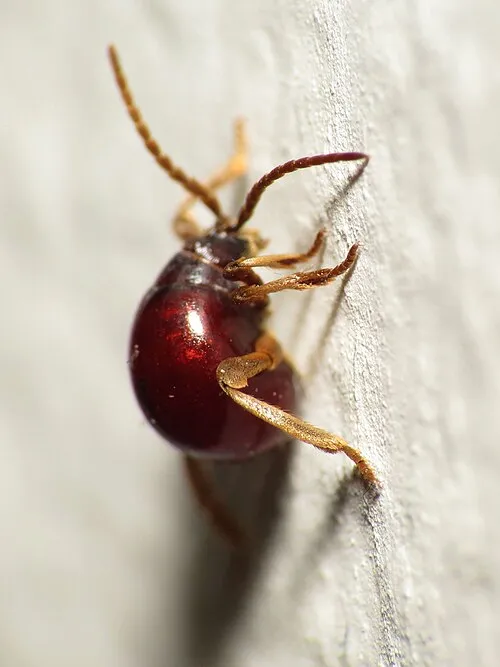
Actual identification photo: Katja Schulz · CC BY 2.0. View original file and reuse license. A shiny spider beetle, Gibbium aequinoctiale.
Identification takeaway: Closest resemblance: reddish brown color and small size. Best clue: ball-shaped, shiny body rather than a flat abdomen.
5. Booklouse
Scientific identification: Liposcelis bostrychophila, representative booklouse.
Booklice are minute, soft-bodied insects commonly associated with moisture and mold. Their light tan color can resemble an unfed young bed bug at a glance. The distinction is usually easier in a magnified photo: booklice have an unusually broad-looking head relative to the thorax and a narrower, softer body. Bed bugs have a smaller head in relation to a more rounded abdomen.
Because these insects can turn up around books, stored food and humid rooms, a tiny pale bug on a nightstand is not automatically a bed bug. A few booklice can suggest excess moisture rather than a blood-feeding infestation. Reducing humidity and addressing leaks may be more helpful than randomly spraying insecticide. Do not identify a specimen solely because it is tiny and pale: newly hatched bed bugs are also pale.
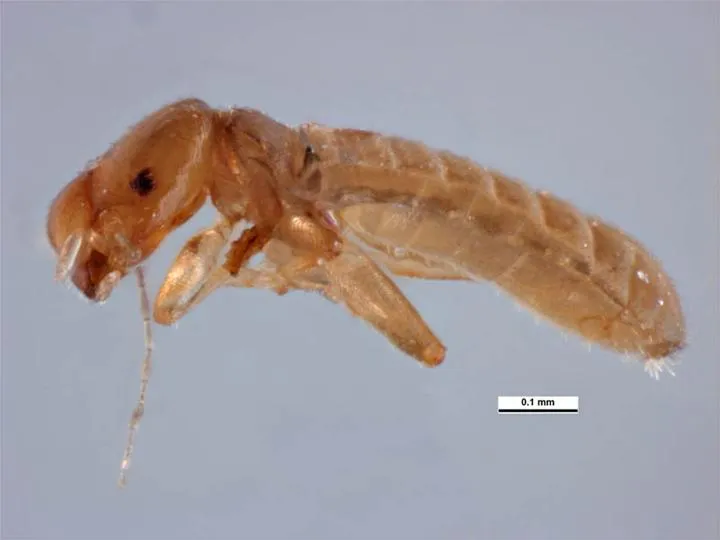
Actual identification photo: K. Walker · CC BY 3.0 AU. View original file and reuse license. A booklouse, a tiny moisture-associated insect.
Identification takeaway: Closest resemblance: very small, pale insect. Best clue: proportionally large head and association with damp areas.
6. German Cockroach Nymph
Scientific identification: Blattella germanica.
A young German cockroach may be dark and small enough to be confused with a bed bug. Both have six legs and cannot fly as juveniles. However, a cockroach nymph usually has a more elongated outline, very long threadlike antennae, spiny legs and a pair of small rear appendages called cerci. The nymph often moves rapidly when disturbed.
Early nymphs can be particularly small, so apparent size alone is insufficient. Look for the antennae extending well beyond the head and body markings. Cockroach nymphs are more likely to be associated with kitchens, food residues, appliances and humid hiding places, although they can move between rooms. Identifying a cockroach does not mean the home has bed bugs, but it may indicate a separate indoor pest issue.

Actual identification photo: Salwa Farwaneh Dameh · CC0. View original file and reuse license. An immature German cockroach with long antennae.
Identification takeaway: Closest resemblance: dark, fast-moving young insect. Best clue: long antennae, spiny legs and a different body shape.
7. Blacklegged Tick
Scientific identification: Ixodes scapularis.
A tick can look like a bed bug when it has a flattened, oval body. Unlike insects, adult ticks are arachnids and have eight walking legs. Adult bed bugs have six. Tick nymphs also have eight legs, but tick larvae have six, so the simple leg-count rule must always be matched to life stage. Ticks do not have the conspicuous insect antennae seen on bed bugs.
The photograph shows a blacklegged tick, also called a deer tick. If a suspicious animal is attached to skin, treat it as a possible tick rather than waiting for a general household identification. Follow authoritative tick-removal instructions and consult a healthcare professional when appropriate. A tick found on a pet or after outdoor activity does not establish a bed bug infestation. For more outdoor context, see our guide to ticks around yards.
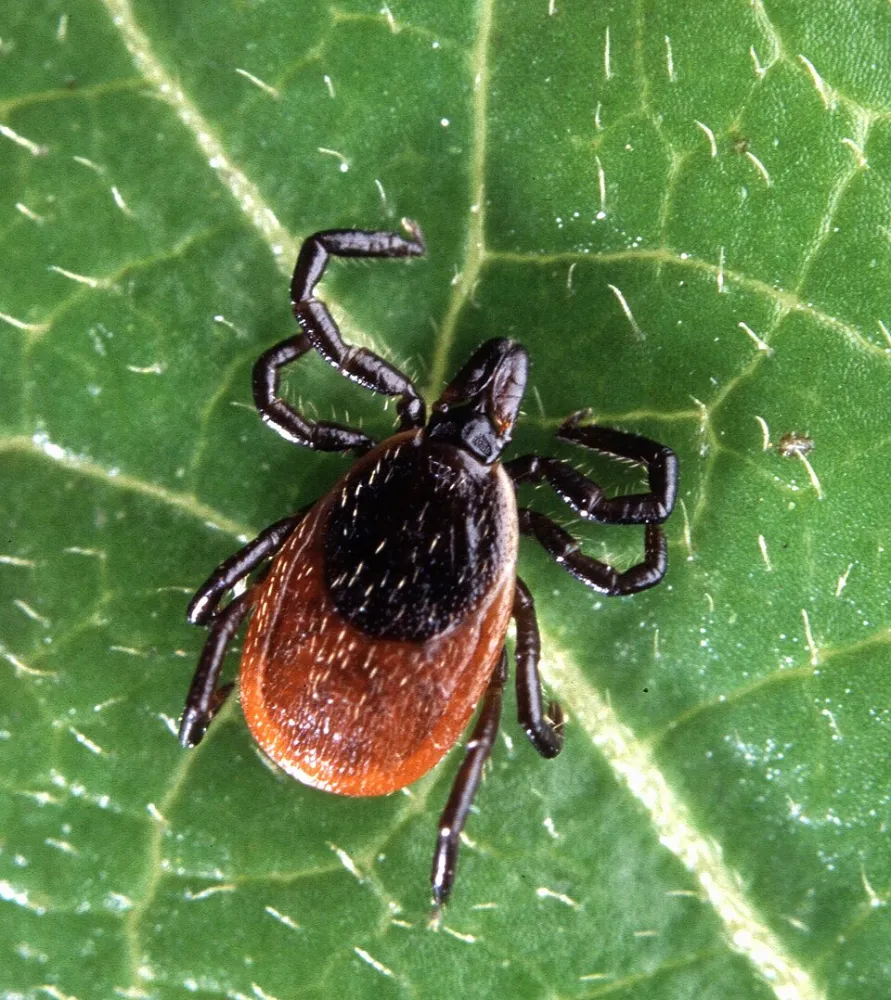
Actual identification photo: Scott Bauer / USDA-ARS · Public Domain. View original file and reuse license. Adult blacklegged tick, Ixodes scapularis, shown from above.
Identification takeaway: Closest resemblance: small flat oval body. Best clue: eight legs in adults and nymphs, with no antennae.
8. Cat Flea
Scientific identification: Ctenocephalides felis.
Fleas are tiny blood-feeding insects, which makes them easy to blame for mysterious itchy marks. Their body shape is very different from a bed bug's, though: a flea is compressed from side to side, while an unfed bed bug is flattened from top to bottom. Fleas also have powerful hind legs and may jump abruptly. Bed bugs cannot jump or fly.
A flea found on a dog, cat or pet bedding may help explain nearby insect activity, but a skin reaction alone cannot identify the culprit. The photograph here shows a preserved adult cat flea under magnification; it should be used to study body shape, not as a claim about what an insect looks like at normal room distance. If pets are involved, consult a veterinarian about appropriate flea prevention and treatment.
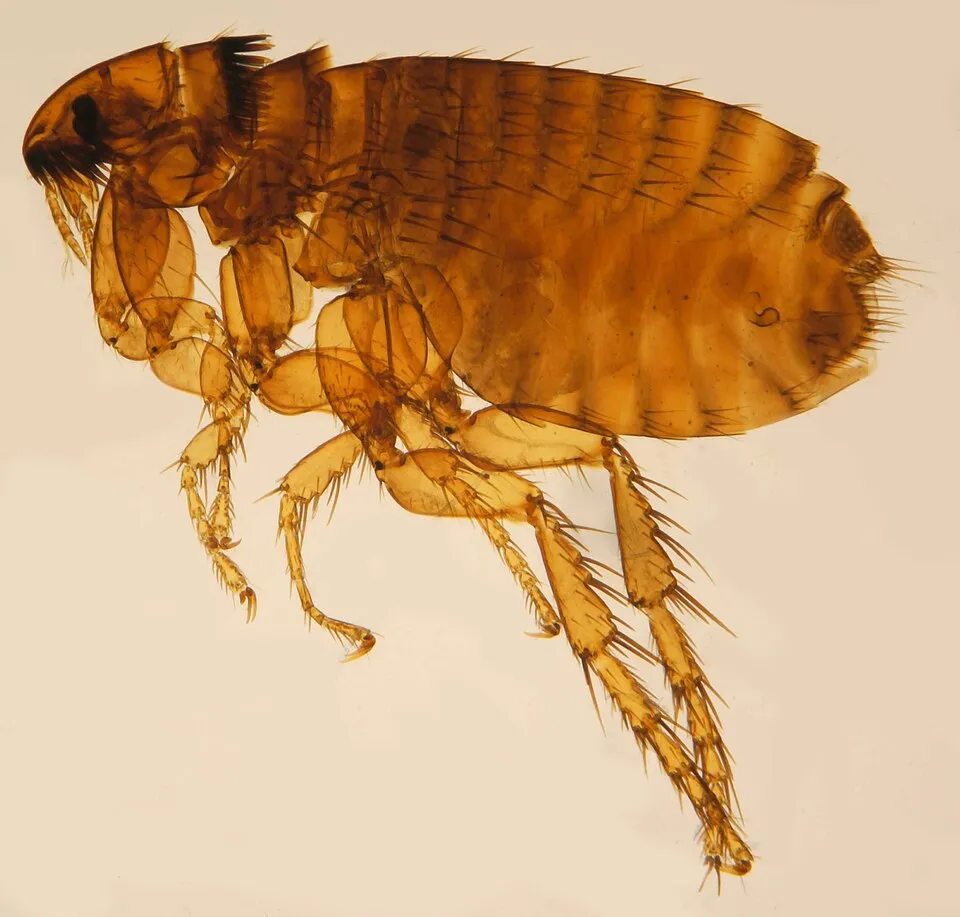
Actual identification photo: Katja ZSM · CC BY-SA 3.0. View original file and reuse license. A preserved female cat flea photographed at magnification.
Identification takeaway: Closest resemblance: tiny brown blood-feeding insect. Best clue: laterally compressed body and jumping ability.
Found a Bug in Bed? Use This Five-Step Identification Checklist
Save the specimen. If possible, trap the insect in a sealed clear container or on transparent tape without destroying its body. Photograph both its top and side next to a coin or ruler.
Check body shape. A flat, oval, visibly segmented body is more consistent with a bed bug than a domed shell, hairy larva or round shiny beetle.
Look at legs and antennae. Count only if the photo is sharp enough. Check for long cockroach antennae, fleas' powerful hind legs or a tick's absence of antennae.
Inspect the nearby resting area. Use a flashlight around mattress piping, headboard joints and furniture cracks. Look for live insects and other physical evidence, rather than relying on skin reactions.
Request confirmation before treating. Especially for bed bugs versus bat bugs, a local extension service, entomology diagnostic laboratory or qualified pest professional may be needed.
What Do Bed Bug Stains, Eggs and Shed Skins Look Like?
Evidence is often more informative than a vague memory of a moving insect. Bed bug fecal spots can look like tiny dark ink dots; reddish smears may occur when insects are crushed. Eggs are small and pale, and developing bed bugs leave cast skins behind. A single stain is not definitive, and old signs may remain after a problem has ended. Look at the whole pattern, including actual specimens.
Inspection is easiest with a flashlight, magnifier and a deliberate sequence: mattress seams, the box spring, bed frame connections, behind the headboard and then nearby upholstered furniture. Randomly applying insecticide before identifying the pest can waste time and may create avoidable risks. For confirmed bed bugs, follow an integrated management approach and consult a qualified professional when necessary.
Which Look-Alikes Bite People?
Bat bugs may bite people, especially after their normal hosts disappear. Ticks and fleas feed on blood and can bite. Adult carpet beetles, their larvae, spider beetles and booklice do not seek human blood meals. Carpet beetle larval hairs can nevertheless irritate sensitive skin. German cockroach nymphs are not blood feeders. A reaction on the skin cannot reliably identify which insect caused it, if any.
Frequently Asked Questions
What are the most common bugs mistaken for bed bugs?
University extension sources commonly mention carpet beetles, spider beetles, booklice, cockroach nymphs and ticks. Bat bugs are especially difficult to tell apart from true bed bugs.
What tiny bugs look like bed bug babies?
Booklice and some very small cockroach nymphs may be confused with bed bug nymphs. A nymph is a young bed bug with a broadly similar shape to an adult, not a hairy larva.
Can a bed bug jump like a flea?
No. Bed bugs crawl but cannot jump or fly. A tiny insect that jumps is more consistent with a flea or another jumping arthropod.
Are bat bugs the same as bed bugs?
No. They are closely related but distinct species with different preferred hosts. Microscopic examination of hairs behind the head can help distinguish them.
Do carpet beetle larvae bite at night?
No. Carpet beetle larvae do not take blood meals. Their tiny bristles can sometimes cause irritation, which should not be confused with a confirmed bite.
How can I tell a tick from a bed bug?
Look for antennae and legs. Adult and nymphal ticks have eight legs and no antennae; bed bugs have six legs and antennae. Tick larvae have six legs, so examine other characters too.
If I see one bug on my bed, do I have bed bugs?
Not necessarily. One isolated insect may be a harmless look-alike. Keep the specimen and inspect for additional physical evidence rather than deciding from location alone.
Can I identify bed bugs from itchy bites alone?
No. The EPA and university pest experts warn that bites are a poor diagnostic sign. Confirm by identifying insects or reliable evidence.
Should I spray my room before knowing what the bug is?
Avoid indiscriminate spraying. Correct identification comes first, because different insects call for different responses and pesticides can be harmful when misused.
Related Animal Guides
For more about insect classification, read Are Insects Animals?. If the insect you found might be a tick rather than a bed bug, see our guide to ticks around yards. For a different visual identification challenge, the ground bee identification guide explains why not every bee-like insect poses the same risk.