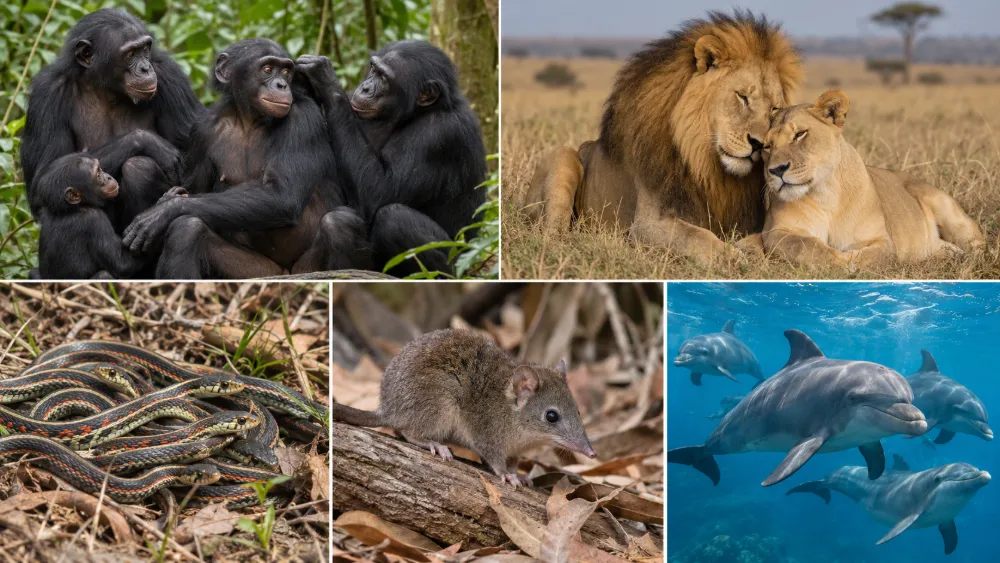
What animal has the best memory? There is no scientifically accepted single winner because memory comes in different forms. If the comparison is long-term social recognition, bonobos and chimpanzees have some of the strongest evidence: a 2023 study found recognition of former groupmates after separations lasting up to about 26 years. Bottlenose dolphins have recognized the signature whistles of former companions after at least 20 years, while elephants show impressive long-term social and olfactory memory.
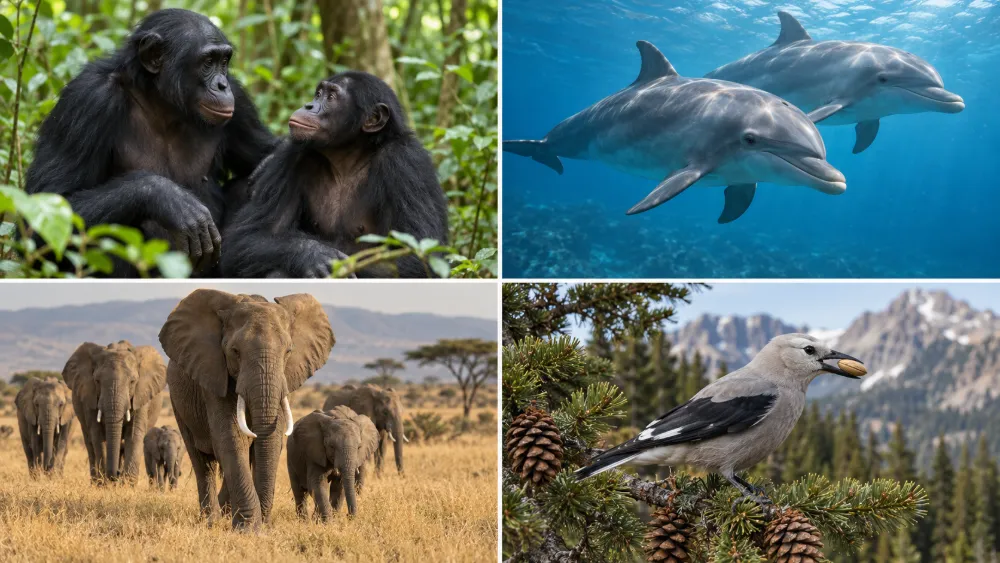
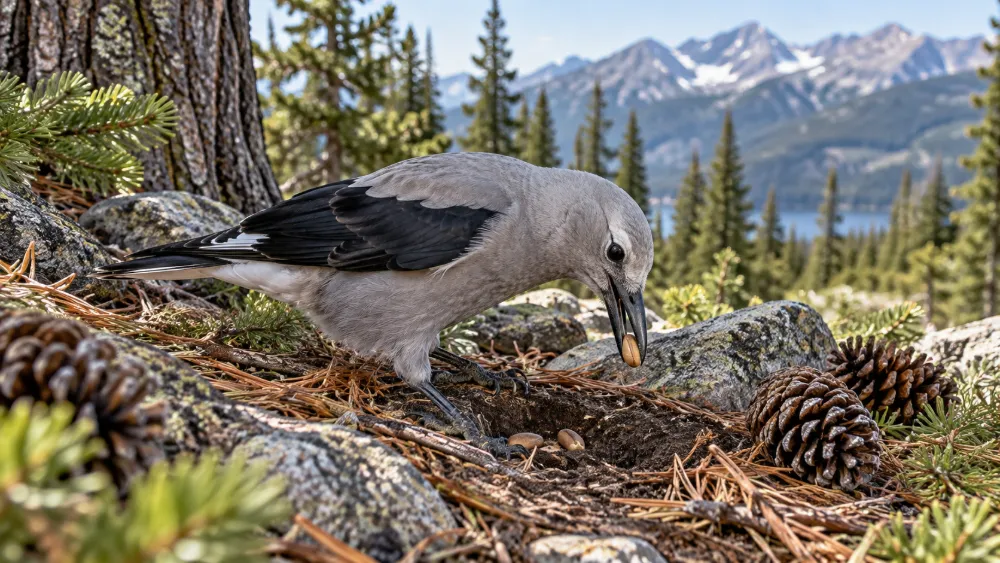
Other animals excel in very different memory tasks. Clark’s nutcrackers remember thousands of food-cache locations, California sea lions can retain an abstract matching concept for roughly a decade, scrub-jays remember what they cached, where they cached it and when, and cuttlefish can use episodic-like “what-where-when” memory even late in life.
This Top 10 is therefore an evidence-based comparison, not an official memory ranking. The best animal depends on whether you mean social memory, spatial memory, associative memory, episodic-like memory or long-term learned concepts.
10 Animals With Remarkable Memory at a Glance
| # | Animal | Memory strength | Notable evidence |
|---|---|---|---|
| 1 | Bonobo | Long-term social recognition | Great apes recognized former groupmates after separations lasting up to about 26 years |
| 2 | Bottlenose Dolphin | Long-term vocal social memory | Recognized former companions’ signature whistles after at least 20 years |
| 3 | African Elephant | Social, olfactory and ecological memory | Studies suggest recognition of familiar individuals or scents after many years |
| 4 | California Sea Lion | Long-term conceptual memory | Retained a learned matching concept after roughly 10 years |
| 5 | Clark’s Nutcracker | Spatial cache memory | Can relocate thousands of buried seed caches months later |
| 6 | Baboon | Large associative memory capacity | Experimental subjects learned thousands of picture-response associations over years |
| 7 | American Crow | Face and threat memory | Wild crows remembered dangerous human faces for years and spread the information socially |
| 8 | Western Scrub-Jay | Episodic-like memory | Remembers what food was cached, where it was hidden and how long ago |
| 9 | Pigeon | Large visual associative memory | Experimental pigeons retained hundreds to more than a thousand picture-response associations |
| 10 | Cuttlefish | Episodic-like memory | Can remember what, where and when feeding events occurred, even at advanced age |
What Does “Best Memory” Mean in Animals?
Memory is not one ability. Scientists separate it into several systems because an animal that excels in one kind of memory may be ordinary in another.
| Memory type | What it involves | Strong animal examples |
|---|---|---|
| Social memory | Remembering familiar individuals and past relationships | Bonobos, chimpanzees, dolphins, elephants |
| Spatial memory | Remembering places, routes and hidden resources | Clark’s nutcrackers, elephants |
| Associative memory | Remembering that one stimulus predicts a response or outcome | Pigeons, baboons, sea lions |
| Episodic-like memory | Remembering components of a past event such as what, where and when | Scrub-jays, cuttlefish |
| Threat memory | Remembering dangerous individuals or situations | Crows |
| Conceptual memory | Retaining an abstract learned rule | California sea lions |
This is why claims such as “an elephant has the best memory in the world” are too simple. Elephants are impressive, but a bird may outperform them in a spatial-cache task and a dolphin may have stronger direct evidence for decades-long social recognition.
Bonobo — A Social Memory Lasting Decades
Bonobos (Pan paniscus) provide one of the strongest direct examples of long-term social memory in any nonhuman animal.
In a 2023 study published in Proceedings of the National Academy of Sciences, researchers showed photographs of former groupmates and unfamiliar apes to bonobos and chimpanzees while recording where the animals looked.
The apes looked longer at former groupmates, indicating recognition after years of separation. In the most striking case, a bonobo named Louise had not seen her sister and nephew for more than 26 years, yet showed a strong attentional bias toward their photographs.
The researchers described this as the longest-lasting nonhuman social memory documented at the time.
That does not mean bonobos possess the best memory in every category. It means great apes have extraordinary long-term memory for socially important individuals.
Bottlenose Dolphin — Remembering Voices for at Least 20 Years
Bottlenose dolphins (Tursiops spp.) also possess exceptionally durable social memories.
Individual dolphins develop distinctive learned calls known as signature whistles. These whistles function as identity signals and allow dolphins to recognize particular companions.
In a large playback study, dolphins heard recordings from animals they had once lived with but had not encountered for years. They responded differently to familiar and unfamiliar signature whistles even when former companions had been separated for 20 years or more.
The study concluded that dolphins have the potential for lifelong social recognition.
Long-term social memory makes sense for a species that lives in flexible social networks. Dolphins may separate and later encounter old companions, competitors or allies.
For more about dolphin cognition, see Dolphin vs Orca Intelligence: Who Is Smarter?.
African Elephant — Famous Memory, With Important Scientific Nuance
Elephants are probably the animals most strongly associated with the phrase “never forget.” The reputation has a real biological basis, but the evidence is more nuanced than popular culture suggests.
A 2025 scientific review noted that surprisingly few experiments have directly measured the limits of elephant memory. However, existing studies reveal several impressive abilities.
African elephants can distinguish the contact calls of many familiar females in their social network. Older matriarchs also perform better in social-discrimination tasks, suggesting that decades of accumulated knowledge can benefit the entire family group.
More direct long-term tests have found evidence that elephants can recognize familiar scents after prolonged separation. One study reported olfactory recognition of relatives after separations lasting up to about 12 years. Another small study found evidence that zoo elephants retained information about former keepers they had not encountered for 13 years, although the researchers cautioned that the sample size was very small.
So elephants clearly have remarkable social and ecological memory. The scientifically careful conclusion is not “elephants never forget,” but rather that they can retain socially important information for many years.
California Sea Lion — Remembering an Abstract Rule for a Decade
The California sea lion (Zalophus californianus) provides a different kind of memory record.
Researchers trained a female sea lion to perform an abstract matching task. Approximately 10 years later, she was tested again.
Instead of merely remembering a single object or person, the sea lion immediately applied the previously learned identity-matching concept to familiar and novel test items.
This was important because it demonstrated long-term conceptual memory in a non-primate animal.
Wild pinnipeds also benefit from long-term memory. Australian sea lions have been shown to recognize their mothers’ calls years after becoming independent.
Clark’s Nutcracker — Thousands of Hidden Food Locations
Clark’s nutcrackers (Nucifraga columbiana) are specialized seed-caching birds of western North America.
Before winter, one nutcracker can hide tens of thousands of seeds across a large landscape. Many caches later become food during winter and spring.
Experimental work shows that spatial memory—not smell or random searching—is central to finding the buried seeds. Cornell Lab reports that individual nutcrackers may cache more than 30,000 seeds and recover stored food as long as roughly nine months later.
The bird does not necessarily remember every single seed perfectly. What makes the system remarkable is the enormous number of spatial locations retained well enough to support survival through winter.
For spatial memory, Clark’s nutcracker is one of the strongest candidates in the animal kingdom.
Baboons — Thousands of Learned Visual Associations
Baboons demonstrate that memory capacity can also be tested by asking how many individual items an animal can learn and retain.
In long-running laboratory experiments comparing primates and pigeons, baboons learned thousands of picture-response associations.
Researchers estimated that the baboons had memorized at least 3,500–5,000 items and still had not clearly reached the limit of their performance after more than three years of testing.
This is a very different achievement from remembering an old social partner or a hidden food cache. It shows enormous long-term associative-memory capacity.
American Crow — Remembering Dangerous Human Faces
American crows (Corvus brachyrhynchos) are famous for recognizing individual human faces, especially when those people have been associated with danger.
Researchers in Seattle wore distinctive masks while trapping and banding wild crows. Later, crows scolded people wearing the “dangerous” mask while reacting less strongly to neutral masks.
The information did not remain only with birds that had personally experienced capture. Other crows learned the threat socially, and young birds could acquire the response from parents or surrounding flock members.
Research summarized in later raven studies reports that wild crows directly exposed to dangerous masked humans still responded to those faces up to about 2.7 years later. The socially learned response also spread geographically and persisted across multiple years.
This is a powerful example of memory functioning as a survival tool rather than as an abstract laboratory score.
Explore more corvids in 10 Types of Ravens and Crows.
Western Scrub-Jay — Remembering What, Where and When
Western scrub-jays, now commonly called California scrub-jays in modern taxonomy, became central to the study of episodic-like memory.
In classic experiments, the birds cached preferred wax-worm larvae and less-preferred peanuts in different places.
After a short delay, the birds searched for the fresh worms. After a much longer delay—when they had learned the worms would have decayed—they avoided the old worm cache and searched for peanuts instead.
The important point was that the birds appeared to integrate:
what they had hidden
where it was hidden
when the caching event occurred
A 2025 review and replication work continued to support this what-where-when approach while emphasizing that researchers should remain careful when comparing animal “episodic-like” memory with human conscious recollection.
Pigeon — A Surprisingly Large Visual Memory
Pigeons are often underestimated, but experimental studies reveal a very large visual associative-memory capacity.
In one long-term experiment, pigeons learned which of two responses was correct for an ever-growing set of images. Individual birds ultimately performed with sets containing more than 1,600–1,800 pictures.
Mathematical estimates suggested reliable access to roughly 800 or more memorized picture-response associations, retained for months.
A comparative study using related procedures estimated a similar 800–1,200-item memory range for pigeons.
This does not mean a pigeon remembers photographs the same way a human does. It demonstrates a remarkable ability to store and retrieve large numbers of visual associations.
Cuttlefish — Episodic-Like Memory That Survives Ageing
Cuttlefish are molluscs, yet their memory abilities can rival those of much more familiar vertebrates in certain tasks.
Researchers tested common cuttlefish on an episodic-like foraging task requiring information about what food had been eaten, where it had been eaten and how long ago.
Both younger and aged cuttlefish succeeded.
The surprising result was that episodic-like performance did not show the same obvious age-related decline often seen in mammals. Older cuttlefish approaching the end of their natural lifespan remained capable of using what-where-when information.
Cuttlefish do not have a mammalian hippocampus, making their memory system especially interesting for scientists studying how complex cognition evolved independently in different animal lineages.
Do Elephants Really Have the Best Memory?
Not in any scientifically proven overall sense.
Elephants certainly have excellent long-term social, olfactory and ecological memory. But the familiar statement “an elephant never forgets” is a proverb, not an experimentally demonstrated biological law.
Great apes currently have evidence for social recognition after longer documented separations, dolphins have strong 20-year vocal-recognition evidence, and food-caching birds outperform most animals in specialized spatial-memory challenges.
Elephants belong near the top of any serious discussion of animal memory, but there is no universal test that makes them the undisputed winner.
Which Animal Has the Longest Memory?
If “longest memory” means the longest experimentally documented social recognition after separation, the strongest published evidence currently includes:
| Animal | Documented example |
|---|---|
| Bonobo / chimpanzee | Recognition of former groupmates after separations reaching about 26 years |
| Bottlenose dolphin | Recognition of former companions’ signature whistles after at least 20 years |
| African elephant | Evidence of familiar individual or scent recognition after roughly 12–13 years in small-sample studies |
| California sea lion | Retention of an abstract learned concept after about 10 years |
These numbers cannot be treated as a simple race. The experiments tested different forms of memory using different methods.
Which Animal Has the Best Spatial Memory?
Food-caching birds are among the strongest specialists.
Clark’s nutcrackers must relocate thousands of scattered seed stores over months, while scrub-jays remember both cache locations and information about the food stored there.
Elephants also rely heavily on spatial knowledge to navigate large home ranges, but precise cross-species comparisons are difficult because the ecological problems are completely different.
Does a Bigger Brain Mean Better Memory?
No.
Brain size alone cannot predict memory ability. Cuttlefish have nervous systems radically different from mammalian brains yet perform sophisticated memory tasks. Small food-caching birds can outperform many larger animals in specialized spatial-memory tests.
Memory evolves to solve ecological and social problems. A species that depends on hidden food may evolve exceptional location memory, while a highly social species may invest more heavily in recognizing individuals and relationships.
Frequently Asked Questions
What animal has the best memory?
There is no official overall winner. Bonobos and chimpanzees have some of the longest documented social memories, bottlenose dolphins remember former companions for decades, elephants have strong social and ecological memory, and Clark’s nutcrackers excel at spatial memory.
What animal has the longest memory?
A 2023 study found evidence that bonobos and chimpanzees can recognize former groupmates after separations lasting up to about 26 years. Bottlenose dolphins have recognized former companions’ whistles after at least 20 years.
Which animal never forgets?
No animal literally never forgets. The phrase “an elephant never forgets” reflects the elephant’s reputation for strong long-term memory, but all animal memories have limits.
Do elephants really remember for years?
Yes. Experiments provide evidence of long-term social and olfactory recognition lasting many years, although a 2025 review emphasized that elephant memory has been less directly tested than popular claims imply.
How long can dolphins remember each other?
Bottlenose dolphins have recognized the signature whistles of former social companions after separations of at least 20 years.
Do chimpanzees and bonobos remember faces?
Yes. Eye-tracking experiments showed that they preferentially attended to former groupmates, with recognition evidence extending across decades in some cases.
Which bird has the best memory?
Clark’s nutcracker is one of the strongest candidates for spatial memory because it stores tens of thousands of seeds and can recover caches many months later. Scrub-jays are famous for what-where-when memory.
Can crows remember human faces?
Yes. American crows can learn to recognize threatening human faces, retain that information for years and spread the knowledge socially to other crows.
Do fish have good memory?
Many fishes can learn and retain information far longer than the old “three-second memory” myth suggests. Memory ability varies widely among fish species and tasks.
Do octopuses have memory?
Yes. Octopuses have well-developed learning and memory systems, including long-term synaptic plasticity and spatial learning. In laboratory work, octopuses have remembered a learned shelter location for at least a week.
What is episodic-like memory?
It is a research term for animal behavior that meets measurable criteria resembling parts of human episodic memory, often involving information about what happened, where it happened and when. Scientists use “episodic-like” because conscious recollection cannot be directly verified in nonhuman animals.
Scientific and Reference Sources
PNAS — Bonobos and Chimpanzees Remember Familiar Conspecifics for Decades
Proceedings of the Royal Society B — Decades-Long Social Memory in Bottlenose Dolphins
Learning & Behavior — Do Elephants Really Never Forget? A Review of Elephant Memory
Animal Cognition — Long-Term Memory for Concepts in a California Sea Lion
Cornell Lab of Ornithology — How Clark’s Nutcrackers Recover Seed Caches
Behavioural Processes — Long-Term Memory Capacity in Baboons and Pigeons
Proceedings of the Royal Society B — Dangerous Human Face Learning in American Crows
Nature — Episodic-Like Memory During Cache Recovery by Scrub-Jays
Psychonomic Bulletin & Review — Associative Memory Capacity in Pigeons
Proceedings of the Royal Society B — Episodic-Like Memory Is Preserved With Age in Cuttlefish
Final Answer
No single animal has been scientifically proven to have the best memory in every category. Bonobos and chimpanzees currently provide some of the strongest evidence for decades-long social recognition, bottlenose dolphins remember familiar individuals for at least 20 years, elephants retain socially important information for many years, and specialized birds such as Clark’s nutcrackers possess extraordinary spatial memory. The most accurate answer depends on what kind of memory is being compared.