 LC
LC
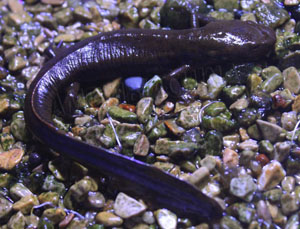
Paramesotriton labiatus
Paramesotriton labiatus
Spotless newt During the day, adult newts were found hiding under the rocks at the bottom of the water. There were small fish, aqu···
Explore amphibians including salamanders, frogs, toads, and caecilians, with concise species facts and conservation information.

Use these shortcuts to move into more specific animal groups.
There are about 4,000 kinds of amphibians, including anurans, anurans, and anurans. Characteristics: 1. Need to spend its childhood in water. 2. It has a bone structure adapted to living on land, has limbs, moist skin, and many glands. 3. The body has no scales or body hair. 4. The tongue is bifurcated, inverted, and can extend outward. 5. Mating and fertilization occur in water. 6. Larvae breathe through gills, while adults breathe through skin, oral lining and lungs.
Amphibia is a type of vertebrate that can live both in water and on land, and is an important transitional group in the evolution from aquatic animals to terrestrial animals. Their life cycle usually includes two stages: aquatic larvae and terrestrial adults, so they are called "amphibians".
Scientific name: Amphibia
Main features:
Moist skin: The skin is exposed and moist, which helps breathing.
Amphibious: The larvae are mostly aquatic and breathe with gills; the adults are mostly terrestrial and breathe with lungs and skin.
Oviparous: Most of them lay eggs in water, and the larvae develop in water.
Poikilotherms: Body temperature changes with the environment.
Inner ear and vocal organs: Amphibians can usually hear sounds, especially frogs can make sounds.
Ecological role:
Pest control: Prey on small invertebrates such as mosquitoes.
Important link in the food chain: Both predator and prey.
Evolutionary history:
Originated in the Devonian period about 350 million years ago, it is the earliest vertebrate adapted to terrestrial life.
Amphibians are the ancestors of reptiles and are also important links between aquatic and terrestrial environments.
Amphibians are mainly divided into three orders: Anura (frogs), Caudata (salamanders), and Apoda (caecilians).
| Classification level | Order | Family | Genus | Examples |
|---|---|---|---|---|
| Anura | Anura (Anura) | Ranidae (Ranidae) | Rana (Rana) | Frog, Rana |
| Bufonidae | Bufo | American toad, common toad | ||
| Hylidae | Hyla | American green tree frog, red-eyed tree frog | ||
| Dendrobatidae | Poison dart frog (Dendrobates) | Blue poison dart frog, golden poison dart frog | ||
| Caudata | Caudata | Salamandridae | Salamandra | Fire salamander, eastern salamander |
| Cryptobranchidae | Andrias | Chinese giant salamander (baby fish), Japanese giant salamander | ||
| Plethodontidae | Plethodon | Red-backed salamander | ||
| Gymnophiona | Caeciliidae | Caecilia | Caecilia | caecilian |
| water caeciliansFamily (Typhlonectidae) | Genus (Typhlonectes) | Water caecilians |
Moist skin: The skin helps with water balance and gas exchange.
Differentiated limbs: Most amphibians have four limbs, which are suitable for swimming and jumping.
Evolution of the tail: Anura adults have no tail, Caudata adults retain their tail, and Apoda adults are worm-like.
Gill breathing: Larvae absorb oxygen through gills.
Lung and skin breathing: Adults mainly rely on lungs and skin for breathing.
Egg laying in water: eggs are mostly colloid and absorb water easily.
Metamorphosis: larvae undergo metamorphosis (such as tadpoles turning into frogs).
Most amphibians live in humid environments, but a few species are adapted to dry areas or completely aquatic environments.
Early Amphibians:
Amphibians originated in the Devonian period, and the earliest fossil records show that they evolved from lobe-finned fish.
With strong flippers and lungs, these early amphibians entered land life for the first time.
Development and Diversification:
During the Carboniferous and Permian periods, amphibians rapidly diversified and occupied a variety of ecological niches.
The emergence of reptiles gradually replaced the dominance of amphibians.
Modern amphibians:
Existing amphibians are descendants of ancient amphibian groups, including Anura, Caudata and Apoda.
Pest Control:
Prey on insects and small invertebrates, controlling pest populations.
Key Link in the Food Chain:
Provide food for birds, mammals and snakes.
Ecological Health Indicators:
Highly sensitive to habitat changes and environmental pollution, it is an important indicator species of ecosystem health.
Amphibians are one of the oldest and most important vertebrates on Earth. Whether it is beautiful frogs, rare giant salamanders, or mysterious caecilians, they all show the diversity of life.
Search the animals shown on this page or narrow them by IUCN conservation code.
LC
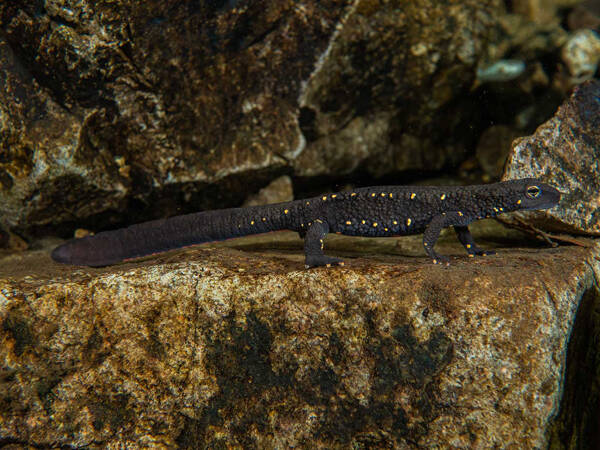
Paramesotriton labiatus
Spotless newt During the day, adult newts were found hiding under the rocks at the bottom of the water. There were small fish, aqu···
 LC
LC
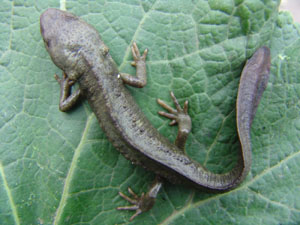
Paramesotriton longliensis
In 2007, experts including Tian Yingzhou, Li Song and Gu Xiaoming discovered a new species of scrofula in Shuichang Township, Long···
 LC
LC
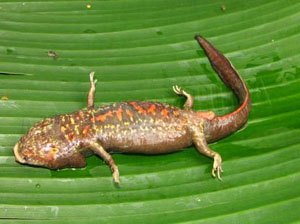
Paramesotriton maolanensis
This newt lives in large ponds with gentle water flow or ponds with groundwater flowing out. The vegetation around the pond is lus···
 LC
LC
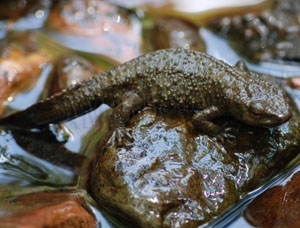
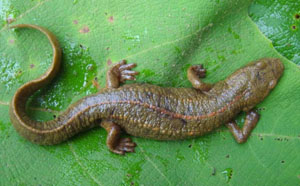
Paramesotriton qixilingensis
Habitat: Adult salamanders live in wide and gentle streams in deep mountains. The water is clear and you can see the bottom of the···
 LC
LC
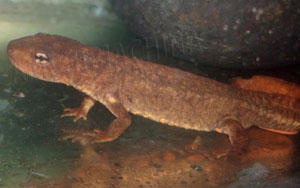
Paramesotriton wulingensis
The Youyang population and Jiangkou population of the new species of Wuling scrofula live in small streams with gentle flow in low···
 LC
LC
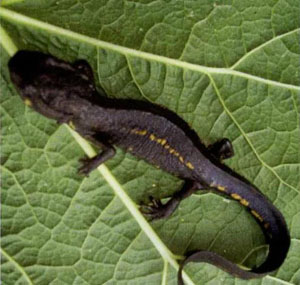
Paramesotriton yunwuensis
The cloud newt lives in ponds of various sizes in mountain streams, at an altitude of about 525m. The largest pond is 4m×4m, and ···
 LC
LC
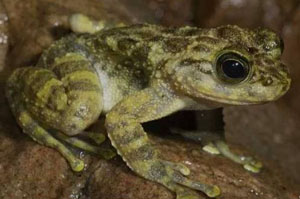
Paramesotriton zhijinensis
Zhijin newt is a new species named by Li Song, Zhao Haitao and others based on the specimens collected in Shuangyantang, Zhijin Co···
 LC
LC
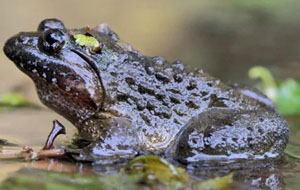
ANURA、Ranidae
The Hainan torrent frog is an amphibian of the Anura order, Ranidae family, and the genus Rana. The head is almost equal in length···
 LC
LC
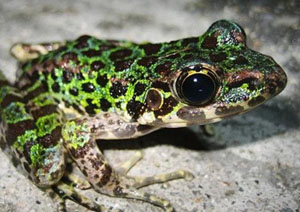
Glandirana minima,Little Gland Frog,Rana minimus
The small glandular frog is an amphibian of the family Ranidae, living in small puddles, marsh ditches or grass beside terraces in···
 LC
LC
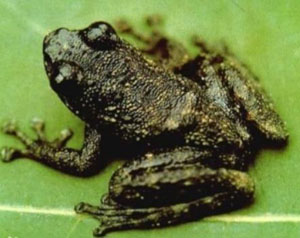
Odorrana wuchuanensis,Tadant
The stinking frog is a general term for frogs of the genus Rhacophoridae of the class Amphibia. There are about 50 known stinking ···
 LC
LC
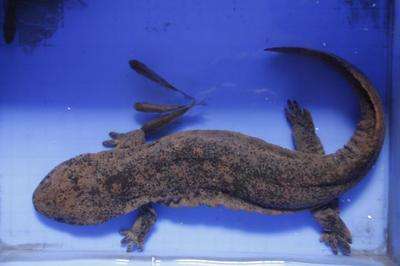
Hong Kong torrent frog is endemic to China. The ecological environment quality of the frog's habitat has declined, and its pop···
 LC
LC
Chinese giant salamander, Chinese baby fish, giant salamander
You may not know much about the Chinese giant salamander, but you must have heard of its alias, the giant salamander. This thing h···
 LC
LC
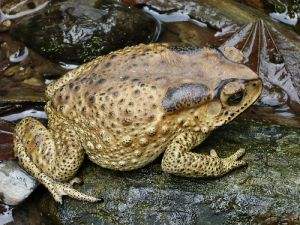
black-rimmed toad, toad, clam
In 2006, the phylogenetic study of amphibians readjusted the original genus Bufo, and the black-rimmed toad was classified into a ···
 LC
LC
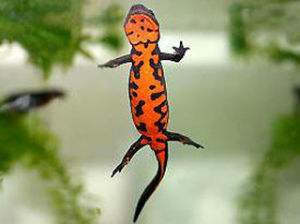
Oriental Salamander, Chinese Fire Dragon, Brazilian Fire Dragon
The appearance of the Oriental Salamander is similar to that of the Blue-tailed Salamander (Cynops cyanurus), but the Oriental Sal···
 LC
LC
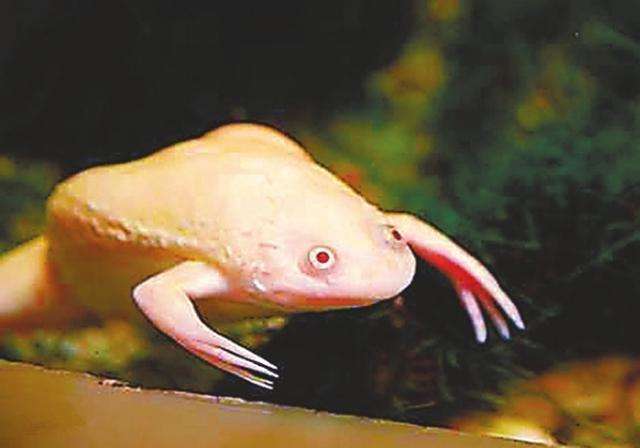
African clawed frog, smooth clawed frog, African clawed frog
The African clawed frog is an aquatic frog in South Africa and an important model organism.The African clawed frog has two faces: ···
 LC
LC
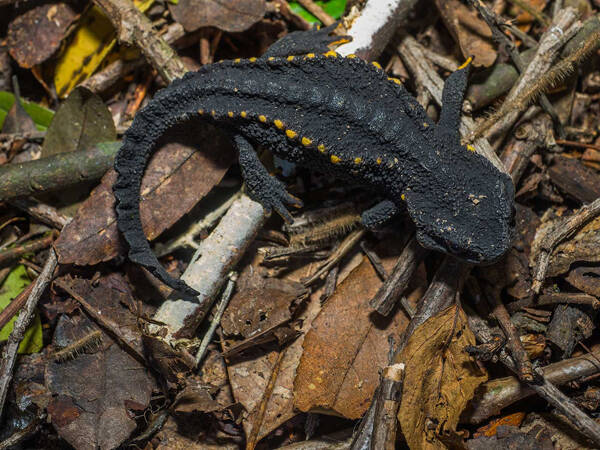
Paramesotriton aurantius
The orange-backed newt is an amphibian of the family Salamandridae and the genus Acanthus. It lives in degraded secondary shrub fo···
 LC
LC
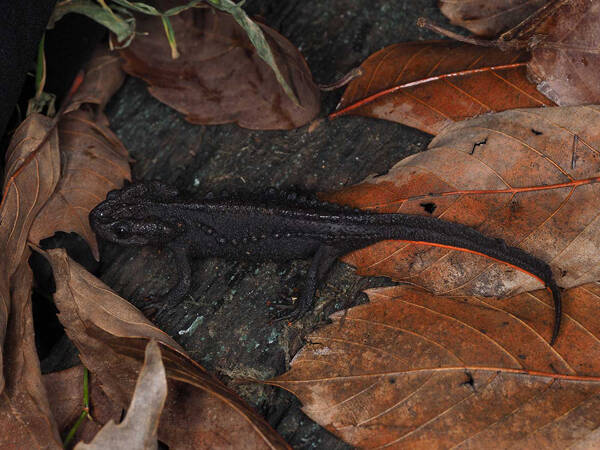
Echinotriton maxiquadratus
The alpine Acanthus salamander is an amphibian of the family Salamandridae and genus Acanthus. It lives in degraded secondary shru···
 LC
LC
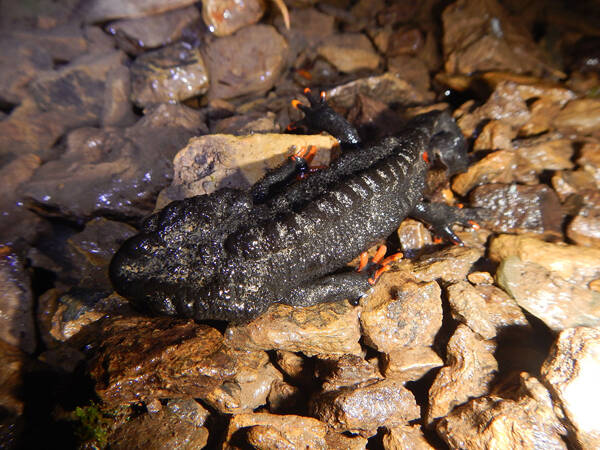
Yaotriton ziegleri
Cai's Yaoteng is an amphibian of the family Salamandridae and genus Yaoteng. The eggs form an egg mass around the pond, about ···
 LC
LC
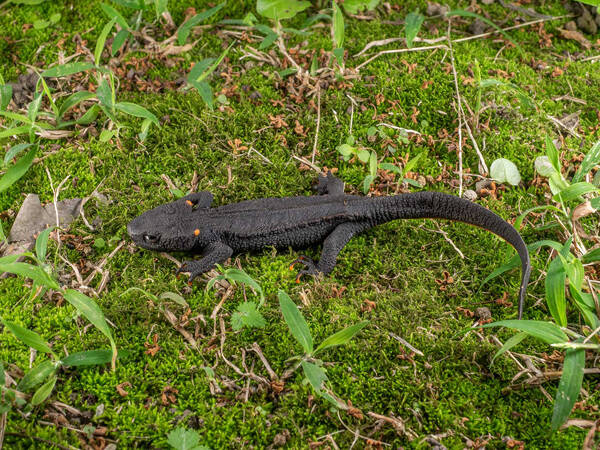
Yaotriton wenxianensis,
Wenxian Yaoteng is an amphibian of the family Salamandridae and genus Yaoteng. It lives in mountainous areas with lush forests at ···
 LC
LC
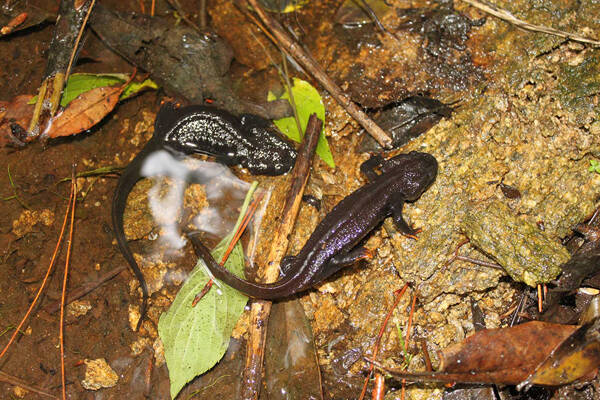
Yaotriton lizhenchangi
The Mangshan Yaoteng is an amphibian of the family Salamandridae and the genus Yaoteng. It lives in mountainous areas at an altitu···
 LC
LC
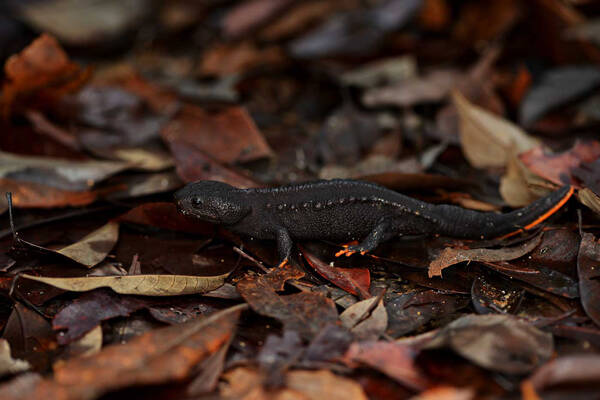
Yaotriton liuyangensis
Liuyang Yaozhi is an amphibian of the family Salamandridae and genus Yaozhi. It lives in mountainous areas with lush bushes and we···
 LC
LC
Yaotriton hainanensis
Hainan Yaoteng is an amphibian of the family Salamandridae and the genus Yaoteng. It lives in mountainous areas of tropical rain f···