 LC
LC
Haswell Froglet
Crinia haswelli
The Haswell Froglet (Crinia haswelli) is a tiny, ground-dwelling frog native to eastern Australia.It belongs to a group of small f···
Explore amphibians including salamanders, frogs, toads, and caecilians, with concise species facts and conservation information.

Use these shortcuts to move into more specific animal groups.
There are about 4,000 kinds of amphibians, including anurans, anurans, and anurans. Characteristics: 1. Need to spend its childhood in water. 2. It has a bone structure adapted to living on land, has limbs, moist skin, and many glands. 3. The body has no scales or body hair. 4. The tongue is bifurcated, inverted, and can extend outward. 5. Mating and fertilization occur in water. 6. Larvae breathe through gills, while adults breathe through skin, oral lining and lungs.
Amphibia is a type of vertebrate that can live both in water and on land, and is an important transitional group in the evolution from aquatic animals to terrestrial animals. Their life cycle usually includes two stages: aquatic larvae and terrestrial adults, so they are called "amphibians".
Scientific name: Amphibia
Main features:
Moist skin: The skin is exposed and moist, which helps breathing.
Amphibious: The larvae are mostly aquatic and breathe with gills; the adults are mostly terrestrial and breathe with lungs and skin.
Oviparous: Most of them lay eggs in water, and the larvae develop in water.
Poikilotherms: Body temperature changes with the environment.
Inner ear and vocal organs: Amphibians can usually hear sounds, especially frogs can make sounds.
Ecological role:
Pest control: Prey on small invertebrates such as mosquitoes.
Important link in the food chain: Both predator and prey.
Evolutionary history:
Originated in the Devonian period about 350 million years ago, it is the earliest vertebrate adapted to terrestrial life.
Amphibians are the ancestors of reptiles and are also important links between aquatic and terrestrial environments.
Amphibians are mainly divided into three orders: Anura (frogs), Caudata (salamanders), and Apoda (caecilians).
| Classification level | Order | Family | Genus | Examples |
|---|---|---|---|---|
| Anura | Anura (Anura) | Ranidae (Ranidae) | Rana (Rana) | Frog, Rana |
| Bufonidae | Bufo | American toad, common toad | ||
| Hylidae | Hyla | American green tree frog, red-eyed tree frog | ||
| Dendrobatidae | Poison dart frog (Dendrobates) | Blue poison dart frog, golden poison dart frog | ||
| Caudata | Caudata | Salamandridae | Salamandra | Fire salamander, eastern salamander |
| Cryptobranchidae | Andrias | Chinese giant salamander (baby fish), Japanese giant salamander | ||
| Plethodontidae | Plethodon | Red-backed salamander | ||
| Gymnophiona | Caeciliidae | Caecilia | Caecilia | caecilian |
| water caeciliansFamily (Typhlonectidae) | Genus (Typhlonectes) | Water caecilians |
Moist skin: The skin helps with water balance and gas exchange.
Differentiated limbs: Most amphibians have four limbs, which are suitable for swimming and jumping.
Evolution of the tail: Anura adults have no tail, Caudata adults retain their tail, and Apoda adults are worm-like.
Gill breathing: Larvae absorb oxygen through gills.
Lung and skin breathing: Adults mainly rely on lungs and skin for breathing.
Egg laying in water: eggs are mostly colloid and absorb water easily.
Metamorphosis: larvae undergo metamorphosis (such as tadpoles turning into frogs).
Most amphibians live in humid environments, but a few species are adapted to dry areas or completely aquatic environments.
Early Amphibians:
Amphibians originated in the Devonian period, and the earliest fossil records show that they evolved from lobe-finned fish.
With strong flippers and lungs, these early amphibians entered land life for the first time.
Development and Diversification:
During the Carboniferous and Permian periods, amphibians rapidly diversified and occupied a variety of ecological niches.
The emergence of reptiles gradually replaced the dominance of amphibians.
Modern amphibians:
Existing amphibians are descendants of ancient amphibian groups, including Anura, Caudata and Apoda.
Pest Control:
Prey on insects and small invertebrates, controlling pest populations.
Key Link in the Food Chain:
Provide food for birds, mammals and snakes.
Ecological Health Indicators:
Highly sensitive to habitat changes and environmental pollution, it is an important indicator species of ecosystem health.
Amphibians are one of the oldest and most important vertebrates on Earth. Whether it is beautiful frogs, rare giant salamanders, or mysterious caecilians, they all show the diversity of life.
Search the animals shown on this page or narrow them by IUCN conservation code.
LC
Crinia haswelli
The Haswell Froglet (Crinia haswelli) is a tiny, ground-dwelling frog native to eastern Australia.It belongs to a group of small f···
 LC
LC
Litoria caerulea
The Green Tree Frog (Litoria caerulea) is one of Australia's best-known frogs and is often foundliving close to people. A···
 LC
LC
Litoria phyllochroa (Green Stream Frog)
The Green Stream Frog (Litoria phyllochroa) is a small to medium-sized frog from eastern Australiathat is closely associated with ···
 LC
LC
Litoria aurea
The Green and Golden Bell Frog (Litoria aurea) is a medium-sized, brightly coloured tree frognative to south-eastern Australia. On···
 LC
LC
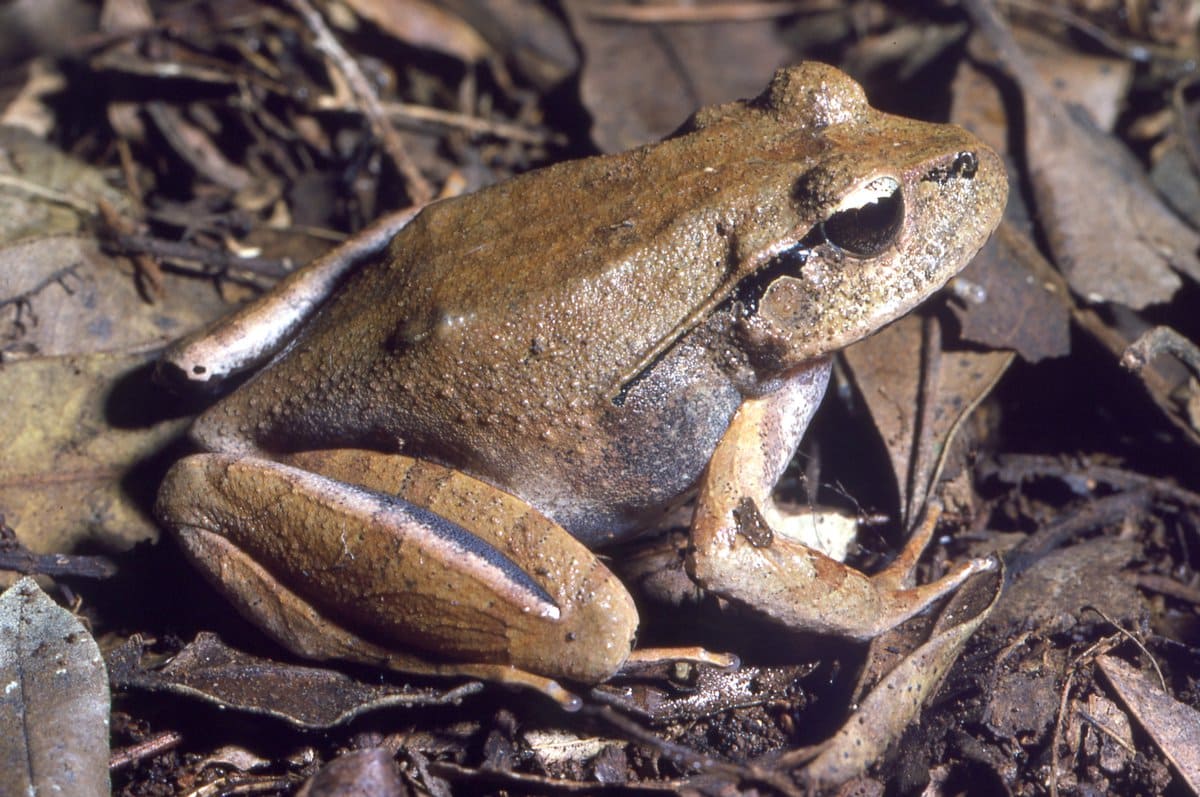
Mixophyes fasciolatus
The Great Barred Frog (Mixophyes fasciolatus) is a large, robust ground-dwelling frog native toeastern Australia. It is closely as···
 LC
LC
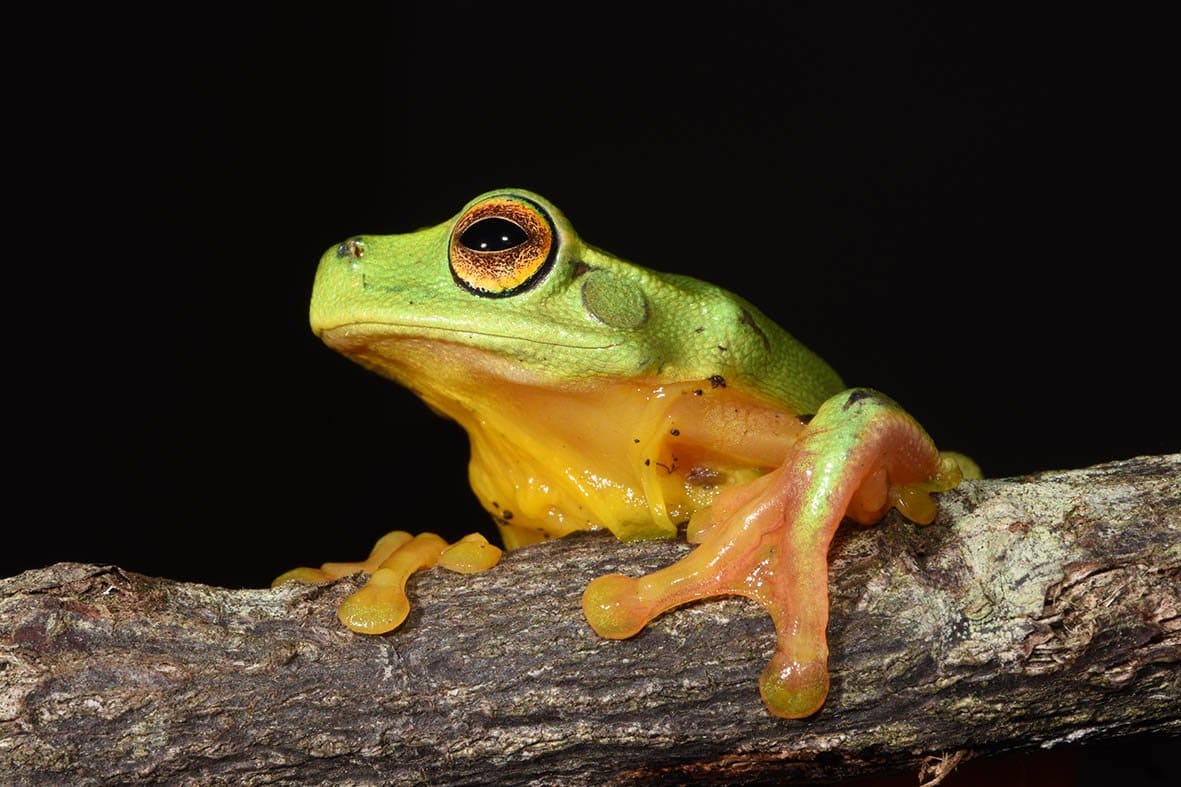
Litoria gracilenta
The Graceful Tree Frog (Litoria gracilenta), also widely known as the Dainty Tree Frog,is a small, bright green tree frog native t···
 LC
LC
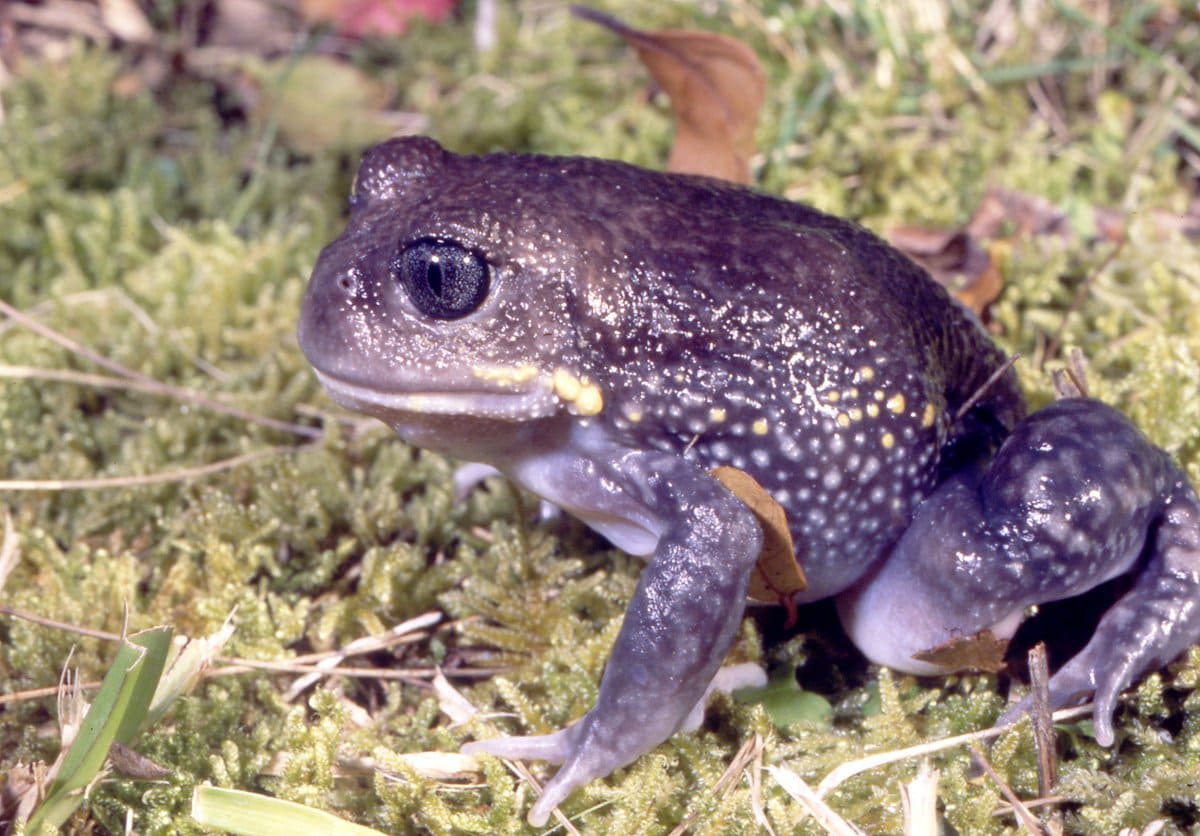
Heleioporus australiacus
The Giant Burrowing Frog (Heleioporus australiacus) is a large, robust ground-dwelling frogendemic to south-eastern Australia. As ···
 LC
LC
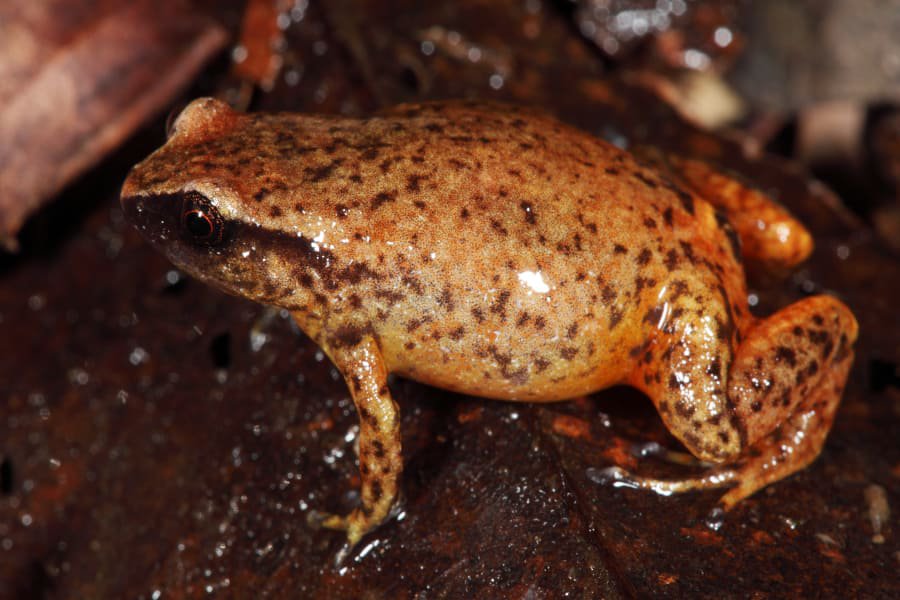
Austrochaperina fryi
Fry’s Frog (Austrochaperina fryi), sometimes written as Fry Frog, is a small,ground-dwelling frog in the family Microhylidae. It ···
 LC
LC
Lechriodus fletcheri
The Fletcher Frog (Lechriodus fletcheri), also widely known as the Sandpaper Frog,is a medium-sized burrowing frog native to easte···
 LC
LC
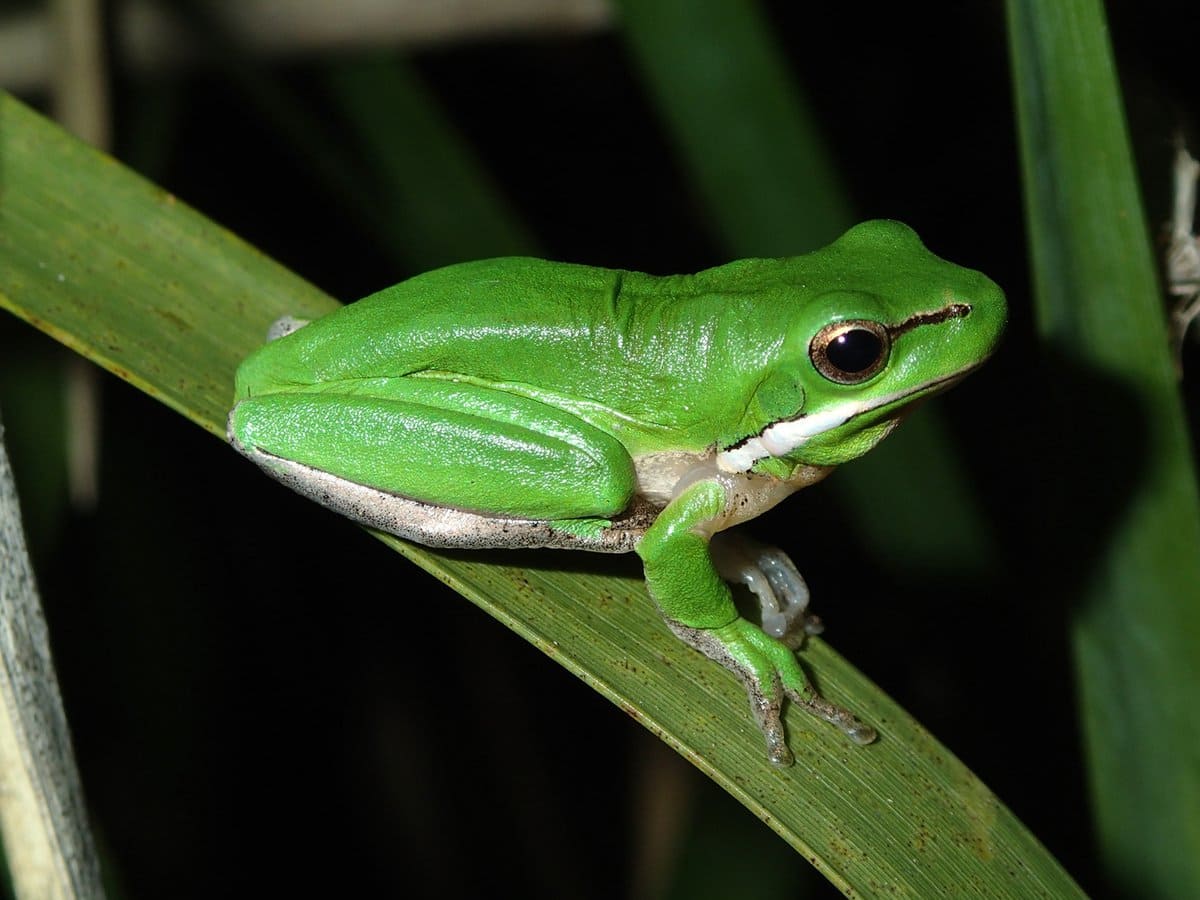
Litoria fallax
The Eastern Dwarf Tree Frog (Litoria fallax, also referred to as Ranoidea fallax in somesources) is a tiny, bright green tree frog···
 LC
LC
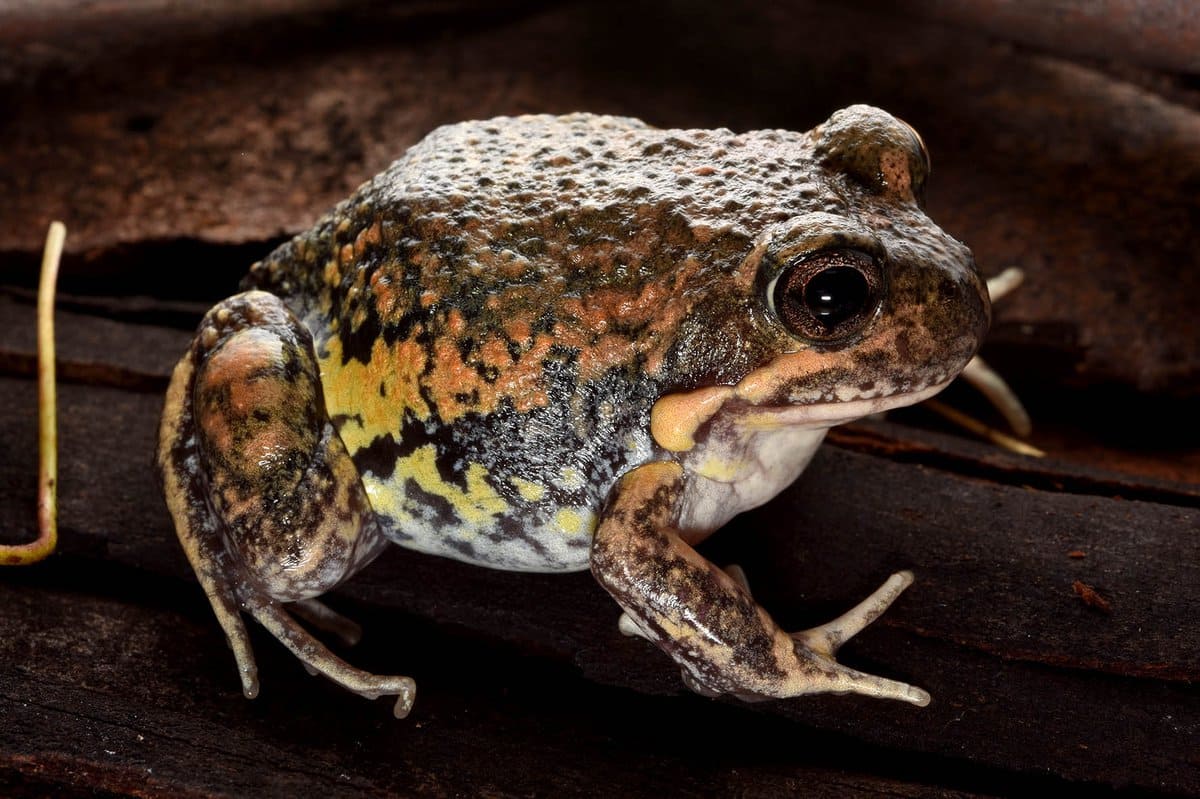
Limnodynastes dumerilii
The Eastern Banjo Frog (Limnodynastes dumerilii) is a medium-sized, burrowing frog native tosouth-eastern Australia. It is famous ···
 LC
LC
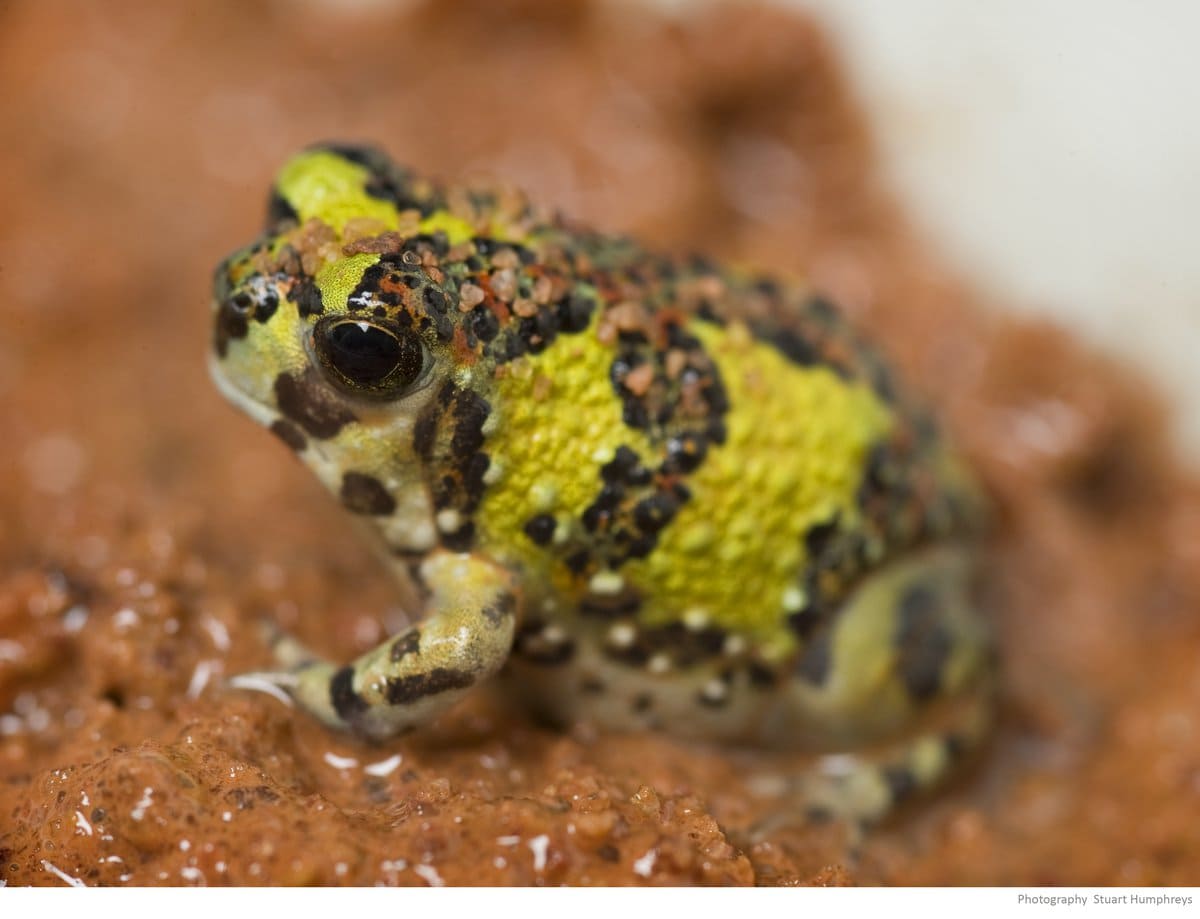
Notaden bennettii (Crucifix Frog)
The Crucifix Frog (Notaden bennettii) is a small but strikingly colourful frog native to aridand semi-arid parts of Australia. It ···
 LC
LC
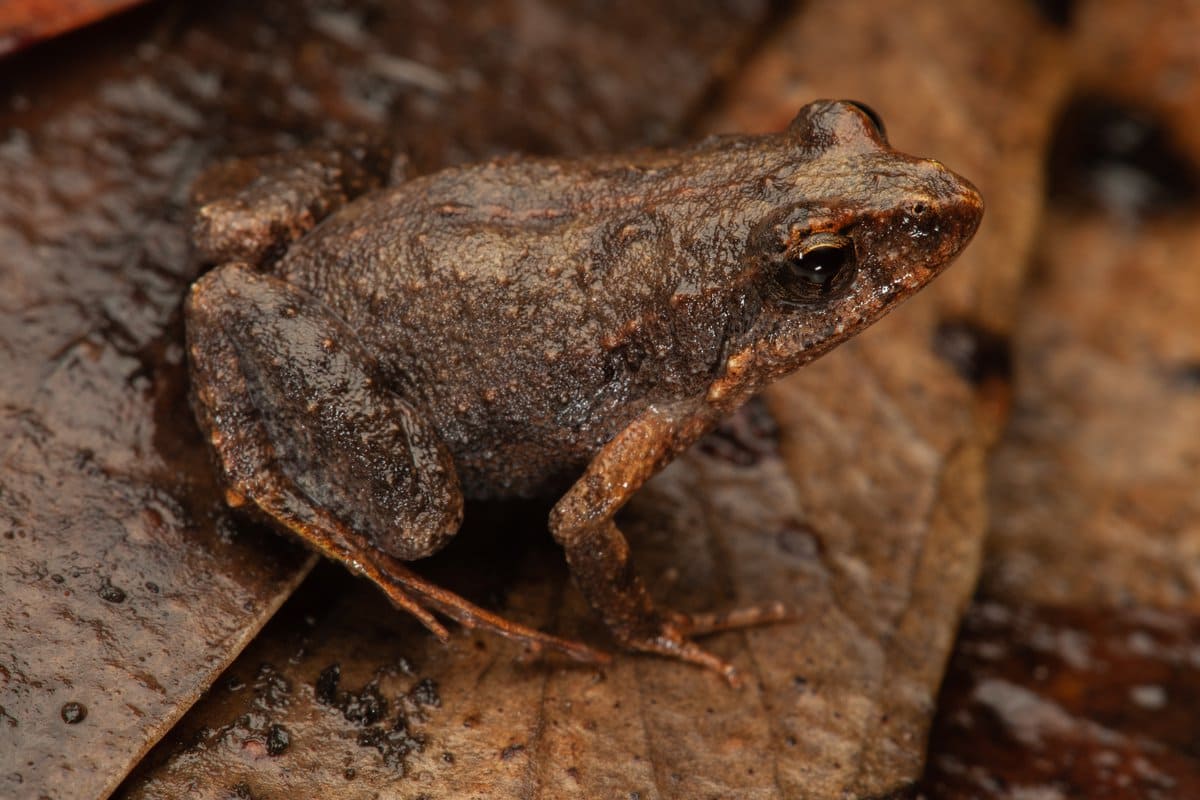
Crinia signifera
The Common Eastern Froglet (Crinia signifera) is a tiny ground-dwelling frog in the familyMyobatrachidae. It is one of the most wi···
 LC
LC
Rhinella marina
The Cane Toad (Rhinella marina, formerly Bufo marinus) is a large, heavy-bodied toadin the family Bufonidae. It is native to tropi···
 LC
LC
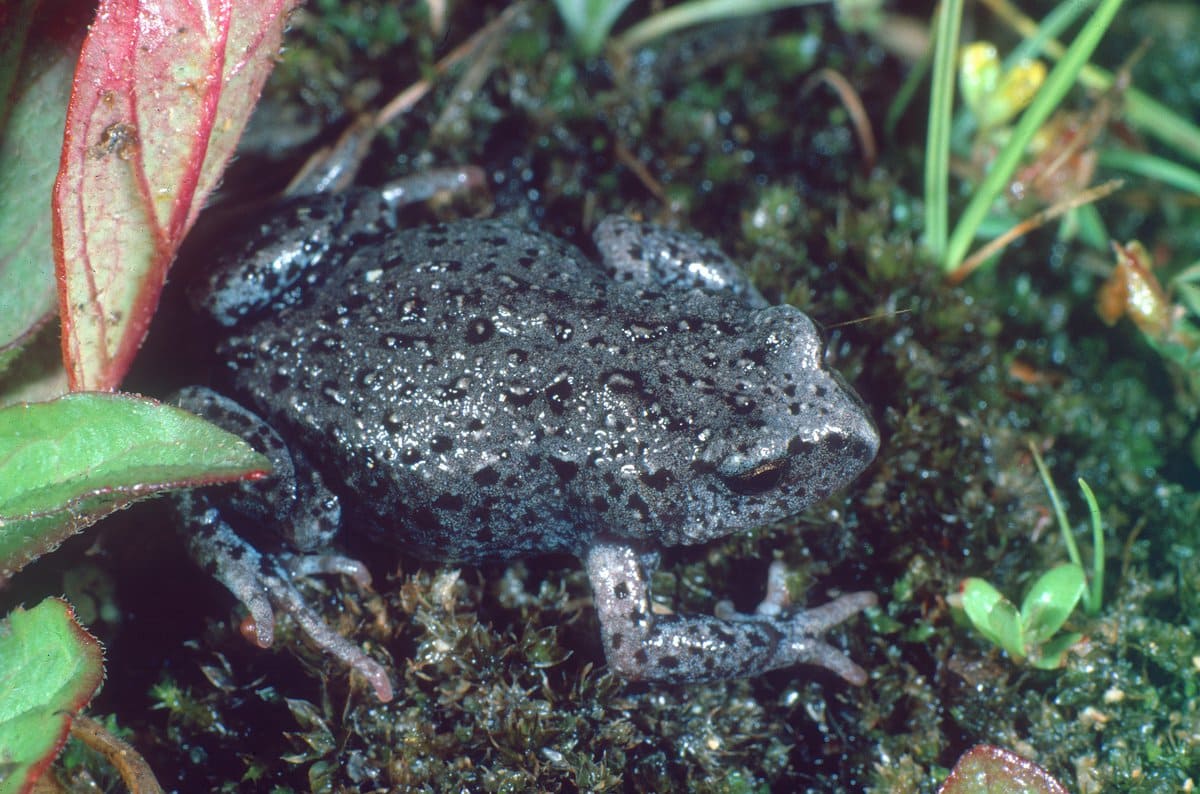
Cophixalus bombiens
The Buzzing Nursery Frog is a tiny ground-dwelling frog from north-eastern Queensland, Australia.Its scientific name is Cophixalus···
 LC
LC
Pseudophryne bibronii
Bibron's Toadlet is a small ground-dwelling frog native to eastern and south-eastern Australia.Despite the name, it is not a t···
 NT
NT
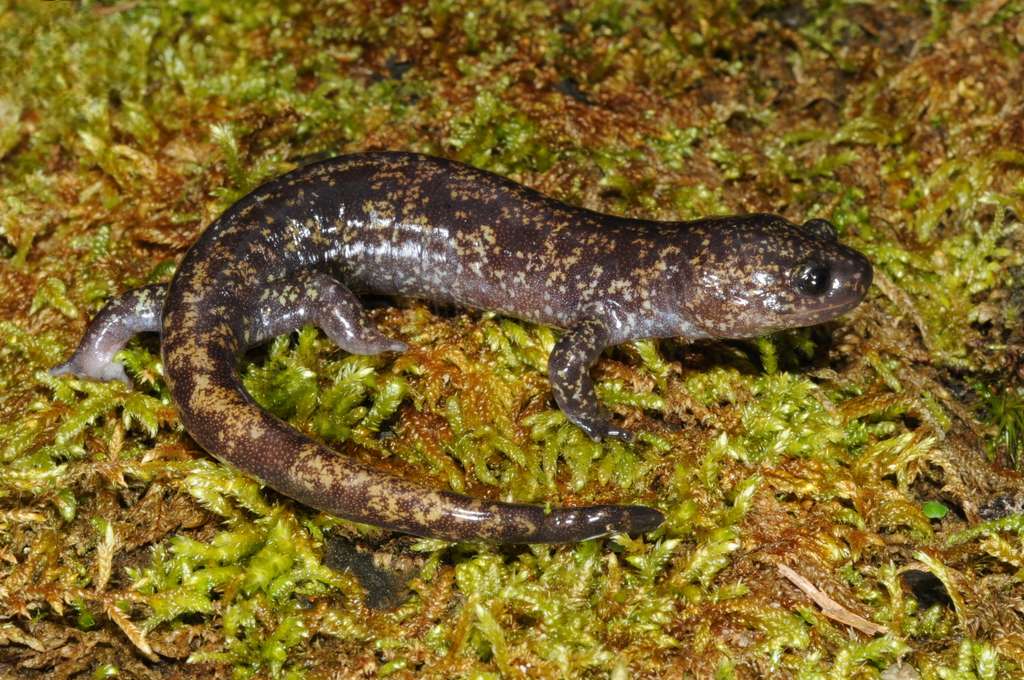
Hynobius formosanus
Hynobius formosanus—the Formosan salamander—is a Taiwan‑endemic hynobiid inhabitingcold headwaters and mossy montane forests. M···
 EN
EN
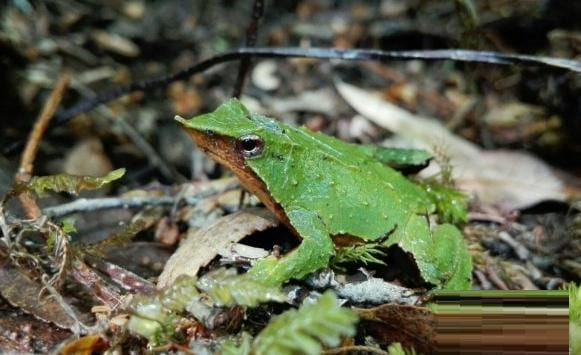
Rhinoderma darwinii
Darwin’s frog (Rhinoderma darwinii) is a tiny terrestrial frog of temperate forests in southernChile and southwestern Argentina, ···
 LC
LC
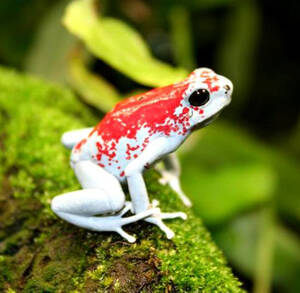
poisondartfrog,poison dart frog, poison dart frog, poison javelin frog
The scientific name of the poison dart frog is poisondartfrog. It is the most beautiful frog in the world and also one of the most···
 LC
LC
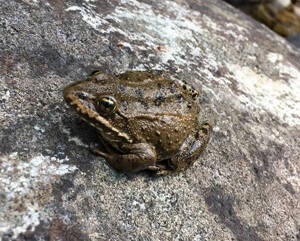
Rana luteiventris ,Columbia spotted frog
Columbia spotted frog is a species of North American frog.Columbia spotted frog is also known for some of its physical features. I···
 LC
LC
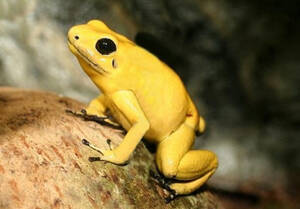
Poison-Dart Frog
The Latin name of the golden poison dart frog is Poison-Dart Frog. The English name of this frog comes from the blow darts of the ···
 LC
LC
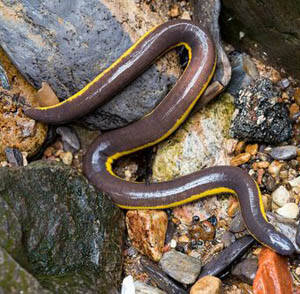
Ichthyophis bannanicus,Banna fish newt, taro snake, two-headed snake
The Latin name of the Bannan ichthyophis is Ichthyophis bannanicus. It is a legless amphibian of the family Ichthyophidae and the ···
 LC
LC
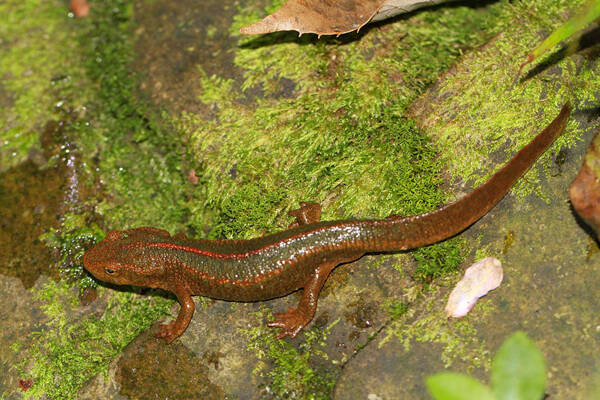
Paramesotriton caudopunctatus,Spot-tailed Warty Newt
The tailed newt is a tailed amphibian belonging to the Salamandridae family and the genus Salamander. It lives in backwaters, smal···
 LC
LC
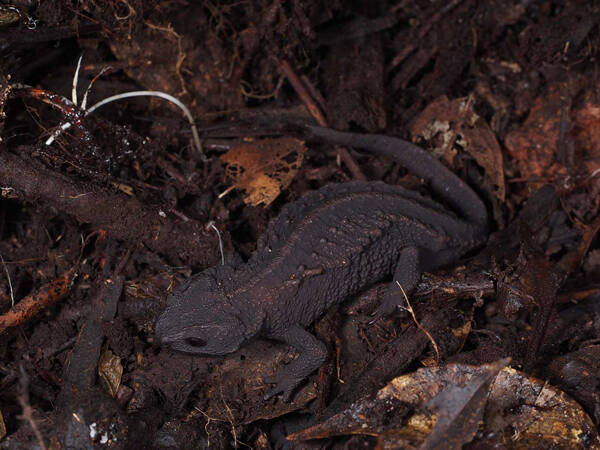
Echinotriton andersoni,Anderson’s Salamander
Ryukyu Acanthus is an amphibian of the family Salamandridae and the genus Acanthus. It lives in mountain forests at an altitude of···