Yes, birds can smell. Most birds possess an olfactory system, although their sensitivity to odors varies widely among species. Turkey vultures can use smell to locate carrion, some albatrosses and petrels detect airborne chemical signals associated with ocean food webs, and kiwi birds use both smell and touch while searching for buried invertebrates. Homing pigeons may also use atmospheric odors during navigation. The old belief that birds have little or no sense of smell is therefore incorrect. However, birds do not all rely on smell equally, and good eyesight or a small olfactory bulb does not automatically mean a bird cannot detect odors.
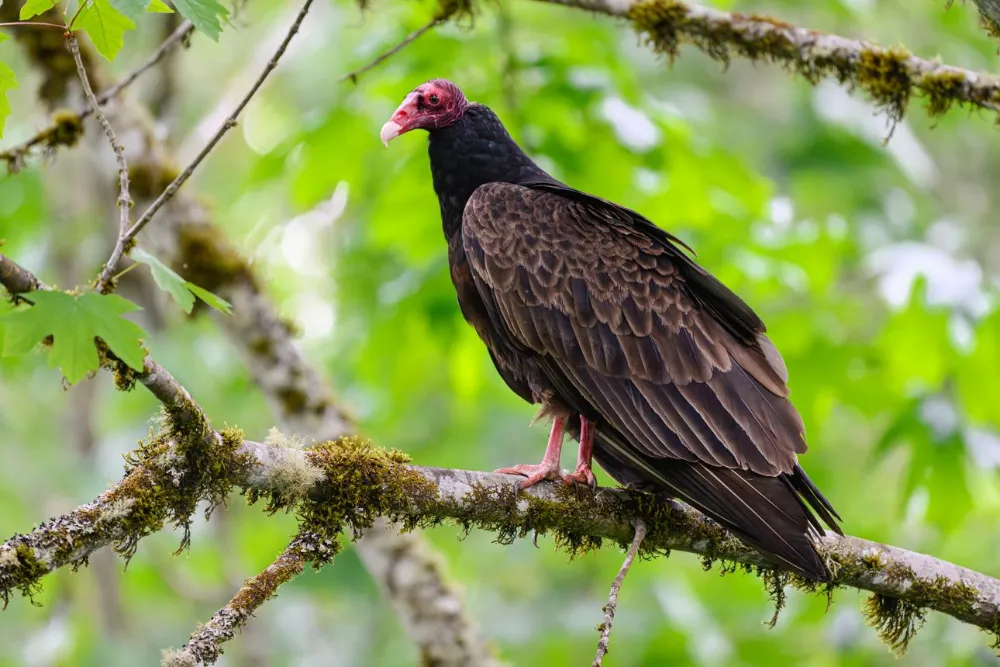
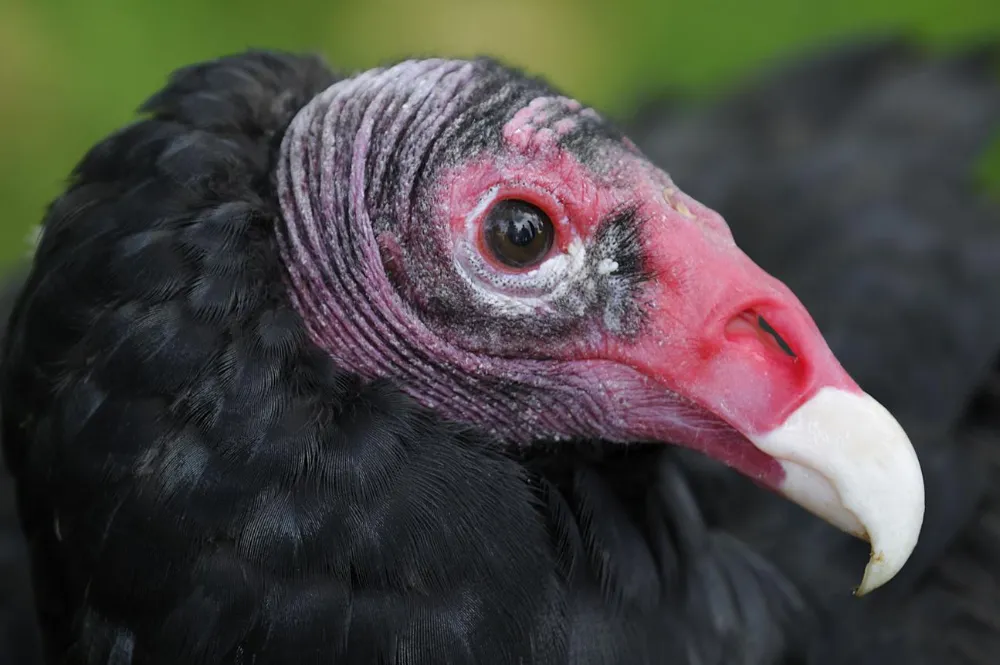
The turkey vulture is a well-documented example of a bird that uses smell to locate food.
Can Birds Smell?
Yes. Birds have olfactory systems capable of detecting airborne chemical substances.
The sense of smell is called olfaction.
For many years, birds were widely portrayed as animals that depend almost entirely on vision and hearing.
This idea was partly encouraged by observations that some birds have relatively small olfactory brain regions compared with certain mammals.
However, decades of experiments have demonstrated that smell plays important roles in the lives of many bird species.
Researchers have tested responses to odors, examined the anatomy of nasal structures, and investigated what happens when birds cannot access normal olfactory information.
The results show that smell can contribute to finding food, navigating, recognizing other individuals, and responding to environmental conditions.
A 2025 review published in the journal Ibis summarized extensive research on these functions.
The review emphasized that olfactory abilities differ substantially among birds and that understanding avian smell requires studying individual species and ecological situations.
Do All Birds Have a Sense of Smell?
Birds generally possess structures involved in detecting chemical odors, but the usefulness and sensitivity of their olfactory systems vary.
Some birds rely strongly on smell during important activities.
Others may depend more heavily on vision, hearing, or tactile information.
For example, turkey vultures have well-developed olfactory capabilities associated with carrion detection.
Many seabirds can detect airborne compounds over the ocean.
By contrast, a bird species that relies heavily on vision to capture prey may use smell less frequently.
However, using smell infrequently is not the same as being unable to smell.
Scientists distinguish between the ability to detect an odor and the degree to which the bird uses that information in natural behavior.
How Does a Bird's Sense of Smell Work?
Birds detect odors through specialized sensory tissue associated with their nasal passages.
Airborne molecules enter the nasal region and interact with olfactory receptor cells.
These cells convert chemical information into neural signals.
The signals travel to the olfactory bulbs and other brain regions involved in processing odors.
This basic organization is shared with other vertebrates, although the anatomical proportions and functional abilities differ among groups.
Some birds have relatively large olfactory bulbs.
Others have smaller ones.
However, olfactory bulb size alone does not provide a complete measurement of smell sensitivity.
Scientists also examine receptor biology, nasal anatomy, behavior, and environmental specialization.
Do Birds Have Nostrils?
Yes. Most birds have two external nostrils, commonly called nares.
In many species, the openings are located near the base of the bill.
The precise shape and position vary with the species.
Some seabirds possess unusual tubular nasal structures associated with their distinctive anatomy.
Kiwi birds are especially remarkable because their nostrils are positioned near the end of their long bills.
These differences demonstrate that birds have evolved diverse arrangements for sampling their environments.
However, the presence of nostrils does not mean every bird uses smell as its principal means of finding food.
Which Birds Have the Best Sense of Smell?
There is no universally accepted ranking of every bird species according to smell sensitivity.
Scientists can measure different abilities, including odor detection thresholds, discrimination between scents, and the usefulness of smell during natural behavior.
These are not identical measurements.
Some birds are especially well known for their olfactory abilities:
Turkey vultures: Use airborne scents to locate carrion.
Albatrosses and petrels: Detect chemical cues over the ocean.
Kiwi birds: Use olfactory and tactile information while probing for prey.
Homing pigeons: Use olfactory information in at least some navigational circumstances.
Each example represents a different ecological use of smell.
A bird that excels at detecting carrion should not automatically be assumed to perform best in every laboratory odor-discrimination test.
Can Turkey Vultures Smell Dead Animals?
Yes. Turkey vultures can use scent to locate carrion.
The turkey vulture, Cathartes aura, is among the best-known examples of olfactory specialization in birds.
It feeds primarily on dead animals.
While soaring, it can respond to chemical odors associated with decomposition.
The Cornell Lab of Ornithology explains that the turkey vulture relies heavily on smell to find food.
Its olfactory brain structures are notably developed compared with those of some other vultures.
This ability is especially useful when a carcass is hidden beneath vegetation or is otherwise difficult to detect visually.
However, turkey vultures also use eyesight.
Their feeding behavior depends on a combination of sensory information and environmental conditions.
How Can Vultures Smell Carrion From the Air?
Decomposing animal tissue releases volatile chemicals into the surrounding environment.
Some of these compounds enter the air.
Wind can transport odor molecules away from the original source.
A turkey vulture flying through an area may detect suitable odor cues and investigate them.
One well-known compound associated with decomposition is ethyl mercaptan, also called ethanethiol.
Cornell Lab discusses this compound in relation to turkey vulture carrion detection.
However, a carcass produces a complex mixture of volatile substances.
It would be an oversimplification to claim that turkey vultures detect only one molecule.
Their performance also depends on wind patterns, environmental conditions, and the age and state of the carcass.
Can Vultures Smell Food From Miles Away?
Turkey vultures can locate carrion through odor cues carried by moving air.
However, the distance at which a carcass can be detected is not fixed.
Wind speed, direction, atmospheric mixing, terrain, vegetation, and odor intensity all influence how far detectable chemicals travel.
Therefore, claims that every turkey vulture can smell any dead animal from a specific number of miles should be treated cautiously.
The important scientific finding is that the species can use odors to locate food that may not be visible.
This provides a major ecological advantage in habitats where carcasses are concealed.
Do All Vultures Rely on Smell?
No. Different vulture species vary in how strongly they use olfactory information.
Turkey vultures are especially associated with scent-based carrion detection.
Black vultures, Coragyps atratus, rely more heavily on visual information in many feeding situations.
They may also observe other scavenging birds and investigate areas where food is available.
However, it would be too absolute to claim that black vultures have no ability to detect odors.
The key difference is the relative importance of smell and vision in their natural foraging behavior.
Turkey Vultures vs. Black Vultures
| Feature | Turkey Vulture | Black Vulture |
|---|---|---|
| Scientific name | Cathartes aura | Coragyps atratus |
| Olfactory specialization | Well developed | Less prominent |
| Typical food search | Smell and vision | Primarily visual cues and social information |
| Ability to find concealed carrion | Smell can be especially useful | Generally less specialized for this task |
| Primary ecological role | Scavenger | Scavenger |
These are general behavioral differences, not rules that describe every individual encounter with food.
Can Seabirds Smell Food Over the Ocean?
Yes. Certain seabirds use airborne chemical information while searching for food.
Albatrosses, petrels, and related birds can travel long distances above the ocean.
They may need to locate prey patches that are difficult to see from the air.
Scientists have studied how these birds respond to compounds associated with marine biological activity.
One important example is dimethyl sulfide, usually abbreviated DMS.
Experimental research has shown that some procellariiform seabirds respond to this chemical.
This suggests that odor can help them identify areas where food may be available.
However, not every seabird species responds equally strongly to DMS.
What Is Dimethyl Sulfide?
Dimethyl sulfide is a volatile sulfur-containing compound that can enter the atmosphere from the ocean.
Its production is associated with processes involving marine microorganisms and phytoplankton.
In some situations, grazing activity within the marine food web contributes to the release of chemical precursors that lead to DMS formation.
This creates a connection between airborne odors and biological activity below the sea surface.
Some seabirds can use DMS as a cue associated with potential feeding opportunities.
However, DMS does not directly identify the precise location of every fish or krill individual.
It provides information about a broader ocean environment in which prey may be present.
How Do Petrels Find Food by Smell?
Some petrels respond to airborne odors associated with marine biological activity.
A 1995 study published in Nature experimentally examined seabird responses to dimethyl sulfide.
The researchers found that several procellariiform seabirds could use DMS as an orientation cue.
Some species, including certain storm petrels, showed strong responses.
Later research provided physiological evidence that an Antarctic seabird could detect naturally relevant DMS concentrations.
These findings demonstrated that seabird olfaction has practical ecological importance.
However, the same odor does not necessarily trigger identical behavior in every seabird species.
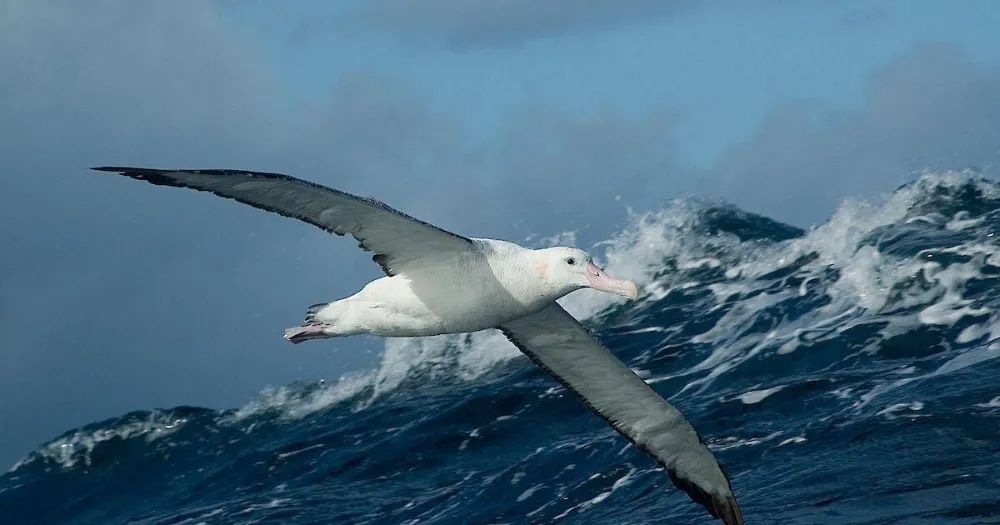
Albatrosses and petrels can use airborne chemical cues while navigating and searching for food over vast ocean areas.
Can Albatrosses Smell?
Yes. Albatrosses have functional olfactory systems.
They belong to a seabird group known for its strong association with odor-based environmental information.
Some species use airborne compounds to help locate biologically productive areas of the ocean.
Albatrosses can also rely on visual information, wind conditions, memory, and other navigational cues.
Therefore, smell is one component of their broader sensory system.
The 2025 review of avian olfaction identified seabirds as especially important examples for understanding how smell contributes to navigation and foraging.
Why Do Some Seabirds Have Tubular Nostrils?
Albatrosses, petrels, and some related seabirds possess distinctive external tubular nasal structures.
These birds are sometimes informally called tubenoses.
The external structures are associated with their specialized nasal anatomy.
They also have mechanisms for managing excess salt consumed during life at sea.
However, it would be misleading to describe the nasal tubes as simple devices built only for smelling.
Olfaction, respiration, and the broader anatomy of the nasal region must be considered together.
The presence of tubular nostrils does not by itself measure how sensitive a species is to every airborne odor.
Can Kiwi Birds Smell?
Yes. Kiwi birds are famous for their unusual nasal anatomy and their use of nonvisual information while finding food.
Kiwi are flightless birds native to New Zealand.
They are often active at night and search for invertebrates within soil and leaf litter.
Unlike most birds, their external nostrils lie near the tip of the long bill.
This arrangement places the nostrils close to the material being investigated.
Experimental and anatomical research supports a role for smell in kiwi foraging.
However, kiwi do not locate prey by smell alone.
Their bills also contain sensitive mechanoreceptors capable of detecting physical information from the substrate.
Why Are Kiwi Nostrils Near the Tip of the Beak?
Kiwi have unusually long bills with nostrils close to the distal end.
Most birds have external nostril openings closer to the base of the bill.
The kiwi arrangement places its nasal openings near the soil as the bird probes for prey.
This may help it sample odors close to potential food sources.
However, scientists have also discovered specialized tactile receptors in kiwi bill tips.
A 2007 study published in the Journal of Anatomy found anatomical evidence that kiwi may detect buried prey through vibrations or pressure changes.
Therefore, the bill should be understood as a specialized sensory structure combining multiple types of information.
Do Kiwi Find Worms by Smell?
Kiwi can use olfactory information while searching for buried invertebrates.
However, the claim that kiwi find every worm entirely through smell is too simplistic.
Research has shown that their bill tips contain mechanoreceptors similar to those of probing shorebirds.
These receptors may help detect movement or pressure changes associated with prey.
Scientists continue to investigate how smell and touch interact during kiwi foraging.
The strongest conclusion is that kiwi possess a specialized sensory system suited to finding food in low-visibility environments.
Can Pigeons Smell?
Yes. Pigeons can detect odors.
Research on homing pigeons has demonstrated that olfactory information can be important in navigation.
Classical experiments tested what happened when pigeons could not use their normal sense of smell.
Some birds released in unfamiliar locations showed impaired homing performance.
This led researchers to propose that pigeons learn relationships between wind direction and local atmospheric odors around their home loft.
When displaced, they may use odor information to help determine their position relative to home.
However, the exact role of smell in navigation remains debated.
Not every experiment supports the same interpretation of the mechanism.
Do Pigeons Use Smell to Find Their Way Home?
Olfactory information can contribute to pigeon homing, especially under unfamiliar conditions.
The olfactory map hypothesis proposes that pigeons learn the geographic distribution of atmospheric odors near their home area.
They associate those odors with the directions of prevailing winds.
At an unfamiliar release site, the birds may use local odors to estimate their location relative to home.
Experiments involving olfactory deprivation and altered odor exposure support a meaningful role for smell.
However, some researchers have proposed that odors may also help activate or organize other navigational systems rather than serving as a complete geographic map themselves.
A 2017 scientific review described this ongoing controversy.
The correct conclusion is that olfaction matters to pigeon navigation, while the precise mechanism is not fully settled.
Can Birds Smell Their Way Across Long Distances?
Some birds can use olfactory cues while navigating across substantial distances.
Seabirds and homing pigeons are important examples.
However, long-distance navigation involves multiple systems.
Birds may use visual landmarks, celestial information, magnetic cues, memory, wind, and odor patterns.
The relative importance of these cues varies among species and environmental conditions.
It would therefore be incorrect to claim that every migrating bird follows an invisible smell trail from its starting point to its destination.
Olfaction can provide meaningful navigational information without being the only system involved.
Can Chickens Smell?
Yes. Domestic chickens can detect odors.
Research reviewed in the 2025 Ibis article found that chickens can distinguish certain chemical stimuli.
Experiments have tested their responses to odors associated with substances such as mint, orange, and other compounds.
This demonstrates that chickens are not completely reliant on vision when responding to their environments.
However, the ability to detect a laboratory odor does not mean smell is equally important in every aspect of a chicken's daily behavior.
Vision, hearing, learning, and social cues also play major roles.
Can Parrots Smell?
Parrots have olfactory systems and should not be described as animals with no sense of smell.
However, their sensitivity and natural use of odors vary among species and remain less extensively characterized than those of some vultures or seabirds.
Parrots are particularly well known for advanced vision, vocal communication, and learning.
These specializations do not eliminate the possibility that odors influence their behavior.
Scientists have investigated avian olfaction across many bird groups, but evidence remains uneven.
It is therefore better to avoid categorical claims that all parrots have excellent smell or that none of them can smell.
Can Ducks Smell?
Ducks possess olfactory structures, but the importance of smell varies by species and context.
Waterfowl rely heavily on vision, touch, and other sensory information when feeding and navigating.
However, their possession of these abilities does not establish an absence of smell.
Scientific studies of avian olfaction demonstrate that the older belief that birds lack smell is broadly incorrect.
At the same time, researchers should avoid assuming that every duck species uses odor cues in exactly the same way.
Can Crows Smell?
Crows possess anatomical structures associated with olfaction, but they are especially well studied for their vision, learning, and cognitive abilities.
They may be capable of detecting certain odors.
However, the extent to which different crow species rely on smell in natural foraging or communication is not as firmly established as the role of smell in turkey vultures.
Therefore, a general statement that crows cannot smell is unsupported.
It is also not appropriate to assign them the same carrion-detection abilities as turkey vultures without direct evidence.
Can Birds Smell Humans?
Birds can potentially detect some odors associated with people, depending on the species and circumstances.
However, the fact that a bird has olfactory receptors does not prove that it can recognize every individual human by scent.
Odor detection depends on the particular chemicals, their concentration, environmental conditions, and the bird's sensory abilities.
Some birds may use chemical cues during social interactions.
Other species rely more strongly on sight and sound to recognize familiar individuals.
The question therefore requires species-specific evidence.
Can Birds Smell Food?
Yes. Several bird species use odors to locate or evaluate food resources.
Examples include turkey vultures detecting carrion and certain seabirds responding to compounds associated with ocean productivity.
Kiwi may also use smell in combination with tactile sensing to detect buried invertebrates.
However, not all birds locate food primarily through olfaction.
Some use eyesight as the dominant sense.
Others rely on specialized hearing or touch.
The importance of smell depends on the type of food and the environment in which the bird searches.
Birds That Use Smell: Comparison Table
| Bird Group | Documented or Studied Use of Smell | Important Qualification |
|---|---|---|
| Turkey vultures | Locating carrion | Also use vision |
| Albatrosses and petrels | Detecting ocean chemical cues | Responses vary by species |
| Kiwi | Finding buried food | Touch is also important |
| Homing pigeons | Navigation | Precise mechanism remains debated |
| Domestic chickens | Detecting certain odors | Ecological importance varies by context |
| Other birds | Potential roles in communication, nesting, and predator detection | Evidence is uneven among species |
Do Birds Use Smell to Recognize Each Other?
Some birds appear capable of using chemical information during social interactions.
Researchers have investigated whether odors associated with plumage, skin secretions, nests, or preen oils contribute to recognition.
Possible functions include identifying familiar individuals, mates, or members of the same species.
However, evidence differs among bird groups.
The 2025 review of avian olfaction identified social recognition as a growing research area.
Some experiments demonstrate responses to chemical cues, but others leave questions about how the birds use those signals under natural conditions.
Therefore, smell-based social recognition should not be presented as universal across all birds.
Can Birds Smell Their Own Nests?
Some birds use odor information associated with nests or breeding locations.
Researchers have investigated this possibility particularly in seabirds that return to nesting colonies after foraging at sea.
Chemical cues may help certain species recognize familiar locations or individuals.
However, the roles of vision, memory, landmarks, and other senses remain important.
It is not accurate to claim that every bird finds its nest by smell alone.
The use of nesting odors varies among species and is still being studied.
Can Birds Smell Predators?
Some birds can respond to chemical cues associated with predators.
These responses may influence vigilance, nesting behavior, or habitat use.
However, predator detection through smell is not equally well documented in every avian lineage.
The 2025 review identifies predator-related odors as one of several areas where experiments have demonstrated biologically meaningful responses.
Scientists must also distinguish between detecting a chemical and responding to it because of learned or inherited associations.
In natural settings, predator detection often involves several sensory channels rather than smell alone.
Can Birds Smell Fear?
There is no reliable basis for claiming that all birds can directly smell an abstract emotion called fear.
Animals may respond to chemical changes associated with stress, but the existence of such cues and the ability to detect them require specific experimental evidence.
Some bird species can discriminate odors associated with biological states or social contexts.
However, that does not justify the broad claim that birds can smell fear in people or other animals.
It is more accurate to discuss measurable chemical signals and documented behavioral responses.
Can Birds Smell Smoke?
Birds with functioning olfactory systems may detect some airborne compounds associated with smoke.
However, sensing smoke does not necessarily establish that a bird identifies it as a warning of wildfire.
Behavioral responses depend on species, past experience, smoke concentration, and other environmental cues.
Birds may also detect fires through sight, heat, sound, or environmental disturbance.
Scientific statements about wildfire detection should therefore be based on experiments involving particular species rather than assumptions about all birds.
Why Did People Think Birds Couldn't Smell?
Historically, scientists and the public often emphasized the impressive visual abilities of birds.
Many species have excellent eyesight and use visual signals extensively.
Some birds also have relatively small olfactory bulbs.
These observations contributed to the assumption that smell was unimportant.
However, later behavioral experiments demonstrated significant olfactory abilities in pigeons, seabirds, vultures, and other species.
The history of avian olfaction research illustrates why anatomical size alone cannot fully establish how an animal experiences its environment.
Direct tests of behavior are also necessary.
Do Birds Smell Better Than Humans?
There is no single answer that applies to all bird species.
Some birds are highly specialized for detecting particular odors in their natural environments.
However, human smell sensitivity also varies by chemical compound.
A scientifically meaningful comparison requires measuring detection thresholds or discrimination ability for the same substance under comparable conditions.
One species might outperform humans for certain odors but not for others.
Therefore, statements that all birds smell better or worse than humans are too broad.
Do Birds Have a Better Sense of Smell Than Dogs?
Dogs are well known for their olfactory abilities, but comparing all birds with all dogs is not scientifically useful.
Different species have different sensory specializations.
The ecological task also matters.
For example, a turkey vulture is highly adapted to locating certain odors associated with carrion from the air.
A trained dog may excel at detecting specific substances on the ground.
These are different conditions involving different chemicals and methods.
A meaningful comparison requires controlled testing of the same odor and task.
Can Birds Smell in the Rain?
Rain and humidity can influence how airborne odors disperse through the environment.
Moisture, wind, and atmospheric conditions affect the movement of volatile molecules.
A bird capable of smelling does not automatically lose that ability when it rains.
However, the availability of a particular odor signal may change.
The outcome depends on weather conditions and the source of the odor.
Therefore, it is not accurate to say that rain either always improves or always prevents bird olfaction.
How Do Scientists Test Whether Birds Can Smell?
Researchers use several approaches to study avian olfaction.
One method is to present birds with different odors and measure their behavioral responses.
Another is to compare performance when normal olfactory information is available and when access to that information is reduced.
Scientists may also examine nasal anatomy, receptor genes, and brain structures.
In navigation studies, researchers have compared the homing performance of pigeons under different sensory conditions.
In seabird research, experiments have presented chemical cues such as dimethyl sulfide.
The 2025 review emphasized the value of combining behavioral experiments with anatomical and molecular studies.
However, removing access to smell can also affect an animal in unintended ways, so experimental design and interpretation require care.
What Does Recent Research Say About Bird Smell?
A review published in Ibis in February 2025 examined how birds use odors in different ecological contexts.
The authors considered foraging, navigation, social interactions, nesting, and predator detection.
They found that research has revealed important olfactory abilities across a diverse range of birds.
However, substantial gaps remain.
For many species, researchers still do not know exactly which natural odors are detected or how those cues are integrated with other senses.
The review also emphasized that olfactory anatomy and ecological specialization vary greatly among birds.
The modern scientific view is therefore neither that birds lack smell nor that all birds are equally skilled at using it.
Instead, avian olfaction is a diverse sensory system whose functions are only partly understood.
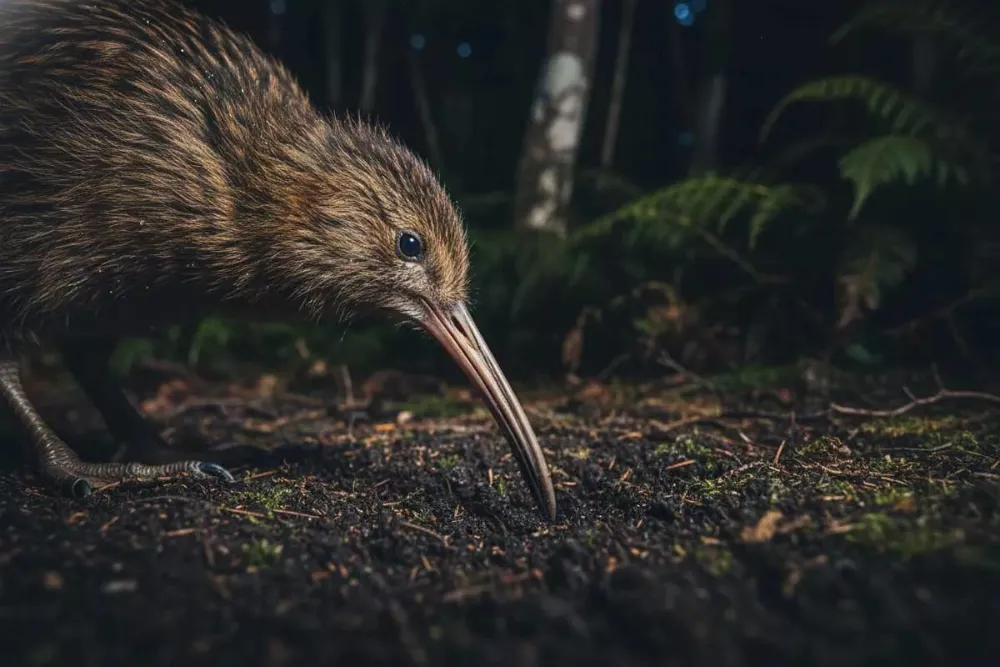
Kiwi birds investigate soil with specialized bills that provide both olfactory and tactile information.
Frequently Asked Questions
Can birds smell?
Yes. Birds have olfactory systems, although the sensitivity and importance of smell vary among species.
Do birds have nostrils?
Yes. Most birds have nasal openings near the base of the bill, while kiwi have unusually positioned nostrils near the bill tip.
Which bird has the best sense of smell?
There is no universal ranking, but turkey vultures, some seabirds, and kiwi are important examples of olfactory specialization.
Can vultures smell dead animals?
Yes. Turkey vultures use odor cues associated with decomposition to help locate carrion.
Can vultures smell food from miles away?
Odor detection distance varies with wind, terrain, and chemical conditions, so there is no single dependable range.
Can pigeons smell?
Yes. Experimental studies show that pigeons can use olfactory information, particularly in some navigation situations.
Do pigeons use smell to find their way home?
Smell can contribute to homing, especially from unfamiliar locations, although the exact navigation mechanism remains debated.
Can parrots smell?
Parrots possess olfactory systems, but the ecological importance and sensitivity of smell vary among species.
Can chickens smell?
Yes. Experiments show that chickens can detect and distinguish certain odors.
Can kiwi birds smell worms?
Kiwi can use olfactory information while foraging, but specialized touch receptors also help them detect buried prey.
Can seabirds smell food?
Yes. Some petrels and albatrosses respond to airborne compounds associated with productive marine food webs.
Can birds smell humans?
Some birds may detect odors associated with people, but individual recognition by smell requires species-specific evidence.
Can birds smell predators?
Some species respond to chemical cues associated with predators, but this ability is not equally documented in all birds.
Can birds smell fear?
There is no evidence that all birds can directly detect fear as an emotion. Specific chemical signals require direct study.
Are birds better at smelling than humans?
It depends on the species, odor, and experimental conditions. No universal comparison is scientifically reliable.
The Bottom Line
Birds can smell, and their olfactory abilities are more diverse than older explanations suggested.
Turkey vultures use scent to locate carrion.
Some seabirds detect chemical cues associated with food-rich ocean environments.
Kiwi combine smell with specialized tactile information while probing for prey.
Homing pigeons can also use olfactory cues during navigation, although scientists continue to debate the exact mechanism.
These examples show that smell is an important sense for many birds.
However, birds do not all rely on odors to the same degree.
The scientific evidence supports a diverse range of olfactory abilities shaped by each species' ecology and evolutionary history.
Sources & Further Reading
Creece et al. (2025) — Past Research and Future Directions in Understanding How Birds Use Their Sense of Smell. Ibis. Modern scientific review covering foraging, navigation, social behavior, nesting, and predator detection.
Cornell Lab of Ornithology — Turkey Vulture. Species account describing carrion detection through smell.
Cornell Lab — In Defense of Turkey Vultures. Explains specialized olfactory anatomy and carrion detection.
Nevitt, Veit and Kareiva (1995) — Dimethyl Sulphide as a Foraging Cue for Antarctic Procellariiform Seabirds. Nature. Experimental evidence of seabird responses to DMS.
Nevitt and Bonadonna (2005) — Sensitivity to Dimethyl Sulphide Suggests a Mechanism for Olfactory Navigation by Seabirds. Physiological and behavioral evidence concerning marine odor cues.
Cunningham, Castro and Alley (2007) — A New Prey-Detection Mechanism for Kiwi. Demonstrates the importance of specialized tactile receptors alongside olfaction.
Gagliardo (2013) — Forty Years of Olfactory Navigation in Birds. Journal of Experimental Biology. Review of homing pigeon experiments and olfactory navigation.
Wiltschko and Wiltschko (2017) — Considerations on the Role of Olfactory Input in Avian Navigation. Discusses competing explanations of odor involvement in pigeon homing.