Yes, some frogs can survive being frozen and become active again after thawing. The best-known example is the wood frog (Lithobates sylvaticus), which can tolerate ice forming in substantial portions of its body during winter. Its heartbeat and circulation may become undetectable during freezing, but the frog is not permanently dead. Special biochemical defenses, including glucose and urea, help protect living cells from freezing damage. When suitable temperatures return, the frog can thaw, restore normal physiological functions, and resume activity. However, most frog species cannot survive this process, and even wood frogs have limits to how much freezing they can tolerate.
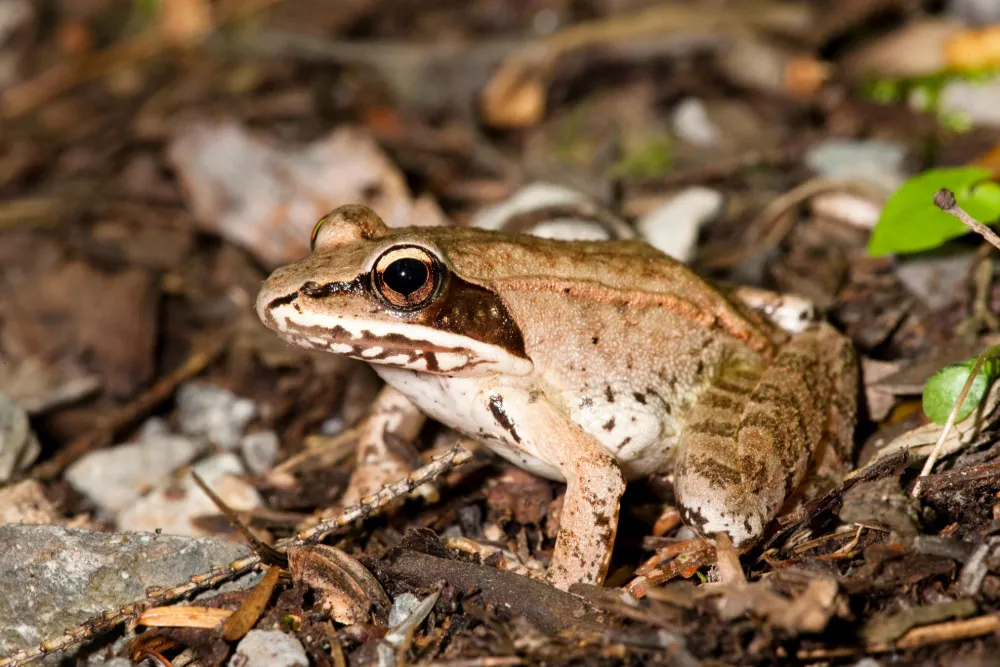
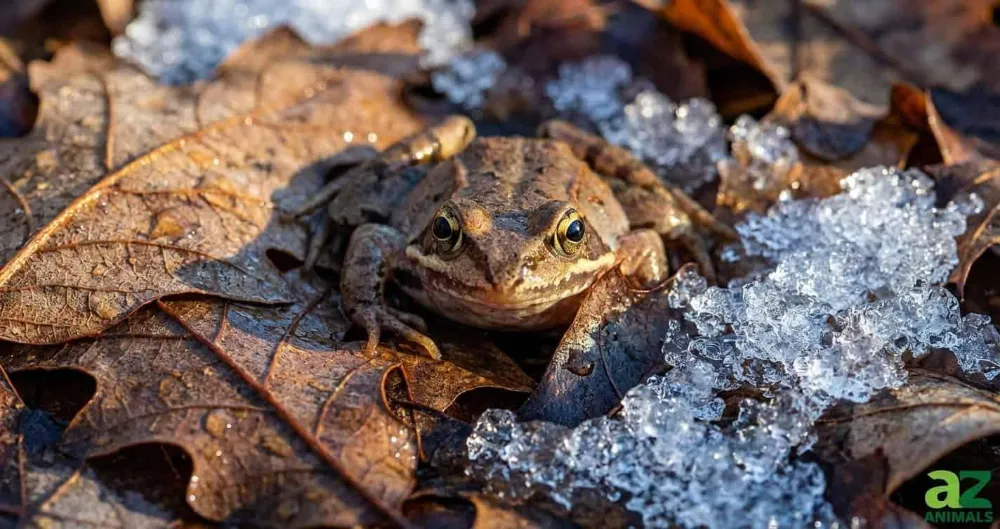
Wood frogs survive northern winters using unusual physiological adaptations that protect their tissues during freezing.
Can Frogs Freeze and Come Back to Life?
Some frogs can survive the formation of ice within their bodies and recover when temperatures rise.
This ability is known as freeze tolerance.
The wood frog is one of the best-studied examples among vertebrates.
During winter, a wood frog may remain beneath leaf litter on the forest floor instead of retreating deep underground below the frost line.
As its environment freezes, ice can form in the spaces between its cells.
The frog's body responds through a complex series of physiological changes.
Its organs become much less active, and the heartbeat may stop during the frozen state.
However, specialized protective mechanisms prevent much of the damage that would normally occur in an animal exposed to similar conditions.
When the frog thaws under survivable conditions, circulation and other physiological functions can resume.
The phrase coming back to life is therefore a popular description of recovery from freezing, not evidence of resurrection after irreversible death.
What Kind of Frog Can Survive Being Frozen?
The North American wood frog, scientifically known as Lithobates sylvaticus, is especially famous for freeze tolerance.
Older scientific literature commonly uses the name Rana sylvatica.
Both names refer to the same species under different taxonomic treatments.
Wood frogs occur across large portions of northern North America.
They inhabit forests and other suitable environments extending into parts of Alaska and Canada.
The species uses shallow temporary pools for breeding in spring.
During much of the year, however, adult wood frogs live on land.
Their ability to overwinter in cold forest-floor habitats is one of their most remarkable adaptations.
Other freeze-tolerant frogs also exist, but wood frogs are among the most extensively investigated.
Do All Frogs Freeze During Winter?
No. Most frogs do not rely on tolerating substantial ice formation within their bodies.
Different species use different strategies for surviving cold weather.
Some overwinter in water, where conditions may remain above freezing beneath surface ice.
Others shelter in burrows, crevices, or deep leaf litter.
Some species avoid severe winter conditions because they live in relatively warm regions.
Freeze tolerance is a specialized adaptation, not a universal characteristic of all frogs.
Even among species that tolerate some freezing, survival limits differ.
Temperature, season, freezing duration, cooling rate, and physiological preparation can influence survival.
Why Can Wood Frogs Survive Freezing?
Wood frogs survive freezing through a coordinated combination of biochemical and physical adaptations.
The most important include:
Rapid production of protective glucose when freezing begins
Seasonal accumulation of urea and other dissolved substances
Controlled redistribution of water away from vulnerable cells
Reduced metabolic activity during the frozen state
Physiological recovery during thawing
No single mechanism explains the entire process.
The protective substances help limit injury, while changes in cellular water balance reduce the danger of destructive ice formation.
The frog's winter preparation also affects how well these defenses operate.
Researchers have found especially strong adaptations in wood frogs from northern populations that experience severe winter conditions.
How Does a Wood Frog Freeze?
As environmental temperatures fall below the freezing point of its body fluids, ice formation can begin in a wood frog's tissues.
Ice generally develops primarily outside the cells rather than being allowed to grow extensively within them.
Extracellular ice formation changes the concentration of dissolved substances around the cells.
Water then moves out of cells, helping reduce the amount of freezable water within them.
This dehydration can be protective within limits.
However, excessive dehydration is also potentially damaging.
The frog must balance competing risks involving ice formation, water loss, and solute concentrations.
Protective compounds help the cells withstand these changes.
Research on wood frog liver tissue has examined how glucose influences cellular water movement and resistance to freezing injury.
Does a Frozen Wood Frog's Heart Really Stop?
Yes. During sufficiently extensive freezing, a wood frog's heartbeat and blood circulation can cease.
Its breathing and visible movements also become greatly reduced or absent.
This gives the animal an appearance that can resemble death.
However, the suspended state is not equivalent to irreversible biological death.
Its tissues remain capable of recovery if the freezing conditions stay within the animal's tolerance limits.
During thawing, physiological functions can restart.
Researchers studying wood frogs have documented the reduction and recovery of organ function through freeze-thaw cycles.
Descriptions such as the frog is dead all winter are therefore misleading.
How Does Glucose Protect a Frozen Frog?
Glucose is one of the most important cryoprotectants used by wood frogs.
A cryoprotectant is a substance that helps biological tissues tolerate freezing or low-temperature stress.
When freezing begins, the wood frog's liver converts stored glycogen into glucose.
Glucose enters the bloodstream and is distributed to tissues while circulation is still functioning.
Higher concentrations can reduce some forms of freezing injury.
Glucose also affects osmotic balance and the amount of water available to form ice.
A landmark 1993 study showed that increasing glucose concentrations experimentally improved the freezing survival of wood frogs.
In that study, glucose-treated frogs survived conditions that were lethal to untreated controls.
The findings provided strong evidence that glucose has a direct protective role.
Is Glucose Like Antifreeze?
Glucose is often described as natural antifreeze, but the comparison needs qualification.
Automotive antifreeze is designed to prevent or reduce freezing in a mechanical cooling system.
Wood frog glucose does not simply keep the entire body liquid.
Instead, it helps living tissues tolerate freezing that actually occurs.
It can influence osmotic conditions, reduce cellular dehydration injury, and limit certain damaging effects associated with ice formation.
The animal still becomes genuinely frozen.
Therefore, the phrase natural antifreeze is a useful introduction but not a complete scientific explanation.
What Is the Role of the Wood Frog's Liver?
The liver is crucial because it stores glycogen, a polymer of glucose.
When freezing begins, stored glycogen is broken down, allowing glucose levels to rise.
The glucose is distributed to organs and tissues before circulation stops.
This timing is important.
Once blood movement ceases, the ability to deliver additional protective substances throughout the body becomes limited.
Experiments have shown that wood frogs undergo substantial changes in liver glycogen and tissue glucose during freezing and thawing.
A study of repeated freeze-thaw cycles found that glucose increased during freezing and was restored toward liver glycogen stores during thawing.
This demonstrates that the biochemical response is dynamic rather than permanently elevated throughout the entire year.
Why Do Wood Frogs Have High Blood Sugar in Winter?
High glucose levels during freezing serve a protective function.
They should not be confused directly with human diabetes.
In wood frogs, glucose accumulation is part of a seasonal physiological response to cold exposure.
Research has measured dramatic increases in glucose during freezing.
However, the size of the increase depends on tissue, season, and environmental conditions.
The frog's cells and organs are adapted to tolerate these unusual biochemical changes.
When thawing occurs, glucose concentrations can decrease as normal metabolic processes resume.
Scientists study this process because it provides insights into how vertebrate tissues can tolerate extreme physiological stress.
What Does Urea Do in a Frozen Wood Frog?
Urea is another important component of the wood frog's cryoprotective system.
It is a nitrogen-containing compound that contributes to the concentration of dissolved substances in body fluids.
Northern wood frogs can accumulate substantial amounts of urea before winter.
This helps prepare tissues for the stresses associated with freezing and dehydration.
Research on subarctic wood frogs found that urea levels increased during seasonal preparation and contributed to their exceptional freeze tolerance.
However, urea and glucose do not perform identical functions.
Their roles overlap in some respects but differ in timing, metabolism, and physiological effects.
The overall cryoprotective system works through several interacting substances and processes.
Why Do Alaskan Wood Frogs Survive Colder Temperatures?
Wood frogs from Alaska experience more severe winter conditions than many populations farther south.
Researchers have found that northern wood frogs can accumulate larger stores of glycogen and higher concentrations of protective osmolytes.
These adaptations help them tolerate more extensive freezing.
A 2013 study in the Journal of Experimental Biology reported that Alaskan wood frogs survived experimental freezing to temperatures as low as approximately −16°C.
The same study found much lower freezing tolerance in frogs from southern Ohio.
However, −16°C should not be presented as a universal survival limit for all wood frogs.
The experimental outcome depends on the population and the conditions under which the frogs are prepared and frozen.
How Long Can a Wood Frog Stay Frozen?
Some wood frogs can remain frozen for extended periods under suitable winter conditions.
Research on northern populations has documented survival after long experimental freezing periods.
One study reported that Alaskan wood frogs endured approximately two months of freezing at −4°C.
However, this does not mean a wood frog can survive indefinitely while frozen.
The duration of safe freezing depends on temperature, physiological preparation, hydration, and other factors.
Repeated freeze-thaw events can also affect the animal's condition.
The length of winter alone does not tell us how long an individual frog's entire body remains continuously frozen.
What Percentage of a Wood Frog's Body Can Freeze?
Wood frogs can tolerate extensive ice formation involving a substantial proportion of body water.
However, published estimates vary by population and experimental conditions.
The phrase almost completely frozen can be misleading if interpreted as every cell turning into solid ice.
In a surviving frozen frog, ice formation is controlled in ways that reduce intracellular damage.
Water redistributes between tissues and compartments, and protective solutes concentrate in the remaining unfrozen fluids.
Therefore, extensive whole-body freezing does not mean every part of every cell becomes a solid block of ice.
Why Doesn't Ice Destroy the Frog's Cells?
Ice formation is dangerous because growing crystals and changing water concentrations can damage cellular structures.
In many animals, uncontrolled freezing causes irreversible injury.
Wood frogs use protective substances and controlled water redistribution to reduce these risks.
Glucose can reduce injury associated with cellular dehydration and freezing stress.
Urea and other osmolytes contribute to seasonal protection.
The formation of ice outside cells helps avoid some of the especially destructive consequences of extensive intracellular ice.
However, the process is not perfectly safe.
Wood frogs can still die if freezing exceeds their physiological tolerance.
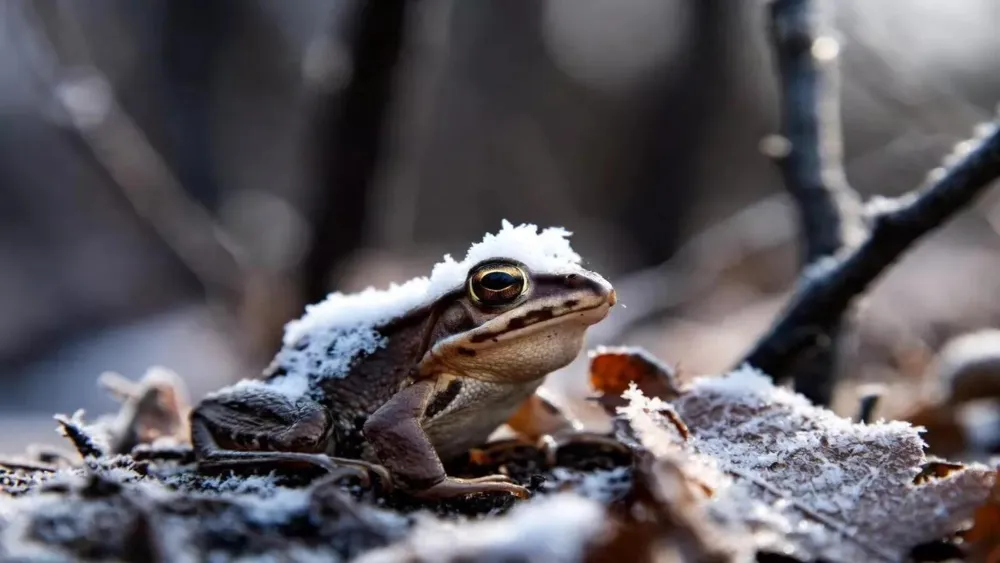
Freeze-tolerant wood frogs overwinter in cold terrestrial habitats where ice may form within their bodies.
Do Wood Frogs Freeze Solid?
Wood frogs can become extensively frozen, but freeze solid is an imprecise phrase.
Ice may occupy substantial extracellular spaces.
At the same time, certain body fluids and cellular compartments retain concentrated dissolved substances.
These substances help protect the tissues.
The process is therefore different from an animal becoming uniformly frozen throughout every cell.
The ability to recover depends on avoiding destructive injury to essential cellular structures.
Scientists study the distinction between extracellular and intracellular ice because it is central to freeze tolerance.
Do Frozen Frogs Feel Pain?
Researchers can measure changes in nervous-system activity, metabolism, and physiological functions during freezing.
However, the subjective experience of a frozen frog cannot be directly established from these measurements.
When extensively frozen, the animal displays profound reductions in normal activity and physiological processes.
That does not justify a definitive claim about what the animal consciously experiences.
It is more scientifically accurate to describe measurable physiology rather than assert that frozen frogs certainly feel pain or certainly feel nothing.
How Does a Frozen Wood Frog Thaw?
As temperatures rise, ice within the body begins to melt.
Water balance shifts as previously frozen fluid returns to the liquid state.
Organ systems gradually recover.
Circulation can resume, and tissues regain normal metabolic activity.
The frog may eventually move and respond to its surroundings again.
However, successful recovery depends on whether the freezing exposure remained within survivable limits.
A frog that has suffered severe tissue injury may not recover normally.
Laboratory studies have followed changes in glucose, enzyme activity, and other physiological markers through the thawing process.
How Quickly Do Wood Frogs Recover After Thawing?
Recovery speed varies with the intensity and duration of freezing and the conditions during thawing.
Some experimental studies have observed substantial recovery within approximately a day after relatively moderate freezing exposures.
However, not all organs necessarily resume full normal function at the exact same moment.
The animal's physiological state, temperature, and prior winter preparation can influence the process.
Therefore, there is no single recovery time that applies to all frozen wood frogs.
Can a Wood Frog Freeze More Than Once?
Yes. Wood frogs can survive repeated freeze-thaw cycles under suitable conditions.
A 1987 study investigated three consecutive freezing and thawing cycles.
The researchers found repeated changes in liver glycogen and glucose levels.
During freezing, glycogen was broken down and glucose accumulated in tissues.
During thawing, glucose could be restored toward glycogen stores.
Additional research on Alaskan wood frogs has also examined the effects of repeated cycles.
However, successful laboratory survival does not mean repeated freezing is harmless under all conditions.
Where Do Wood Frogs Spend the Winter?
Wood frogs commonly overwinter in terrestrial habitats, often beneath leaf litter or other natural cover.
These sites provide some insulation and moisture protection.
However, they may still experience freezing temperatures.
Unlike frogs that remain in unfrozen water, wood frogs can survive the formation of ice in their tissues.
The precise overwintering site varies with habitat and climate.
Leaf litter depth, snow cover, soil moisture, and exposure all influence the local thermal environment.
Snow can provide insulation even when the air above it is extremely cold.
Why Don't Wood Frogs Hibernate Underwater?
Wood frogs are primarily terrestrial outside their breeding season.
They usually spend winter in protected locations on land rather than remaining submerged in ponds.
Their freeze-tolerance physiology allows them to tolerate cold terrestrial microhabitats.
Other frog species may overwinter underwater and survive by using oxygen available through their skin or other respiratory surfaces.
These are different survival strategies.
It would therefore be incorrect to assume that all frogs overwinter in the same way.
What Happens to Wood Frogs in Spring?
When temperatures rise and winter conditions end, surviving wood frogs become active again.
They often move toward temporary woodland pools used for reproduction.
These pools are sometimes called vernal pools.
Breeding can begin early in spring, often before many other amphibian species become highly active.
The frogs lay eggs in suitable freshwater habitats.
The tadpoles then develop through their aquatic larval stage.
The ability to survive cold winters allows wood frogs to occupy northern habitats with short growing seasons.
How Is Freeze Tolerance Different From Hibernation?
Hibernation and freeze tolerance are related but distinct concepts.
Hibernation generally involves prolonged reductions in activity and metabolism during unfavorable seasonal conditions.
Freeze tolerance refers specifically to the capacity to survive ice formation within the body.
An animal can hibernate without allowing its tissues to freeze.
Wood frogs combine seasonal metabolic reduction with specialized freeze-tolerance mechanisms.
Therefore, saying that a wood frog simply sleeps through winter does not fully explain its remarkable physiology.
Can Other Animals Survive Freezing?
Yes. Freeze tolerance occurs in several animal groups.
Some insects survive ice formation through specialized cryoprotectants and other adaptations.
Certain reptiles and amphibians can also tolerate limited freezing.
However, different species use different mechanisms.
Freeze avoidance, in which an animal prevents ice formation inside its body, is another common strategy.
The fact that one species survives freezing does not mean that all animals in the same group can do so.
Wood frogs are especially interesting because they demonstrate extensive freeze tolerance in a vertebrate animal.
Freeze Tolerance vs. Freeze Avoidance
| Feature | Freeze Tolerance | Freeze Avoidance |
|---|---|---|
| Main strategy | Survive controlled ice formation | Prevent damaging internal ice formation |
| Ice within body | Can occur in tolerated compartments | Generally prevented |
| Protective mechanisms | Cryoprotectants, water redistribution, metabolic adjustments | Supercooling, antifreeze-related substances, habitat selection |
| Example | Wood frog | Various cold-adapted insects and other organisms |
| Biological limitation | Too much or uncontrolled freezing can be fatal | Ice nucleation may trigger damaging freezing |
These strategies are not necessarily mutually exclusive in every biological system, and their detailed mechanisms vary among species.
Can a Pet Frog Survive Being Frozen?
Most pet frog species should not be assumed to possess wood frog-like freeze tolerance.
Many tropical and subtropical amphibians are vulnerable to cold exposure.
Even a freeze-tolerant species can die if the temperature, freezing duration, hydration, or prior acclimatization is unsuitable.
Therefore, the freezing ability of wild wood frogs should not be used as a justification for deliberately freezing a pet or wild amphibian.
If a captive frog has experienced dangerous cold exposure, advice from a qualified veterinarian or experienced amphibian professional is appropriate.
Can Scientists Freeze Humans Like Wood Frogs?
Wood frog research is relevant to cryobiology, the scientific study of how living systems respond to low temperatures.
Understanding cryoprotectants and freezing injury may contribute to research involving cells, tissues, and organ preservation.
However, humans do not naturally possess the same whole-body freeze-tolerance adaptations as wood frogs.
The successful recovery of a frozen frog does not demonstrate that a frozen human can currently be revived.
Whole-body freezing presents enormous challenges involving the brain, blood vessels, cells, and other tissues.
Wood frog biology is scientifically valuable, but its findings should not be exaggerated into claims about established human suspended animation.
What Can Wood Frogs Teach Scientists?
Wood frogs provide a natural model for investigating the effects of cold, dehydration, and high concentrations of protective solutes on living tissues.
Researchers have studied glucose accumulation, urea metabolism, liver function, cellular water movement, and physiological recovery.
These findings may help scientists understand general principles of cryoprotection.
However, translating adaptations from a small amphibian to other organisms requires substantial additional research.
The strongest current conclusion is that wood frogs demonstrate one highly specialized biological solution to winter freezing.
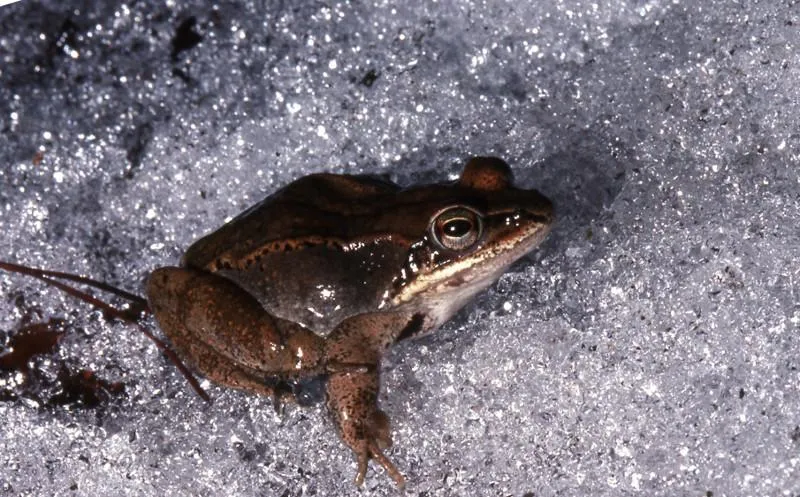
After surviving winter, wood frogs become active in spring and often gather at temporary woodland pools to breed.
Frequently Asked Questions
Can frogs freeze and come back to life?
Some freeze-tolerant species, especially wood frogs, can survive substantial body freezing and recover after thawing. This is physiological recovery, not resurrection from irreversible death.
What frog can survive being frozen?
The North American wood frog, Lithobates sylvaticus, is one of the best-known freeze-tolerant frogs.
Do frozen frogs really stop breathing?
During extensive freezing, visible breathing movements and normal circulation may cease. These functions can recover during successful thawing.
Does a frozen wood frog's heart stop?
Yes. The heartbeat can stop during the frozen state and resume when the animal thaws under survivable conditions.
How cold can wood frogs survive?
Some Alaskan wood frogs have survived experimental freezing to approximately −16°C, but tolerance varies greatly by population, season, and conditions.
How long can a wood frog remain frozen?
Research has documented survival after extended freezing, including approximately two months at −4°C in a studied northern population.
Why doesn't freezing kill a wood frog?
Glucose, urea, controlled water redistribution, and other physiological adaptations help protect its cells and organs.
Is wood frog antifreeze made of glucose?
Glucose is an important natural cryoprotectant, but it works alongside urea and other physiological defenses.
Do all frogs survive freezing?
No. Freeze tolerance is limited to certain species and conditions. Many frogs cannot survive extensive body freezing.
Can wood frogs freeze repeatedly?
Yes. Research has documented survival through repeated freeze-thaw cycles under controlled conditions.
Where do wood frogs hibernate?
They often overwinter beneath leaf litter or other protective ground cover in forest habitats.
What happens when wood frogs thaw?
Ice melts, circulation and metabolism recover, and surviving frogs can resume normal activity.
Are wood frogs dead when frozen?
No. They can enter a profoundly inactive frozen state while retaining the ability to recover if freezing has not caused irreversible injury.
Can people freeze and thaw like wood frogs?
No. Humans lack the natural whole-body freeze-tolerance adaptations documented in wood frogs.
The Bottom Line
Some frogs really can survive being frozen.
The wood frog is a remarkable example because it can tolerate extensive ice formation, dramatic reductions in physiological activity, and the temporary cessation of heartbeat and circulation.
Its survival depends on specialized defenses, including protective glucose, accumulated urea, and controlled changes in cellular water balance.
However, freeze tolerance has limits, and it is not shared by all frog species.
Wood frogs do not return from irreversible death. They survive a natural frozen state and recover when conditions become suitable again.
Their remarkable adaptation reveals how far evolution can modify the physiology of a living vertebrate to withstand extreme winter environments.
Sources & Further Reading
Costanzo, Lee and Lortz (1993) — Glucose Concentration Regulates Freeze Tolerance in the Wood Frog Rana sylvatica. Experimental evidence showing the protective role of glucose.
Costanzo et al. (2013) — Hibernation Physiology, Freezing Adaptation and Extreme Freeze Tolerance in a Northern Population of the Wood Frog. Research on Alaskan wood frogs, including freezing temperature and duration.
Costanzo et al. (2015) — Cryoprotectants and Extreme Freeze Tolerance in a Subarctic Population of the Wood Frog. Examines glucose, urea, tissue water, and freeze-thaw survival.
Seasonality of Freeze Tolerance in a Subarctic Population of the Wood Frog (2014). Compares seasonal protection and freezing limits.
Storey (1987) — Organ-Specific Metabolism During Freezing and Thawing in a Freeze-Tolerant Frog. Documents biochemical changes across repeated freeze-thaw cycles.
Devireddy et al. (1999) — Liver Freezing Response of the Freeze-Tolerant Wood Frog. Investigates liver tissue and cell water movement during freezing.