A healthy backyard rooster can live much longer than many people expect.
Most domestic roosters have the potential to live for roughly 5 to 10 years when they receive good nutrition, secure housing and appropriate veterinary care.
Seven or eight years is a reasonable lifespan for many well-managed birds, while some chickens can live 12 years or longer.
However, there is no single fixed age for every rooster. Breed, genetics, predators, disease, injuries and the way the flock is managed can all dramatically change how long an individual bird lives.
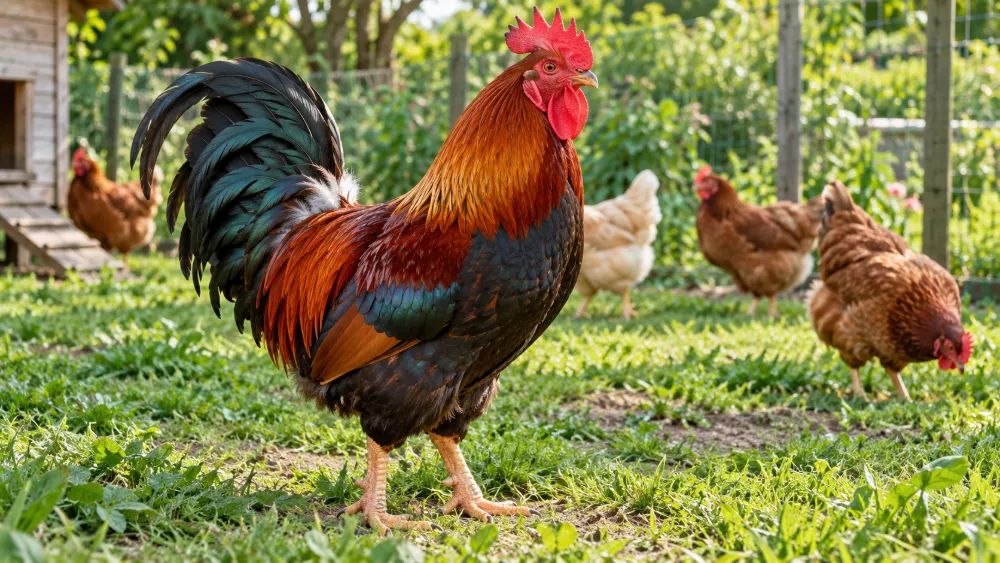
How Long Do Roosters Live?
A typical backyard rooster may live approximately 5 to 10 years.
University extension guidance for small chicken flocks reports that chickens commonly live around eight years and can sometimes reach 12 to 15 years.
Roosters belong to the same domestic chicken species as hens, so their potential lifespan is broadly similar.
There is considerable individual variation, however.
| Situation | Approximate Lifespan |
|---|---|
| Typical backyard rooster | About 5–10 years |
| Well-managed hardy chicken | Often around 7–10+ years |
| Exceptionally long-lived chicken | 12–15+ years possible |
| Bird exposed to heavy predator or disease pressure | May die much younger |
These numbers describe biological potential rather than guaranteed survival.
Do Roosters Live Longer Than Hens?
Roosters and hens of the same breed can have broadly similar natural lifespans.
There are reasons a rooster might sometimes outlive hens in the same flock.
A rooster does not experience the physical demands associated with producing and laying eggs, so he avoids some reproductive problems that affect aging hens.
But roosters face different risks.
They may:
fight with other males;
challenge predators while defending the flock;
suffer injuries from large spurs;
or be removed from flocks because of aggression or local regulations.
Those competing factors make it misleading to claim that all roosters automatically live longer than hens.
What Determines a Rooster's Lifespan?
1. Breed and Genetics
Chicken breeds differ significantly in body size, growth rate and genetic background.
Hardy heritage and dual-purpose breeds are often kept for many years, while chickens selected for extremely rapid production or growth may experience more health challenges.
Individual genetics also matter.
Two roosters raised in the same coop can still have very different lifespans.
2. Predator Protection
Predators are one of the biggest threats to backyard chickens.
Depending on location, threats may include:
A secure coop that is closed at night can dramatically reduce preventable deaths.
3. Disease and Parasites
Roosters can develop many of the same infectious and parasitic diseases as hens.
Important poultry health problems include:
Marek's disease;
coccidiosis;
respiratory infections;
mites and lice;
intestinal parasites;
and bacterial infections.
Good biosecurity, clean housing and appropriate veterinary care improve the chances that a bird reaches old age.
4. Nutrition
Adult chickens should receive a nutritionally balanced poultry ration appropriate for their life stage.
Feeding large quantities of scratch grains, table scraps or treats can dilute the nutrition supplied by a balanced feed.
Clean drinking water must also be available continuously.
5. Housing
A good chicken coop should protect birds from:
rain and extreme weather;
excessive moisture;
predators;
injury;
and unsanitary conditions.
Ventilation is also important because accumulated moisture and ammonia can contribute to respiratory and foot problems.
6. Flock Conflict
Multiple adult roosters can live together successfully in some flock structures, but serious fighting can also occur.
The risk is especially high when several males are competing for access to a small group of hens.
VCA Animal Hospitals notes that backyard flocks usually require only about one rooster for every eight to ten hens and that keeping multiple roosters can lead to territorial fighting.
How Can You Tell If a Rooster Is Getting Old?
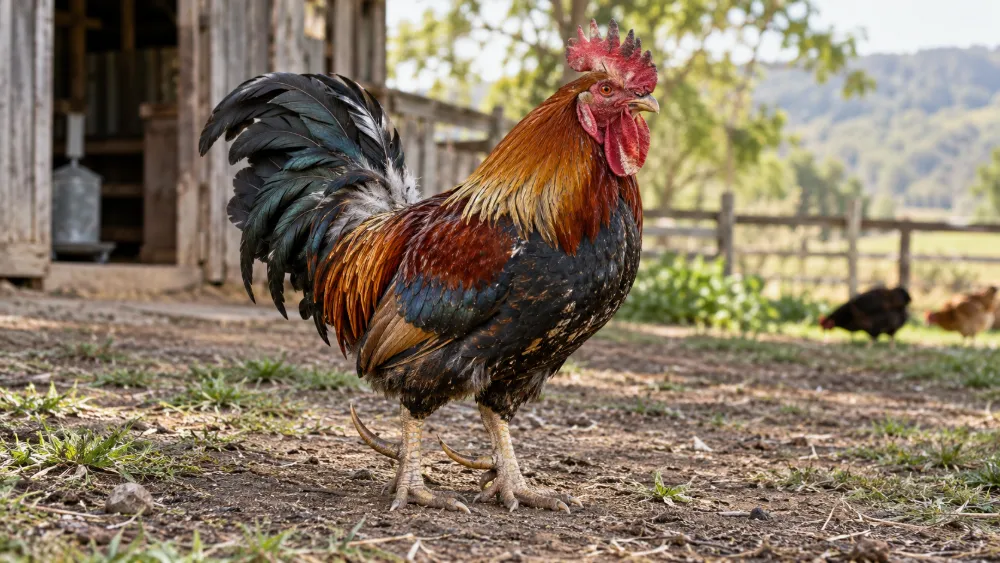
There is no perfectly reliable way to determine the exact age of an adult rooster by appearance alone.
However, older birds may show several changes.
These can include:
longer and more developed spurs;
rougher scales on the legs;
reduced activity;
slower movement;
changes in feather quality;
or a less dominant role in the flock.
Spur length alone cannot accurately determine age because genetics, wear and trimming can change spur appearance dramatically.
At What Age Is a Rooster Fully Grown?
Male chickens are called cockerels while they are young and roosters once mature.
Sexual maturity often begins within the first several months of life.
A young male may begin crowing and showing obvious male plumage before his skeleton and body have completely matured.
Large breeds can continue filling out longer than small or lightweight breeds.
Can a Rooster Live 10 Years?
Yes.
Ten years is entirely possible for a rooster from a hardy genetic background that receives good long-term care.
It is toward the upper part of the common backyard range but is not extraordinary for domestic chickens.
Penn State Extension notes that chickens in small flocks may live up to 12 to 15 years.
Can a Rooster Live 15 Years?
It is possible, but uncommon.
A 15-year-old rooster would be an exceptionally old bird.
Most roosters will die earlier because of disease, predators, injury or age-related decline.
Chicken records demonstrate that the species is biologically capable of remarkable longevity.
For example, Guinness World Records confirmed a hen named Peanut at more than 20 years old.
That does not mean 20 years is a normal rooster lifespan—it simply demonstrates how far beyond the typical range an exceptional domestic chicken can live.
Do Pet Roosters Live Longer Than Farm Roosters?
They can.
A rooster kept primarily as a companion may receive:
more individualized health monitoring;
better predator protection;
less exposure to commercial production pressures;
and care throughout old age.
By contrast, chickens raised commercially for meat are generally not kept until anything close to their natural maximum lifespan.
Therefore, “commercial lifespan” and “natural biological lifespan” should not be confused.
How to Help a Rooster Live Longer
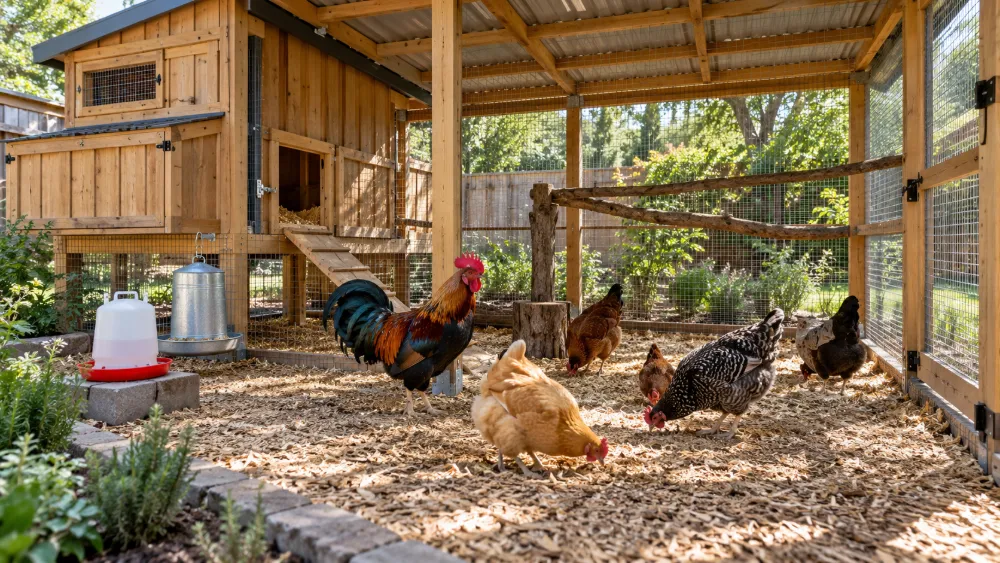
You cannot control every disease or genetic problem, but good husbandry removes many preventable risks.
Use secure predator-proof housing.
Provide a balanced poultry diet.
Keep clean water available at all times.
Maintain dry, clean bedding.
Reduce serious fighting between males.
Check feet, skin, feathers and body condition regularly.
Use appropriate vaccination and parasite-control programs.
Contact an avian or poultry veterinarian when illness is suspected.
Do Roosters Need Hens to Live a Healthy Life?
A rooster does not biologically need hens simply to stay alive.
Chickens are highly social animals, however, so they should not normally be kept in complete isolation.
A rooster can live in an appropriately managed flock or, in some situations, with other compatible male chickens.
The important issue is providing safe social interaction without persistent fighting or injury.
How Many Hens Should One Rooster Have?
A common backyard guideline is approximately one rooster for eight to ten hens.
This is not a rigid biological law.
The ideal ratio varies with:
breed;
temperament;
space;
season;
and whether fertile eggs are desired.
Too much mating pressure can injure hens, while too many competing roosters can increase fighting.
FAQ
What is the average lifespan of a rooster?
A backyard rooster commonly has the potential to live about 5 to 10 years, with seven to eight years being a reasonable expectation for many well-cared birds.
Can roosters live longer than hens?
Sometimes, but not always. Roosters avoid the strain of egg production, while hens may experience reproductive diseases. Roosters, however, can face greater risks from fighting and predators.
Can roosters live 10 years?
Yes. A healthy rooster with good genetics and long-term care can reach 10 years or more.
Can a rooster live 15 years?
Yes, but it would be unusual. University extension guidance indicates that exceptionally well-kept chickens can sometimes reach 12 to 15 years.
What shortens a rooster's lifespan?
Common causes include predators, infectious disease, parasites, injuries, poor nutrition, unsafe housing and serious fights with other roosters.
Do bigger rooster breeds live shorter lives?
Breed and body size can influence longevity, but there is not a simple rule that every large rooster dies younger. Genetics and husbandry remain major factors.
How old is an old rooster?
A rooster around seven or eight years old can reasonably be considered an older bird, although healthy chickens sometimes live considerably longer.
How can I tell my rooster's age?
Exact age is difficult to determine once a rooster is fully mature. Spur development, leg scales, plumage and general condition may provide clues, but none can give an exact age.
Final Answer
Most backyard roosters can live roughly 5 to 10 years.
A lifespan around seven or eight years is realistic for many well-managed birds, while exceptional chickens can reach 12 to 15 years or even beyond.
The biggest factors are not simply whether the bird is male or female. Breed, genetics, disease prevention, nutrition, predators, housing and flock management all affect how long a rooster actually survives.
A secure coop, balanced diet, clean environment and prompt health care give a rooster the best chance of reaching the upper end of his natural lifespan.
Related Reading
Sources Used for Fact Checking
Penn State Extension — Successfully Raising a Small Flock of Laying Chickens
PetMD — Chicken Care Sheet
VCA Animal Hospitals — Healthcare for Pet and Backyard Chickens
Guinness World Records — Oldest Chicken Records