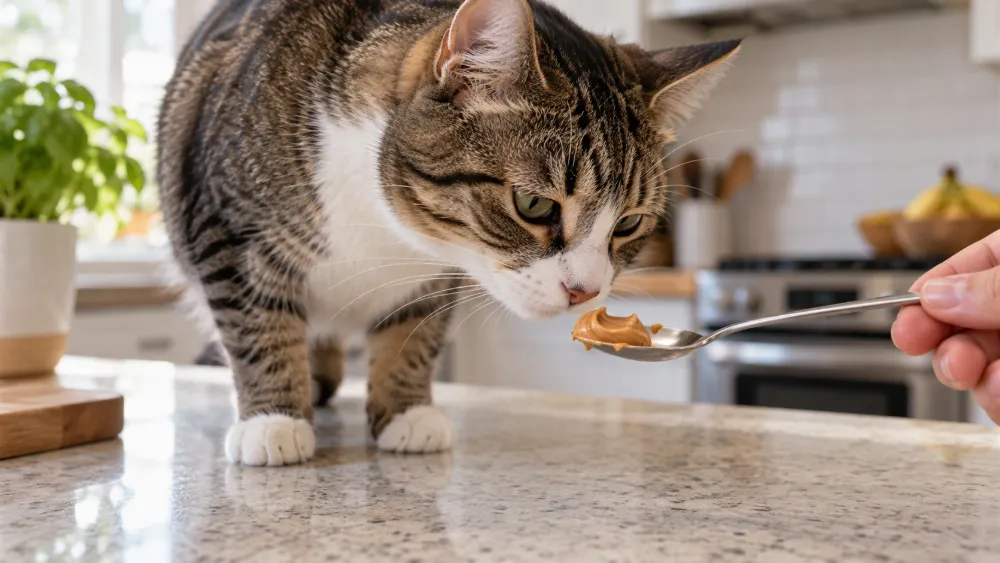
If your cat steals a lick of peanut butter from a spoon, there is usually no reason to panic.
Most plain peanut butter is not inherently toxic to a healthy cat in a tiny amount. However, that does not make it a good feline treat.
Peanut butter is high in calories and fat, provides little useful nutrition for an obligate carnivore, and its thick, sticky texture can make it difficult for some cats to swallow.
So the practical answer is: cats do not need peanut butter, and it is better to choose a meat-based treat instead.
Quick Answer: Can Cats Eat Peanut Butter?
A healthy adult cat that accidentally eats a very small amount of plain peanut butter will usually be fine.
But peanut butter should not become a regular part of a cat's diet because it:
is high in fat and calories;
provides little nutritional value for cats;
can contain added sugar or salt;
may contain ingredients that should be avoided;
and has a sticky texture that can be difficult to swallow.
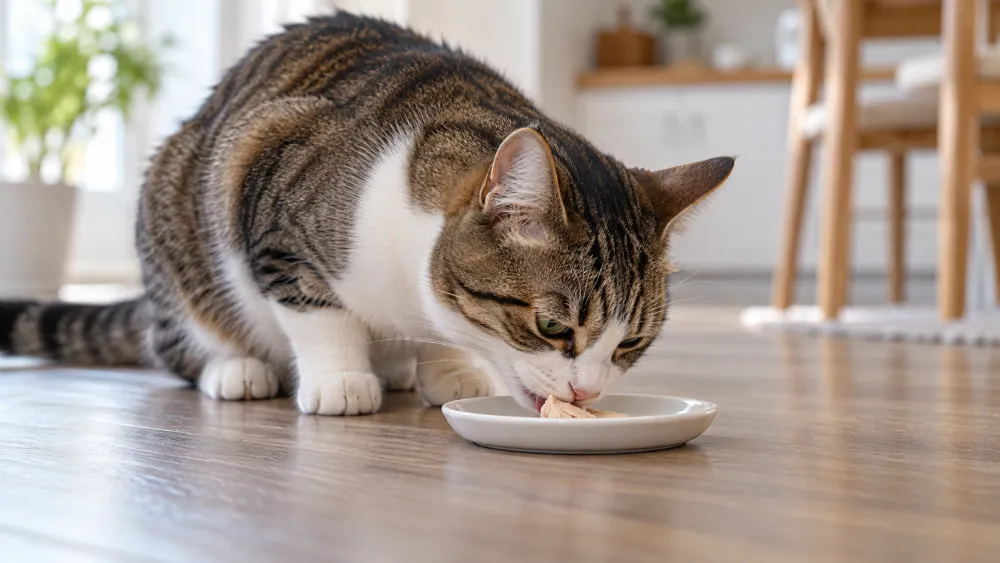
A small piece of plain cooked chicken or another appropriate meat-based treat is usually a much better choice.
Is Peanut Butter Toxic to Cats?
Plain peanut butter made primarily from peanuts is not generally considered inherently poisonous to cats.
The bigger issue is that cats are obligate carnivores.
Their nutritional requirements are built around animal-derived proteins and nutrients rather than calorie-dense plant spreads.
Peanut butter therefore adds calories without providing the nutritional advantages of an appropriate feline food.
Some products also contain extra ingredients that make them less suitable.
Why Isn't Peanut Butter a Good Cat Treat?
1. It Is High in Calories
Peanut butter is very energy-dense.
A quantity that looks small to a person can represent a substantial number of calories for a cat that may weigh only 8 to 12 pounds.
Repeated high-calorie treats can contribute to unwanted weight gain.
2. It Is High in Fat
Peanuts naturally contain large amounts of fat.
That does not make peanut butter a poison, but feeding fatty human foods regularly can upset the digestive system and add unnecessary calories.
Cats with existing gastrointestinal or metabolic problems may be particularly poor candidates for rich treats.
3. It Is Sticky
Peanut butter can adhere to the roof of the mouth and tongue.
This sticky texture is another reason not to give a cat a large spoonful.
Whole peanuts are an even worse choice because they can create a choking risk and are difficult for cats to chew effectively.
4. Cats Do Not Need It Nutritionally
Peanut butter may contain plant protein, but that is not the same thing as providing a complete feline diet.
Cats require nutrients associated with animal tissues, including specific amino acids and fatty acids.
A balanced commercial cat food is designed to meet those needs. Peanut butter is not.
Can Cats Eat Natural Peanut Butter?
Natural peanut butter containing only peanuts—or peanuts plus a small amount of salt—is simpler than heavily sweetened varieties.
However, “natural” does not mean it is necessary or beneficial for a cat.
Even simple peanut butter remains:
high in calories;
high in fat;
sticky;
and nutritionally unnecessary.
If a healthy cat happens to lick a tiny amount, that is different from deliberately adding peanut butter to its regular diet.
What About Xylitol in Peanut Butter?
Xylitol is a sugar substitute found in some sugar-free products, including a small number of nut butters.
Its danger to dogs is firmly established: relatively small doses can cause severe hypoglycemia and liver injury.
The situation in cats is less clear.
A small experimental study involving six healthy cats tested oral xylitol at doses up to 1,000 milligrams per kilogram and did not find the hypoglycemia or liver injury typically seen in dogs.
That study is important because it shows that cats should not automatically be assumed to respond exactly like dogs.
However, six animals are not enough to establish that every exposure is safe, and veterinary sources still generally recommend keeping xylitol-containing products away from cats.
If your cat eats peanut butter containing xylitol, contact your veterinarian or an animal poison service rather than waiting for symptoms.
How Much Peanut Butter Can a Cat Eat?
There is no nutritional reason to establish a regular peanut-butter serving size for cats.
If an otherwise healthy adult cat accidentally licks a very small amount of plain peanut butter, monitoring is usually reasonable.
Do not give a cat a spoonful.
The safest approach is to consider peanut butter an accidental or extremely occasional taste rather than a normal treat.
My Cat Ate Peanut Butter. What Should I Do?
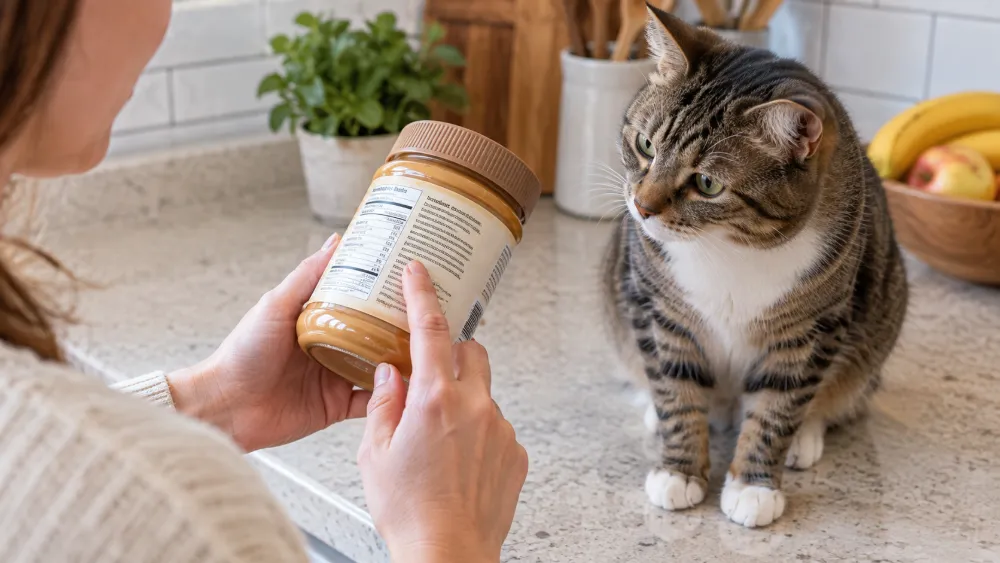
First, check what the cat actually ate.
Read the ingredient label.
Estimate approximately how much is missing.
Check whether your cat is behaving normally.
Watch for gastrointestinal or swallowing problems.
If the product was ordinary peanut butter and your healthy cat consumed only a small lick, serious effects are unlikely.
Contact your veterinarian if:
your cat ate a large amount;
the peanut butter contained an unusual sweetener or other concerning ingredient;
your cat has an existing medical condition;
you do not know what the product contained;
or your cat develops symptoms.
What Symptoms Should I Watch For?
After eating a rich human food, possible signs of digestive upset include:
vomiting;
diarrhea;
reduced appetite;
abdominal discomfort;
or unusual lethargy.
Difficulty swallowing, coughing, repeated gagging or breathing difficulty requires prompt veterinary attention regardless of the food involved.
Can Kittens Eat Peanut Butter?
It is better not to give peanut butter to kittens.
Kittens have small bodies and very specific nutritional requirements for growth.
Most of their calories should come from a complete kitten diet rather than calorie-dense human snacks.
The sticky texture is also less appropriate for a very small animal.
Can Cats Eat Peanuts?
Peanuts are not an appropriate feline snack either.
Plain peanuts are calorie-dense and offer little benefit to cats.
Whole nuts can also be difficult to chew and potentially present a choking or gastrointestinal obstruction risk.
Salted, flavored, honey-coated or seasoned peanuts introduce additional ingredients that cats do not need.
Can Cats Eat Peanut Butter and Jelly?
No.
Adding jelly only introduces more sugar or sweeteners to a snack that already has little nutritional value for a cat.
Some jams, spreads and baked products may also contain additional ingredients that are unsuitable for pets.
Can You Use Peanut Butter to Hide Cat Medicine?
It is usually unnecessary.
Dogs may readily swallow pills hidden in peanut butter, but cats often respond better to:
commercial pill pockets formulated for cats;
a small amount of wet cat food;
a veterinary-recommended treat;
or another method recommended by your veterinarian.
Do not crush or mix medication into food unless your veterinarian confirms that the medicine can be given that way.
What Treats Are Better Than Peanut Butter?
For most cats, better occasional treats include very small amounts of:
plain cooked chicken;
plain cooked turkey;
commercial cat treats;
or a portion of the cat's normal food used as a reward.
Any human food offered to a cat should be unseasoned and free of bones, onion, garlic and heavy sauces.
Treats should remain a small part of the overall diet rather than replacing nutritionally complete cat food.
Why Does My Cat Like Peanut Butter?
Not every cat does.
Cats have individual preferences for smell, texture and fat content.
A curious cat may investigate peanut butter because of its strong aroma and high fat content even though the food is not biologically necessary.
Interest in a food is not evidence that it is nutritionally appropriate.
FAQ
Can cats eat peanut butter?
A tiny amount of plain peanut butter is unlikely to harm most healthy cats, but it provides little nutritional value and is not recommended as a regular treat.
Is peanut butter poisonous to cats?
Plain peanut butter is not generally considered inherently poisonous to cats. The main concerns are unnecessary calories and fat, sticky texture and added ingredients.
What happens if my cat licks peanut butter?
If it was only a small lick of ordinary peanut butter and the cat remains normal, serious problems are unlikely. Monitor the cat and check the ingredient list.
Can cats have peanut butter every day?
No. Peanut butter is calorie-dense and nutritionally unnecessary for an obligate carnivore.
Can kittens have peanut butter?
It is better to avoid it. Kittens should receive nearly all of their calories from nutritionally complete kitten food.
Can cats eat crunchy peanut butter?
It is not recommended. Nut pieces add no nutritional advantage and may make the food more difficult to swallow.
Can cats eat peanuts?
Peanuts provide little benefit to cats and whole nuts can pose choking or digestive risks, so they are best avoided.
Is xylitol toxic to cats?
The evidence is less clear than it is for dogs. A small controlled study did not find the classic toxic effects seen in dogs, but veterinary guidance still recommends avoiding xylitol-containing foods and contacting a veterinarian after a concerning exposure.
What should I give my cat instead?
A small amount of plain cooked meat or an appropriate commercial cat treat is usually a better option.
Final Answer
Cats can usually tolerate an accidental tiny lick of plain peanut butter, but peanut butter is not a good regular treat.
It is high in fat and calories, sticky, and provides little of the nutrition an obligate carnivore actually needs.
If a cat eats peanut butter, check the ingredient list and consider the amount consumed. A small accidental taste of a plain product will usually require only monitoring in a healthy adult cat.
For routine treats, stick with appropriately sized meat-based or commercial feline treats instead.
Related Reading
Sources Used for Fact Checking
PetMD — Can Cats Eat Peanut Butter?
VCA Animal Hospitals — Using Food and Treats for Training Cats
VCA Animal Hospitals — Foods and Treats for Cats
Jerzsele et al. — Effects of Orally Administered Xylitol in Cats