If you search for the name of a group of ravens, you may find several surprisingly dramatic answers.
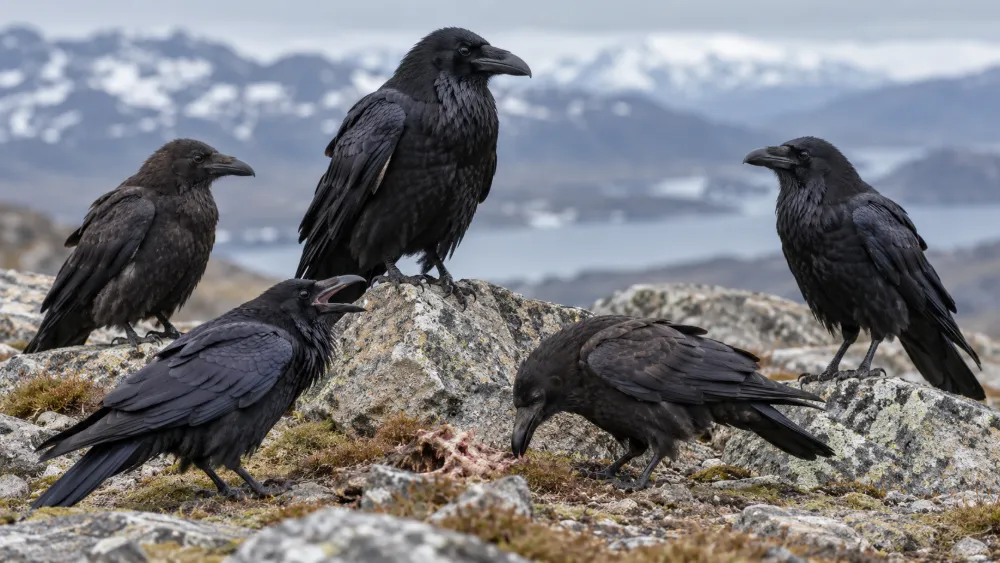
A group of ravens is traditionally called an unkindness. You may also see the term conspiracy. In ordinary birdwatching and scientific writing, however, the simplest and most practical term is usually flock.
All three expressions can appear in English, but they are not used in exactly the same way.
Quick Answer: What Is a Group of Ravens Called?
The traditional collective noun is an unkindness of ravens.
A conspiracy of ravens is another colorful term that is sometimes used.
If you are simply describing several ravens together in nature, a flock of ravens is completely correct and is the word most likely to appear in modern bird biology.
| Term | Meaning | Typical Use |
|---|---|---|
| Unkindness | Traditional collective noun for ravens | Trivia, vocabulary and literary writing |
| Conspiracy | Alternative imaginative collective noun | Literary or informal writing |
| Flock | Ordinary group of ravens | Birdwatching, ecology and everyday English |
| Pair | Two bonded ravens | Very common social unit in adult Common Ravens |
Why Is a Group of Ravens Called an Unkindness?
Unkindness is one of the traditional English collective nouns attached to ravens.
The name sounds as if it must describe aggressive or cruel behavior, but that interpretation should be treated cautiously.
Ravens have accumulated dark cultural associations for centuries because of their black plumage, harsh calls and habit of feeding on carrion. Those associations probably helped imaginative names such as “unkindness” feel appropriate.
However, a collective noun is not a scientific description of raven personality.
Modern research shows that ravens have complex social behavior, long-term pair bonds, problem-solving ability and sophisticated interactions with other ravens.
Calling a group an “unkindness” tells us more about human language and folklore than it does about whether ravens are actually unkind.
Is a Group of Ravens Also Called a Conspiracy?
Yes.
Conspiracy is another collective noun that has been used for groups of ravens.
The word fits the mysterious reputation people have given these large black birds, especially because ravens are unusually intelligent and can cooperate when finding food or dealing with other animals.
But again, “conspiracy” is not a formal biological term.
A wildlife researcher observing 20 ravens at a carcass would normally describe them as a group or flock, not as a conspiracy.
Is “Flock of Ravens” Correct?
Absolutely.
In fact, flock is usually the most practical word when describing real ravens in nature.
Cornell Lab of Ornithology uses the term when discussing raven behavior and photographs of grouped birds.
For example, Common Ravens may gather in flocks around:
large carcasses;
landfills;
concentrated food sources;
communal nighttime roosts;
or places where young birds congregate.
So if you write, “A flock of ravens gathered near the carcass,” there is nothing incorrect about the sentence.
Do Ravens Normally Live in Large Groups?
Not usually.
Common Ravens are less social than American Crows.
According to Cornell Lab of Ornithology, adult Common Ravens are often seen alone or in pairs, and established breeding pairs may remain together throughout the year.
Large gatherings do occur, especially when food is concentrated in one place.
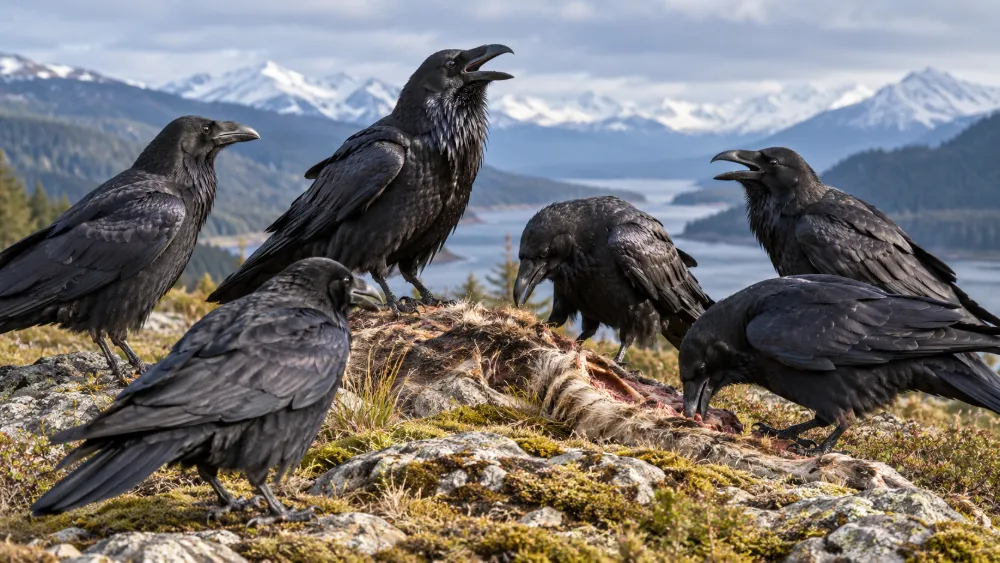
Large groups often contain younger birds that have not yet formed breeding pairs.
That means seeing 30 ravens together does not necessarily mean that those birds permanently live as one social unit.
Why Do Ravens Gather Around Food?
A large food source can temporarily bring many ravens together.
A deer carcass, landfill or other abundant food source may contain far more food than one raven can eat.
Young ravens can benefit from joining others at these locations.
Cornell notes that when young ravens discover a large carcass, they may call in additional ravens. One possible advantage is that a crowd of younger birds can overwhelm the territorial pair that might otherwise control access to the food.
This is a good example of why raven social behavior is much more complicated than the old word “unkindness” suggests.
Do Ravens Roost Together?
They can.
Ravens may form communal nocturnal roosts, particularly outside the breeding season.
A roost is a location where birds gather to rest or sleep, especially overnight.
Communal roosting can provide several potential advantages, including social interaction, access to information about food and reduced individual exposure to predators.
The exact size of a raven roost varies greatly by location and season.
Do Ravens Usually Stay in Pairs?
Adult Common Ravens often form strong pair bonds.
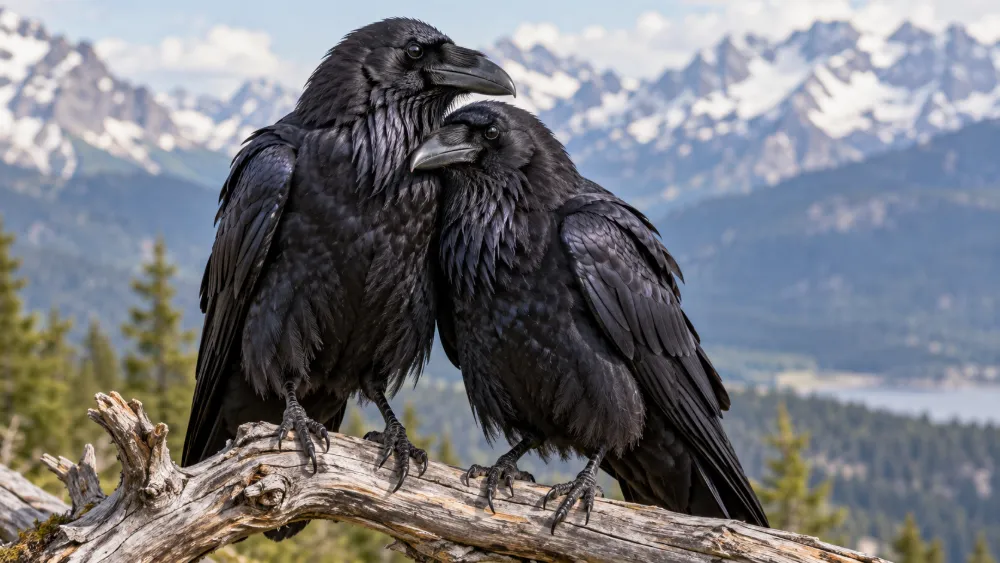
Established breeding pairs can remain together year-round and defend territories from other ravens.
This creates an interesting contrast with the idea of a huge permanent “unkindness.”
For many mature ravens, the most important everyday social group is actually a pair rather than a large flock.
What Is a Baby Raven Called?
A newly hatched raven is a chick.
Once it has grown enough feathers to leave the nest, it can be called a fledgling.
Young ravens remain dependent on their parents for a period after leaving the nest while they develop flying, feeding and survival skills.
Juvenile ravens may later associate with other young birds before eventually forming adult breeding pairs.
What Is the Difference Between a Raven and a Crow?
Ravens and crows belong to the same family, Corvidae, but they are not the same bird.
In North America, the Common Raven is generally much larger than the American Crow.
Useful identification clues include:
ravens have heavier, more curved bills;
ravens often have shaggy throat feathers;
a Common Raven's tail appears wedge-shaped in flight;
an American Crow's tail is more rounded or fan-shaped;
ravens commonly soar;
and crows tend to be more strongly social.
The famous phrase “a murder of crows” therefore refers to a different bird group from an unkindness of ravens.
Why Do Ravens Have So Many Strange Group Names?
Collective animal nouns are a mixture of language, tradition and wordplay.
Many colorful animal-group names became popular because they sounded memorable rather than because scientists needed a special technical term for every species.
That is why ravens can have several traditional names while modern ornithologists still comfortably use the ordinary word flock.
The same pattern appears with many other animals.
A group of flamingos may traditionally be called a flamboyance, but bird experts can still call them a flock. A group of turkeys can be called a rafter, yet wildlife organizations routinely write about turkey flocks.
Unkindness vs. Conspiracy vs. Flock
The easiest way to remember the difference is:
Unkindness = the classic trivia answer.
Conspiracy = another colorful traditional expression.
Flock = the normal real-world bird term.
None of these requires every group of ravens to be described in only one way.
FAQ
What do you call a group of ravens?
A group of ravens is traditionally called an unkindness. It may also be called a conspiracy, while flock is the ordinary term used for ravens gathered together in nature.
Why is a group of ravens called an unkindness?
The term comes from traditional English collective-noun usage and probably reflects the dark cultural reputation historically associated with ravens. It is not a scientific description of their behavior.
Is a group of ravens called a conspiracy?
Yes. “A conspiracy of ravens” is another recorded collective expression, although it is more literary or playful than biological.
Can you say a flock of ravens?
Yes. Flock is completely correct and is commonly used by ornithological sources when describing ravens gathering to feed or roost.
Is a group of crows also called an unkindness?
No. The famous traditional collective noun for crows is a murder. Ravens are traditionally associated with an unkindness.
Do ravens stay together in groups?
Common Ravens are often alone or in bonded pairs. Larger groups form around abundant food, communal roosts and among younger birds that have not yet established breeding territories.
What is a baby raven called?
A young raven is initially called a chick. Once it leaves the nest but is still developing independence, it is called a fledgling.
Final Answer
The classic answer is an unkindness of ravens.
You may also encounter a conspiracy of ravens, but neither term is a formal scientific classification.
When real ravens gather at a food source, travel together or share a nighttime roost, flock is the simple and scientifically natural term.
So the best answer depends on context: “unkindness” for the traditional collective noun, “flock” for everyday bird biology.
Related Animal Group Names
Sources and Further Reading
```