If you have ever searched for the name of a group of turkeys, you may have found two different answers: a rafter of turkeys and a flock of turkeys.
Both can be correct, but they are used differently.
Rafter is the traditional collective noun specifically associated with turkeys. Flock is the ordinary word used by bird experts, wildlife organizations and most people when describing turkeys actually traveling, feeding or roosting together.
Quick Answer: What Is a Group of Turkeys Called?
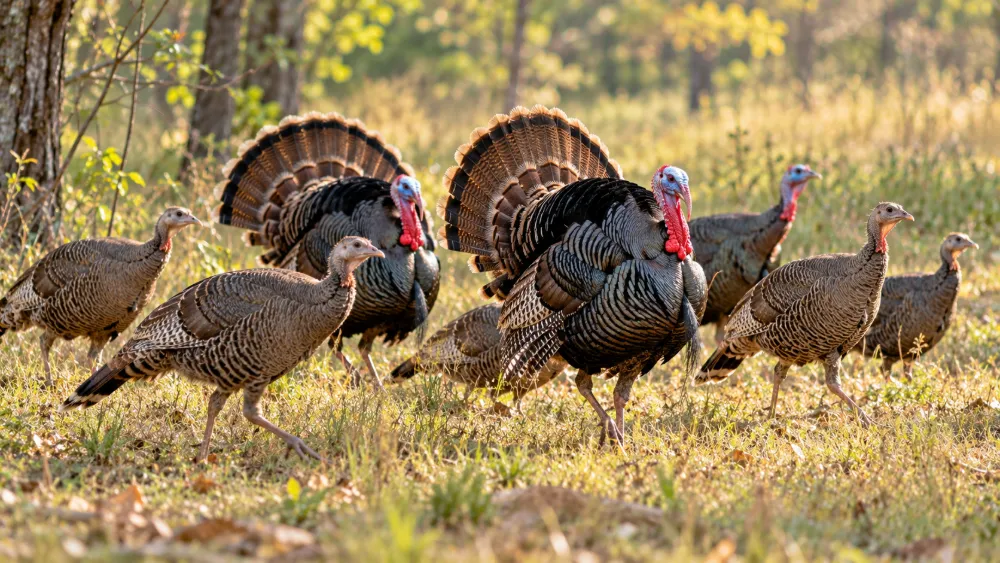
A group of turkeys is traditionally called a rafter.
However, flock is the more common everyday and wildlife-biology term.
| Term | Meaning | When You Are Most Likely to See It |
|---|---|---|
| Rafter | Traditional collective noun for turkeys | Trivia, vocabulary lists and discussions of animal group names |
| Flock | General group of turkeys | Everyday English and wildlife biology |
| Gang | Informal term sometimes used for a group, especially young males | Casual writing rather than formal terminology |
| Brood | A hen and her young | Reproduction and chick-rearing contexts |
Why Is a Group of Turkeys Called a Rafter?
The traditional answer to this question is “a rafter of turkeys.” Dictionary references record rafter as a collective noun meaning a flock, especially a flock of turkeys.
The exact historical reason the word became associated with turkeys is less certain.
You may see claims that it comes from turkeys sitting on the wooden rafters of barns or from wild turkeys roosting together high in trees. Those explanations sound plausible because wild turkeys really do roost above the ground, but the precise origin of the collective noun is not firmly established.
It is therefore safer to say that rafter is a traditional English collective noun whose exact origin is uncertain rather than presenting a colorful origin story as proven fact.
Is It a Rafter of Turkeys or a Flock of Turkeys?
Both expressions are acceptable.
If you are answering a trivia question asking for the special collective noun for turkeys, rafter is probably the expected answer.
If you are describing real birds in a field, flock is usually the more natural word.
For example:
“A rafter of turkeys” is a traditional collective-noun expression.
“A flock of wild turkeys crossed the field” sounds completely natural in everyday wildlife writing.
Professional wildlife sources frequently use flock. Cornell Lab of Ornithology describes wild turkeys forming all-male flocks, family groups and larger flocks, while the National Wild Turkey Federation regularly discusses winter flocks, hen flocks and gobbler flocks.
So flock is not a less correct answer. It is simply the normal biological and everyday term rather than the specialized collective noun.
Do Wild Turkeys Actually Live in Groups?
Yes. Wild turkeys are highly social birds for much of the year.
The makeup of a turkey flock changes with age, sex and season.
During fall and winter, turkeys commonly gather into larger groups. The National Wild Turkey Federation notes that males and females often form separate winter flocks, and the birds establish social dominance relationships within these groups.
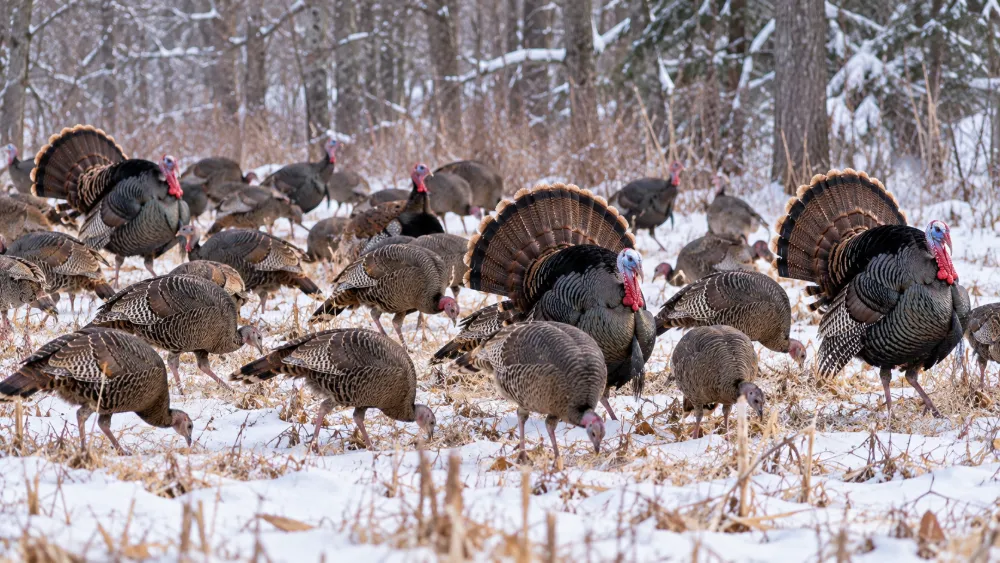
Large winter groups can help turkeys locate food and may provide advantages from having more birds watching for danger.
As spring approaches, flock structure changes again as breeding activity increases.
What Is a Group of Male Turkeys Called?
Adult male wild turkeys are commonly called gobblers or toms.
Outside the breeding season, males commonly form all-male flocks.
Young males are known as jakes. Wildlife writers sometimes informally describe groups of young males as “jake gangs,” but flock remains the straightforward general term.
Calling every male turkey group a “gang” is therefore unnecessary. It is more of an informal expression than a distinct scientific category.
What Is a Group of Female Turkeys Called?
An adult female turkey is called a hen.
Female turkeys commonly travel in hen flocks, particularly outside the breeding and nesting period.
Females with young may also join other hens and their offspring, creating larger family groups.
Cornell Lab of Ornithology notes that growing chicks can gather into groups containing several hens and their broods.
What Is a Group of Baby Turkeys Called?
A young turkey is called a poult.
A hen together with her young can be described as a brood.
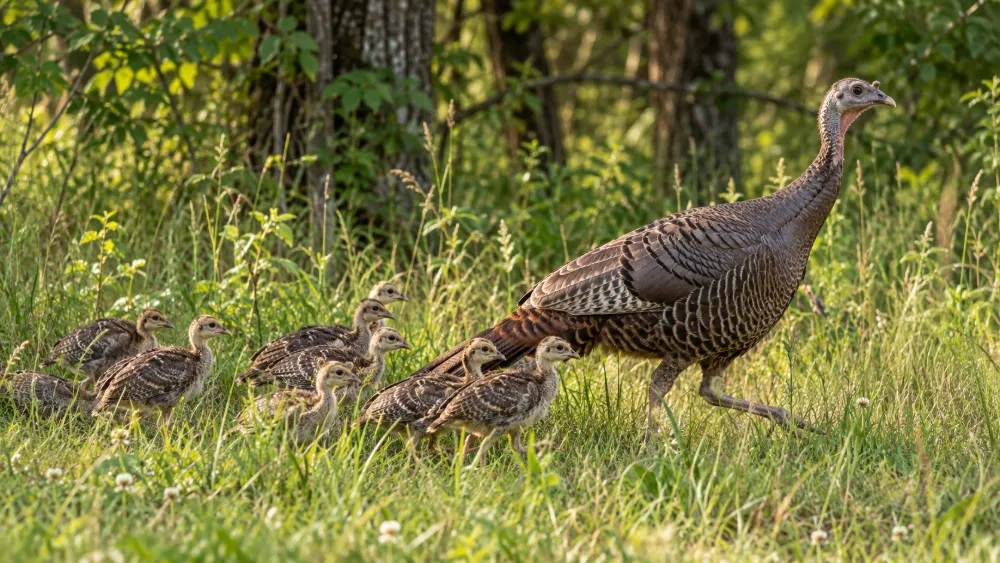
Poults leave the nest shortly after hatching and follow their mother while learning where to find food and how to respond to danger.
As the young grow, family groups can merge with other hens and poults to form larger flocks.
How Many Turkeys Are in a Flock?
There is no fixed number.
A flock may contain only a few birds or, under the right seasonal conditions, many dozens of turkeys.
The National Wild Turkey Federation reports that winter flocks can become particularly large. In some regions, winter gatherings may even number in the hundreds.
Flock size depends on factors such as:
season;
sex and age of the birds;
food availability;
habitat;
roosting locations;
and local turkey population density.
Why Do Turkeys Form Flocks?
Living in groups provides several advantages.
During winter, turkeys can concentrate around productive feeding and roosting areas. More birds also means more individuals capable of watching for potential predators.
Flocks have an important social function as well.
Wild turkeys maintain dominance hierarchies, commonly called pecking orders. The composition of male and female groups changes during the year as birds establish social rank, enter the breeding season, nest and raise young.
This means a flock is not simply a random collection of birds standing near one another. Turkey social groups can have complex relationships and seasonal structure.
Are Collective Animal Names Scientific Terms?
Usually not.
Words such as rafter, murder, flamboyance and many other colorful collective nouns belong mainly to the English language rather than biological classification.
A wildlife biologist studying turkeys is far more likely to write about a flock than to repeatedly call the birds a rafter.
That does not make traditional collective nouns wrong. They are simply linguistic names rather than formal taxonomic terms.
FAQ
What do you call a group of turkeys?
A group of turkeys can be called a rafter or a flock. Rafter is the traditional turkey-specific collective noun, while flock is the normal everyday and biological term.
Is a group of turkeys called a rafter?
Yes. Dictionaries record rafter as a collective noun for a flock of turkeys.
Is a flock of turkeys correct?
Yes. In fact, flock is the term commonly used by bird and wildlife organizations when describing real groups of wild turkeys.
Is a group of turkeys called a gang?
Gang is sometimes used informally, particularly for groups of young male turkeys, but it is less universal than flock and less established as the traditional collective noun than rafter.
What is a group of baby turkeys called?
Baby turkeys are called poults. A group of young poults being raised by a hen can be described as a brood.
What is a male turkey called?
An adult male is commonly called a tom or gobbler. A young male is called a jake.
What is a female turkey called?
An adult female turkey is called a hen. A young female is sometimes called a jenny.
Final Answer
The traditional collective noun for a group of turkeys is a rafter of turkeys.
But if you see wild turkeys feeding, walking or roosting together, calling them a flock of turkeys is equally correct—and is actually the terminology most commonly used in wildlife biology.
Think of it this way: “rafter” is the fun vocabulary answer; “flock” is the everyday wildlife answer.
Related Animal Group Names
Sources and Further Reading
```