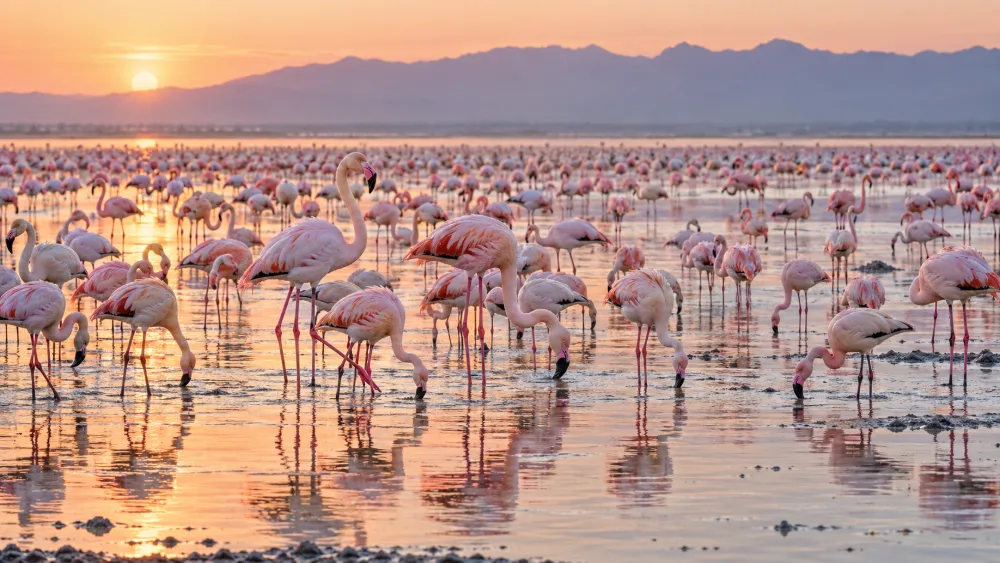
A group of flamingos is famously called a flamboyance.
It is one of the most memorable collective animal names in English, and it seems especially appropriate for birds known for vivid pink plumage, long curved necks and spectacular group displays.
But flamboyance is not the only word you can use. Flamingos can also be described as a flock, colony or stand depending on the context. In scientific and wildlife writing, flock and colony are often much more practical than the colorful trivia term.
Quick Answer: What Is a Group of Flamingos Called?
The best-known collective noun for a group of flamingos is a flamboyance of flamingos.
Other terms you may encounter include:
| Term | Meaning | Typical Use |
|---|---|---|
| Flamboyance | Special collective noun for flamingos | Trivia, vocabulary and popular writing |
| Flock | A group of flamingos together | Everyday and scientific wildlife writing |
| Colony | A large social or breeding group | Breeding and ecological contexts |
| Stand | Traditional alternative collective noun | Animal group-name lists |
| Pat | Less common alternative term | Collective-noun lists |
Why Is a Group of Flamingos Called a Flamboyance?
The word flamboyance normally means showiness, boldness or an extravagant display.
That makes it feel almost perfectly designed for flamingos.
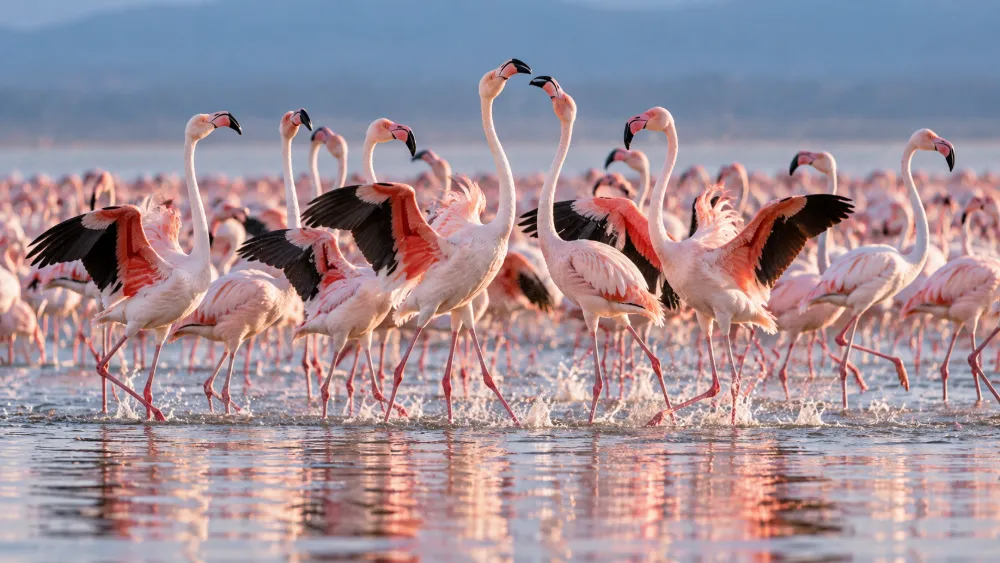
Adult flamingos can display intense pink, coral or reddish plumage, and large groups may perform synchronized movements during courtship. Hundreds or thousands of birds moving together can create an extremely dramatic sight.
However, the exact historical origin of the flamingo collective noun is not well documented enough to confidently say that one particular person invented it for one particular reason.
It is better to say that flamboyance is an established collective noun that also happens to fit the birds' striking appearance remarkably well.
Is “A Flock of Flamingos” Correct?
Yes. In real wildlife writing, flock may actually be the more useful word.
Flamingos are birds, and groups of birds are naturally described as flocks.
Wildlife organizations routinely write about flamingo flocks when discussing feeding, movement, breeding and social behavior.
So these two sentences are both correct:
“A flamboyance of flamingos covered the lake.”
“A flock of flamingos gathered to feed.”
The first emphasizes the special collective noun. The second sounds more natural in biological or everyday description.
What Is a Flamingo Colony?
Colony is especially useful when flamingos gather to breed.
Flamingos are among the most social birds, and breeding colonies can contain very large numbers of individuals.
Within a colony, birds build nests, form pairs, incubate eggs and raise chicks in close proximity to many other flamingos.
That does not mean every bird interacts closely with every other member of the colony. The word simply describes the large shared breeding aggregation.
Do Flamingos Really Live in Large Groups?
Yes.
Unlike giant pandas, which are mostly solitary, flamingos are genuinely highly social animals.
Some flamingo flocks contain thousands of birds.
Living in large groups is important for several parts of their life cycle, especially courtship and breeding.
Why Do Flamingos Perform Group Displays?
Flamingo courtship can be spectacularly synchronized.
Large numbers of adults may stand tall, repeatedly turn their heads, march together and open their wings in coordinated displays.
These behaviors help stimulate and synchronize breeding activity within the colony.
Smithsonian's National Zoo notes that courtship displays may involve thousands of birds moving together and appear to help bring members of the colony into reproductive readiness at approximately the same time.
This is one reason the word flamboyance seems so fitting: flamingos do not merely stand beside one another—they can participate in striking coordinated displays.
How Big Can a Flamingo Flock Get?
Flamingo group size varies enormously.
A small flock may contain only a modest number of birds, while favorable wetlands can attract thousands.
Some species have historically formed breeding gatherings numbering in the hundreds of thousands or more.
The exact number depends on:
species;
available food;
rainfall;
water depth;
salinity;
nesting conditions;
and local population size.
Flamingos may also move between wetlands when environmental conditions change.
What Is a Group of Baby Flamingos Called?
A baby flamingo is called a chick.
When many flamingo chicks gather together, the group is called a creche.
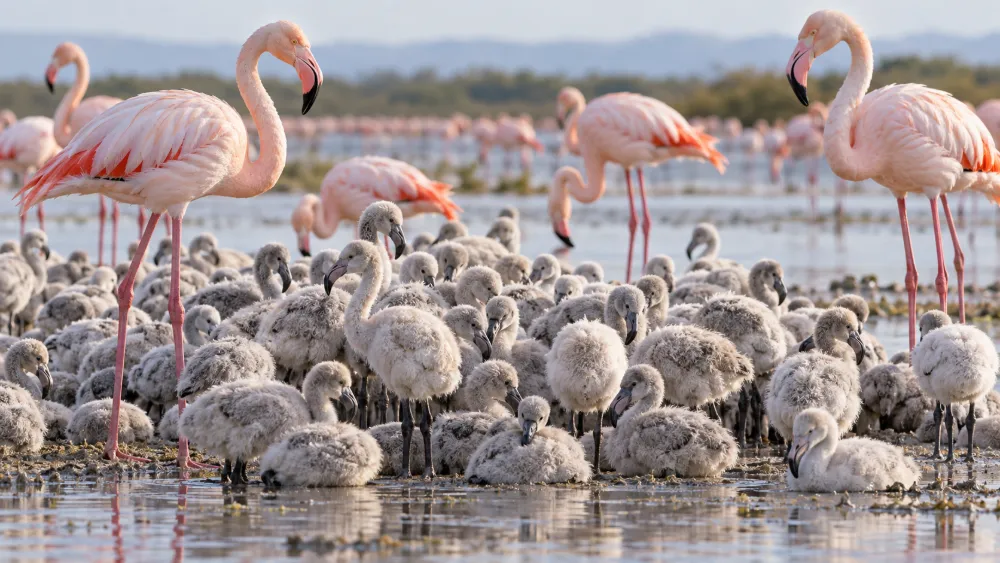
A creche can contain a remarkable number of young birds.
The chicks gather together while their parents move away to feed. Adults can later locate their own young among enormous numbers of similar-looking chicks partly through individual vocal recognition.
The parents, rather than unrelated adults, continue to provide the chick's food.
Are Baby Flamingos Pink?
No.
Flamingo chicks hatch with pale white or gray down rather than the vivid pink plumage of adults.
The pink color develops later as pigments from their diet accumulate in the feathers.
Foods consumed by flamingos contain carotenoid pigments, which contribute to the familiar pink, orange and reddish coloration.
This means a flamingo does not hatch looking like a miniature bright-pink adult.
Why Do Flamingos Stand So Close Together?
Flamingos naturally tolerate high social densities.
Concentrated food sources, suitable shallow water and limited nesting areas can all bring many birds into the same location.
Breeding also depends on social stimulation, making the presence of other flamingos especially important during courtship.
In managed populations, animal-care specialists also pay close attention to group size because flamingos are strongly social birds.
Is a Group of Flamingos Called a Stand?
Yes, stand is one of the alternative collective nouns recorded for flamingos.
The name probably feels intuitive because large numbers of flamingos are often seen standing together in shallow water on their extremely long legs.
However, stand is much less familiar than flamboyance and less generally useful than flock.
If someone asks the trivia question “What is a group of flamingos called?”, flamboyance remains the expected answer.
Is a Group of Flamingos Called a Colony?
Yes, especially when discussing a breeding population.
For example, wildlife researchers may describe a large nesting site as a flamingo breeding colony.
This is not merely a fanciful collective noun. Colony has a real ecological use when birds gather together to reproduce.
Is a Group of Flamingos Called a Pat?
Pat is another collective noun that appears in references for groups of flamingos.
It is far less common than flamboyance, flock or colony.
For a modern informational article, there is little reason to use pat unless you are specifically discussing unusual collective nouns.
How Many Flamingo Species Are There?
There are six living flamingo species:
greater flamingo;
lesser flamingo;
American flamingo;
Chilean flamingo;
Andean flamingo;
and James's flamingo.
They live in different regions of the world, but all share the highly specialized body structure associated with flamingos: long legs, long necks and filter-feeding bills.
Do All Flamingos Form Flamboyances?
All flamingo species are social, but group size varies enormously.
A few flamingos standing together can still technically be described using a collective noun, while spectacular wild colonies may contain thousands of birds.
There is no minimum number required before a group suddenly becomes a “flamboyance.”
The word is linguistic rather than a scientific category based on flock size.
Flamboyance vs. Flock vs. Colony
The easiest way to remember the terms is:
Flamboyance = the memorable special collective noun.
Flock = the normal general term for flamingos together.
Colony = especially useful for a large breeding group.
Creche = a group of flamingo chicks.
Unlike some exotic collective nouns, these terms describe genuinely important aspects of flamingo social life.
FAQ
What do you call a group of flamingos?
A group of flamingos is famously called a flamboyance.
Why is a group of flamingos called a flamboyance?
Flamboyance means striking or showy display, which fits flamingos' vivid plumage and spectacular group behavior. The exact historical origin of the collective noun is not firmly documented.
Can you call a group of flamingos a flock?
Yes. Flock is completely correct and is commonly used in wildlife and scientific writing.
What is a flamingo colony?
A colony is a large social group, especially a breeding aggregation where many flamingos nest and reproduce in the same area.
What is a baby flamingo called?
A baby flamingo is called a chick.
What is a group of baby flamingos called?
A group of flamingo chicks is called a creche.
Are flamingos social?
Yes. Flamingos are extremely social birds and may form flocks containing thousands of individuals.
Are baby flamingos pink?
No. Chicks hatch with pale gray or white down. Their characteristic pink coloration develops later from pigments obtained through their diet.
Is a group of flamingos called a stand?
Yes. Stand is an alternative collective noun, although flamboyance is much more widely recognized.
Final Answer
A group of flamingos is called a flamboyance.
But unlike many entertaining animal collective nouns, flamingos really do spend much of their lives in large social groups.
In wildlife biology, flock is the normal general term and colony is especially useful for breeding groups.
There is even a separate word for young flamingos gathered together: creche.
So remember it this way: a flamboyance is the fun answer, a flock is the everyday answer, and a colony describes their highly social breeding life.
Related Animal Group Names
Sources Used for Fact Checking
Smithsonian's National Zoo — American Flamingo
Smithsonian's National Zoo — Why Are Flamingos Pink? And Other Flamingo Facts
Smithsonian's National Zoo — Flamingo Chick and Colony Behavior