The volcano snail, better known as the scaly-foot snail, is a deep-sea snail that lives around hydrothermal vents in the Indian Ocean. Its scientific name is Chrysomallon squamiferum. It is famous for its black iron-rich shell and armored foot, making it one of the only known animals that uses iron sulfide as part of its natural body protection.
Quick Facts About the Volcano Snail
| Feature | Details |
|---|---|
| Common names | Volcano snail, scaly-foot snail, sea pangolin |
| Scientific name | Chrysomallon squamiferum |
| Animal group | Marine gastropod mollusk |
| Size | About 3 to 4 cm across |
| Habitat | Deep-sea hydrothermal vents |
| Depth range | Roughly 2,400 to 2,800 meters below the ocean surface |
| Known range | Restricted areas of the Indian Ocean |
| Diet | Nutrition from symbiotic sulfur-oxidizing bacteria |
| Special feature | Iron-rich shell and scale-like armor on the foot |
| Conservation status | Endangered |
What Is a Volcano Snail?
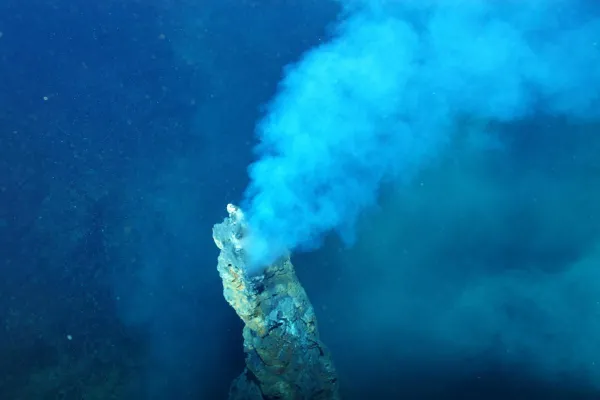
The volcano snail is not a land snail that lives near volcanoes. It is a deep-sea snail that lives around hydrothermal vents, which are underwater systems where superheated, mineral-rich water flows out from the seafloor. These vents are sometimes compared to underwater chimneys or volcano-like structures because they release hot fluids loaded with chemicals from beneath the Earth’s crust.
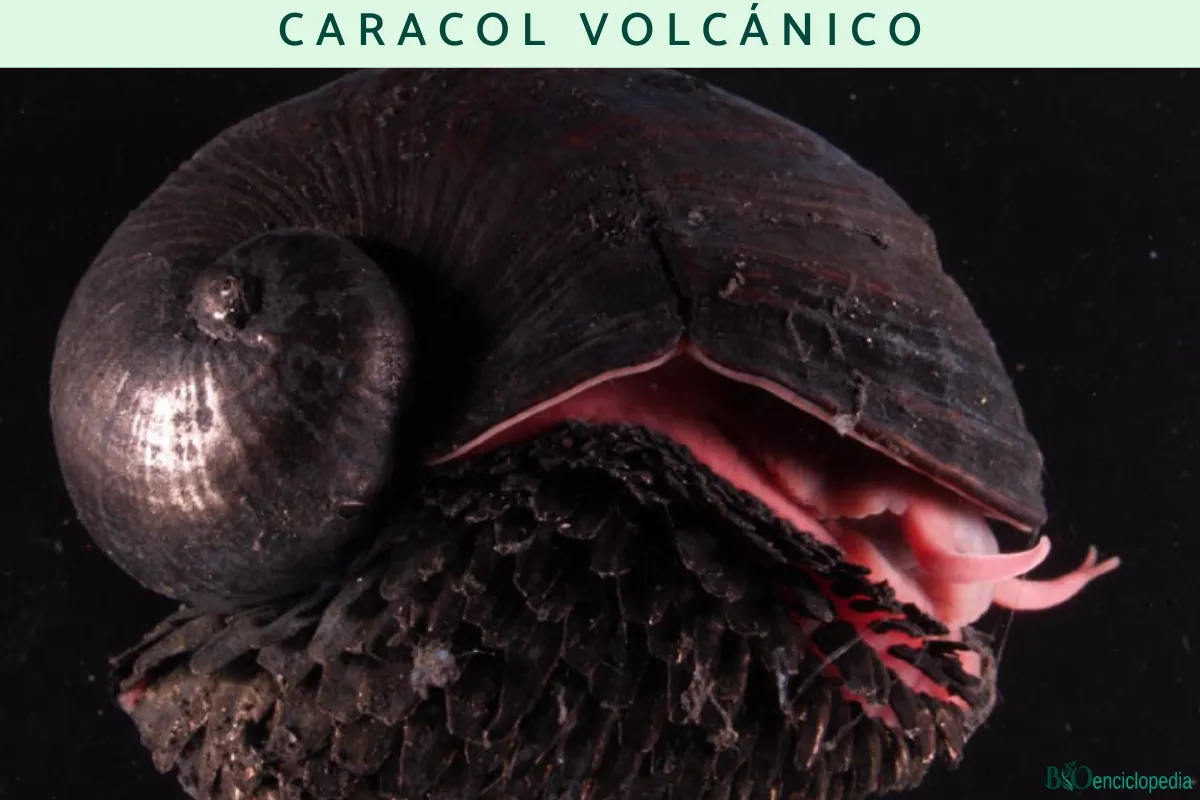
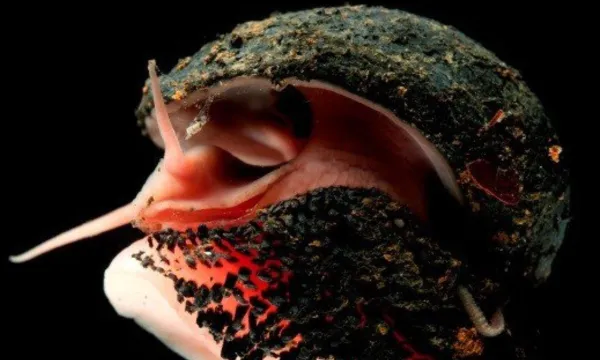
The species is also called the scaly-foot snail because the lower part of its body, known as the foot, is covered with overlapping hard plates called sclerites. These plates look like armor scales, which is why the animal is sometimes nicknamed the sea pangolin.
Among living snails, this species is extraordinary. Most snails rely mainly on their shell for protection, but the volcano snail has two defensive systems: a spiral shell and an armored foot. Even more unusually, parts of this protection contain iron sulfide, giving the snail a dark metallic appearance.
Why Is the Volcano Snail So Unique?
The volcano snail is famous because it is one of the only animals known to incorporate iron sulfide into its body armor. Its shell and foot scales are not simply black in color; they contain mineral compounds from the hydrothermal vent environment.
The shell has a layered structure. The outer layer contains iron sulfide, which helps form a tough protective surface. Beneath that is a softer organic layer that may help absorb physical impact. The inner layer is made mainly of calcium carbonate, a material commonly found in the shells of many mollusks.
This combination makes the volcano snail very different from ordinary sea snails. Its body is adapted not only to deep pressure and darkness, but also to an environment rich in sulfide, heat, and dissolved metals.
What Does the Volcano Snail Look Like?
The volcano snail has a dark, heavy-looking body. Its shell is usually black because of iron sulfide minerals. The soft body tissues can appear reddish, while the armored scales on the foot are typically dark or black. In environments with less available iron, the shell and scales may appear paler or even whitish.
The body is small, usually around 3 to 4 centimeters across, but its appearance is striking. The snail looks almost prehistoric, with a spiral shell above and a scale-covered foot below. This armored foot helps protect the soft underside of the animal from predators such as crabs and other deep-sea animals.
The foot is also the structure the snail uses for movement. Like other gastropods, it moves slowly across surfaces, but in this case those surfaces are mineral-rich rocks and vent structures deep beneath the ocean.
Where Does the Volcano Snail Live?
The volcano snail lives only in a few known hydrothermal vent fields in the Indian Ocean. It has been recorded from highly restricted deep-sea locations, including the Longqi, Solitaire, and Kairei vent fields. These sites are separated from each other and together represent a very small known habitat area.
Its habitat lies at extreme depths, generally between about 2,400 and 2,800 meters below the surface. At these depths, sunlight does not reach the seafloor. The water is cold away from the vents, pressure is enormous, and food is scarce compared with shallow marine ecosystems.
Hydrothermal vents create local islands of life in this otherwise dark environment. Hot fluids rising from below the seafloor carry sulfide, iron, and other chemicals. Many organisms in these ecosystems depend on chemical energy rather than sunlight.
How Does the Volcano Snail Survive in Hydrothermal Vents?
The volcano snail survives by using the chemistry of its environment. Hydrothermal vents are rich in sulfide, a compound that can be toxic to many animals. However, this snail has evolved a close relationship with bacteria that can use sulfide as an energy source.
The minerals in the vent water also help form the snail’s unusual armor. Iron ions from the environment are incorporated into the shell and foot scales, creating the iron-rich outer surfaces that make this species so famous.
This means the volcano snail is not merely surviving near vents; it is physically shaped by the vent environment. Its armor, feeding system, and lifestyle are all connected to the chemistry of the deep sea.
What Does the Volcano Snail Eat?
The volcano snail does not feed like a typical snail. Most snails use a rasping tongue-like structure called a radula to scrape algae, plant matter, or organic material. In the volcano snail, the radula and parts of the digestive system are reduced because it does not depend on scraping food from surfaces.
Instead, it receives nutrition from symbiotic bacteria that live inside a specialized part of its body, especially in the esophageal region. These bacteria are sulfur-oxidizing bacteria, meaning they can use sulfur compounds from the vent environment to produce energy-rich molecules.
This relationship is a form of symbiosis. The snail provides the bacteria with a protected place to live and access to chemical compounds from the vent. In return, the bacteria produce nutrients that help feed the snail. This is part of a broader deep-sea process known as chemosynthesis, where life is supported by chemical energy rather than sunlight.
Why Does the Volcano Snail Have Iron Armor?
The iron-rich armor likely helps protect the snail from predators and physical damage. Hydrothermal vent ecosystems may seem remote, but they still contain predators such as crabs. A soft-bodied snail would be vulnerable, so extra protection is extremely useful.
The overlapping sclerites on the foot act like a shield over the lower body. These scales may make it harder for predators to bite or tear into the snail. The shell adds another layer of defense from above.
Scientists are also interested in this armor because it shows how animals can use minerals from their environment in surprising ways. The volcano snail is often discussed as one of the most unusual examples of biomineralization in the animal kingdom.
How Does the Volcano Snail Reproduce?
The volcano snail is believed to be a simultaneous hermaphrodite, meaning each individual has both male and female reproductive organs. This can be useful in a deep-sea environment where populations may be scattered and finding mates may be difficult.
After fertilization, the snail produces eggs that do not float freely in the water column in the same way as many marine larvae. The early life stages of this species are still not fully understood, partly because it lives in deep, difficult-to-reach habitats.
Young volcano snails look different from adults. Juveniles are very small, around 1 to 2 millimeters, and have fewer foot scales. Their operculum, a hard structure that can close the shell opening in many snails, is relatively larger when young and becomes proportionally smaller as the snail grows.
Is the Volcano Snail Endangered?
Yes. The volcano snail is considered endangered because its known habitat is extremely limited and vulnerable. It lives only in a few hydrothermal vent fields, so damage to those sites could have a serious impact on the entire species.
The biggest concern is deep-sea mining. Hydrothermal vent areas can contain valuable metal-rich mineral deposits, including polymetallic sulfides. These minerals are attractive for industrial extraction, but mining could destroy or disturb the fragile habitats that the volcano snail and many other vent animals depend on.
Because the species has such a narrow known range, even localized habitat destruction could be dangerous. Protecting hydrothermal vent ecosystems is therefore essential for the survival of this rare snail.
Why Is the Volcano Snail Important?
The volcano snail is important because it shows how life can adapt to extreme environments. It lives in darkness, under intense pressure, near chemically rich hot vents, and depends on bacteria rather than ordinary food sources.
It also gives scientists clues about the evolution of animal armor. Scale-like structures on the foot were more common in some ancient mollusk relatives, but they are absent in nearly all modern snails. The volcano snail is a rare living example of a snail with this kind of external armor.
Its biology may also inspire research in materials science. The layered shell and iron-reinforced scales show how natural structures can combine hardness, flexibility, and impact resistance.
Interesting Facts About the Volcano Snail
The volcano snail is also called the scaly-foot snail because its foot is covered in armor-like scales.
It is sometimes nicknamed the sea pangolin because of its overlapping protective plates.
Its shell and foot scales contain iron sulfide, making it one of the most unusual armored animals in the ocean.
It lives at extreme depths where sunlight never reaches.
It does not eat in the usual snail-like way, but depends on symbiotic bacteria for nutrition.
Its habitat is limited to a few known hydrothermal vent fields in the Indian Ocean.
The species is endangered mainly because of the potential threat of deep-sea mining.
Its body may appear darker or lighter depending on the mineral composition of the vent environment.
Volcano Snail FAQs
Is the volcano snail a real animal?
Yes. The volcano snail, or scaly-foot snail, is a real deep-sea gastropod mollusk. It lives around hydrothermal vents in the Indian Ocean and is famous for its iron-rich shell and armored foot.
Why is it called the volcano snail?
It is called the volcano snail because it lives near hydrothermal vents, which are underwater structures that release hot, mineral-rich fluids from beneath the seafloor. These vents are sometimes compared to underwater volcanic systems.
Is the volcano snail made of iron?
The entire animal is not made of iron, but parts of its shell and foot scales contain iron sulfide. This gives the snail a dark, metallic-looking armor that is unique among living snails.
What does the volcano snail eat?
The volcano snail receives nutrition from symbiotic sulfur-oxidizing bacteria living inside its body. These bacteria use chemical energy from the vent environment and provide nutrients to the snail.
Where can volcano snails be found?
They are known from a few deep-sea hydrothermal vent fields in the Indian Ocean, including Longqi, Solitaire, and Kairei. Their known range is very small.
Why is the volcano snail endangered?
The volcano snail is endangered because it has a very restricted habitat and may be threatened by deep-sea mining. Mining near hydrothermal vents could damage or destroy the environments where this species lives.
Can volcano snails live in aquariums?
No. Volcano snails require extreme deep-sea conditions, including high pressure, darkness, vent chemistry, and symbiotic bacteria. These conditions are not practical to recreate in ordinary aquariums.
Why do scientists study the volcano snail?
Scientists study it because of its iron-rich armor, unusual symbiosis with bacteria, and ability to survive in one of the most extreme habitats on Earth. It is also important for understanding deep-sea biodiversity and conservation.