Fish live surrounded by water, so it seems strange to ask whether they ever get thirsty.
The answer is more complicated than a simple yes or no.
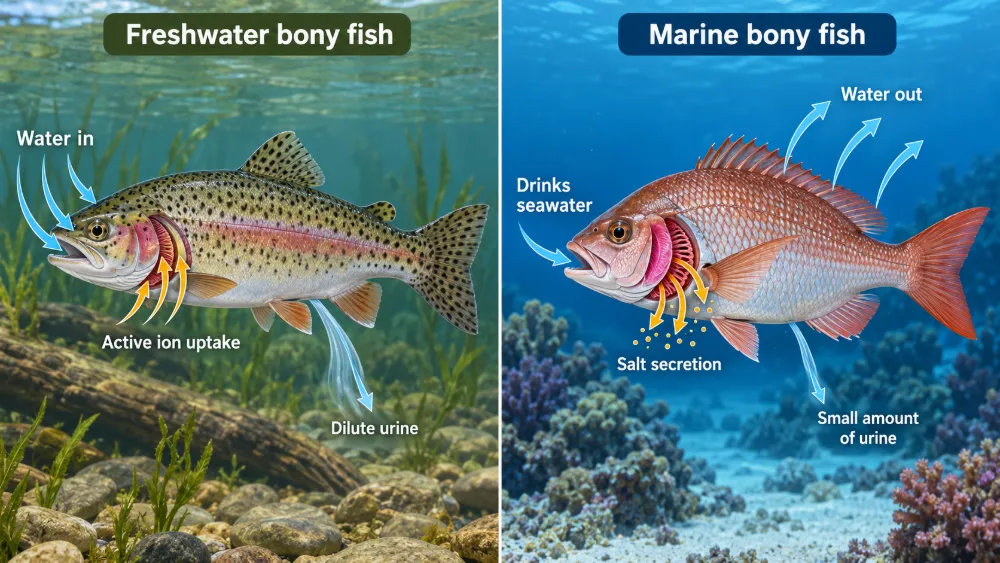
Fish need to maintain the right amount of water inside their bodies, but most do not experience drinking in exactly the same way humans do. Marine bony fish usually drink seawater regularly because they constantly lose water to their salty surroundings. Freshwater fish face the opposite problem: water naturally enters their bodies, so they generally drink very little.
This process of keeping water and dissolved salts in balance is called osmoregulation.
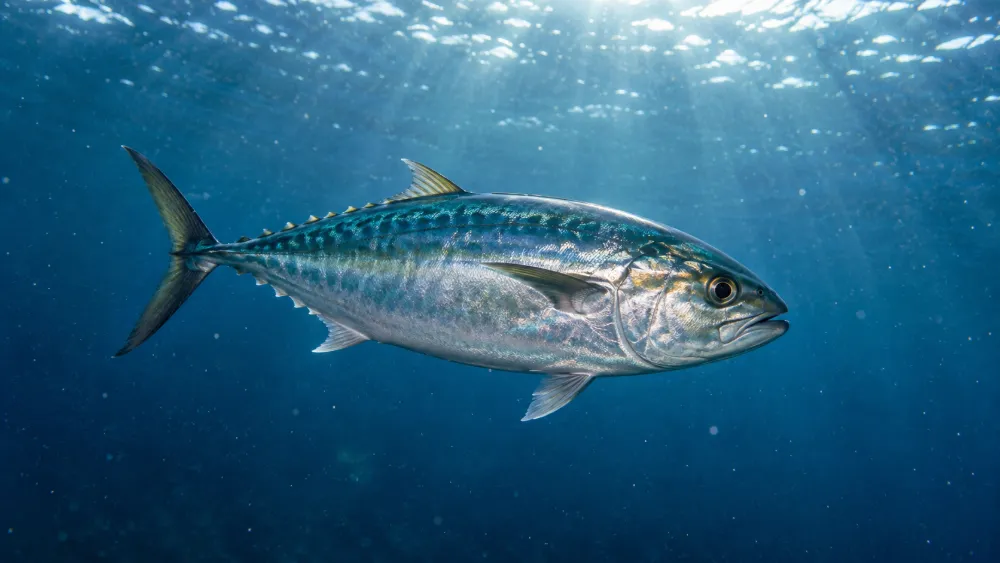
Quick Answer: Do Fish Get Thirsty?
Fish regulate water balance, but their drinking behavior is not necessarily driven by the same conscious feeling of thirst that humans experience.
In general:
Marine bony fish drink seawater regularly because water tends to leave their bodies.
Freshwater bony fish drink little or no water because water continuously enters their bodies by osmosis.
Sharks and rays use a different strategy involving urea and specialized salt-excreting organs.
Some fish that move between fresh and salt water can switch their osmoregulatory systems.
Why Would a Fish Need to Drink Water?
A fish's body fluids contain dissolved salts and other substances.
The concentration inside the fish is usually different from the concentration of the surrounding water.
Water naturally moves across thin biological membranes from an area with a higher concentration of water toward an area with a lower concentration. This movement is called osmosis.
Fish gills are particularly important because their thin surfaces allow oxygen exchange—but they also allow water and ions to move between the fish and its environment.
This creates opposite problems for freshwater and marine fish.
Do Saltwater Fish Drink Water?
Yes. Most marine bony fish drink seawater.
Ocean water contains far more dissolved salts than the body fluids of a typical marine teleost.
As a result, water tends to move out of the fish's body through osmosis.
If the fish did nothing, it would gradually become dehydrated.
To compensate, marine bony fish swallow seawater.
Their bodies then have to solve a second problem: drinking seawater brings in a large amount of salt.
Marine fish remove much of this excess salt through specialized ion-transporting cells in their gills. Their kidneys also help regulate ions while conserving as much water as possible.
In simple terms:
water tends to leave a marine fish;
the fish drinks seawater to replace it;
and the gills remove much of the extra salt.
Do Freshwater Fish Drink Water?
Usually, very little.
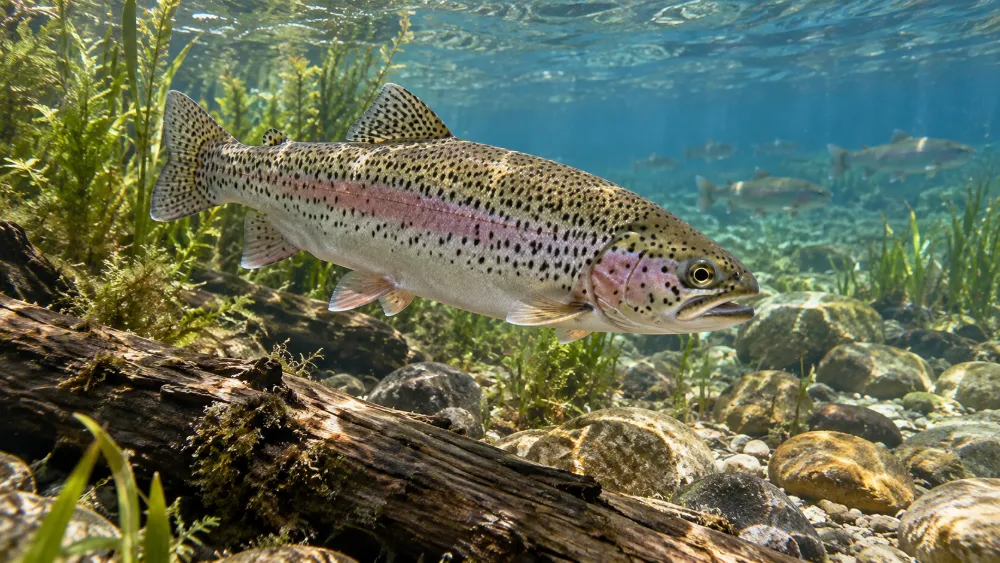
A freshwater fish has body fluids that contain more dissolved salts than the water around it.
Water therefore tends to move into the fish through its gills and other permeable surfaces.
Instead of struggling to obtain enough water, freshwater fish generally struggle to avoid accumulating too much of it.
They deal with the problem by:
drinking little water;
producing large amounts of very dilute urine;
and actively taking important ions such as sodium and chloride from the surrounding water through the gills.
This is almost the exact opposite of what happens in most marine bony fish.
Freshwater vs. Saltwater Fish
| Feature | Freshwater Bony Fish | Marine Bony Fish |
|---|---|---|
| Water movement | Water tends to enter the body | Water tends to leave the body |
| Do they drink? | Usually very little | Usually drink seawater regularly |
| Main salt problem | Losing important ions | Taking in excess salt |
| Gill function | Actively absorbs ions | Actively excretes excess ions |
| Urine | Large amount, dilute | Smaller amount, conserving water |
Do Fish Feel Thirst Like Humans?
This is where the question becomes especially interesting.
Humans become thirsty when the brain detects changes in body-fluid concentration or volume. That sensation motivates us to search for water, pick it up and drink.
Aquatic fish already have water continuously entering their mouths and flowing across their gills.
Research on teleost fish suggests that drinking can therefore be controlled differently.
Studies of eels and other fish have found that hormones such as angiotensin II regulate drinking behavior.
But rather than necessarily creating the same forebrain-driven thirst sensation seen in terrestrial mammals, the hormone can trigger swallowing mechanisms in the fish's hindbrain.
In other words, a fish can increase drinking without first needing to search for a water source.
So asking whether a fish “feels thirsty” exactly as a person does may be the wrong biological question.
The important point is that fish have sophisticated physiological systems that detect and correct water imbalance.
Do Fish Swallow Water While Breathing?
Water constantly enters the mouth of most fish as part of respiration.
The fish moves that water across its gills, where oxygen diffuses into the blood and carbon dioxide moves out.
But water passing through the mouth and across the gills is not automatically the same thing as drinking it.
To actually drink, water must be swallowed into the digestive tract.
Marine teleosts do this regularly as part of maintaining body-water balance.
How Can Fish Drink Saltwater Without Getting Dehydrated?
Humans cannot survive by drinking seawater because our kidneys cannot eliminate the salt without losing more water than the seawater provides.
Marine bony fish have a different system.
They absorb water through the digestive tract while specialized cells in their gills actively transport sodium and chloride back into the surrounding ocean.
The kidneys handle other ions while producing relatively small amounts of urine.
This combination allows the fish to gain useful water without allowing salt concentration inside its body to rise uncontrollably.
What About Sharks?
Sharks and rays are not bony fish. They belong to a group called the elasmobranchs.
Their solution to seawater balance is very different.
Sharks retain high concentrations of urea in their body fluids. Another compound, trimethylamine oxide (TMAO), helps protect their proteins from the effects of that urea.
This makes the overall concentration of their body fluids closer to that of seawater than it is in most marine bony fish.
As a result, sharks do not face exactly the same constant water-loss problem.
They also possess a specialized rectal gland that helps remove excess salt.
Some sharks and other elasmobranchs do drink under certain conditions, especially when dehydrated, but their water-balance strategy should not be treated as identical to that of marine teleosts.
What About Salmon?
Salmon demonstrate how adaptable fish physiology can be.
They spend different parts of their lives in freshwater and saltwater.
In freshwater, they must deal with water entering their bodies and salts diffusing out.
After moving into the ocean, the direction of the problem reverses.
Their gills, kidneys, hormones and other tissues change their activity so the fish can switch from a freshwater osmoregulatory strategy to a marine one.
Fish capable of tolerating a wide range of salinity are called euryhaline.
Can a Freshwater Fish Survive in Saltwater?
Most cannot.
The physiological systems of a strictly freshwater species are adapted to preventing excess water gain and conserving salts.
Placed suddenly into seawater, that same fish may lose water rapidly while absorbing too much salt.
Most strictly marine fish have the opposite problem if placed into freshwater.
Only species with the necessary physiological flexibility can tolerate major changes in salinity.
Do Fish Pee?
Yes.
The amount and concentration differ dramatically between environments.
Freshwater fish need to eliminate the excess water continuously entering their bodies, so they produce relatively large quantities of dilute urine.
Marine bony fish need to conserve water, so urine production is generally much lower.
The kidneys are therefore another important part of fish osmoregulation.
Can Fish Become Dehydrated?
Yes.
Living underwater does not make dehydration impossible.
A marine bony fish constantly risks losing water to the surrounding ocean through osmosis.
Fish moved into an unsuitable salinity can also experience severe water and electrolyte imbalance.
This is why salinity is such an important environmental factor for fish.
FAQ
Do fish get thirsty?
Fish regulate dehydration and water balance, but their drinking behavior does not necessarily involve the same conscious thirst sensation humans experience. Marine bony fish usually drink water regularly, while freshwater fish generally drink very little.
Do saltwater fish drink seawater?
Yes. Most marine bony fish drink seawater to replace water that is continuously lost from their bodies through osmosis.
Do freshwater fish drink water?
Most freshwater fish drink very little because water naturally enters their bodies through osmosis. They remove the excess by producing large amounts of dilute urine.
Why doesn't seawater kill saltwater fish?
Marine fish have specialized gill and kidney mechanisms that remove excess salts while conserving water.
Do sharks drink seawater?
Sharks regulate water differently from marine bony fish by retaining urea and using specialized salt-excreting organs. Some elasmobranchs can drink in response to dehydration, but they do not use exactly the same strategy as typical marine teleosts.
Do fish drink through their gills?
No. Water passes across the gills for respiration and ion exchange, but drinking refers to swallowing water into the digestive tract.
Do fish pee?
Yes. Freshwater fish generally produce more dilute urine, while marine bony fish conserve water and produce much less urine.
Can fish become dehydrated underwater?
Yes. Marine fish can lose body water to their salty surroundings, and any fish placed in an unsuitable salinity can suffer dangerous water and electrolyte imbalance.
Final Answer
Fish do need to regulate their body water, but they do not all “get thirsty” and drink in the same way humans do.
Most saltwater bony fish regularly drink seawater because osmosis constantly pulls water out of their bodies. They absorb the water they need and remove excess salts through their gills and kidneys.
Freshwater fish face the opposite problem. Water constantly moves into their bodies, so they usually drink very little and instead produce large amounts of dilute urine.
Research also suggests that aquatic fish can regulate drinking through hormonal and reflex pathways without needing the same water-seeking thirst mechanism used by terrestrial mammals.
So the simple answer is: fish can experience physiological dehydration, but “thirst” underwater works very differently from thirst in humans.
Related Reading
Sources Used for Fact Checking
NOAA — Respiration and Osmoregulation in Fish
Washington State University — Do Fish and Sharks Drink Water?
University of Oregon — Osmoregulation and Osmotic Balance
Georgia Tech — Animal Ion and Water Regulation
Takei et al. — Hormonal Control of Drinking Behavior in Teleost Fishes