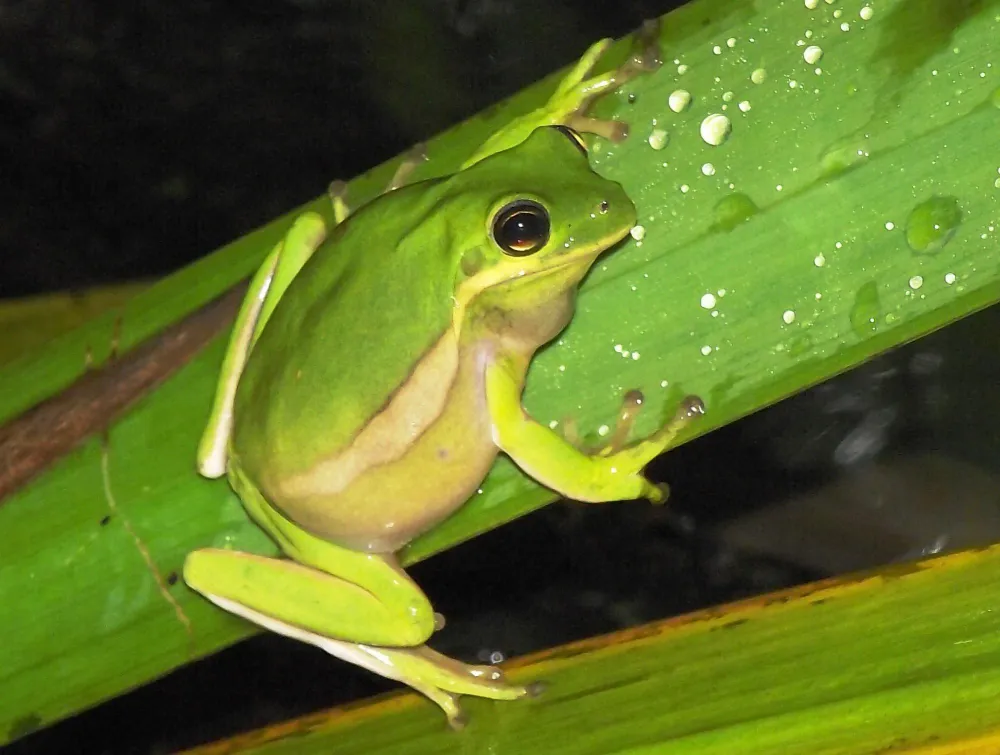
Frogs are eaten by a surprisingly wide range of predators, including snakes, birds, fish, turtles, mammals, larger frogs and aquatic insects.
But there is no single predator that eats every frog. A tiny tadpole living underwater faces a completely different set of dangers from an adult tree frog sitting several feet above the ground.
The species, size, habitat and life stage of the frog all determine what is most likely to eat it.
Quick Answer: What Animals Eat Frogs?
Common frog predators include:
snakes;
herons and other birds;
fish;
turtles;
otters and other mammals;
larger frogs;
salamanders;
crayfish;
dragonfly larvae;
and other large aquatic invertebrates.
Frog eggs and tadpoles are often especially vulnerable because they remain concentrated in ponds, streams and wetlands where aquatic predators can find them.
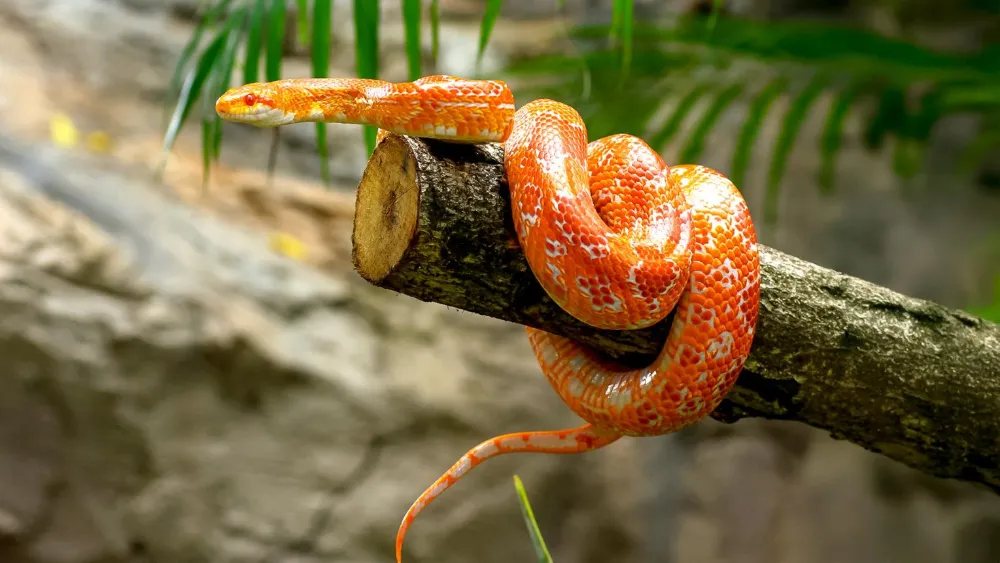
1. Snakes
Snakes are among the best-known frog predators.
Many snakes hunt around ponds, marshes, streams and wet woodland—the same environments used by amphibians.
Depending on the region, frogs may be eaten by:
watersnakes;
garter snakes;
ribbon snakes;
rat snakes;
and numerous tropical snake species.
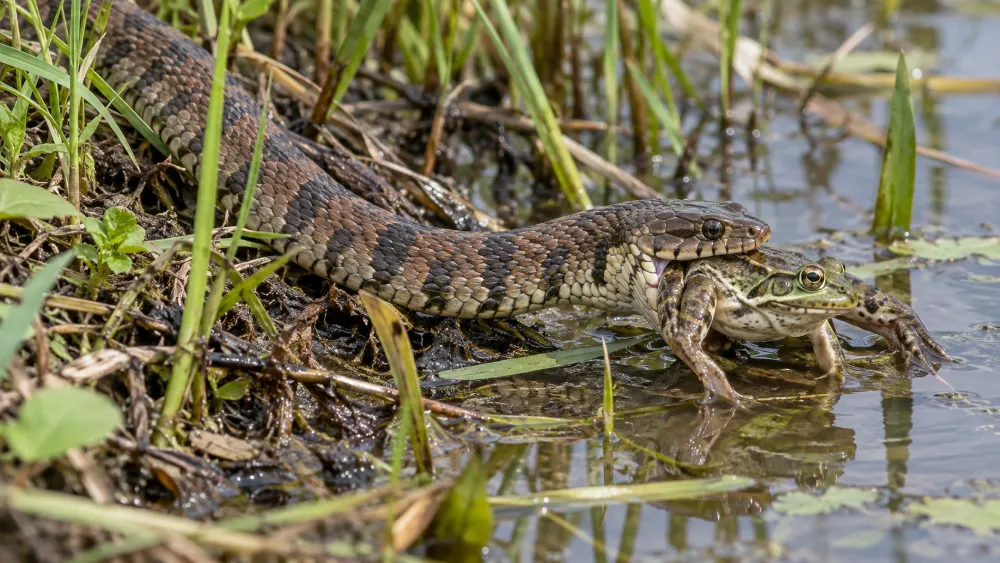
Some snakes actively search wetland margins for amphibians, while others simply take frogs when they encounter them.
Frogs defend themselves by jumping, hiding, inflating their bodies or producing unpleasant skin secretions, but those defenses do not stop every snake.
2. Herons and Other Birds
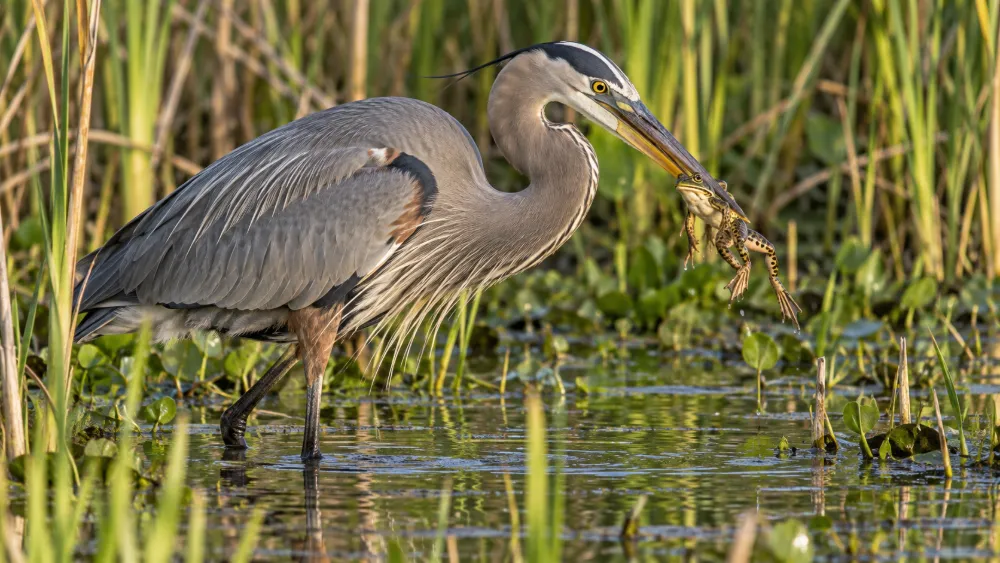
Wading birds are major predators of frogs in wetlands.
Virginia Tech specifically lists herons among animals that prey on frogs and toads.
A great blue heron may stand almost motionless in shallow water before striking rapidly with its long bill.
Other birds that may eat frogs include:
egrets;
storks;
ibises;
kingfishers;
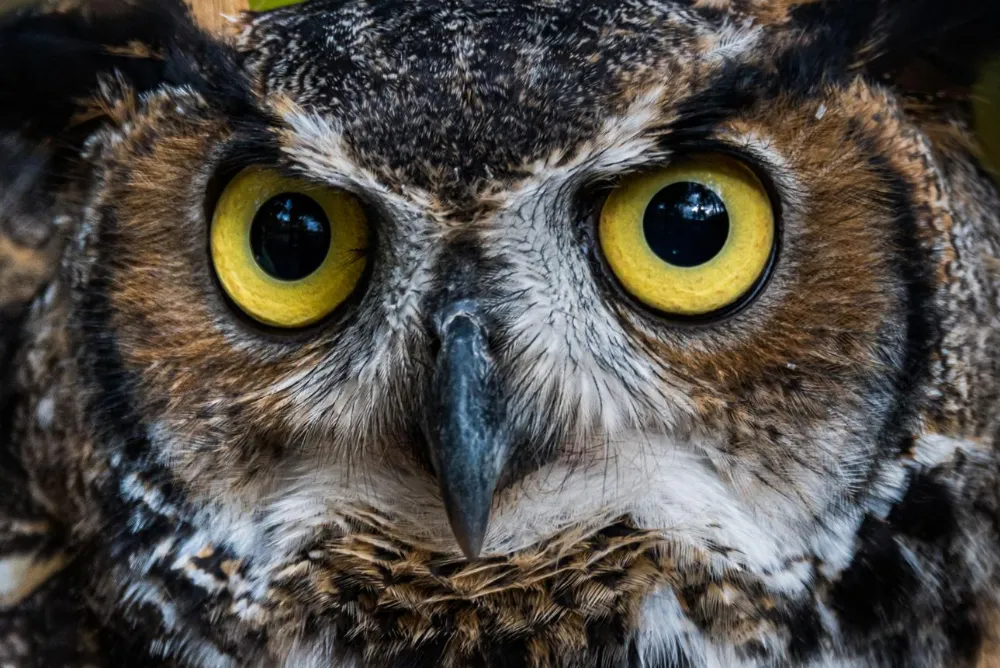
hawks;
owls;
and some crows and ravens.
Which birds matter most depends heavily on where the frog lives.
3. Fish
Fish are especially important predators of tadpoles, eggs and small frogs.
Large predatory fish may swallow amphibians that enter the water or sit near the shoreline.
Tadpoles are particularly exposed because they spend their early lives underwater.
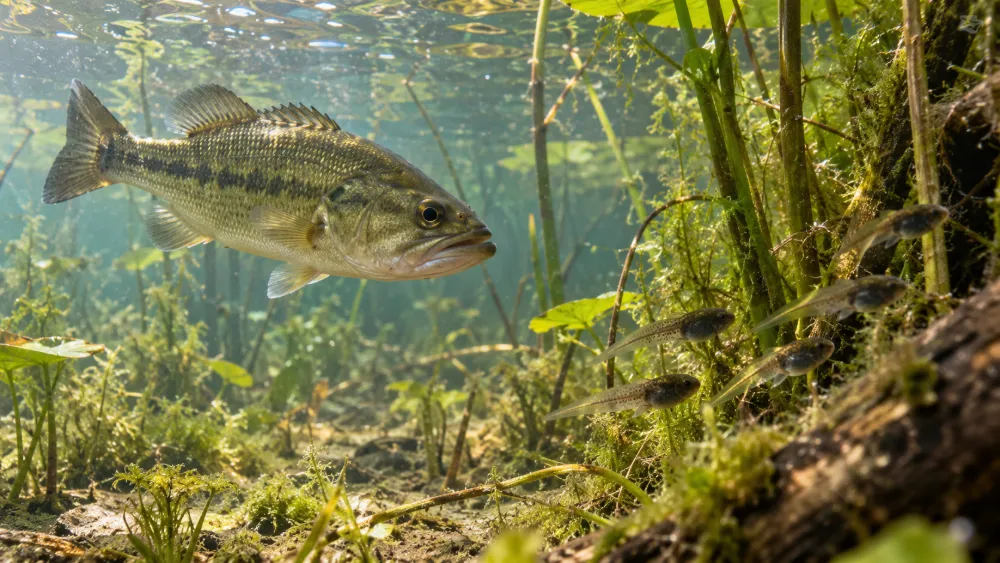
The importance of fish predation is so great that some frog species prefer to breed in temporary ponds where large predatory fish cannot survive permanently.
Tadpoles of some species can even detect chemical cues from predators and reduce their activity when danger is nearby.
4. Turtles
Freshwater turtles are another amphibian predator.
Many turtles are opportunistic omnivores and will eat animal prey that they can capture.
Small frogs, tadpoles and eggs may all be taken.
Missouri Extension includes turtles among important predators of frogs and their aquatic life stages.
A frog resting at the surface or moving through shallow water can therefore face predators from both above and below.
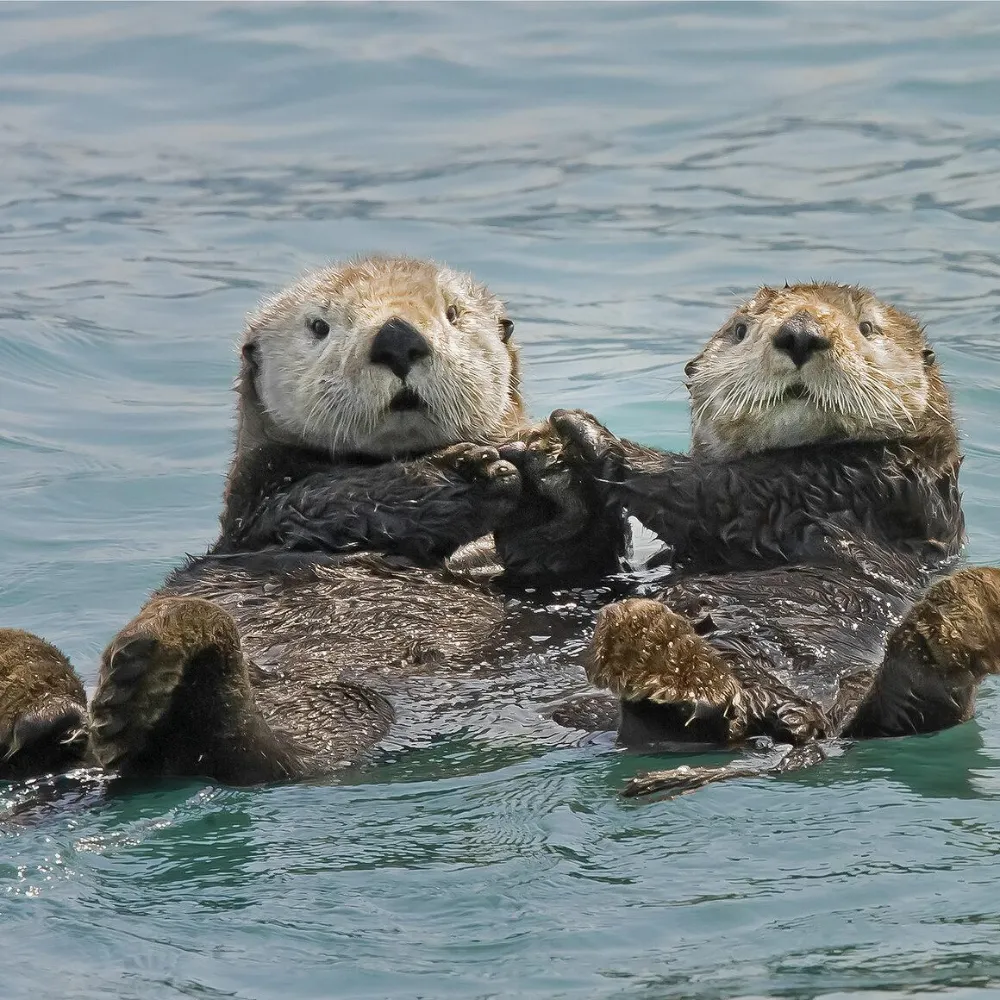
5. Mammals
Several mammals eat frogs.
Virginia Tech specifically mentions otters, while other wildlife sources document amphibians in the diets of mammals such as:
raccoons;
skunks;
mink;
shrews;
and other opportunistic carnivores.
These animals often forage around wetland margins, streams or damp forest floors where frogs are abundant.
Missouri Extension lists shrews, mink, skunks and raccoons among frog and toad predators.
6. Other Frogs
Frogs also eat other frogs.
This is particularly common among large, generalist species.
The American bullfrog (Lithobates catesbeianus) is one of the clearest examples.
USGS reports that bullfrogs consume an extremely broad variety of prey, including other frogs and amphibians, along with fish, snakes, rodents, birds and many invertebrates.
Bullfrogs can even cannibalize members of their own species when conditions allow.
So being a frog does not prevent an animal from also being a frog predator.
7. Salamanders
Predatory salamanders can eat tadpoles and young frogs.
This is especially important in streams and ponds where large aquatic salamander larvae or adults share habitat with developing amphibians.
Experiments with tailed frog tadpoles, for example, have shown that giant salamanders can consume tadpoles and that the tadpoles change their behavior in response to predator cues.
This type of predator pressure can influence when and where tadpoles feed.
8. Dragonfly Nymphs
Some of the most dangerous tadpole predators are much smaller than birds or snakes.
Dragonflies spend their juvenile stage underwater as predatory nymphs.
These insects have extendable mouthparts that can seize aquatic prey.
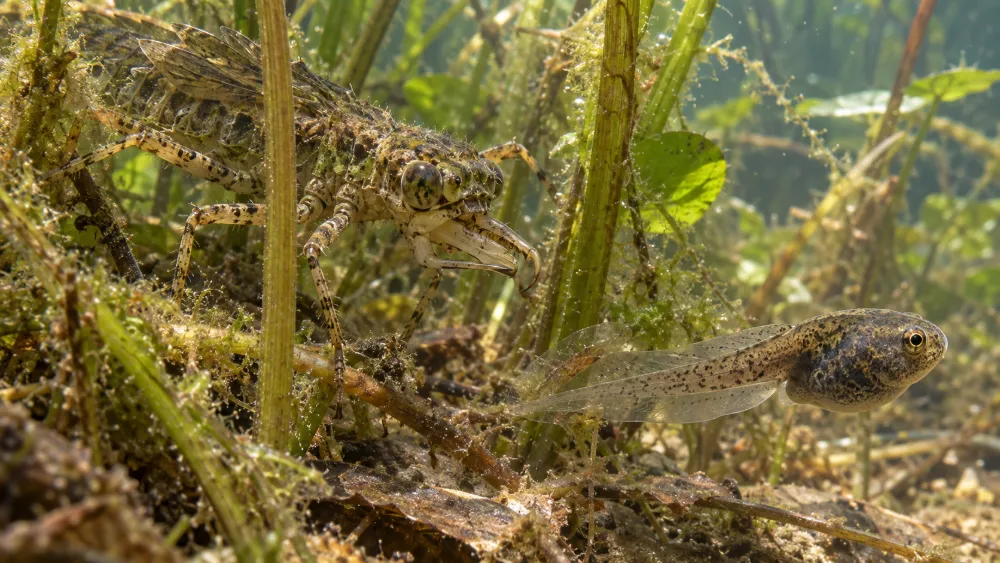
Depending on relative size, dragonfly larvae can prey on very small tadpoles and recently hatched amphibians.
For a tiny larval frog, an aquatic insect can therefore be as significant a predator as a fish.
9. Crayfish and Other Aquatic Invertebrates
Crayfish are opportunistic feeders capable of taking frog eggs, tadpoles and small amphibians.
Other aquatic invertebrate predators can include:
large diving beetle larvae;
giant water bugs;
predatory insect larvae;
and some large aquatic arthropods.
These predators matter most during the egg and tadpole stages, when frogs cannot simply jump away onto land.
10. Larger Amphibians and Opportunistic Predators
Frogs occupy the middle of many food webs.
They eat enormous numbers of smaller animals, especially insects and other invertebrates, while also providing food for larger predators.
That means almost any suitably sized opportunistic carnivore sharing the same habitat may occasionally prey on a frog.
The exact predator list therefore changes between a tropical rainforest, a North American pond, a desert oasis and a mountain stream.
What Eats Tadpoles?
Tadpoles face especially intense predation.
Common tadpole predators include:
fish;
salamanders;
turtles;
larger frogs;
crayfish;
dragonfly nymphs;
aquatic beetles;
and water birds.
A study of chorus frogs also lists larger fish, turtles, crayfish, dragonfly larvae and other frogs among predators of tadpoles and young froglets.
This helps explain why many frogs lay large numbers of eggs: only a fraction of offspring survive all the way to adulthood.
What Eats Frog Eggs?
Frog eggs are often deposited in ponds, temporary pools, streams, leaves or other moist environments.
Depending on the species and location, eggs can be eaten by:
fish;
aquatic insects;
salamanders;
crayfish;
other frogs;
and various opportunistic animals.
Some frogs protect eggs through unusual behaviors such as guarding nests, carrying eggs or placing offspring in tiny pools where large predators cannot reach them.
Do Frogs Eat Other Frogs?
Yes.
Large frogs often swallow any prey they can overpower and fit into their mouths.
American bullfrogs are particularly famous generalist predators, and USGS records other frogs among their prey.
Cannibalism also occurs in some frog species.
Size can therefore be more important than biological relationship: a small frog may simply look like prey to a much larger frog.
Do Snakes Eat Frogs?
Yes. Frogs and other amphibians are important prey for many snakes.
Species that live around wetlands and streams are especially likely to encounter frogs regularly.
Some snakes specialize heavily on amphibians, while others include them as only one part of a much broader diet.
Do Birds Eat Frogs?
Yes.
Herons are among the clearest examples, and frogs may also be consumed by egrets, storks, raptors and other opportunistic birds.
Wetland birds are especially well positioned to hunt frogs because both predator and prey concentrate around shallow water.
How Do Frogs Protect Themselves From Predators?
Frogs have evolved many defenses, including:
camouflage;
remaining motionless;
powerful jumping;
rapid swimming;
inflating the body;
hiding underground or in vegetation;
unpleasant or toxic skin secretions;
and warning coloration.
Some poison frogs use bright reds, yellows and blues to advertise chemical defenses.
But those defenses reduce predation rather than creating complete immunity. Predators differ in their tolerance and behavior.
For examples of these warning colors, see our 12 Colorful Frog Species guide.
Why Are Frogs Important in the Food Chain?
Frogs occupy an important position between smaller invertebrates and larger predators.
Adult frogs often consume insects, spiders and worms. Virginia Tech describes most adult frogs and toads as carnivorous ambush predators.
At the same time, frogs become food for snakes, birds, mammals and aquatic predators.
That makes them an important link between invertebrate prey and larger vertebrates in both aquatic and terrestrial ecosystems.
FAQ
What animals eat frogs?
Frogs are eaten by snakes, birds, fish, turtles, mammals, larger frogs, salamanders and many aquatic invertebrates.
What is a frog's main predator?
There is no single main predator for all frogs. Predator importance varies according to frog species, habitat, geographic region, size and life stage.
Do snakes eat frogs?
Yes. Many snakes prey on frogs, particularly species that forage around streams, ponds and wetlands.
Do birds eat frogs?
Yes. Herons, egrets and several other birds regularly capture frogs.
Do fish eat frogs?
Yes. Predatory fish may eat small frogs and are particularly important predators of tadpoles.
Do frogs eat frogs?
Yes. Large species such as American bullfrogs may eat smaller frogs, and cannibalism occurs in some species.
What eats tadpoles?
Common tadpole predators include fish, salamanders, turtles, larger frogs, crayfish, dragonfly larvae and aquatic insects.
What eats frog eggs?
Fish, salamanders, aquatic insects, crayfish, other amphibians and various opportunistic predators may consume frog eggs.
Are poisonous frogs safe from predators?
No defense is perfect. Toxic skin and warning colors can deter many predators, but they do not mean a frog can never be attacked or eaten.
Final Answer
Frogs are an important food source for a wide variety of animals.
Adult frogs are commonly hunted by snakes, herons and other birds, mammals, turtles, fish and even larger frogs.
Tadpoles face an additional group of underwater predators including fish, salamanders, crayfish, dragonfly nymphs and aquatic insects, while frog eggs may be eaten before they even hatch.
There is therefore no single answer to “What eats frogs?” The predator changes with the frog's size, species, habitat and stage of life.
That vulnerability is also what makes frogs so important ecologically: they are predators of insects and other small animals while simultaneously transferring energy upward to larger wildlife.
Sources Used for Fact Checking
Virginia Cooperative Extension / Virginia Tech — Frog Biodiversity and Conservation
U.S. Geological Survey — American Bullfrog Species Profile
University of Missouri Extension — Missouri's Frogs and Toads
Macalester College — Chorus Frog Natural History
Smithsonian's National Zoo — Poison Frogs