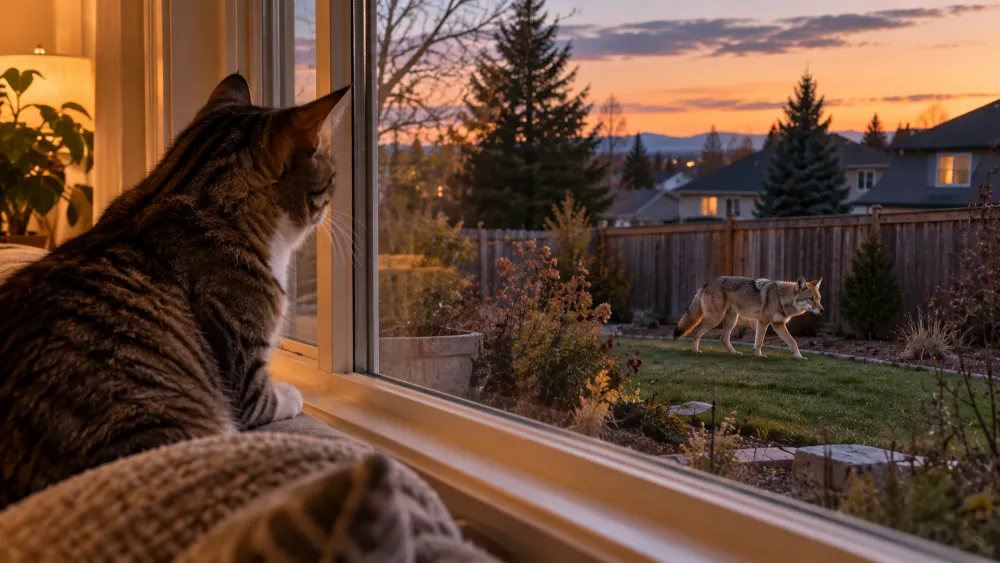
Domestic cats are predators themselves, but an outdoor cat can also become prey.
Which animals can eat cats depends heavily on where you live. A cat in suburban California faces a very different set of predators from a cat in London, rural Canada or southern Florida.
Size also matters. Kittens and very small cats are vulnerable to a wider range of predators than healthy adult cats.
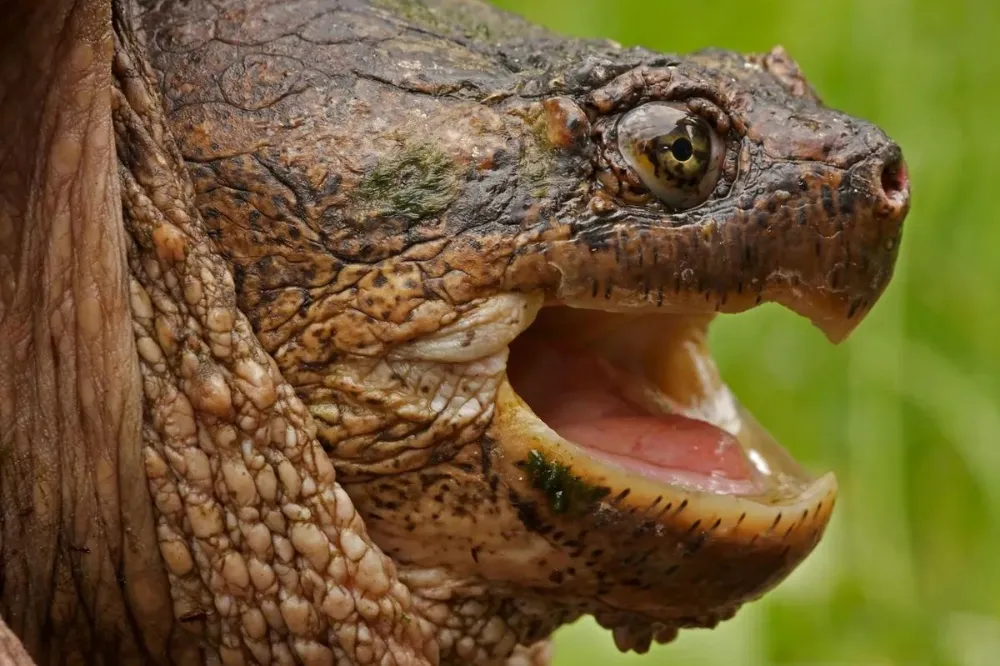
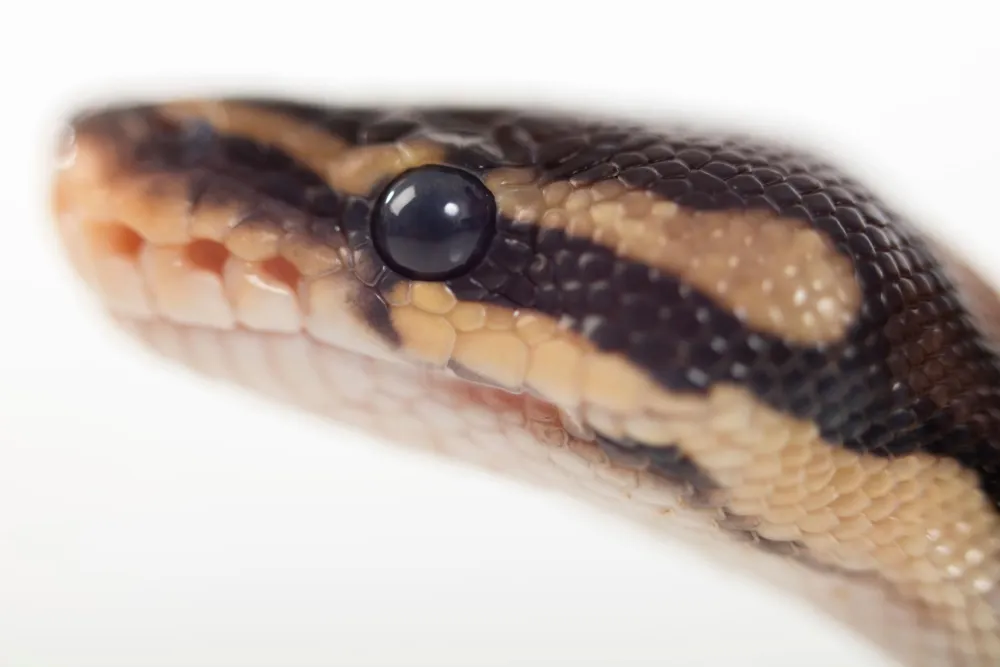
In North America, coyotes are one of the best-documented predators of free-ranging domestic cats. Bobcats can also prey on cats, while larger predators such as mountain lions may take pets opportunistically. Great horned owls are capable of taking surprisingly large mammalian prey, and in a few regions large reptiles such as Burmese pythons and alligators can also threaten pets.
Quick Answer: What Animals Eat Cats?
Animals that can prey on domestic cats include:
coyotes;
bobcats;
mountain lions;
large owls such as great horned owls;
large constrictor snakes in places where they occur;
and alligators near suitable wetland habitats.
That does not mean all of these animals commonly hunt cats.
Predation risk depends on location, habitat, predator abundance, the cat's size and how much unsupervised time the cat spends outdoors.
1. Coyotes
Coyotes (Canis latrans) are probably the most important wild predator for cat owners to know about across much of North America.
They are highly adaptable and can live not only in rural landscapes but also around suburbs and major cities.
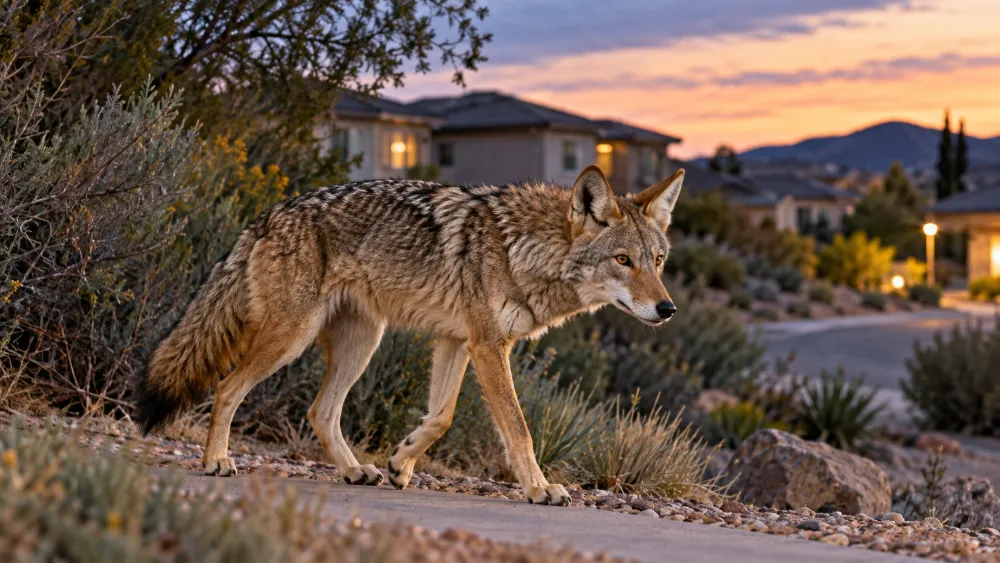
Coyotes are opportunistic omnivores. Their normal diet can include rodents, rabbits, deer, fruit, insects and many other foods, but domestic cats can also become prey.
How often this happens varies greatly from city to city.
A study of urban coyotes in New York City detected domestic cat remains in fewer than 5% of sampled coyote scats. Research in southern California has found much higher levels in some urban areas, with one study reporting domestic cat remains in nearly 20% of surveyed urban coyote scats.
This difference is important. It means it is inaccurate to say either that coyotes “constantly hunt pets” or that cats are never meaningful prey.
Local ecology matters.
When are cats most at risk from coyotes?
Risk is generally higher for free-ranging cats that spend time outside without supervision, particularly in areas close to parks, greenbelts, vacant land, brush or other habitat used by coyotes.
Urban coyotes often increase activity around dusk and nighttime, although they can appear during daylight as well.
The safest approach in areas with regular coyote activity is to keep cats indoors or provide secure outdoor access through an enclosed catio.
2. Bobcats
Bobcats (Lynx rufus) are medium-sized wild cats found across much of North America.
Their normal prey consists mainly of animals such as rabbits, rodents and birds, but their diet is flexible.
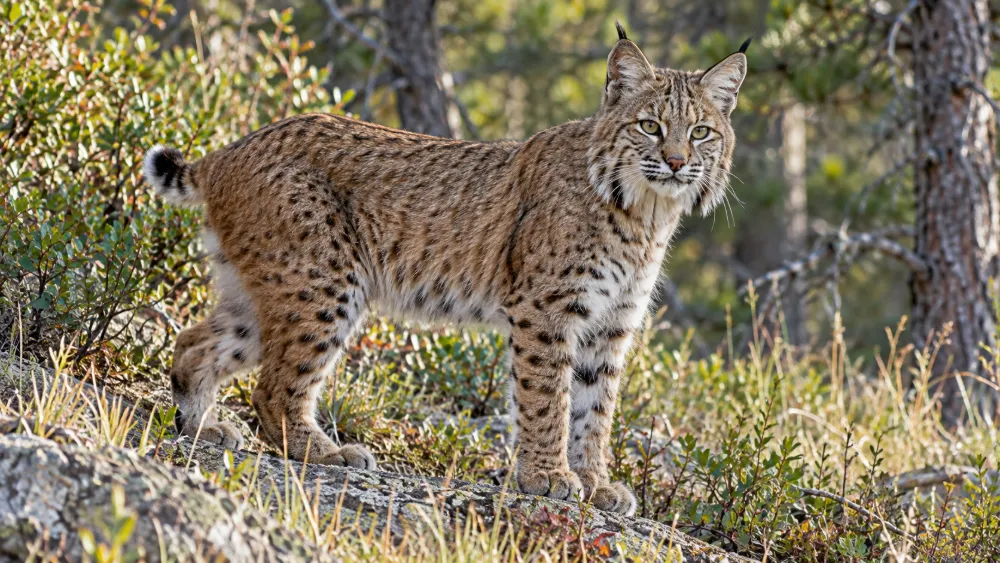
The U.S. National Park Service notes that bobcats can take domestic cats and small dogs in addition to their more typical wild prey.
A bobcat is generally larger and more powerful than an ordinary house cat. It is also an ambush predator, relying on stealth and a short explosive pounce rather than long-distance pursuit.
That does not mean every bobcat that enters a neighborhood is searching for pets. Rodents, rabbits and other wildlife normally make up much of its diet.
Where bobcats and domestic cats overlap, however, an unsupervised outdoor cat can potentially become prey.
You can learn more about the species in our Bobcat guide.
If you are unsure how a bobcat differs from a much larger cougar, see our Bobcat vs. Mountain Lion comparison.
3. Mountain Lions
Mountain lions (Puma concolor), also called cougars or pumas, are much larger than bobcats.
Their main prey in much of North America consists of deer and other medium-to-large mammals, but they can also eat smaller animals.
Mountain lions generally avoid people and developed areas when possible. Encounters are therefore far less common than the everyday presence of domestic cats might suggest.
Even so, wildlife agencies advise people living in mountain-lion habitat not to leave pets outdoors unattended at night.
A free-ranging cat is small enough to be vulnerable if it encounters a mountain lion, although domestic cats are not the species' primary natural prey.
4. Great Horned Owls
Birds of prey are often exaggerated in online stories about disappearing pets, but at least one North American owl is powerful enough that the risk should not be dismissed completely.
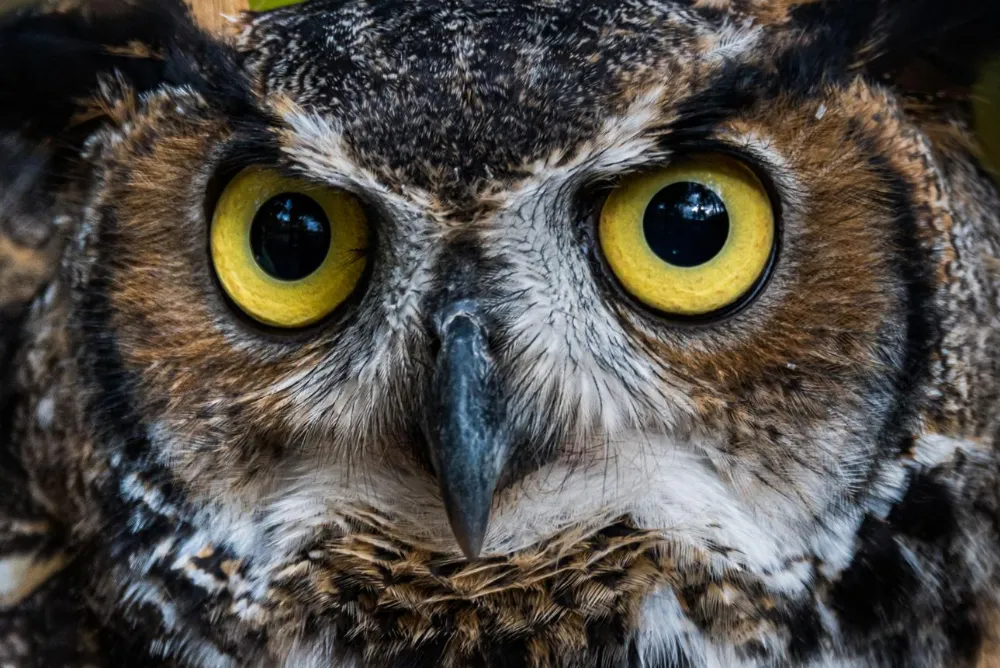
The great horned owl (Bubo virginianus) is a large, widespread predator found in forests, farmland, suburbs and even cities.
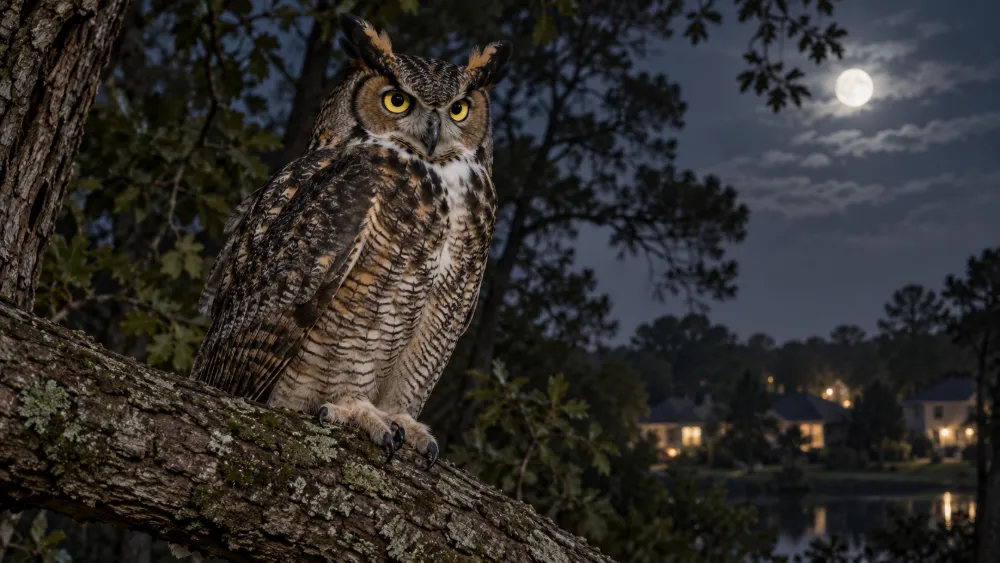
Cornell Lab of Ornithology records an unusually broad diet for the species, ranging from rodents and rabbits to skunks, waterbirds, other raptors and even house cats.
That does not mean great horned owls commonly carry off normal adult cats from suburban yards. Small cats and kittens are more plausible targets than large adult cats.
Body size matters enormously when assessing raptor risk.
For more information on these birds, see our Owl Species Guide.
5. Large Constrictor Snakes
In most of the United States, giant snakes are not a realistic threat to domestic cats.
Southern Florida is an important exception.
Invasive Burmese pythons (Python bivittatus) have established a breeding population in the Greater Everglades ecosystem.
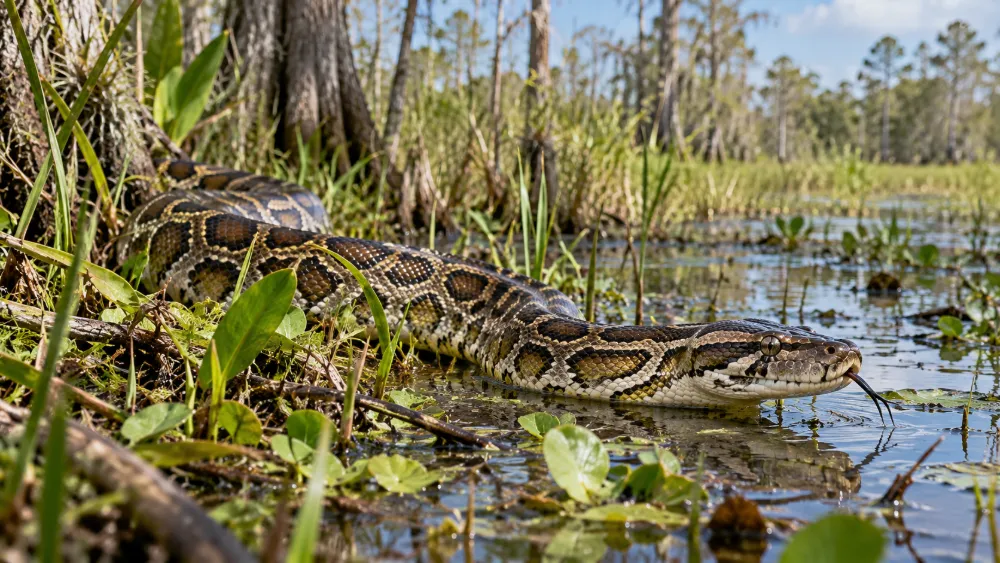
These are very large constrictors capable of consuming a wide variety of mammals and birds.
The Florida Fish and Wildlife Conservation Commission specifically warns that Burmese pythons may prey on pets, including cats and dogs.
This is therefore a genuine but highly geographic risk. A cat living in New York, London or Toronto does not face the same threat from free-ranging giant pythons as a pet living near python habitat in southern Florida.
6. Alligators
American alligators are another strongly location-dependent threat.
They occur widely in wetlands, lakes, ponds and waterways in the southeastern United States, especially Florida.
Florida wildlife officials warn pet owners to keep pets away from the edges of freshwater and brackish water because pets can resemble natural prey.
Cats that remain inside homes have essentially no exposure to this risk. A roaming cat that approaches canals, ponds or marshes in alligator country has a very different risk profile.
Do Foxes Eat Cats?
This is especially common as a concern in the United Kingdom, where urban foxes frequently live in the same neighborhoods as domestic cats.
For healthy adult cats, the evidence suggests the risk is low.
Cats Protection reports that fox attacks on cats are very uncommon. Their cited veterinary data found fox-related incidents to be far less frequent than injuries caused by other cats or road traffic.
Foxes and adult cats will often avoid one another rather than treating each other as predator and prey.
Kittens, severely weakened animals and unusual circumstances may carry greater risk, but it would be inaccurate to list the red fox as a routine predator of healthy adult domestic cats.
Do Raccoons Eat Cats?
Raccoons and cats can come into conflict over food, especially when pet food or garbage is left outdoors.
However, an adult domestic cat is not normal primary prey for a raccoon.
A fight can still cause serious injury, which is different from saying that raccoons routinely hunt cats for food.
This distinction matters because lists of “animals that eat cats” often mix together predators, competitors and animals that might simply fight with a cat.
Do Dogs Eat Cats?
Dogs can seriously injure or kill cats, particularly if a dog has strong chase or predatory behavior.
The National Park Service includes attacks from domestic dogs among the dangers faced by free-ranging cats.
However, a dog attacking a cat should not automatically be described as normal feeding predation. Chasing, territorial behavior and predatory behavior can overlap without the dog necessarily consuming the cat.
Are Kittens at Greater Risk?
Yes.
A kitten's small body size makes it vulnerable to a much wider range of predators than a healthy adult cat.
A predator that could not realistically overpower a full-grown domestic cat may be able to take a very young kitten.
This is one reason kittens should not be allowed to roam outdoors unsupervised.
Are Outdoor Cats More Likely to Be Eaten?
Almost all wildlife-predation risk requires the cat and predator to occupy the same space.
An indoor cat behind secure doors and windows has extremely little exposure to coyotes, bobcats, owls or other wild predators.
A free-ranging cat may travel through:
parks;
woodland edges;
vacant lots;
greenbelts;
creeks;
wetlands;
and wildlife corridors.
Those are exactly the types of habitats many predators use.
Research on free-ranging cats and coyotes has shown that predator presence can even affect where cats move through urban landscapes.
How to Protect a Cat From Predators
The simplest way to reduce predation risk is to prevent unsupervised roaming.
Practical options include:
keeping cats indoors;
using a secure catio or enclosed outdoor run;
supervising outdoor time;
using a harness and leash for cats comfortable with them;
bringing cats inside before nighttime in predator-rich areas;
not leaving pet food outdoors;
keeping garbage and food attractants secured;
and learning which wild predators actually occur in your region.
Removing outdoor food is particularly useful because bowls of cat food can attract not only cats but also raccoons, coyotes and other wildlife.
What Should I Do If I See a Predator Near My Cat?
Do not deliberately approach or corner a wild predator.
Bring your cat indoors if you can do so safely and remove food or other attractants.
For repeated visits by large predators, follow guidance from your local wildlife authority rather than trying to trap or handle the animal yourself.
If your cat has been bitten or attacked by wildlife, contact a veterinarian promptly. Bite wounds can be deeper than they look and can carry a risk of infection.
What Is the Most Dangerous Predator for Outdoor Cats?
There is no single answer worldwide.
In parts of North America, coyotes are one of the clearest documented predators of outdoor cats.
In other places, different risks dominate—or significant wildlife predation may be uncommon altogether.
For example:
Southern California: coyotes can be an important risk;
wooded parts of North America: bobcats may occasionally take cats;
mountain-lion country: large predators create additional risk;
southern Florida: Burmese pythons and alligators add unusual regional threats;
United Kingdom: fox predation on healthy adult cats appears uncommon.
Local conditions are more useful than a universal predator ranking.
FAQ
What animals prey on house cats?
Documented predators can include coyotes, bobcats, mountain lions and great horned owls. In specific regions, large constrictor snakes or alligators can also threaten pets. Risk varies greatly by location and the size of the cat.
Do coyotes eat cats?
Yes. Domestic cats have been documented in coyote diets. However, the frequency varies substantially between cities and habitats. Studies have found relatively low cat consumption in some urban coyote populations and much higher rates in parts of southern California.
Do bobcats eat house cats?
They can. Bobcats usually hunt rabbits, rodents, birds and other wild prey, but U.S. National Park Service sources document domestic cats among the animals bobcats may take.
Can an owl eat a cat?
Large great horned owls have been documented eating house cats, although cats are only one item in a very diverse diet. Small cats and kittens are more vulnerable than large healthy adults.
Do foxes kill cats?
It can happen, but in the United Kingdom the risk to healthy adult cats appears very low. Cats and foxes commonly coexist in urban areas without serious conflict.
Can snakes eat cats?
Very large constrictor snakes can. This is mainly a regional issue. For example, Florida wildlife authorities warn that invasive Burmese pythons may prey on pets such as cats and dogs.
Do alligators eat cats?
An alligator can prey on a small pet if it approaches suitable water habitat. Florida wildlife authorities advise keeping pets away from the edges of freshwater and brackish water because pets may resemble natural prey.
How can I stop predators from getting my cat?
Keeping a cat indoors or giving it access to a secure enclosed outdoor space provides the strongest protection. Avoid leaving food outside, supervise outdoor activity and learn which predators live in your area.
Final Thoughts
Cats occupy an unusual position in the food web: they are highly capable predators of smaller wildlife but can themselves become prey for larger animals.
For outdoor cats in North America, coyotes are among the best-documented threats. Bobcats, mountain lions and large owls can also take cats under the right circumstances, while pythons and alligators create more localized risks.
That does not mean every cat that steps outdoors is surrounded by predators.
The important factors are geography, habitat, the cat's body size and how much unsupervised outdoor access it has.
For cat owners, reducing roaming is far more useful than trying to memorize a frightening list of every animal physically capable of harming a cat.
To learn more about one of the wild cats that can overlap with domestic cats in North America, visit our Bobcat guide. You can also explore the wider family in our Types of Felines guide.
Sources and Further Reading
U.S. National Park Service — Cats: Predators or Prey?
U.S. National Park Service — Bobcat ecology and diet
Cornell Lab of Ornithology — Great Horned Owl Life History
Florida Fish and Wildlife Conservation Commission — Burmese Python
Florida Fish and Wildlife Conservation Commission — Alligator Pet Safety
Peer-reviewed urban coyote diet studies from New York City and Southern California
Cats Protection — Cats and Foxes