Sea Urchin Habitat at a Glance
Sea urchins belong to the class Echinoidea and are found in every major ocean on Earth. Although they all require saltwater to survive, different species have adapted to a wide variety of marine environments.
| Habitat Type | Typical Water Depth | Common Sea Urchin Species | Main Food Sources |
|---|---|---|---|
| Rocky Shores | Intertidal to 30 m (100 ft) | Purple sea urchin, Red sea urchin | Algae, kelp |
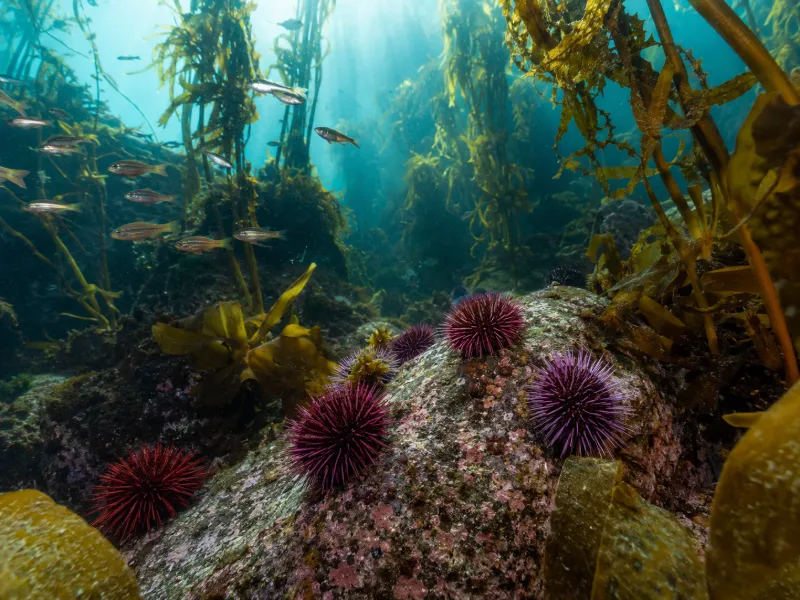
| Kelp Forests | 5–40 m (16–130 ft) | Purple sea urchin, Green sea urchin | Kelp, drifting algae |
| Coral Reefs | 1–50 m (3–164 ft) | Long-spined sea urchin | Algae growing on coral |
| Seagrass Meadows | 1–20 m (3–66 ft) | Collector urchins | Seagrass, algae, detritus |
| Deep Ocean | 200–5,000+ m (656–16,400+ ft) | Various deep-sea species | Marine snow, organic matter |
| Polar Waters | Shallow to deep | Antarctic sea urchins | Algae and seabed organisms |
Where Are Sea Urchins Found?
Sea urchins have one of the broadest geographic distributions among marine invertebrates. Scientists have identified nearly 1,000 living species, and they occur in tropical, temperate, and polar oceans.
They can be found along the coastlines of North and South America, Europe, Africa, Asia, Australia, and Antarctica. Some species live close to shore where waves constantly crash against rocks, while others inhabit the dark deep sea where sunlight never reaches.
Because sea urchins cannot survive in freshwater, they are absent from rivers and lakes.
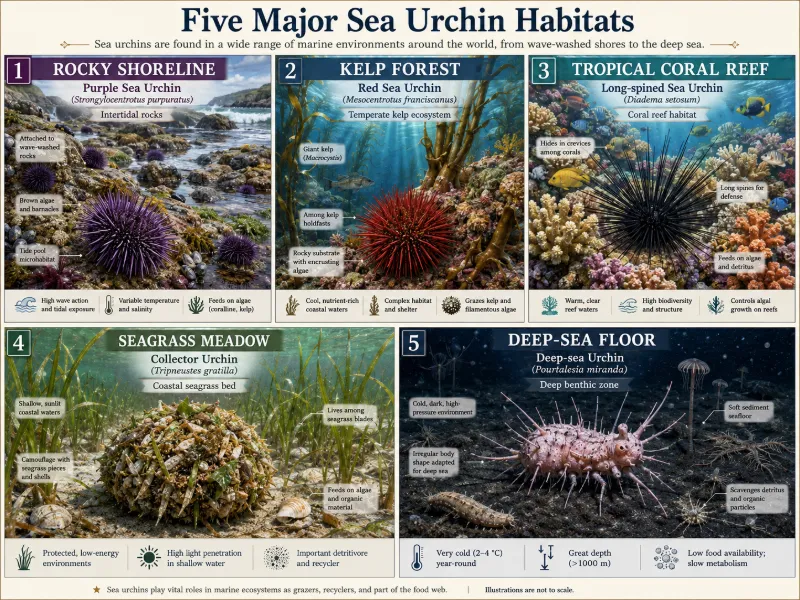
Rocky Shores: One of the Most Common Habitats
Many familiar sea urchins live on rocky coastlines. These habitats provide firm surfaces where algae can grow and where sea urchins can securely attach using hundreds of tube feet.
Rock crevices offer protection from waves and predators. During low tide, some species remain hidden in pools or cracks until the water returns.
On exposed coastlines, sea urchins often slowly graze across rocks, scraping algae with their specialized mouthparts known as Aristotle's lantern.
Kelp Forest Ecosystems
Temperate kelp forests are among the richest habitats for sea urchins. Giant kelp provides abundant food, shelter, and habitat complexity.
Sea urchins usually feed on detached kelp drifting across the seafloor. However, when their populations become unusually large, they may actively consume living kelp plants, creating areas known as "urchin barrens."
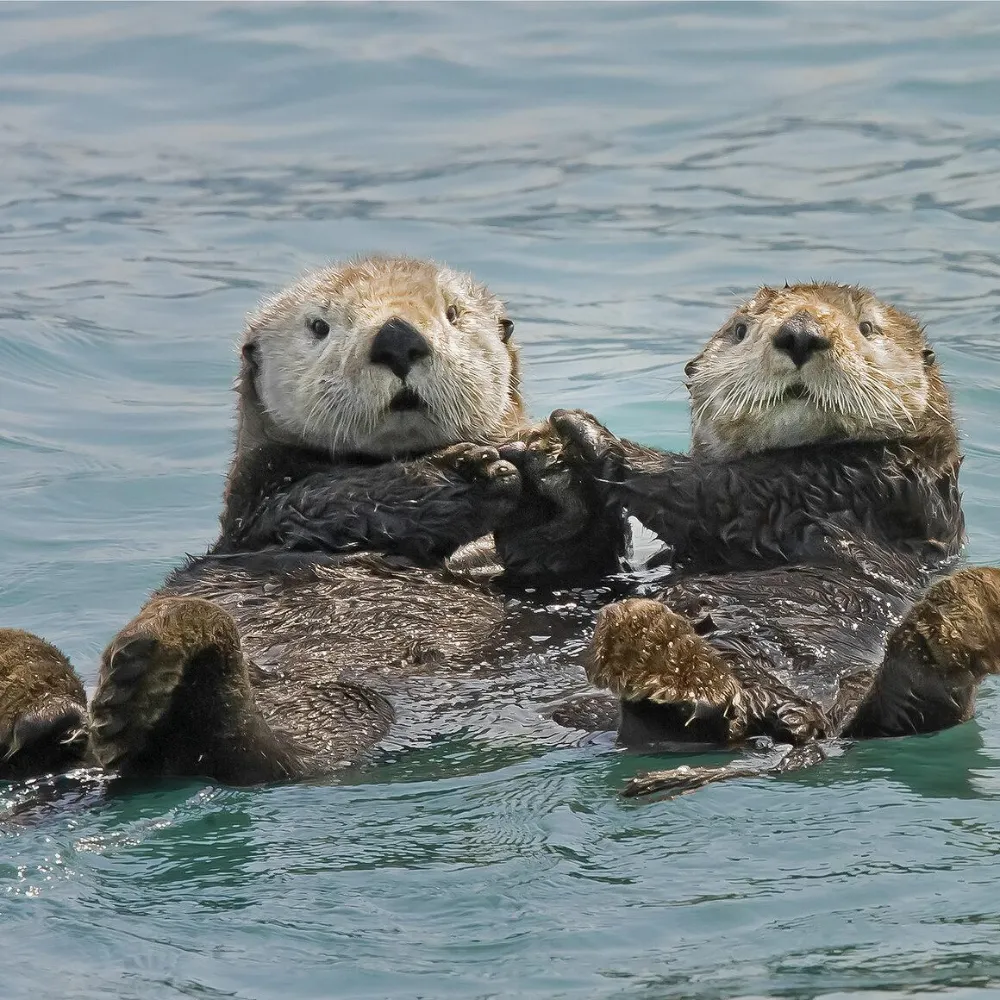
Natural predators such as sea otters, sunflower sea stars, and some fish help maintain a balance between sea urchins and kelp forests.
Coral Reef Habitats
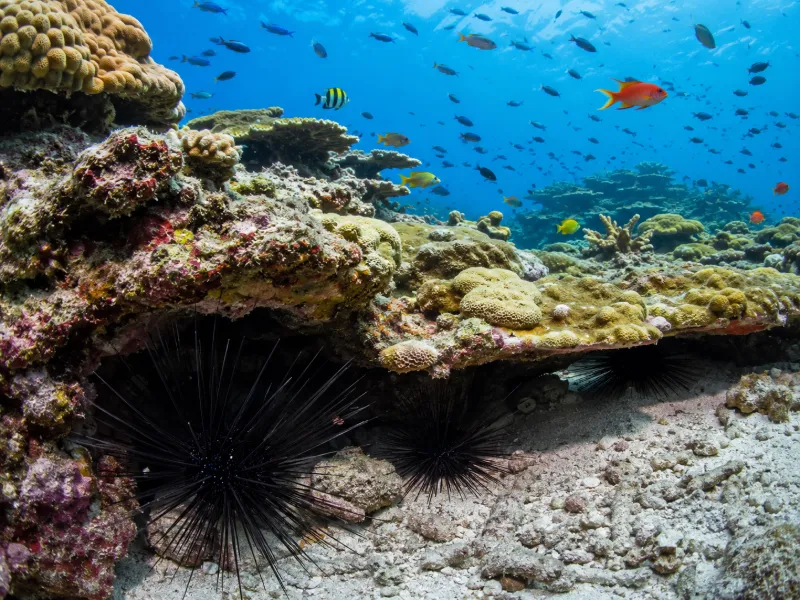
Tropical coral reefs support many colorful sea urchin species. These animals typically hide beneath coral ledges during the day and emerge at night to graze on algae.
By removing algae from reef surfaces, sea urchins help prevent excessive algal growth that could compete with living corals.
The long-spined sea urchin is one of the best-known reef species and plays an important ecological role throughout many tropical regions.
Seagrass Meadows and Sandy Bottoms
Not all sea urchins live on rocky reefs. Some species inhabit sandy or muddy bottoms near seagrass beds.
Collector urchins often camouflage themselves by carrying shells, stones, or pieces of seagrass on their spines. This behavior may provide shade, protection from predators, and camouflage.
Seagrass habitats also contain abundant algae and organic material that support sea urchin populations.
Deep-Sea Habitats
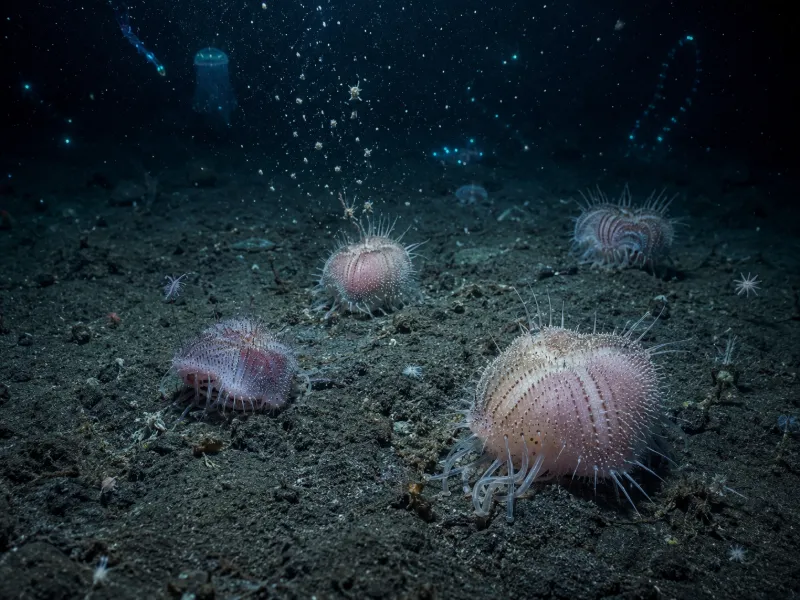
Many people associate sea urchins with shallow coastal waters, but numerous species inhabit the deep ocean.
Deep-sea sea urchins may live hundreds or even thousands of meters below the surface. These environments are permanently dark, cold, and under extremely high pressure.
Instead of feeding primarily on algae, deep-sea species often consume marine snow—tiny particles of dead organisms and organic matter that slowly sink from the upper ocean.
Polar Ocean Habitats
Sea urchins are also common in Arctic and Antarctic waters. These cold-adapted species survive in temperatures close to the freezing point of seawater.
Because metabolism slows in cold environments, polar sea urchins generally grow more slowly and may live longer than many tropical species.
Environmental Conditions Sea Urchins Need
Although habitats vary greatly, most sea urchins require similar environmental conditions.
Saltwater with stable salinity
Hard surfaces or stable seafloor habitats
Sufficient food, especially algae or organic material
Good oxygen availability
Moderate water movement that delivers nutrients without constantly dislodging them
Many species are also sensitive to changes in ocean chemistry caused by increasing carbon dioxide, which can make shell formation more difficult.
How Sea Urchins Adapt to Different Habitats
Sea urchins possess several adaptations that allow them to occupy diverse marine environments.
Tube feet help them cling tightly to rocks even in strong waves.
Sharp spines provide defense against predators and assist with movement.
Aristotle's lantern, a complex jaw structure, enables efficient grazing on algae.
Camouflage behavior helps some species avoid predators.
Flexible diets allow different species to exploit available food resources.
These adaptations have enabled sea urchins to survive for hundreds of millions of years in changing marine environments.
Threats to Sea Urchin Habitats
Many sea urchin habitats face increasing environmental pressures. Climate change, ocean warming, pollution, destructive fishing practices, and ocean acidification can alter the ecosystems where sea urchins live.
In some regions, declining predator populations allow sea urchins to become overly abundant, leading to widespread kelp forest loss. In other areas, habitat degradation reduces suitable environments for both sea urchins and the many species that depend on healthy marine ecosystems.
Conservation efforts increasingly focus on protecting entire marine habitats rather than individual species, helping preserve the ecological balance that sea urchins are part of.
FAQs
Do sea urchins live in freshwater?
No. Sea urchins are exclusively marine animals and cannot survive in freshwater environments such as rivers or lakes.
Do sea urchins live on coral reefs?
Yes. Many species inhabit tropical coral reefs, where they feed on algae and help maintain reef health.
Can sea urchins live in deep water?
Yes. Numerous species live in the deep ocean, including depths exceeding 5,000 meters (16,400 feet), where they feed on organic material settling from above.
What is the best habitat for sea urchins?
There is no single "best" habitat. Different species are adapted to rocky shores, kelp forests, coral reefs, seagrass meadows, sandy bottoms, or deep-sea environments.
Why are kelp forests important for sea urchins?
Kelp forests provide abundant food and shelter. Healthy predator populations keep sea urchin numbers balanced, allowing both kelp and sea urchins to coexist.
What is the habitat of sea urchins?
What ocean animals eat sea urchins?
What is inside the sea urchin?
What organism is close to a sea urchin?