What Do Sea Urchins Eat?
Sea urchins play an important role in marine food webs because they help control algae growth. Most species spend much of their lives slowly grazing across the seafloor, feeding on plants and other organic material.
Although they are generally classified as herbivores, many sea urchins are actually omnivorous opportunists that will eat a variety of foods if given the chance.
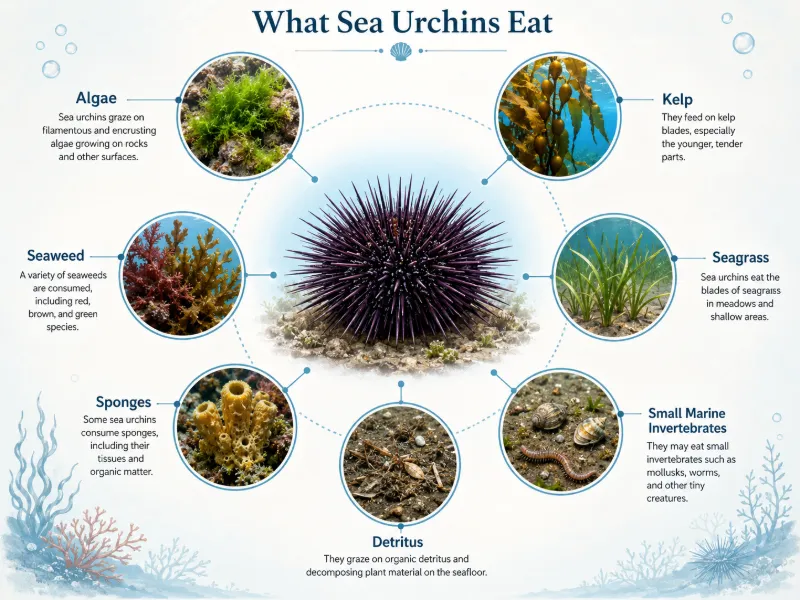
| Food Type | Commonly Eaten? | Importance in Diet |
|---|---|---|
| Algae | Yes | Primary food source |
| Kelp | Yes | Major food for temperate species |
| Seaweed | Yes | Staple diet |
| Seagrass | Sometimes | Supplemental food |
| Sponges | Occasionally | Opportunistic feeding |
| Dead Fish or Animals | Occasionally | Scavenged when available |
| Small Invertebrates | Sometimes | Additional protein source |
| Organic Detritus | Frequently | Especially for deep-sea species |
Algae: The Favorite Food of Most Sea Urchins
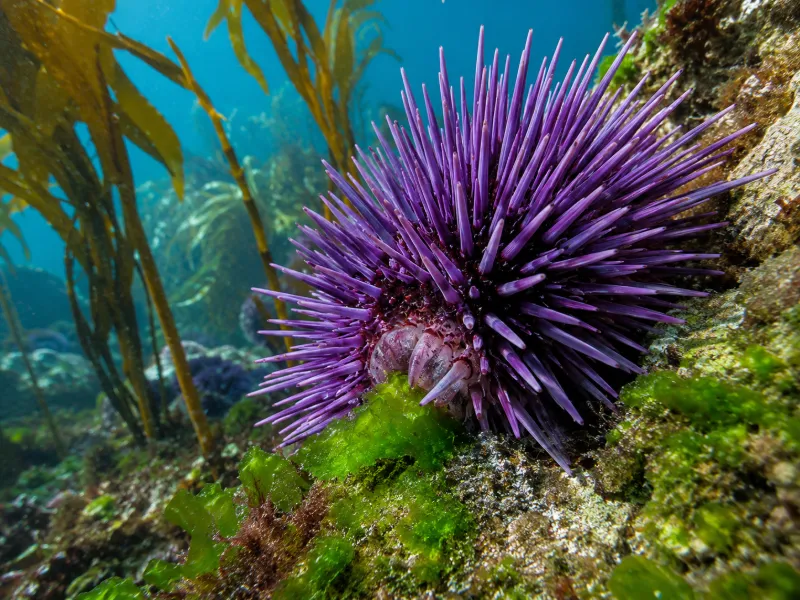
Algae are the main food source for most sea urchin species. They feed on both microscopic algae and larger seaweeds growing on rocks, coral reefs, and other underwater surfaces.
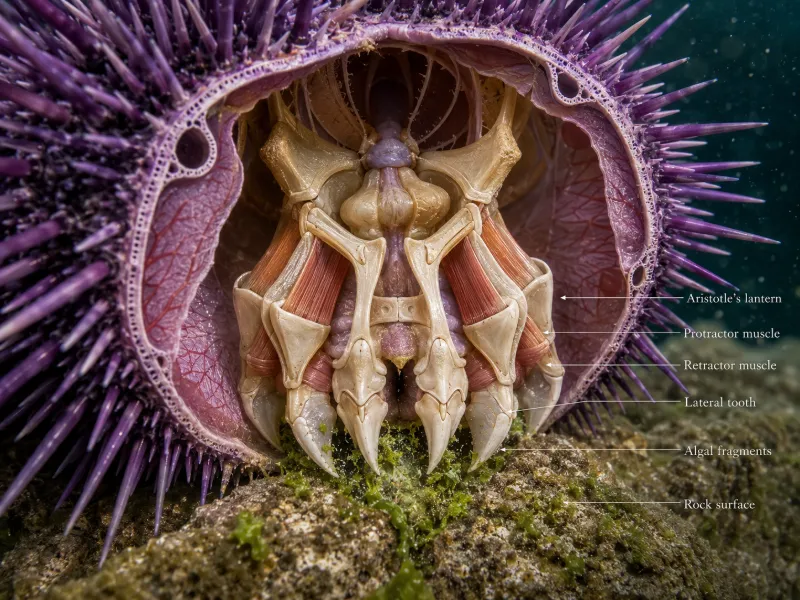
Using Aristotle's lantern, sea urchins scrape algae from hard surfaces with remarkable efficiency. They often spend hours grazing over a relatively small area.
This grazing helps prevent excessive algal growth, which benefits coral reefs and many coastal ecosystems.
Do Sea Urchins Eat Kelp?
Yes. Kelp is one of the most important foods for sea urchins living in temperate oceans.
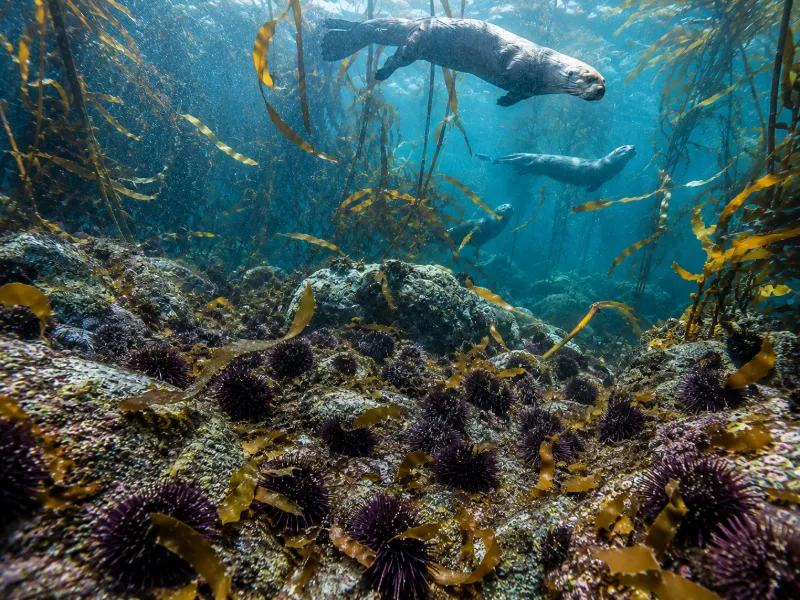
Under normal conditions, many sea urchins feed on pieces of kelp that naturally drift to the seafloor. This allows kelp forests and sea urchins to coexist.
However, when predator numbers decline or sea urchin populations become unusually large, they may begin feeding directly on living kelp plants. This intense grazing can transform lush kelp forests into rocky areas known as urchin barrens.
Do Sea Urchins Eat Seaweed?
Yes. Various species of red, green, and brown seaweed make up a significant portion of the diet for many coastal sea urchins.
The exact species consumed depend on local availability. Some sea urchins even show preferences for certain types of seaweed based on nutritional value or ease of feeding.
Do Sea Urchins Eat Animals?
Although sea urchins are mainly herbivorous, they are not strict vegetarians.
If plant material becomes scarce, many species will consume:
Dead fish
Mussels
Barnacles
Small crustaceans
Marine worms
Sponges
Decaying organic matter
This flexible feeding strategy helps sea urchins survive during periods when algae are limited.
How Do Sea Urchins Eat?
Sea urchins use a remarkable feeding structure called Aristotle's lantern. It consists of five continuously growing teeth supported by muscles and skeletal plates.
These teeth allow sea urchins to:
Scrape algae from rocks
Cut through seaweed
Crush soft invertebrates
Grind food into smaller particles
Because the teeth continually wear down while feeding, they also continue growing throughout the sea urchin's life.
What Do Baby Sea Urchins Eat?
Newly hatched sea urchin larvae drift freely in the plankton rather than living on the seafloor.
During this stage, they feed primarily on microscopic phytoplankton suspended in seawater.
After developing into juvenile sea urchins and settling on the seabed, they gradually switch to grazing on algae and biofilms growing on hard surfaces.
What Do Deep-Sea Sea Urchins Eat?
Deep-sea species have access to very little algae because sunlight cannot reach the ocean floor.
Instead, they often feed on:
Marine snow
Dead organisms
Organic sediment
Microorganisms
Occasionally small bottom-dwelling animals
This diet allows them to survive in one of Earth's most food-limited environments.
What Do Sea Urchins Eat in Aquariums?
Public aquariums and marine hobbyists typically provide sea urchins with foods that resemble their natural diet.
Common foods include:
Dried seaweed (nori)
Fresh macroalgae
Kelp
Algae wafers
Marine vegetable pellets
Some species may also consume leftover fish food and naturally growing algae inside the aquarium.
How Much Do Sea Urchins Eat?
The amount a sea urchin eats depends on its size, species, water temperature, and food availability.
Large individuals living in productive kelp forests can consume substantial amounts of algae each day. Smaller tropical species generally feed more slowly and over shorter distances.
Their continuous grazing behavior makes them important ecosystem engineers that influence the structure of marine plant communities.
Why Is the Sea Urchin Diet Important?
Sea urchins are key herbivores in many marine ecosystems. By controlling algae, they help maintain healthy coral reefs and influence the growth of kelp forests.
However, ecological balance is essential. Too few sea urchins may allow algae to overgrow sensitive habitats, while too many can remove nearly all large seaweeds, reducing habitat for countless marine species.
Natural predators such as sea otters, triggerfish, lobsters, crabs, and sea stars help keep sea urchin populations at sustainable levels.
FAQs
Are sea urchins herbivores or carnivores?
Sea urchins are generally herbivores, but many species are opportunistic omnivores that also consume small animals and decaying organic matter.
What is a sea urchin's favorite food?
Most sea urchins prefer algae, seaweed, and kelp, especially fresh algae growing on rocks.
Do sea urchins eat coral?
Most sea urchins do not eat healthy coral itself. Instead, they usually graze on algae growing on coral surfaces, which can benefit reef ecosystems. Some species may occasionally scrape coral while feeding on attached algae.
Can sea urchins survive without algae?
Some species can survive for a time by feeding on detritus, dead animals, or other organic matter, but algae remain the primary food source for most shallow-water sea urchins.
Do sea urchins eat at night?
Many sea urchins are more active at night, when they leave sheltered areas to graze while reducing their risk of being seen by predators.
What is the habitat of sea urchins?
What ocean animals eat sea urchins?
What is inside the sea urchin?
What organism is close to a sea urchin?