What Animals Are Closely Related to Sea Urchins?
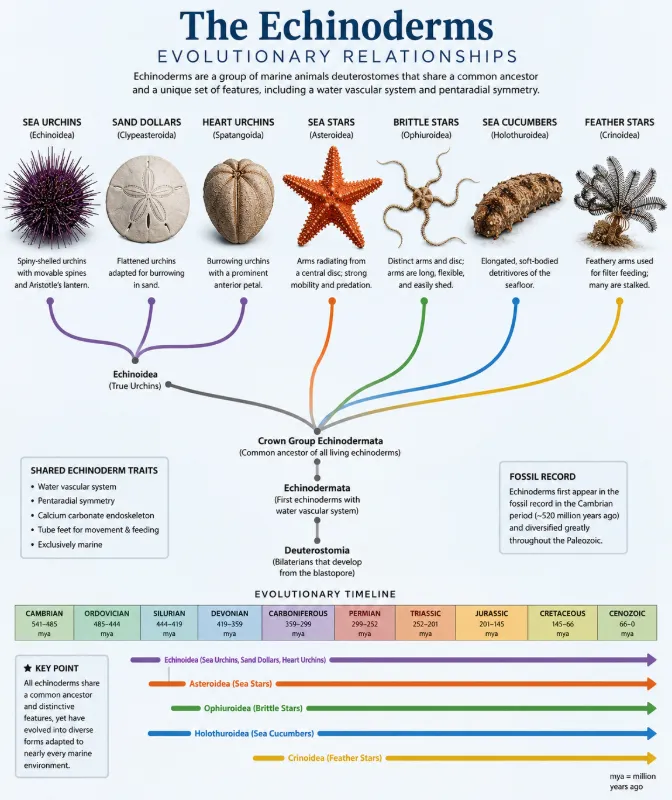
Sea urchins belong to the phylum Echinodermata, an ancient group of marine invertebrates that has existed for more than 500 million years. Every living echinoderm shares a common ancestor and possesses unique anatomical features that distinguish the group from other marine animals.
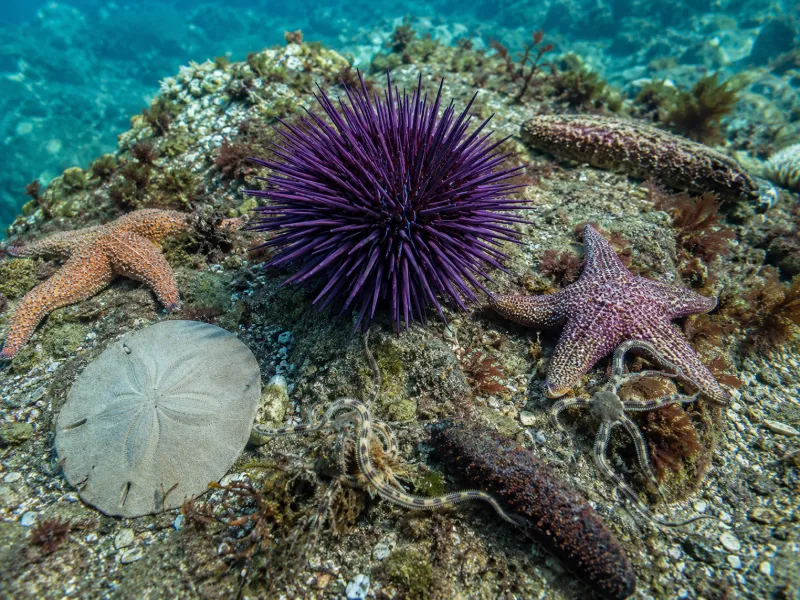
The closest living relatives of sea urchins are sand dollars. More distant, but still closely related, are sea stars, brittle stars, sea cucumbers, and crinoids.
| Organism | Relationship to Sea Urchins | Shared Characteristics |
|---|---|---|
| Sand Dollars | Closest living relatives | Same class (Echinoidea), hard test, tube feet |
| Heart Urchins | Very close relatives | Same class, burrowing lifestyle |
| Sea Stars | Close relatives | Water vascular system, tube feet, radial symmetry |
| Brittle Stars | Close relatives | Five-part body plan, regeneration ability |
| Sea Cucumbers | Moderately close relatives | Tube feet, internal skeleton, water vascular system |
| Feather Stars and Sea Lilies | More distant echinoderm relatives | Calcareous skeleton, radial symmetry |
Sand Dollars: The Closest Living Relatives
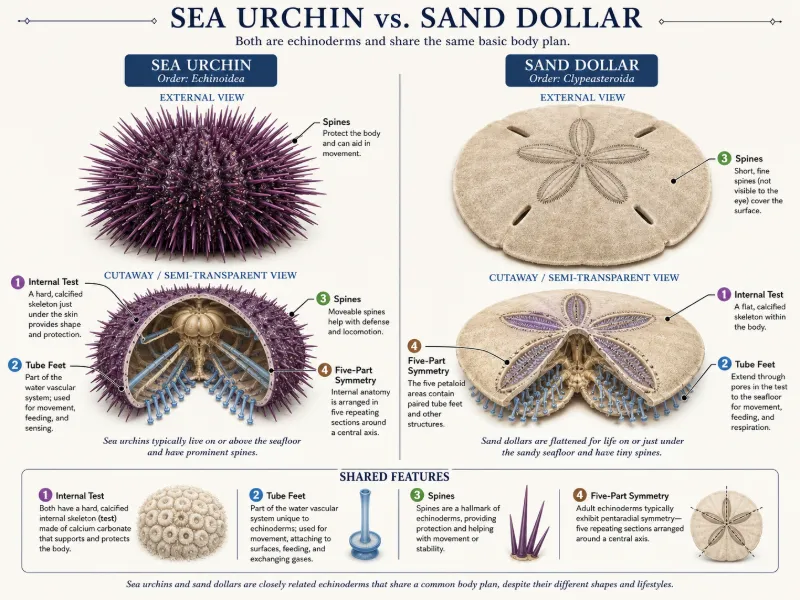
Sand dollars are generally considered the closest living relatives of sea urchins because both belong to the class Echinoidea. In fact, a sand dollar is essentially a highly specialized type of sea urchin that has evolved a flattened body for living beneath or on sandy seafloors.
Like sea urchins, sand dollars possess:
A rigid shell called a test
Tiny movable spines
Tube feet powered by a water vascular system
Five-part radial symmetry
A similar developmental pattern from larvae to adults
Their flattened shape simply reflects adaptation to a different habitat.
Heart Urchins
Heart urchins also belong to the class Echinoidea and are another close relative of typical sea urchins.
Unlike round sea urchins, heart urchins have an elongated body adapted for burrowing into soft sediment. Their spines are usually much shorter and finer, allowing them to move through sand while feeding on organic material.
Sea Stars (Starfish)
Sea stars may appear very different from sea urchins, but they are members of the same phylum.
Both animals possess:
A water vascular system
Tube feet used for movement
An internal skeleton made of calcium carbonate plates
Five-part body symmetry in adults
Unlike sea urchins, sea stars have flexible arms instead of a spherical body.
Brittle Stars
Brittle stars resemble sea stars but belong to a separate class. They have long, flexible arms that allow rapid movement across the seafloor.
Like sea urchins, they lack a true brain, rely on a water vascular system, and possess remarkable regenerative abilities.
Sea Cucumbers
At first glance, sea cucumbers seem unrelated to sea urchins. However, they are surprisingly close evolutionary relatives.
Over millions of years, sea cucumbers evolved from ancestors with a more rigid body plan into elongated animals adapted for crawling across soft sediments.
Despite their different appearance, they still possess tiny internal skeletal elements, tube feet, and a water vascular system.
Feather Stars and Sea Lilies
Feather stars and sea lilies belong to the oldest surviving echinoderm lineage. Their feather-like arms filter food particles from seawater.
Although they look unlike sea urchins, they share the same basic echinoderm body organization and common ancestry.
Shared Features of Echinoderms
All echinoderms share several characteristics that reflect their common evolutionary origin.
| Characteristic | Sea Urchins | Other Echinoderms |
|---|---|---|
| Marine habitat | Yes | Yes |
| Water vascular system | Yes | Yes |
| Tube feet | Yes | Yes |
| Calcium carbonate skeleton | Yes | Yes |
| Five-part adult symmetry | Yes | Usually |
| Excellent regenerative ability | Present in many species | Common in many groups |
What Animals Are Not Closely Related to Sea Urchins?
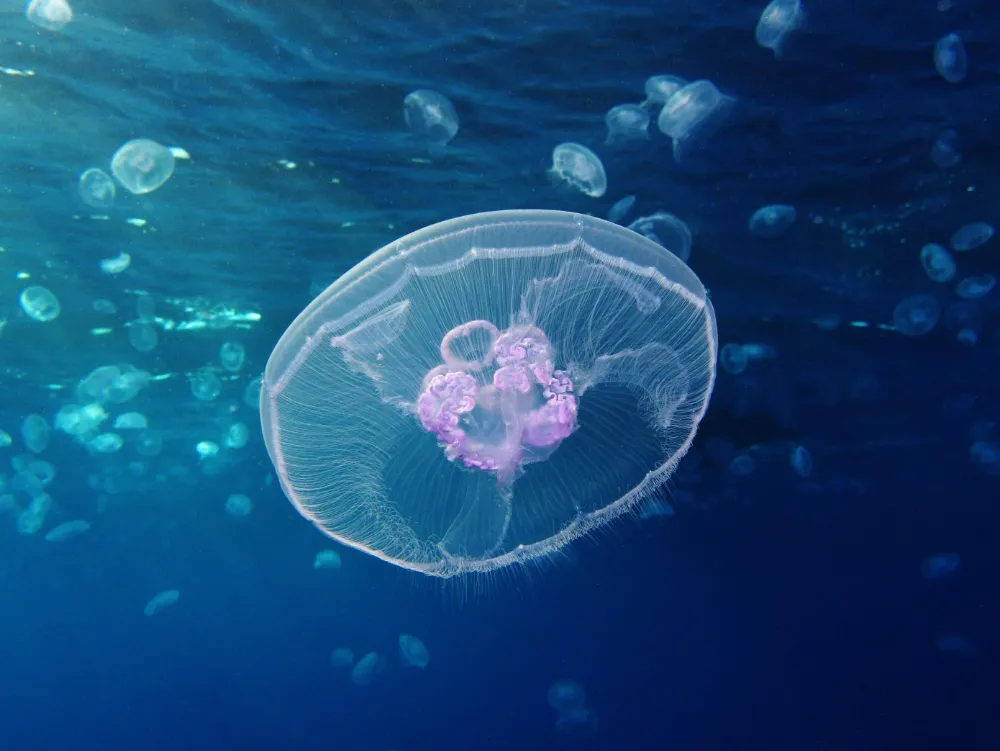
Because they live in the ocean, sea urchins are often mistaken as relatives of shellfish, jellyfish, corals, or mollusks. In reality, they are only distantly related to these animals.
Sea urchins are evolutionarily much closer to sea stars and sand dollars than they are to crabs, shrimp, octopuses, clams, or jellyfish.
An Unexpected Evolutionary Relationship
One surprising fact is that echinoderms belong to a major evolutionary group called the deuterostomes. Vertebrates—including fish, birds, reptiles, and mammals—also belong to this group.
This does not mean sea urchins are close relatives of humans in a practical sense, but it does mean they share a more recent common ancestor with vertebrates than insects or mollusks do. Because of this evolutionary relationship, sea urchins have become valuable model organisms in developmental biology and genetics.
FAQs
What is the closest relative of a sea urchin?
The closest living relatives of sea urchins are sand dollars and heart urchins, which belong to the same class, Echinoidea.
Are sea stars related to sea urchins?
Yes. Sea stars and sea urchins are both echinoderms and share features such as tube feet, radial symmetry, and a water vascular system.
Are sea cucumbers related to sea urchins?
Yes. Although they look very different, sea cucumbers are members of the phylum Echinodermata and share a common ancestor with sea urchins.
Are sea urchins related to crabs?
No. Crabs are crustaceans (arthropods), while sea urchins are echinoderms. They belong to entirely different animal phyla.
Are sea urchins related to humans?
Very distantly. Sea urchins and humans are both deuterostomes, meaning they share an ancient evolutionary ancestor, but humans are vertebrates and sea urchins are echinoderms.
What is the habitat of sea urchins?
What ocean animals eat sea urchins?
What is inside the sea urchin?
What organism is close to a sea urchin?