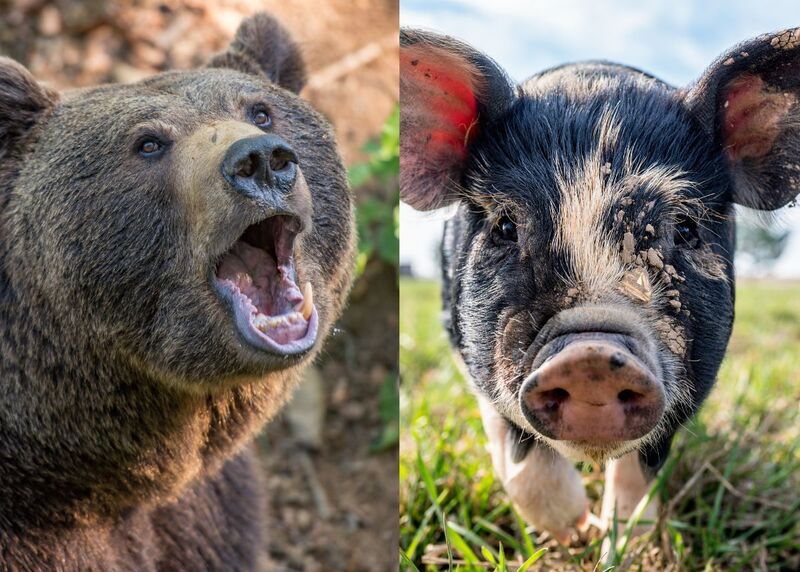
Are Bears Related to Pigs? No—Here’s Their Family Tree
Are bears related to pigs? Only distantly. See how bears and pigs differ in taxonomy, evolutionary history, anatomy, diet, and their closest living relatives.
Find animal profiles, comparisons, pet care guides, dinosaurs, FAQs, and tools.
Are bears related to pigs? Only distantly. See how bears and pigs differ in taxonomy, evolutionary history, anatomy, diet, and their closest living relatives.
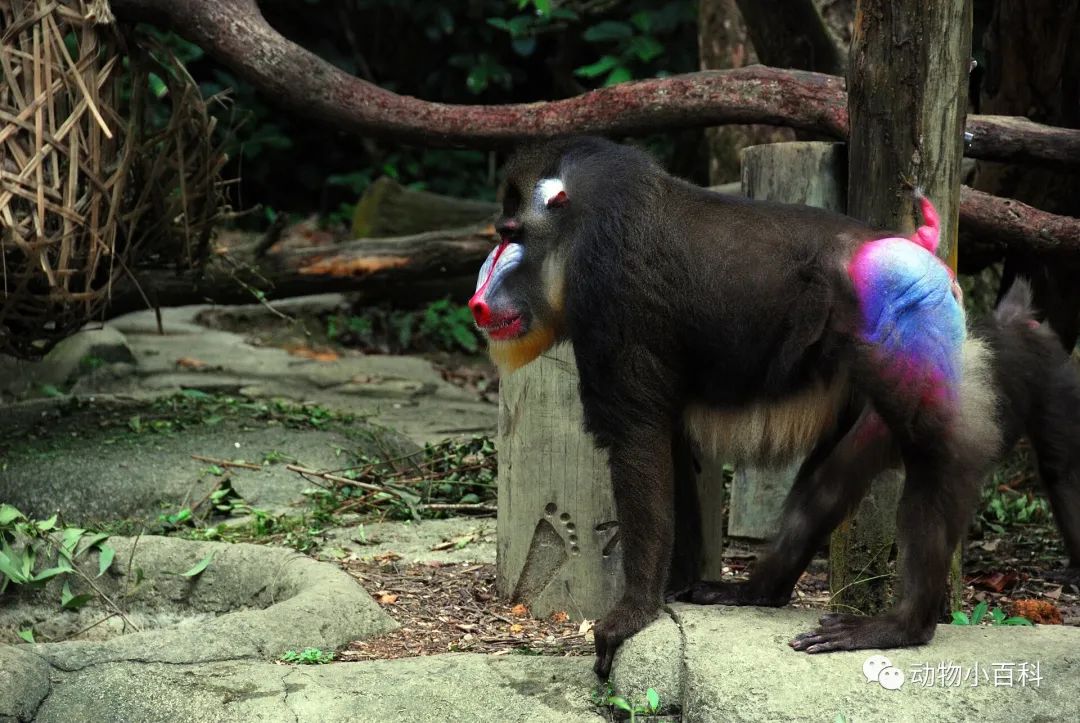
Which monkeys are the strongest? Compare 10 of the most powerful monkeys, including mandrills, drills and baboons, by size, build, canines and defensive ability.

Which animals are illegal to keep as pets in Europe? Learn how EU invasive-species rules, wildlife trade laws and national licences affect exotic pet ownership.
IntroductionAlthough no wild animal naturally considers humans its primary prey, some predators have gained a reputation as "man-eaters" because of documented attacks on people. Most incidents occur when animals are defending territory, protecting young, feeling threatened, or struggling t

What Is a Matriarchal Animal Society?A matriarchal society is a social system in which females occupy the dominant leadership role. This does not necessarily mean males have no importance, but females often control reproduction, group movement, food access, territory, or social hierarchy.Matriarchal
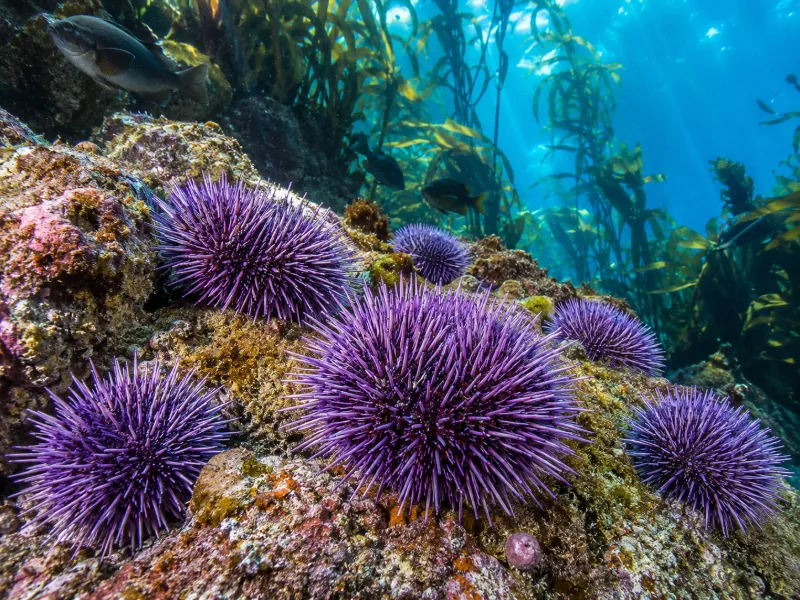
Sea Urchin Facts at a GlanceFeatureFactAnimal GroupEchinodermsScientific ClassEchinoideaNumber of Living SpeciesAbout 950–1,000 speciesHabitatAll major oceansMain DietAlgae, kelp, seaweedMain PredatorsSea otters, fish, crabs, lobsters, sea starsLargest Known SpeciesRed sea urchin (among the largest
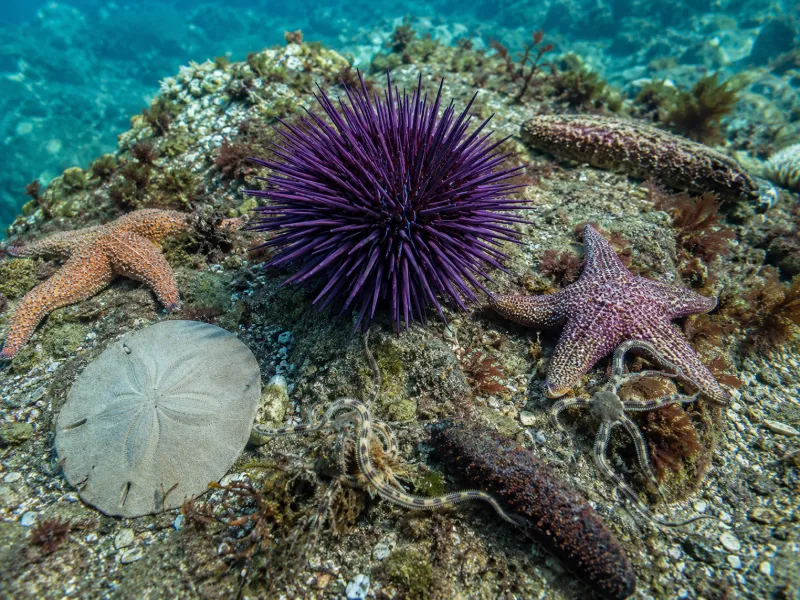
What Animals Are Closely Related to Sea Urchins?Sea urchins belong to the phylum Echinodermata, an ancient group of marine invertebrates that has existed for more than 500 million years. Every living echinoderm shares a common ancestor and possesses unique anatomical features that distinguish the gr
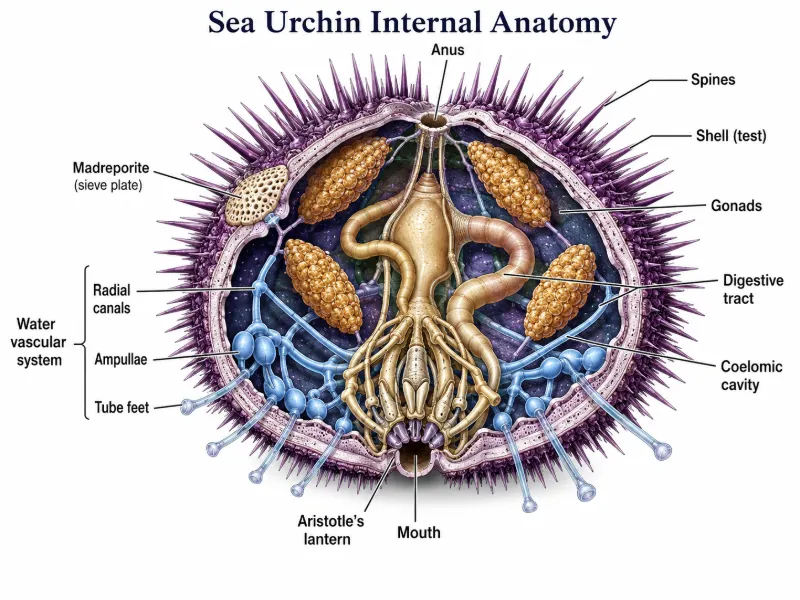
What's Inside a Sea Urchin?Although sea urchins have a simple appearance from the outside, their internal anatomy is remarkably specialized. Their organs are arranged inside a rigid shell called the test, which is covered externally with movable spines and tiny tube feet.Most sea urchins have fi
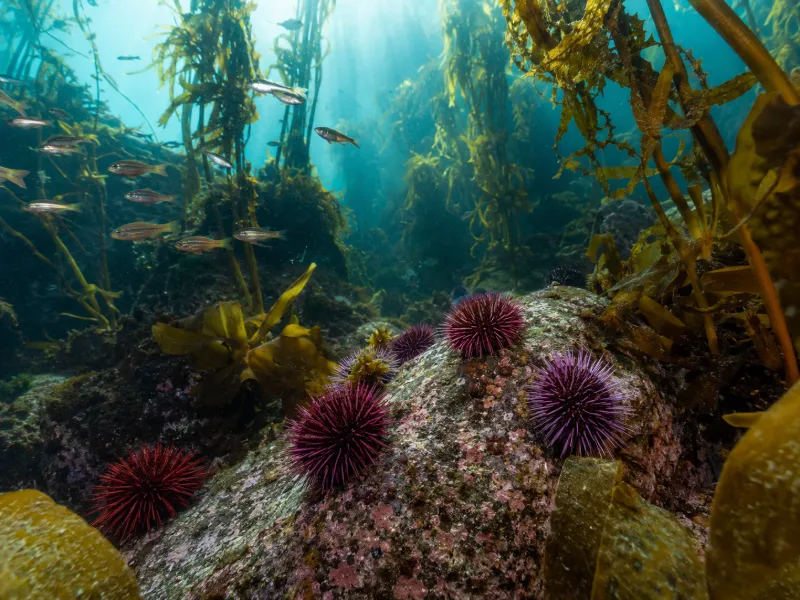
Sea Urchin Habitat at a GlanceSea urchins belong to the class Echinoidea and are found in every major ocean on Earth. Although they all require saltwater to survive, different species have adapted to a wide variety of marine environments.Habitat TypeTypical Water DepthCommon Sea Urchin SpeciesMain F
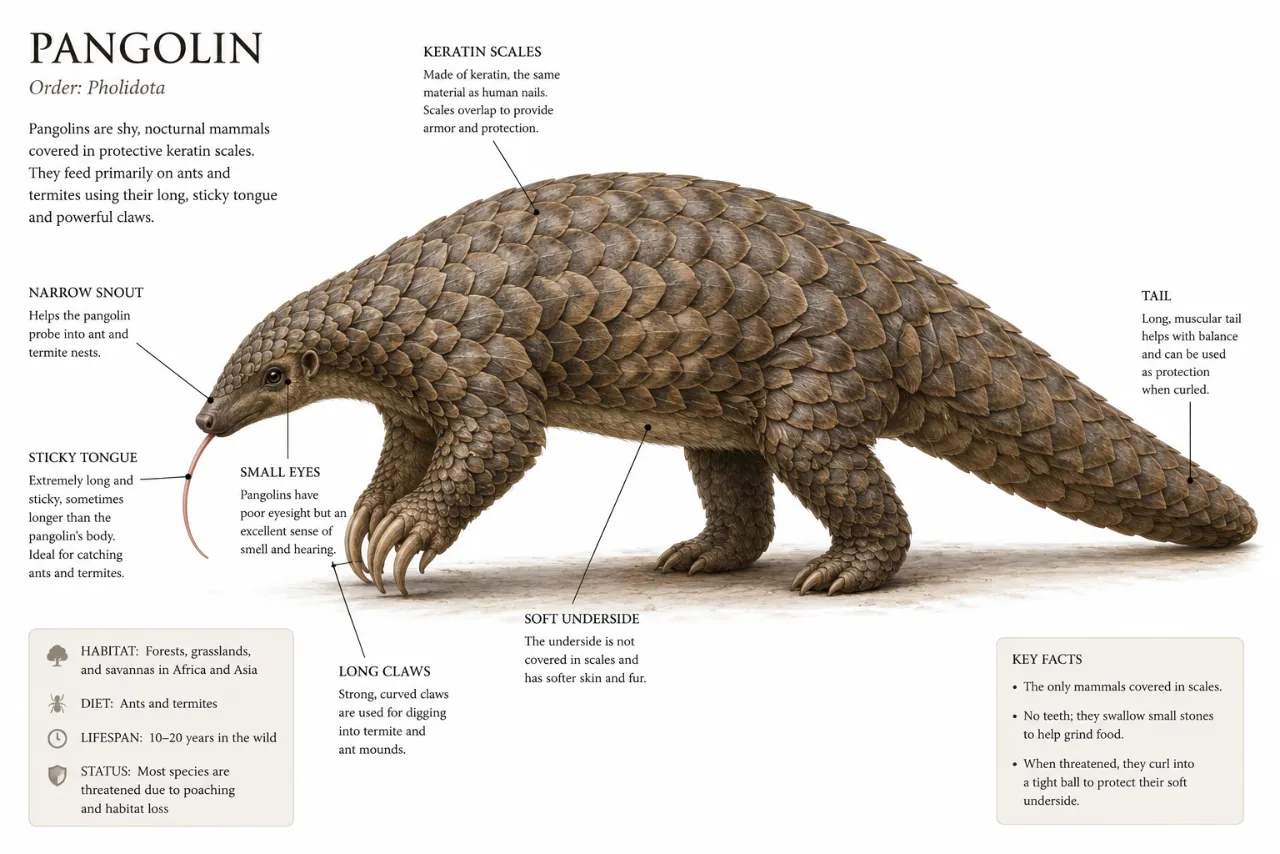
Quick answerA pangolin is a scale-covered mammal in the order Pholidota. Pangolins are famous for their armor-like bodies, long sticky tongues, strong digging claws, and unusual defensive habit of curling into a ball. Their scales are made of keratin, the same general material found in human fingern

Ophthalmosaurus was a fast-swimming marine reptile that lived during the Jurassic. It was not a dinosaur, even though it lived at the same time as many dinosaurs. Instead, it belonged to the ichthyosaurs, a group of highly specialized reptiles that evolved fish-like bodies for life in the sea. Ophth

Amargasaurus was a long-necked plant-eating dinosaur from the Early Cretaceous of South America. It is one of the most unusual sauropods ever discovered because of the extraordinary paired spines along its neck and upper back. While many sauropods are known mainly for giant size, Amargasaurus stands

Mussaurus was an early plant-eating sauropodomorph from what is now Argentina. It became famous because the first fossils belonged to tiny hatchlings and juveniles, making scientists think of it as a very small dinosaur. Later discoveries showed that adult Mussaurus was much larger and had the long

Carnotaurus was a large meat-eating dinosaur from the Late Cretaceous of South America. It is one of the most recognizable theropods ever discovered because of the two horns above its eyes, its unusually deep skull, and its tiny forelimbs. Although it was not as massive as Tyrannosaurus, Carnotaurus

Megaraptor was a large meat-eating theropod dinosaur from the Late Cretaceous of South America. It is best known for its oversized hand claws and its unusual mix of features, which have made it one of the more debated predatory dinosaurs in modern paleontology. When it was first described, some of i

Irritator was a spinosaurid theropod from the Early Cretaceous of Brazil. It is one of the most unusual predatory dinosaurs because its skull was long, narrow, and shaped in a way that suggests a strong link to fish-eating behavior. Unlike the deep-skulled hunters that many people picture when they
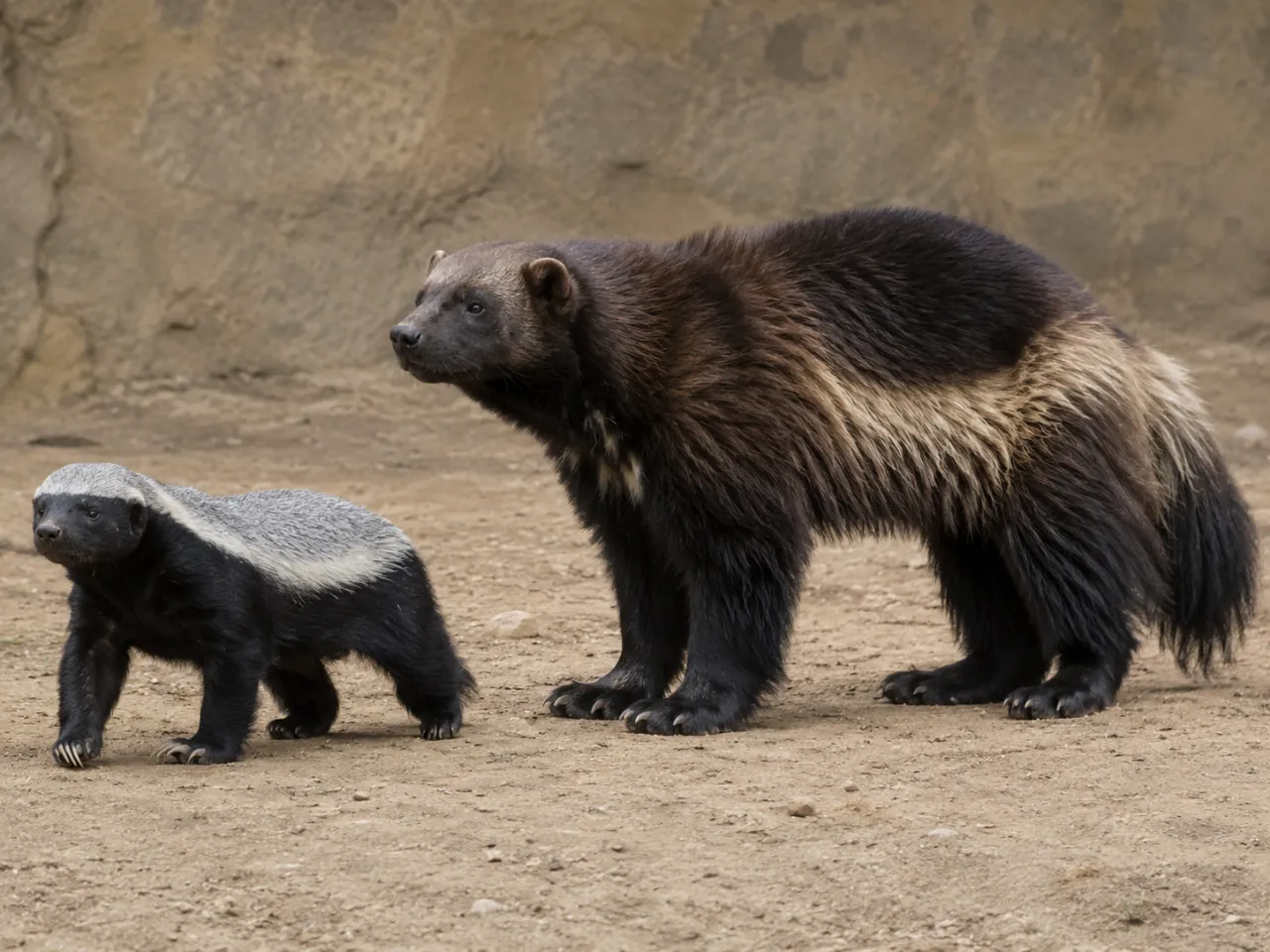
Honey badgers and wolverines are both tough, fearless mammals in the mustelid family, but they are not the same animal. The honey badger is a smaller, heat-adapted African and Asian predator famous for loose skin, snake-hunting, and defensive aggression. The wolverine is a larger, cold-adapted north

Maiasaura was a large duck-billed dinosaur from the Late Cretaceous of North America. It is best known for the remarkable fossil evidence connected with nests, eggs, hatchlings, and growing juveniles. Because of these discoveries, Maiasaura became one of the most famous dinosaurs in discussions abou